
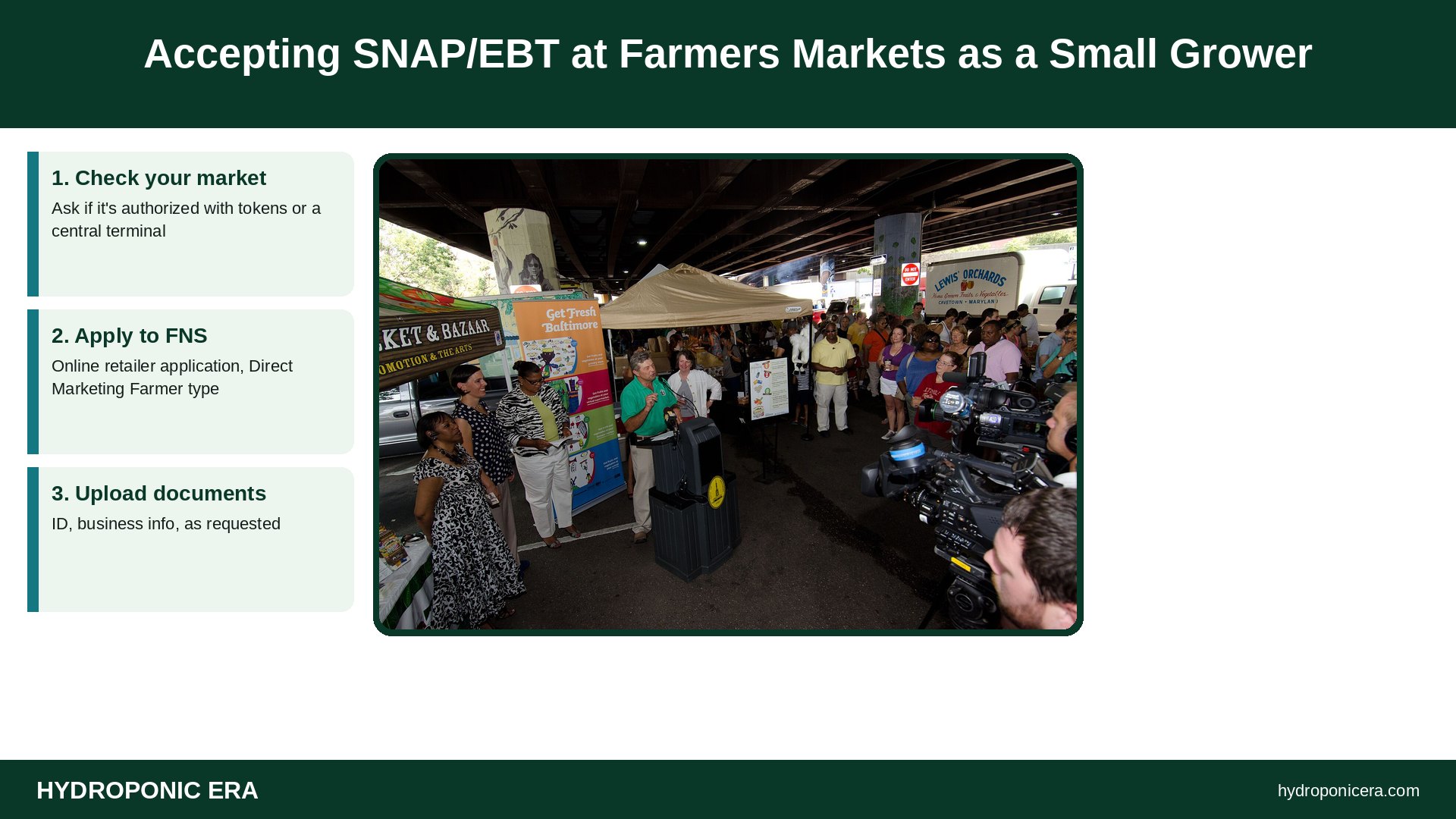
To accept SNAP EBT at a farmers market as a small grower, you either apply to USDA’s Food and Nutrition Service (FNS) yourself as a Direct Marketing Farmer, or sell at a market that is already SNAP-authorized and uses a central token or card system. Individual farmers apply online through the FNS retailer application, choosing the Direct Marketing Farmer (farm stand) store type. Once authorized, you need a way to process EBT cards, such as a free mobile app or a wireless device, and programs like MarketLink have helped eligible farmers and markets get equipment. Many markets also offer incentive programs, funded in part by USDA’s GusNIP grants, that double SNAP dollars for fruits and vegetables.
Key takeaway: Check whether your market already accepts SNAP. If not, apply to FNS as a Direct Marketing Farmer, set up EBT processing, and train yourself on eligible items.
| Step | What to do |
|---|---|
| 1. Check your market | Ask if it’s authorized with tokens or a central terminal |
| 2. Apply to FNS | Online retailer application, Direct Marketing Farmer type |
| 3. Upload documents | ID, business info, as requested |
| 4. Get EBT processing | Mobile app or wireless terminal |
| 5. Learn the rules | Eligible foods, no cash back, record keeping |
| 6. Promote it | Signs saying you accept EBT |
Two Ways to Accept SNAP at a Market
Market-Level Authorization
Many farmers markets are authorized as a single SNAP retailer. Shoppers swipe their EBT card at a central booth and receive tokens or vouchers to spend with vendors. Vendors are then reimbursed by the market. This is the easiest path for a small grower: ask your market manager how it works.
Individual Farmer Authorization
FNS also lets farmers apply individually. According to FNS, direct marketing farmers use the store application and select Direct Marketing Farmer as the store type. This lets you accept SNAP at multiple markets, a farm stand, or through a CSA.
How to Apply
- Create a USDA account for the online application (Login.gov).
- Complete the FNS retailer application.
- Choose the Direct Marketing Farmer store type.
- Provide required documents such as ID and business information.
- Wait for FNS review; they may contact you for more details.
FNS doesn’t charge an application fee. Follow the official FNS guidance for current requirements.
Processing EBT Cards
After authorization, you need equipment or an app that can process EBT. Options include mobile apps on a smartphone and wireless point-of-sale devices. MarketLink, a program supported through USDA, has helped eligible farmers and markets obtain SNAP equipment and services. Check current program availability and terms before applying.
What Can SNAP Customers Buy From You?
SNAP covers food for home consumption, including fruits, vegetables, herbs, and seeds and plants that produce food. That means hydroponic lettuce, herbs, microgreens, and vegetable starts generally qualify. Non-food items and hot prepared foods don’t. Check FNS rules for edge cases. See selling hydroponic seedlings.
Nutrition Incentive Programs
The Gus Schumacher Nutrition Incentive Program (GusNIP), administered by USDA’s National Institute of Food and Agriculture, funds projects that give SNAP shoppers extra dollars for fruits and vegetables. Many markets run “Double Up” style programs through these grants. Participating vendors may see more SNAP customers. Ask your market or state program whether you can participate.
Benefits for Small Growers
- Reach more customers in your community.
- Incentive programs can increase spending on produce.
- Builds goodwill and supports food access.
Practical Tips at the Booth
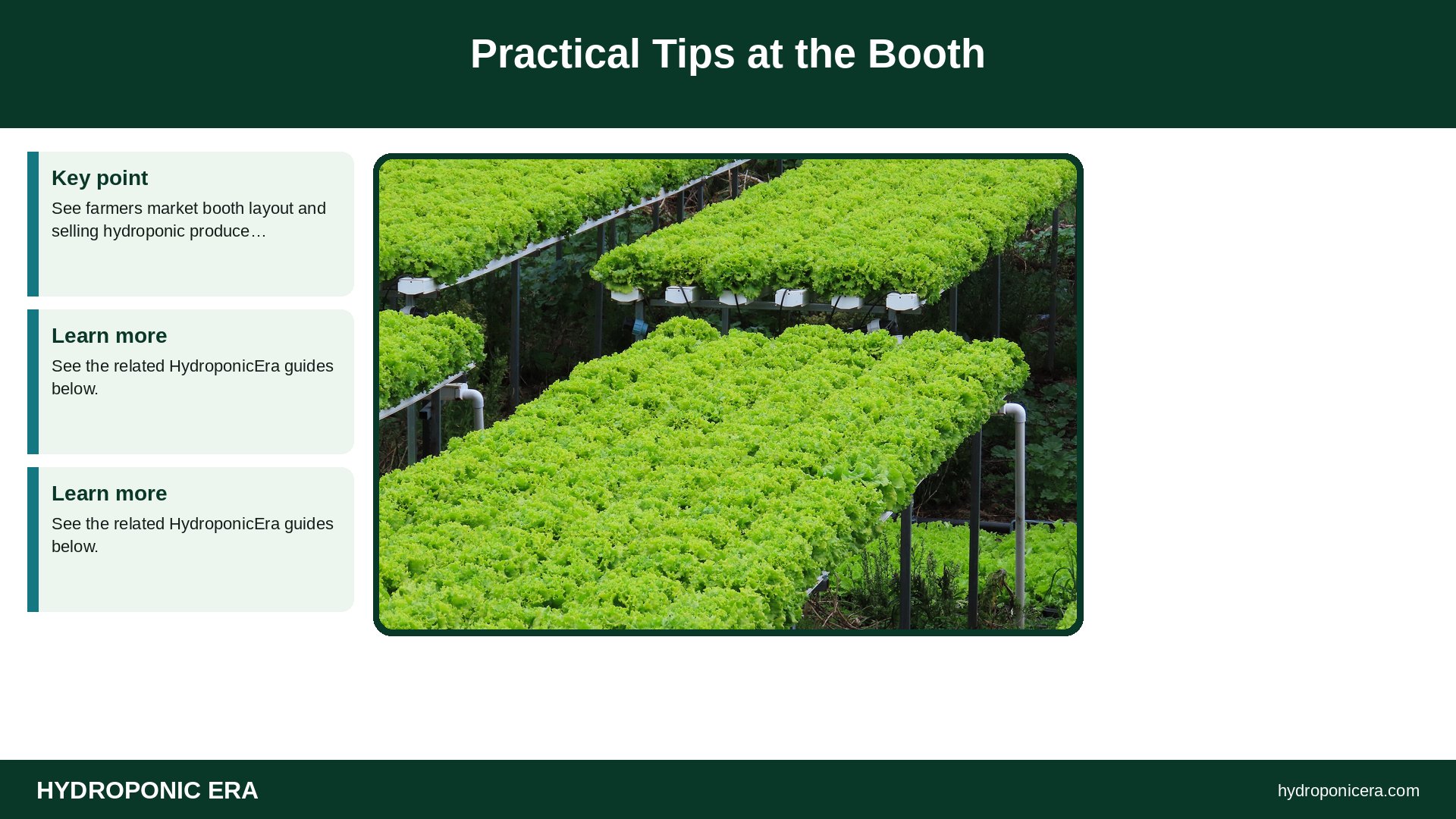
- Display clear “EBT accepted” signs.
- Know which items are eligible.
- Keep records of benefit sales.
- Train helpers on the process.
- Coordinate with the market manager on tokens.
See farmers market booth layout and selling hydroponic produce locally.
Common Mistakes to Avoid
- Selling ineligible items such as hot food or non-food goods to EBT customers.
- Giving cash back or change in cash for benefit purchases, which isn’t allowed.
- Letting your authorization lapse when business details change; update FNS if you move or change ownership.
- Forgetting to keep receipts and records of benefit sales.
- Not telling customers you accept benefits, so they don’t know to ask.
Reporting and Compliance
Authorized retailers agree to follow program rules, which include selling only eligible food items, treating benefit customers the same as other shoppers, and cooperating with any FNS review. Keep your authorization information current. FNS may periodically ask authorized retailers to confirm their information. Read the materials that come with your authorization so you understand what’s expected.
Is It Worth It for a Small Grower?
For many small growers, accepting benefits is worth the setup time, especially at markets in neighborhoods with many participating households or where incentive programs are active. If your market already handles authorization centrally with tokens, joining that system is the simplest choice. If you sell at several places or run a farm stand, an individual authorization gives you more flexibility. Consider how many shoppers at your market use EBT, what equipment you’d need, and whether incentive dollars are available locally.
Marketing Tips
Post clear signs, mention EBT acceptance on social media and your website, and tell your market manager so it’s listed in market materials. Offering smaller bundles at lower price points can make produce easier to fit into tight food budgets. See herb bundle design for ideas.
Working With Your Market Manager
Even with your own authorization, talk with your market manager before your first benefit sale. Some markets prefer all EBT transactions to run through the central booth so incentive tokens can be tracked, while others welcome vendors with their own devices. Agreeing on the process early avoids confusion for shoppers and makes sure you can take part in any matching program the market runs.
FAQs: SNAP at Farmers Markets
Can a small farmer accept SNAP?
Yes. Farmers can apply to FNS as a Direct Marketing Farmer or sell through a SNAP-authorized market.
Does it cost money to become SNAP-authorized?
FNS doesn’t charge an application fee. Equipment or processing may have costs, though some programs provide free equipment.
Can SNAP buy vegetable plants?
Yes, seeds and plants that produce food for the household are eligible.
What’s the difference between SNAP and EBT?
SNAP is the benefit program; EBT is the card system used to deliver benefits.
Do I need a separate authorization for each market?
An individual Direct Marketing Farmer authorization can cover sales at multiple locations. Check FNS guidance for your situation.
Sources
- USDA FNS — SNAP Farmer/Producer
- USDA FNS — How Do I Apply to Accept SNAP Benefits?
- USDA NIFA — Gus Schumacher Nutrition Incentive Program
- Photo credits (Wikimedia Commons, edited with titles): Deputy Secretary Kathleen Merrigan helps launch Wireless EBT at Baltimore Farmers’ Market and Bazaar (20120708-OSEC-LSC-0120) by USDAgov (Public domain); Ennis – Market Place – Farmers’ Market – Vegetable Stand – geograph.org.uk – 3038450 by Joseph Mischyshyn (CC BY-SA 2.0); Ennis – Market Place – Farmers’ Market – Vegetable Stand – geograph.org.uk – 3038450 by Joseph Mischyshyn (CC BY-SA 2.0); USDA Urban Farm Cover Crop (20211215-FPAC-PJK-004) by USDAgov (Public domain); Hydroponic lettuce @ Plaine des Cafres 03 by Rémih (CC BY-SA 4.0)