
The main farm loans for a US hydroponic farm come from USDA’s Farm Service Agency (FSA), which offers microloans up to $50,000, direct operating loans up to $400,000, direct farm ownership loans up to $600,000, and guaranteed loans made through commercial lenders. Hydroponic, greenhouse, and other nontraditional operations can qualify if they meet FSA eligibility rules, including being unable to get credit elsewhere for direct loans. Other options include Farm Credit lenders, SBA-backed loans, local banks and credit unions, and state agricultural programs. Grants are separate and don’t need repayment.
Key takeaway: Start with an FSA microloan if you’re new and small; prepare a business plan and records; compare FSA with Farm Credit and SBA options.
| Loan | Max amount | Typical use |
|---|---|---|
| FSA Microloan | $50,000 | Startup equipment, operating costs, small purchases |
| FSA Direct Operating | $400,000 | Equipment, supplies, operating expenses |
| FSA Direct Farm Ownership | $600,000 | Buying land, building structures |
| FSA Guaranteed | $2,343,000 (FY2026) | Larger loans via commercial lenders |
| SBA loans | Varies | General small-business needs |
| Farm Credit | Varies | Ag-focused lending |
FSA Microloans: The Starter Farm Loans
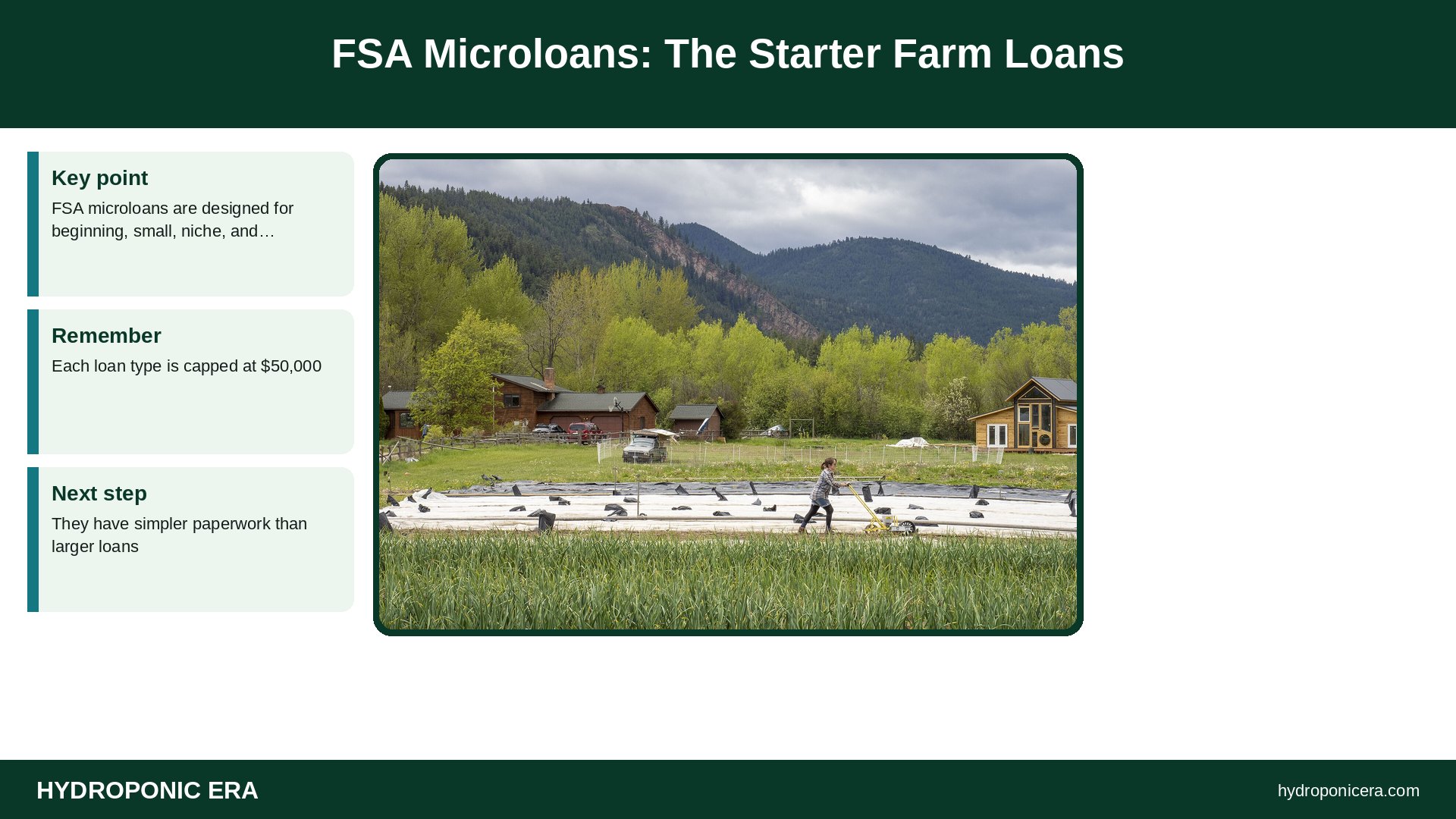
FSA microloans are designed for beginning, small, niche, and nontraditional farms, which includes many hydroponic and urban operations. Each loan type is capped at $50,000. They have simpler paperwork than larger loans. Operating microloans can cover equipment, supplies, and startup costs; ownership microloans can help buy land or build structures. Apply through your local FSA office.
FSA Direct and Guaranteed Loans
Direct loans are made by FSA and are for farmers who can’t obtain commercial credit on reasonable terms. Guaranteed loans are made by banks and other lenders, with FSA guaranteeing a portion. Interest rates for direct loans are set monthly; check FSA’s current rates page before applying.
Eligibility Basics
- US citizen or eligible noncitizen.
- Operate a family-size farm.
- Have acceptable credit history.
- For direct loans, be unable to get sufficient credit elsewhere.
- Have relevant experience or training, depending on loan type.
Microloans can be more flexible about experience. Talk with your local FSA office about your situation.
What Lenders Want to See for Farm Loans
- A business plan with production and sales projections. See hydroponic farm business plan.
- Records of past production and finances, if you have them.
- Equipment quotes and startup budgets. See how to start a small hydroponic farm.
- Evidence of buyers or market demand.
- Personal financial statements.
Beginning Farmer Advantages
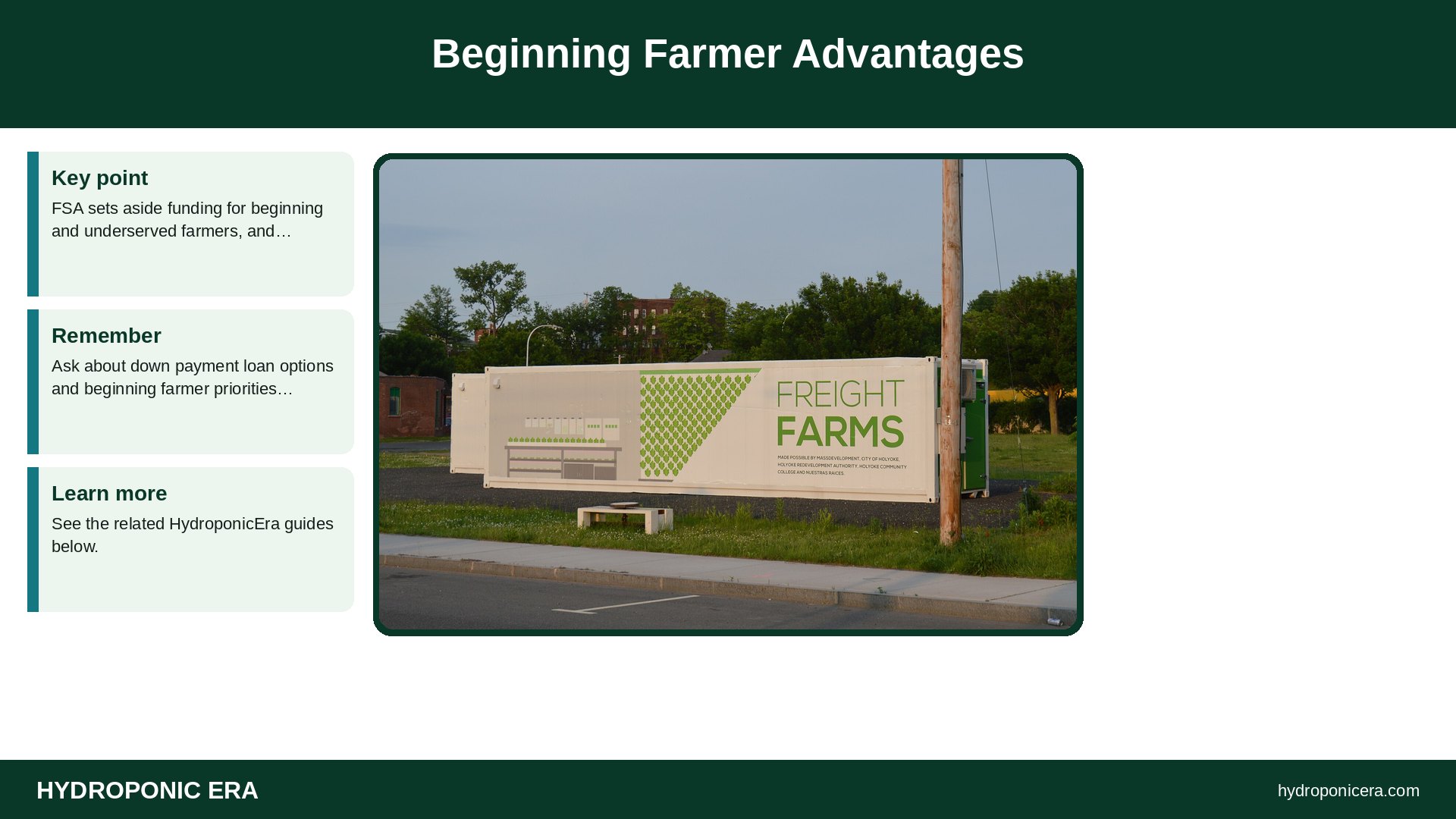
FSA sets aside funding for beginning and underserved farmers, and offers microloans and other programs aimed at newer operators. Ask about down payment loan options and beginning farmer priorities if you plan to buy property.
Other Farm Loans and Financing Options
- Farm Credit System: cooperative lenders focused on agriculture; many have young and beginning farmer programs.
- SBA loans: SBA-backed loans through banks for small businesses; check eligibility for agricultural operations.
- Local banks and credit unions: may finance equipment or real estate.
- State programs: many state agriculture departments offer loans or loan guarantees.
- Grants: don’t require repayment; see grants for hydroponic farming.
Are Farm Loans the Right Move?
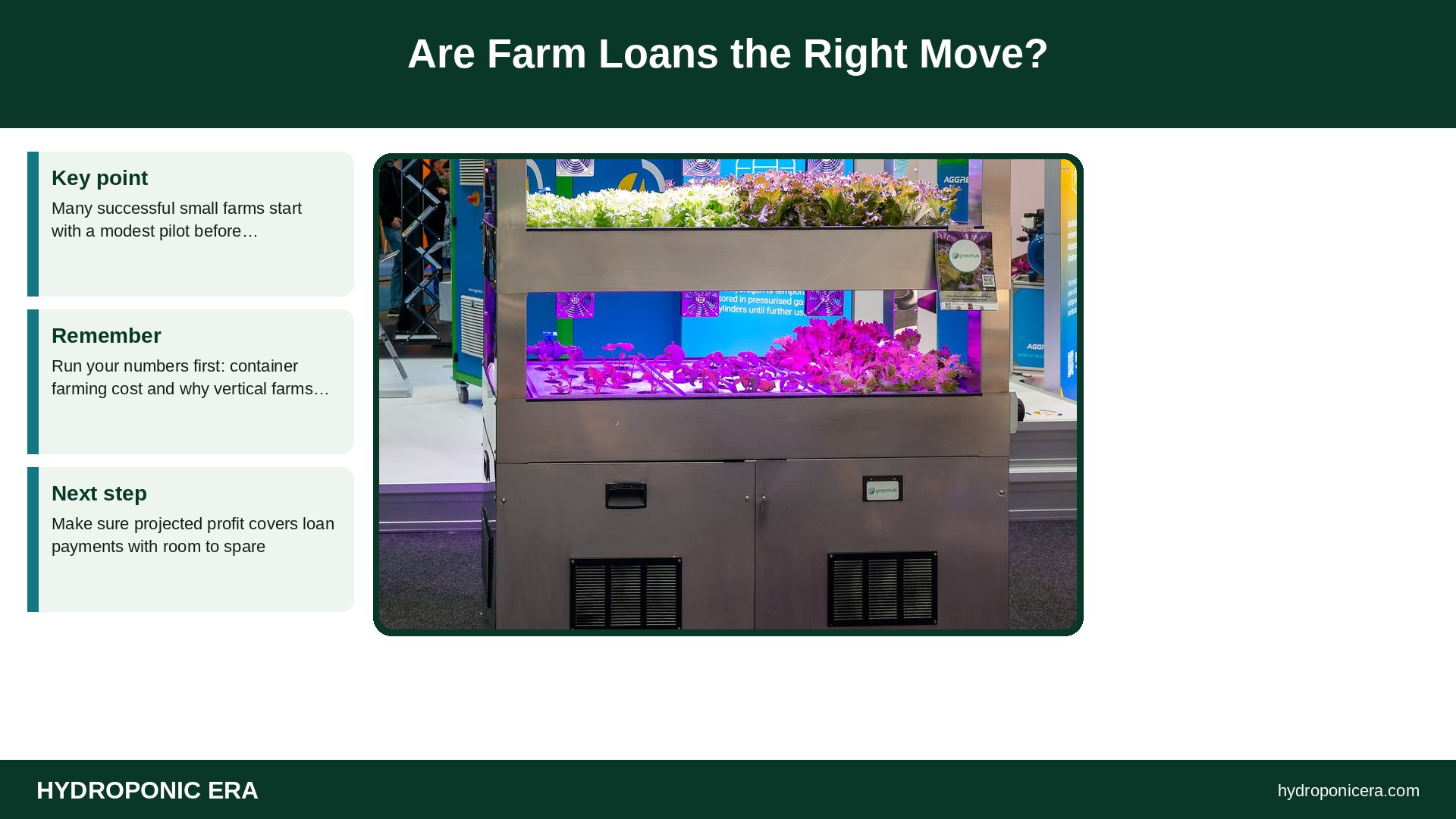
Debt adds risk. Many successful small farms start with a modest pilot before borrowing heavily. Run your numbers first: container farming cost and why vertical farms fail show how capital costs can sink an operation. Make sure projected profit covers loan payments with room to spare.
How to Apply for an FSA Loan
- Find your local USDA Service Center.
- Meet with a farm loan officer to discuss options.
- Complete the application (FSA-2001 for direct loans).
- Submit business plan, financial records, and supporting documents.
- Respond to any requests for more information.
Comparing Farm Loans Side by Side
When comparing farm loans, look past the headline amount. Compare the interest rate, whether it’s fixed or variable, the repayment term, collateral requirements, fees, and how long approval takes. A loan with a slightly higher rate but a longer term may give smaller monthly payments that fit a young farm’s cash flow better. Ask each lender for a written estimate so you can compare like with like.
Preparing Your Records
Farm loans are easier to get with good records. Even before you apply, track every sale, expense, and harvest. A year of records shows lenders that you understand your operation. FSA microloans are designed for newer farms, but having production and financial records still strengthens your application. Keep receipts, invoices, and a simple monthly profit-and-loss sheet. See cost tracking framework.
Farm Loans and Nontraditional Operations
Hydroponic, urban, and indoor farms are considered nontraditional by many lenders. FSA explicitly includes niche and nontraditional farms in its microloan program, and USDA has expanded its outreach to urban agriculture. Explain your system clearly, show photos of a working pilot, and describe your buyers. Some commercial lenders are less familiar with indoor farming and may ask more questions about equipment value and risk.
Using Farm Loans Wisely
- Borrow for assets that produce income, such as growing systems and lights.
- Keep a cash reserve for the first months of operation.
- Avoid borrowing for unproven scale-ups.
- Match loan term to equipment life: don’t finance short-life items over long terms.
Getting Help
Your local USDA Service Center can explain farm loans and connect you with other programs. Many states also have beginning farmer programs, and your county extension office may offer farm business planning help. See how to start a farm.
Questions to Ask a Loan Officer
- Which farm loans fit an indoor or greenhouse operation of my size?
- What records and documents will you need from me?
- How long does approval usually take at this office?
- Can equipment such as lights and growing systems serve as collateral?
- Are there beginning farmer or targeted funds available this year?
FAQs: Hydroponic Farm Loans
Can I get a USDA loan for a hydroponic farm?
Yes, if you meet FSA eligibility. Microloans are often the best starting point for small operations.
How much can I borrow with an FSA microloan?
Up to $50,000 per microloan type.
Do I need farming experience?
Requirements vary by loan; microloans are more flexible. Ask your local FSA office.
Are there grants instead of loans?
Yes, some grants support hydroponic and urban farming, but they’re competitive.
What interest rate do FSA loans charge?
Rates change monthly. Check FSA’s current loan interest rates page.
Sources
- USDA Farm Service Agency — Operating Microloan
- USDA Farm Service Agency — Farm Loan Programs
- USDA Farm Service Agency — Current FSA Loan Interest Rates
- Photo credits (Wikimedia Commons, edited with titles): USDA Moorefield Service Center 2020 by Antony-22 (CC BY-SA 4.0); 20220525-FPAC-PJK-1302 TONED by USDAgov (Public domain); USDA Urban Farm Cover Crop (20211215-FPAC-PJK-004) by USDAgov (Public domain); Freight Farms project, Holyoke, Massachusetts by Simtropolitan (CC BY-SA 4.0); Greenhub, Agritechnica 2023, Hanover (P1140976) by Matti Blume (CC BY-SA 4.0)