
Can you root a rubber plant in water? Yes. A rubber plant in water can root from a 3–6 inch (8–15 cm) stem tip with two or more nodes. Let the sap stop and the cut dry, then set a node underwater in bright, indirect light at 75–80°F (24–27°C). Roots take several weeks; pot the cutting once they reach 1–2 inches (2.5–5 cm).
Key takeaway: A rubber plant in water roots more slowly than pothos. Callus the cut, keep the water fresh and warm, and move the rooted cutting into soil rather than leaving it in a jar for good.
| Step | What to do | Why |
|---|---|---|
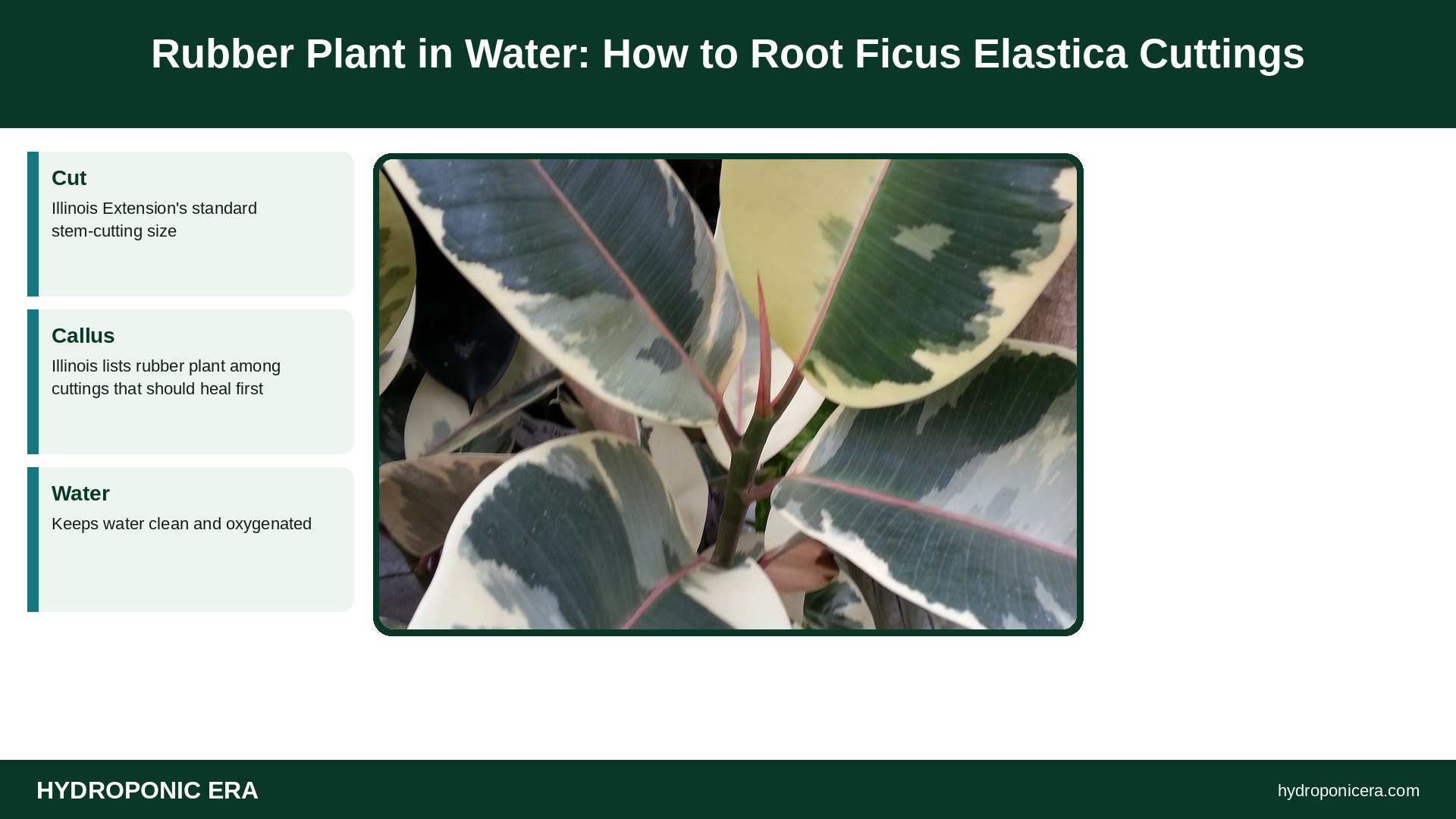
| Cut | 3–6 inch (8–15 cm) tip with 2–6 nodes | Illinois Extension’s standard stem-cutting size |
| Callus | Air-dry the cut end before placing it | Illinois lists rubber plant among cuttings that should heal first |
| Water | Room temperature; change at least twice a week | Keeps water clean and oxygenated |
| Light | Bright, indirect | Direct sun warms the glass and feeds algae |
| Pot up | When roots are 1–2 inches (2.5–5 cm) | Shorter water roots adapt to soil more easily |
Can a Rubber Plant Grow in Water?
A rubber plant cutting can root in water, but water is a starting point, not a forever home. Ficus elastica is a tree in its native Southeast Asia, and indoors it can grow into a tall, heavy plant. That size needs the support and nutrition of a pot. University of Illinois Extension lists stem cuttings and air layering as the main ways to multiply rubber plants, and it generally prefers rooting media over water because roots formed in water tend to be weak.
Still, many home growers like a rubber plant in water for the first stage because they can watch the roots form. That works if you pot the cutting promptly.
How Do You Propagate a Rubber Plant in Water Step by Step?
To start a rubber plant in water, take a healthy tip cutting, let it callus, then stand it in clean water with a node submerged.
- Pick the stem. Choose a healthy, actively growing branch in spring or summer. Illinois Extension notes stem cuttings are usually taken then, though other months can work.
- Cut below a node. Use clean, sharp pruners and cut a 3–6 inch (8–15 cm) tip with two to six nodes.
- Deal with the sap. Rubber plants bleed white latex. North Carolina State Extension notes this sap was once used to produce rubber. Rinse the cut end under cool water and wear gloves; Ficus sap can irritate skin.
- Trim leaves. Keep two or three leaves at the top. Large leaves can be cut in half to reduce water loss.
- Let it callus. Illinois lists rubber plant (Ficus) among cuttings that should air-dry and heal over before sticking, which helps prevent disease. A few hours to overnight is typical.
- Place in water. Use a narrow glass so the cutting stands upright with one or two nodes underwater and no leaves touching it.
- Keep it warm and bright. Penn State Extension puts the best rooting temperature at 75–80°F (24–27°C). A spot near a bright window, out of direct sun, is ideal.

How Long Does a Rubber Plant in Water Take to Root?
A rubber plant in water needs several weeks, often longer than soft-stemmed plants, and longer still in cool rooms. Illinois Extension notes that tougher, woodier stems take longer than soft ones, and rubber plant stems are thick and woody. Vermont Extension’s advice applies: rooting can take weeks or months, so stay patient as long as the stem is firm and green.
A typical sequence: first the cut end seals over, then small white bumps appear at or near the submerged node, and finally those bumps lengthen into roots. Check the base every few days when you change the water. Warmth and light matter more than anything else, so a cutting on a cool windowsill in winter will be slower than one rooted in early summer.
Should You Air Layer a Rubber Plant Instead?
If the plant is tall and leggy, air layering is often more reliable. Illinois Extension lists air layering for rubber plants. You wound a stem while it’s still attached, wrap the wound in moist sphagnum moss and plastic, and wait for roots before cutting it free. Because the parent keeps feeding the stem, a big section can root with less risk. Water propagation suits smaller tips.
Can a Rubber Plant in Water Live There Permanently?
It can survive for a while, but it won’t thrive long term. In plain water there are almost no nutrients. If you want to try, feed at about one-quarter strength with a complete fertilizer and change the water regularly; see our guide to using hydroponic nutrients. Expect slower growth than in soil. For a sturdy plant, pot it into a well-draining mix once roots form.
How Do You Move a Rubber Plant in Water to Soil?
Plant your rubber plant in water into soil once roots are about 1–2 inches (2.5–5 cm) long. Illinois Extension uses 1 inch (2.5 cm) as the signal to pot cuttings; Vermont Extension waits for 2–3 inches (5–8 cm). Use a small pot with drainage holes and a light potting mix. Water thoroughly, then keep the mix lightly moist for the first couple of weeks while the roots adjust. After that, NC State’s care advice applies: water regularly but avoid overwatering, and cut back in fall and winter.
Why Is My Rubber Plant in Water Not Rooting?

- Too cold: Below about 65°F (18°C), rooting slows sharply. NC State notes rubber plants want temperatures above 55°F (13°C) at a minimum.
- No node underwater: Roots form from nodes. Recut if needed.
- Rotting base: Cut above the soft section, let it callus again and use fresh water.
- Leaf drop: NC State notes that overwatering, temperature drops and cold drafts can cause rubber plants to lose leaves. Keep cuttings away from doors and vents.
- Too little light: A dim corner stalls rooting. A bright window works best.
White fuzz on new roots is usually root hairs, not mold. Compare with our guide to white fuzz on roots in water. For other easy candidates, see plants that grow in water.
Can You Root a Single Rubber Plant Leaf in Water?
A single leaf may grow roots but usually won’t produce a new stem. New shoots come from buds at the node. Always include a piece of stem with at least one node.
FAQs
Do I need rooting hormone for a rubber plant cutting?
It’s optional. Penn State notes hormone can speed rooting, but use only a light dusting.
Why is my rubber plant cutting leaking white liquid?
That’s latex sap. Rinse it off and let the cut dry.
Can I propagate variegated rubber plants in water?
Yes, the method is the same; variegated cuttings may root a little slower.
How often should I change the water for a rubber plant in water?
At least twice a week, or whenever it turns cloudy.
Will a rubber plant cutting branch?
Once potted and growing, pinching the tip encourages side shoots.
Sources
- University of Illinois Extension — Houseplant Propagation
- University of Illinois Extension — Cuttings
- North Carolina State Extension — Ficus elastica (Rubber Plant)
- University of Vermont Extension — More, Please: Propagating Houseplants
- Penn State Extension — Propagating Houseplants
- Photo credits (Wikimedia Commons, edited with titles): Ficus elastica Doescheri03ra by Satin66Flower (CC BY-SA 4.0); Ficus cuttings with roots in a bottle, White background by Biusch (CC BY-SA 3.0); Basilikum (Ocimum basilicum) Stecklinge — Josef Schlaghecken by Schlaghecken Josef (CC BY-SA 4.0); 2008-09-20 Thermometer reading by Ildar Sagdejev (Specious) (CC BY-SA 4.0); Spathiphyllum wallisii hydroponically grown by Kephalian (CC BY-SA 4.0)