
White fuzz on roots in water is usually healthy root hairs, tiny outgrowths that absorb water. Healthy fuzz is bright white, dry-looking and firmly attached, and the root under it is firm. Brown, slimy or smelly roots whose outer layer slips off point to Pythium root rot. Fuzzy mold on a sponge surface is usually harmless.
| What you see | Likely meaning | Action |
|---|---|---|
| Fine, bright white fuzz along new roots | Root hairs (normal) | Nothing; keep oxygen up |
| Milky white, firm roots | Healthy (AeroGarden FAQ) | Nothing |
| White fuzz on the top of a sponge or plug | Usually harmless surface fungus (AeroGarden FAQ) | Watch; improve airflow |
| Brown, soft, stubby roots | Pythium root rot (BC Ministry of Agriculture) | Treat as root rot |
| Outer root layer slides off, leaving a white string | Pythium “sloughing” (e-GRO) | Treat as root rot |
| Slimy coating, sour smell | Bacterial slime or rot; low oxygen | Clean system, aerate |

Is White Fuzz on Roots in Water Normal?

Yes, most of the time. Root hairs are extensions of epidermal cells near the root tip, and they massively increase the surface area roots use to absorb water and minerals. A University of California, Davis botany course on LibreTexts shows radish seedlings “covered with fuzzy, white root hairs, which aid with water absorption.” In a jar or a clear reservoir, those hairs look like a soft white halo, which is why white fuzz on roots in water alarms so many growers.
AeroGarden’s FAQ says healthy hydroponic roots are milky white and grow and expand in the water as plants mature. It also says white fuzz on the top of grow sponges is likely a beneficial fungus that plants out-compete. Neither is a reason to panic.
How Do You Tell Root Hairs From Mold or Rot? 6 Checks

- Color. Root hairs are bright white. Tan, brown or gray roots are a warning sign.
- Location. Root hairs sit just behind growing root tips, on new roots. Fuzz only on old, darkening roots is suspicious.
- Touch. Healthy roots are firm. Pythium roots feel soft and mushy.
- The sloughing test. Gently pull a root between your fingers. e-GRO says that in Pythium-infected roots, the outer cortex easily pulls off, leaving the inner white vascular strand.
- Smell. Healthy roots smell earthy or of nothing. A sour or rotten smell means decay.
- The plant. Root hairs come with healthy growth. Wilting in warm weather, even with plenty of water, suggests root rot.
Run these six checks before treating any white fuzz on roots in water.
When Is White Fuzz on Roots in Water a Problem?
When it comes with rot. The British Columbia Ministry of Agriculture’s 2024 Pythium fact sheet describes lesions on root tips and feeder roots progressing to soft, brown, stubby roots that lack feeder roots, with the outer root tissue peeling away from the string-like vascular bundles. In young plants, it says Pythium causes sudden wilting when weather turns warm and sunny.
Pythium is a “water mold” (an oomycete) that spreads by swimming zoospores, so e-GRO warns that symptoms can “explode” in recirculating hydroponic systems. Its own threads aren’t the fluffy white halo you see on healthy roots; by the time you notice Pythium, roots are usually discolored. If your white fuzz on roots in water sits on brown, collapsing roots, see Pythium root rot in hydroponics and why hydroponic roots turn brown.
What Causes Fuzzy Mold on Sponges and Plugs?

The surface of a constantly damp sponge, rockwool cube or plug is a perfect home for harmless saprophytic fungi. AeroGarden calls it likely beneficial and says plants out-compete it for light, nutrients and water. It can also look like the white fuzz on roots in water, but it stays on the medium’s surface. If it bothers you, improve airflow, avoid wetting the top of the plug and keep light off the medium with labels or covers. Green or slimy growth is algae; see algae in hydroponic reservoirs.
How Do You Keep Roots Healthy and White?
- Oxygen. e-GRO notes overwatering can lower root-zone oxygen and promote infection. Use air stones or an air gap; see dissolved oxygen and root health.
- Temperature. The BC fact sheet says root-zone media that’s too cold or too warm favors Pythium buildup. Keep solution in a moderate range; see reservoir temperature.
- Sanitation. Clean tools, tanks and lines between crops, and start with clean transplants.
- Pest control. BC and e-GRO both say fungus gnats and shore flies can spread Pythium.
- Light-tight reservoirs. Dark tanks limit algae, which competes for oxygen.
Healthy white fuzz on roots in water is a sign you’re getting these basics right.
How Often Should You Check Roots?
Once a week is a good rhythm for home systems, plus any time a plant wilts or growth stalls. AeroGarden suggests gently lifting the seed pod or grow deck to look inside. In a bucket or tote, lift one net pot at a time and hold it over the reservoir so drips fall back in. Take a quick phone photo in the same light each week; comparing photos makes slow color changes obvious long before they’re dramatic. If several plants share one reservoir, check the weakest plant first, because root rot often shows there before it spreads. Healthy white fuzz on roots in water should look the same or better each week.
What Should You Do if It’s Root Rot?
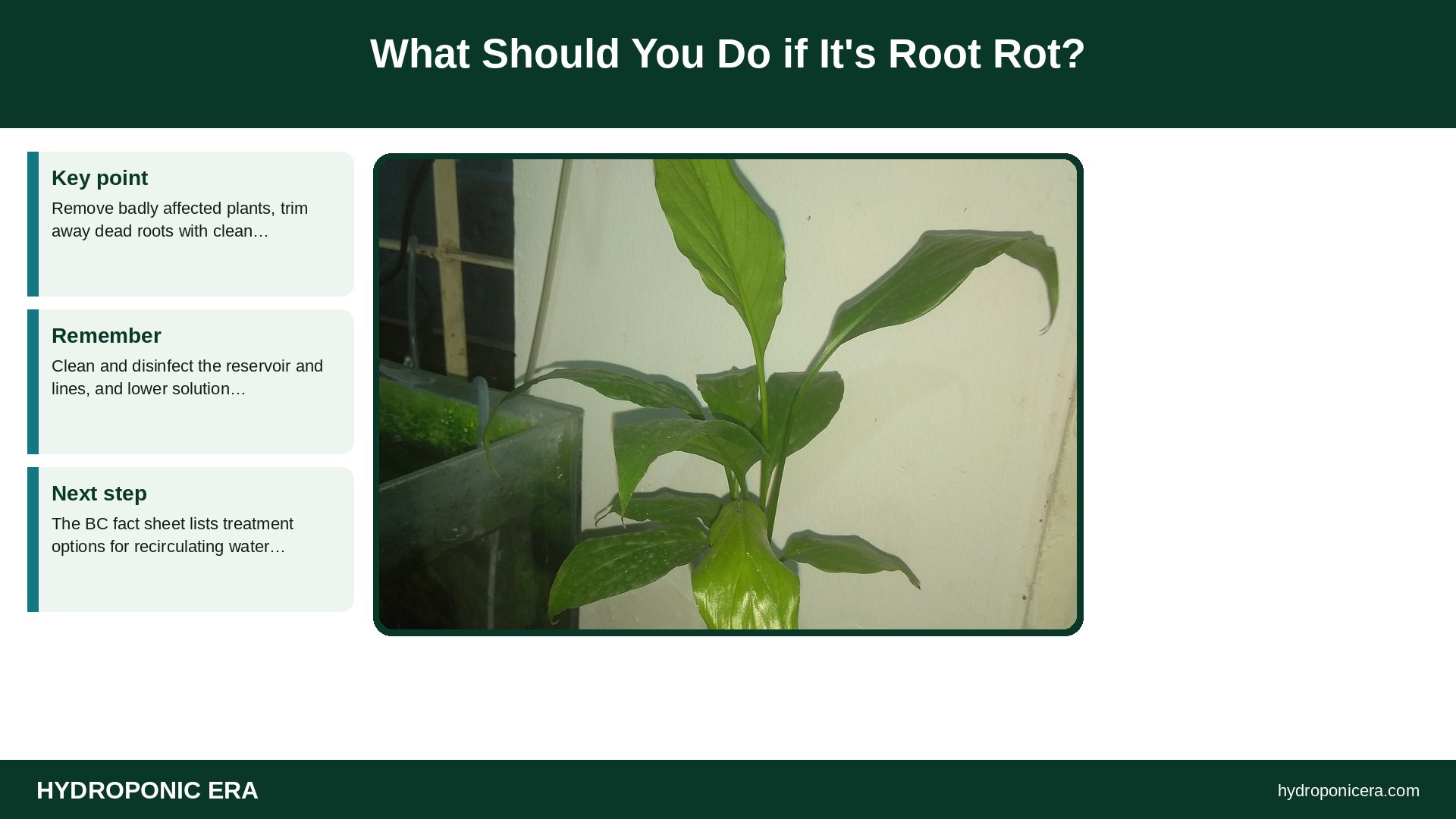
Act quickly. Remove badly affected plants, trim away dead roots with clean scissors, and replace the nutrient solution. Clean and disinfect the reservoir and lines, and lower solution temperature if it’s warm. The BC fact sheet lists treatment options for recirculating water, including filtration, heat, UV and chemical methods such as hydrogen peroxide; follow the product label for any treatment. Our guides on UV sterilizers and cleaning a hydroponic system go deeper.
Common Mistakes With White Fuzz on Roots
| Mistake | Why it hurts | Better approach |
|---|---|---|
| Dosing peroxide at the first sign of fuzz | Root hairs are healthy; harsh oxidizers can damage them | Run the 6 checks first |
| Ignoring brown roots because fuzz is white | Rot spreads fast in shared water | Do the sloughing test |
| Warm, still water | Low oxygen favors rot | Aerate and cool |
| Wiping off sponge fungus daily | Disturbs seedlings for no benefit | Improve airflow instead |
FAQs: White Fuzz on Roots in Water
Is white fuzz on roots in water mold?
Usually not. It’s most often root hairs. Mold on roots would come with decay, discoloration or slime.
Why does white fuzz on roots in water appear on cuttings?
New roots on cuttings in water often grow dense root hairs. It’s a good sign the cutting is rooting.
Should I remove white fuzz on roots in water?
No, not if roots are firm and white. Removing root hairs reduces water uptake.
Can root hairs turn brown?
Older root sections and hairs can darken slightly with age or stained water. Soft, brown, mushy roots are a different story.
Does white fuzz on roots in water mean too much oxygen?
No. Good oxygen supports healthy roots and root hairs.
Related HydroponicEra Guides
- Pythium root rot
- When to prune roots in DWC
- Damping off seedlings
- AeroGarden troubleshooting
Sources
- e-GRO Edible Alert (2018) — What is swimming around your roots?
- British Columbia Ministry of Agriculture and Food — Pythium Diseases of Greenhouse Vegetables (June 2024)
- UC Davis PLS 002 via LibreTexts — 11.4: Water Absorption
- ScottsMiracle-Gro (AeroGarden) — AeroGarden FAQs
- Photo credits (Wikimedia Commons, edited with titles): Hanfsämling mit Wurzelhaaren am Stamm – Hemp seedling with root hairs on the stem by Vschlothauer (CC0); Spathiphyllum wallisii hydroponically grown by Kephalian (CC BY-SA 4.0); 2009-03-30 Lettuce roots by Ildar Sagdejev (Specious) (CC BY-SA 4.0)