
Can you propagate string of hearts in water? Yes. Cut a 4–6 inch (10–15 cm) piece of vine with at least two nodes, remove the leaves from the bottom node and let only that bare node sit in water. Keep the jar in bright, indirect light at 70–80°F (21–27°C) and change the water weekly. Pot once roots reach about 1 inch (2.5 cm).
Key takeaway: String of hearts in water roots well from short vine pieces, but it’s a succulent. Keep leaves dry, pot promptly into sandy, fast-draining mix and let it dry out between waterings afterward.
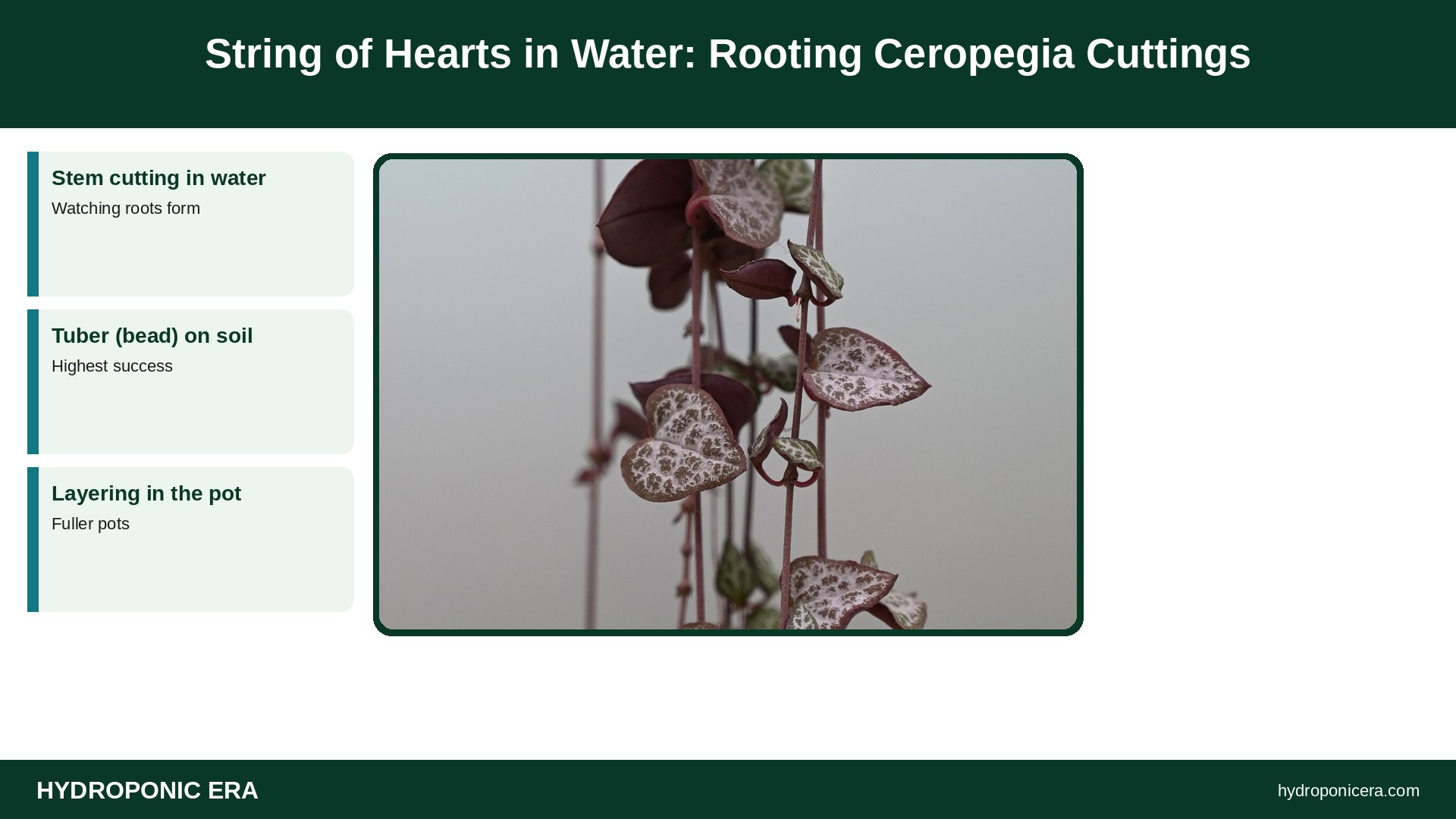
| Method | How it works | Best for |
|---|---|---|
| Stem cutting in water | Bare node submerged; roots form there | Watching roots form |
| Tuber (bead) on soil | NC State: beads root when the stem touches soil | Highest success |
| Layering in the pot | Pin vines to soil beside the parent | Fuller pots |
| Seed | Horn-shaped pods, wind-dispersed seed | Rare indoors |
Does String of Hearts in Water Root Easily?
Yes, in most homes. NC State Extension lists layering, seed and stem cuttings as propagation methods for string of hearts (Ceropegia woodii), also called rosary vine. The plant makes bead-like aerial tubers along its stems, and NC State notes these tubercles root and produce new plants when they touch soil. Water rooting uses the nodes instead and lets you watch progress through the glass.
How Do You Propagate String of Hearts in Water Step by Step?
- Choose a healthy vine with plump leaves and close spacing.
- Cut a 4–6 inch (10–15 cm) piece with clean scissors. NC State says leaves occur about every 3 inches (8 cm), so this gives you two nodes.
- Remove the leaves at the bottom node.
- Place the bare node in water, using a narrow jar or a small bottle so leaves stay above the rim.
- Set the jar in bright, indirect light; NC State says too much sun scorches leaves.
- Keep it warm, ideally 75–80°F (24–27°C), the rooting temperature Illinois and Penn State recommend.
- Change the water weekly. Vermont Extension advises replacing cloudy water.
- Pot it when roots are about 1 inch (2.5 cm) long.

How Long Does String of Hearts in Water Take to Root?
Expect a few weeks in warm months. Vermont Extension says houseplant cuttings can root in days or weeks, sometimes months, and NC State notes string of hearts is dormant in winter, so winter cuttings are slower. Fine stems tend to root faster than woody ones, according to Maryland Grows, which works in this vine’s favor.
Can You Root the Beads of String of Hearts in Water?
You can, but beads rot more easily when fully submerged. NC State’s description points to soil contact as the natural trigger. A safer approach is to lay a vine with beads on top of moist, sandy mix, press each bead lightly into the surface and keep it barely damp. Roots and new shoots form from the beads while the vine is still attached or after you cut it free. Our guide to perlite and vermiculite explains gritty mixes.
Why Is My String of Hearts in Water Rotting?
- Leaves underwater: Succulent leaves rot fast; keep them above the waterline.
- Too many nodes submerged: One is enough.
- Stale water: Refresh weekly.
- Cold: Keep jars off winter windowsills.
Cut above any soft, brown tissue and restart in clean water. Our guide to pythium root rot shows what unhealthy roots look like.
When Should You Move String of Hearts in Water to Soil?
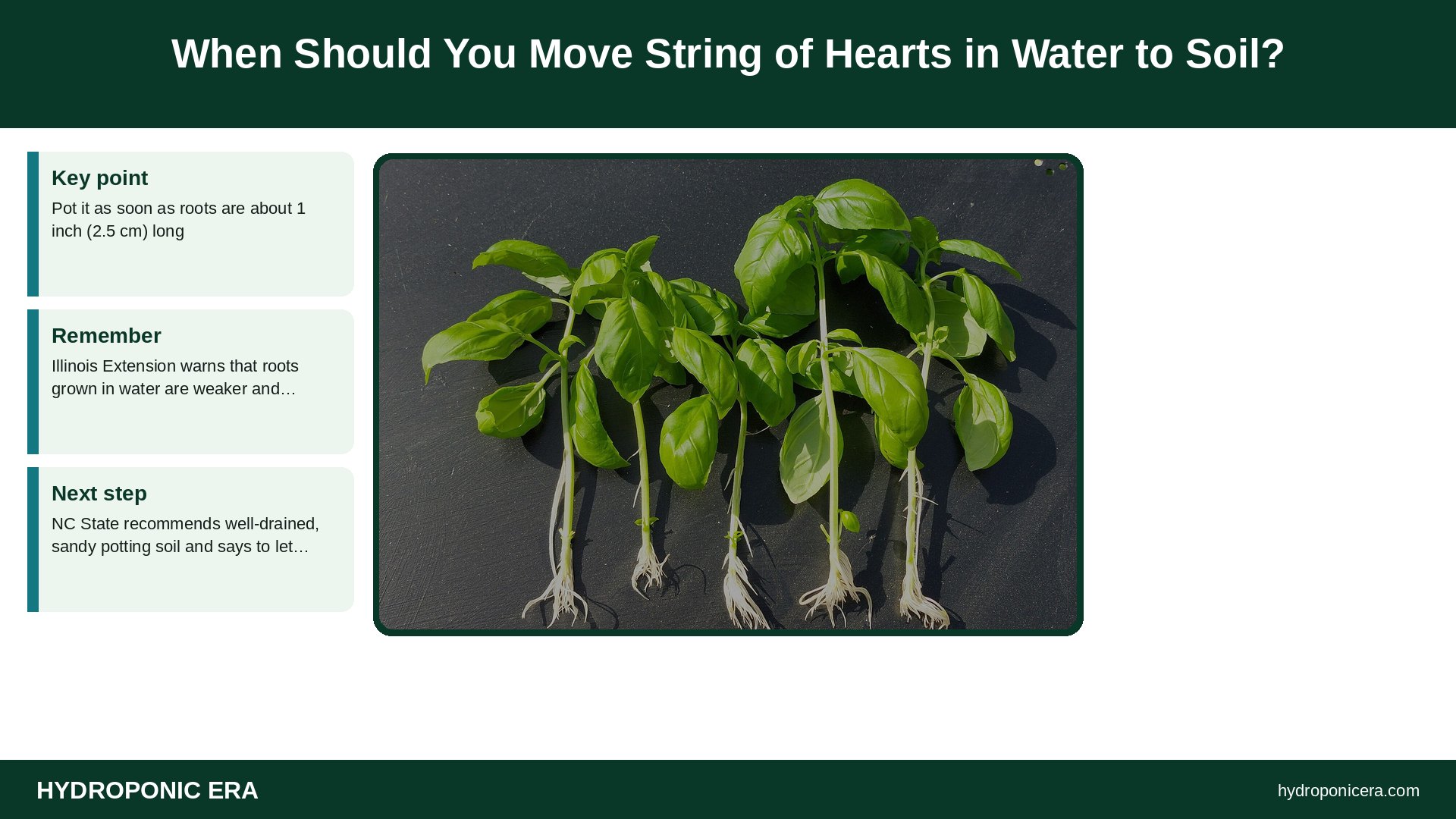
Pot it as soon as roots are about 1 inch (2.5 cm) long. Illinois Extension warns that roots grown in water are weaker and advises not to wait too long to transplant. NC State recommends well-drained, sandy potting soil and says to let the plant dry out completely between waterings. For the first week after potting, keep the mix just slightly moist so water-grown roots can adjust, then switch to the dry-out routine.
- Use a small pot with drainage holes.
- Plant several rooted cuttings together for a fuller look.
- NC State says the plant likes to be crowded, so don’t oversize the pot.
What Is the Best Jar Setup for String of Hearts in Water?
Thin vines need support, so use a narrow-necked bottle, a test-tube propagation stand or a small jar with plastic wrap stretched over the top and a hole poked for each vine. The goal is to hold one node underwater while every leaf stays dry. Fill the container just high enough to cover that node, and top it up as water evaporates. Tinted glass slows algae, while clear glass lets you see roots. If your tap water is heavily treated, our guide to chlorine and chloramine explains simple fixes. Group several jars on a tray in bright, indirect light so they’re easy to check daily.
Can String of Hearts Live in Water Permanently?
It’s not a good long-term water plant. As a succulent adapted to dry, sandy soil, it’s prone to rot in constant moisture. Root it in water, then pot it. If you want water-grown trailing plants, our pothos in water guide covers a better candidate.
What Light Does String of Hearts in Water Need?
NC State says string of hearts prefers bright, indirect sunlight. Too much sun scorches leaves, and large gaps between leaves signal too little light. The same applies to cuttings in a jar. An east window or a spot a few feet from a south window works well, or use a small LED for 12–14 hours.
Which Varieties of String of Hearts in Water Root Best?
| Variety (NC State) | Leaves |
|---|---|
| f. variegata | Cream and pink variegation |
| ‘Silver Glory’ | Silver, apple-shaped |
| ‘Heartless’ | Bright green, pink underside |
| ‘Orange River’ | Green with an orange tint |
| ‘String of Arrows’ | Lime green and silver, pointed |
Variegated types have less green tissue and may root a bit more slowly, so give them bright light.
What Pests Affect String of Hearts in Water?
NC State lists aphids, mealybugs and scale. Check vines closely before cutting, and isolate new plants using our guide to quarantining new plants and clones.
FAQs
Can I root string of hearts in moss instead?
Yes; damp sphagnum or a gritty mix also works well.
How many vines of string of hearts in water per jar?
Several; short vines fit easily in one narrow jar.
Does string of hearts in water need rooting hormone?
No. Illinois says easy-rooting plants don’t need it.
Why are the leaves yellow after potting?
NC State links yellow leaves to overwatering.
Can I grow it outdoors?
Only in USDA Zones 10–12, per NC State.
Should I water less in winter?
Yes. NC State says the plant is dormant in winter and needs even less water.
How long do vines get?
NC State says about 3 feet (0.9 m) indoors.
Sources
- North Carolina State Extension — Ceropegia woodii (String of Hearts)
- University of Illinois Extension — Houseplant Propagation
- Penn State Extension — Propagating Houseplants
- University of Vermont Extension — More, Please: Propagating Houseplants
- University of Maryland Extension (Maryland Grows) — Make More Plants From Cuttings: 5 Plants That Root Easily in Water
- Photo credits (Wikimedia Commons, edited with titles): Ceropegia woodii Ceropegia Wooda 2024-04-26 02 by Agnieszka Kwiecień, Nova (CC BY-SA 4.0); Ficus cuttings with roots in a bottle, White background by Biusch (CC BY-SA 3.0); Basilikum (Ocimum basilicum) Stecklinge — Josef Schlaghecken by Schlaghecken Josef (CC BY-SA 4.0); Perlite1 by KENPEI (CC BY-SA 3.0); Ficus cuttings with roots in a bottle, White background by Biusch (CC BY-SA 3.0)