
How do you grow clover sprouts? Soak about 2 heaping tablespoons of red clover seed in cool water for 4–12 hours, drain, then rinse and drain every 8–12 hours. Move the jar to indirect light on day 3 or 4 so leaves green. Clover sprouts are ready in about 5–6 days. Remove hulls, dry and refrigerate.
Key takeaway: Clover sprouts are mild, crunchy and nearly identical to alfalfa, but they shed hulls more easily. They are easy to grow, yet clover sprouts have been linked to real outbreaks, so start with seed sold for sprouting, sanitize, and skip raw sprouts if you are in a higher-risk group.
| Clover sprouts step | Guideline | Source |
|---|---|---|
| Seed | Up to 2 heaping Tbsp per quart (1 L) sprouter | Sprout People |
| Soak | 4–12 hours in 2–3× cool water, once only | Sprout People |
| Rinse/drain | Every 8–12 hours | Sprout People, USask |
| Greening | Indirect light from day 3–4 | Sprout People |
| Harvest | Day 5–6; leaves open and green | Sprout People |
| Yield | About 7:1 by weight (about 4 cups) | Sprout People |
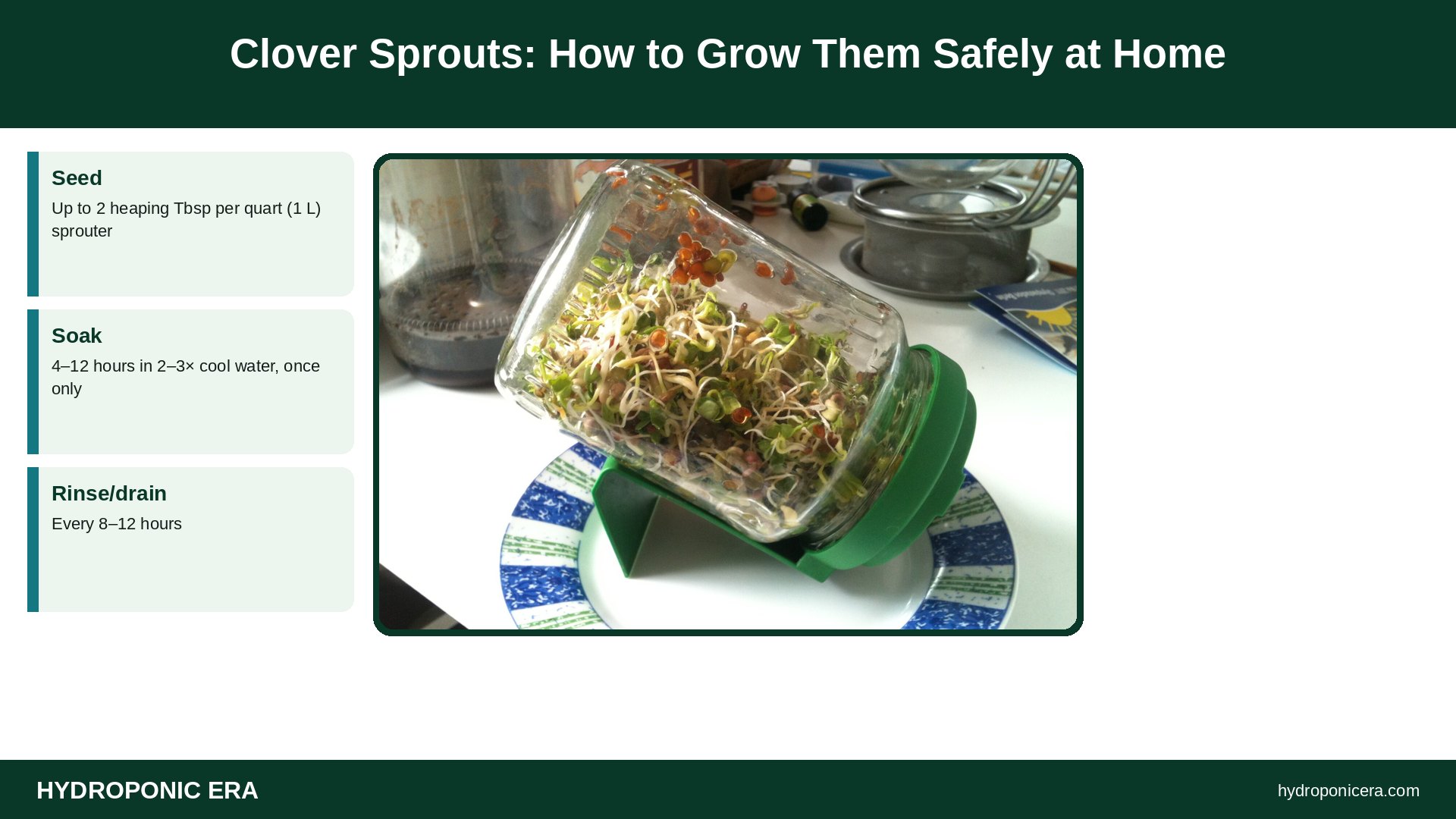
What Are Clover Sprouts?
Clover sprouts are red clover seeds sprouted for about 6 days until they form tiny green leaves. Sprout People describes them as crunchy, mild, cool and refreshing, and says clover is so much like alfalfa that most people would not know the difference; the leaves are a lighter green, and clover sheds its hulls much more easily. The University of Saskatchewan includes red clover among recommended sprouting seeds.
Are Clover Sprouts Safe to Eat?
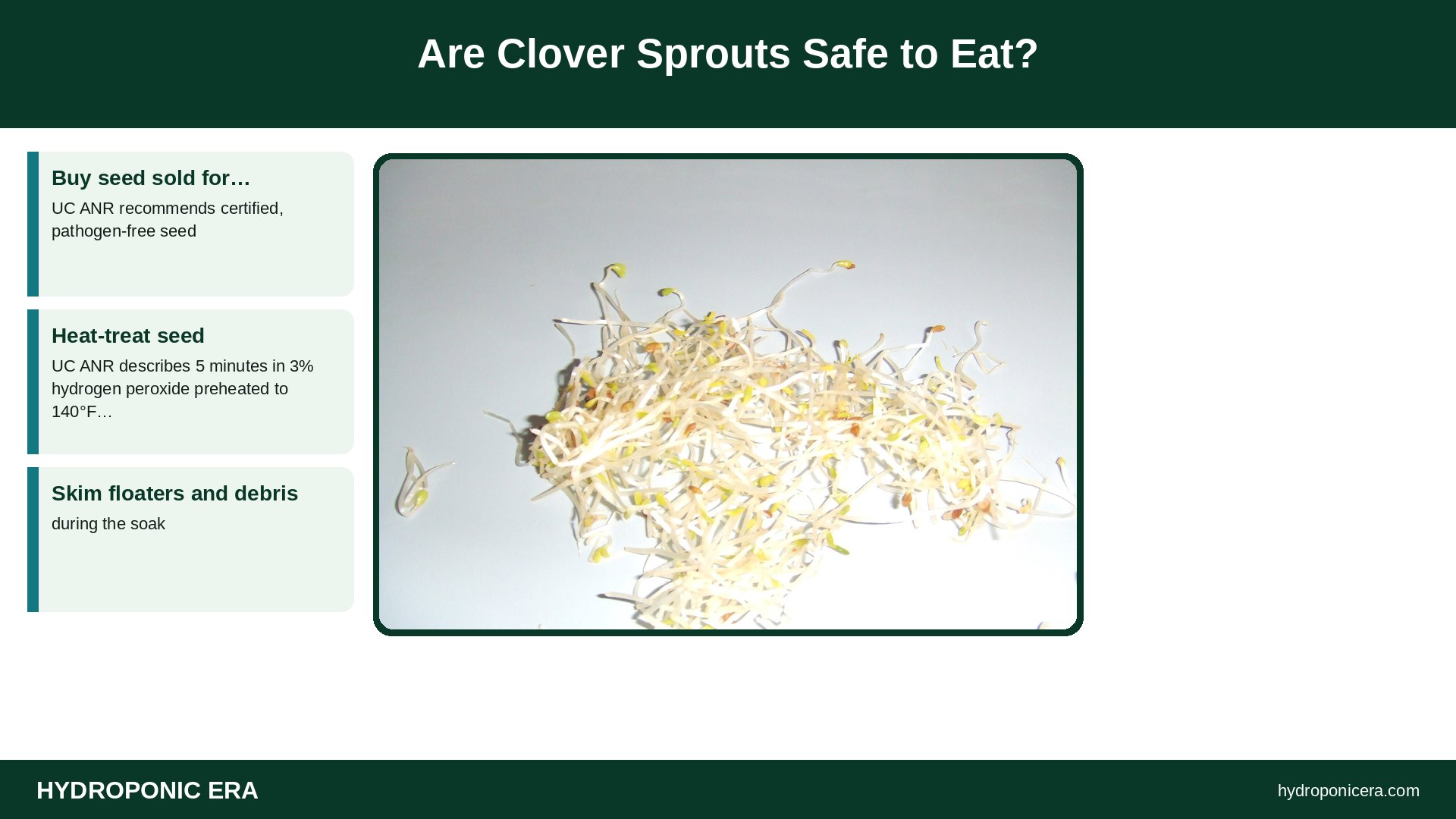
They carry real risk when eaten raw. In 2020, the CDC reported 51 people in 10 states sickened by E. coli O103 in an outbreak linked to clover sprouts, with 3 hospitalized. The FDA explains that bacteria on seed can multiply in the warm, humid conditions used for sprouting, and advises children, older adults, pregnant people and people with weakened immune systems not to eat raw or lightly cooked sprouts of any kind.
- Buy seed sold for sprouting: UC ANR recommends certified, pathogen-free seed.
- Heat-treat seed: UC ANR describes 5 minutes in 3% hydrogen peroxide preheated to 140°F (60°C), then a 1-minute rinse.
- Skim floaters and debris during the soak.
- Sanitize the sprouter with ¾ cup bleach per gallon (about 180 mL per 3.8 L) of water for at least 5 minutes, then rinse.
- Cook sprouts to 165°F (74°C) for higher-risk eaters.
How Do You Grow Clover Sprouts Step by Step?
- Measure 2 heaping tablespoons of seed per quart (1 L) of sprouter. Sprout People warns not to use more, since volume expands a lot.
- Rinse to remove dust and debris.
- Soak 4–12 hours in 2–3 times as much cool water.
- Drain off the soak water; never soak again.
- Rinse and drain thoroughly every 8–12 hours for 3 days.
- Keep out of direct sun at about 70°F (21°C).
- Green on day 4 in indirect light or under a grow light.
- De-hull on day 5–6 by floating hulls off in a bowl of water.
- Dry 8–12 hours after the last rinse, then refrigerate.
For jar setup tips, see how to grow sprouts in a jar.
How Long Do Clover Sprouts Take?
About 6 days from the end of the soak. Sprout People says a crop of leafy sprouts usually takes 6 days after soaking, with harvest when most leaves are open and green. Cooler rooms take longer; warmer rooms grow faster but raise spoilage risk, so drain extra well in summer.
| Day (after soak) | What you see | Task |
|---|---|---|
| 1 | Seeds crack, tiny tails | Rinse and drain |
| 2–3 | White roots lengthen | Rinse and drain thoroughly |
| 4 | Yellow leaves appear | Move to indirect light |
| 5–6 | Green leaves, loose hulls | De-hull, dry, refrigerate |
How Much Light Do Clover Sprouts Need?
Very little. Sprout People says light does not matter much until leaves appear, and that you will be amazed at how little light sprouts need to green up. Use indirect sunlight or a grow light for jars; direct sun can cook sprouts in a jar, though it is fine for open tray sprouters. The University of Saskatchewan also advises bright indirect light, never direct sun.
Should You Use a Jar or a Tray Sprouter?
Either works for clover. A wide-mouth quart (1 L) jar with a fine mesh lid is cheap and simple, but small seeds can pack at the bottom and hold water, so tilt it mouth-down at an angle after every rinse. A tray sprouter spreads seed in a thin layer, drains better, and lets leaves stand upright toward the light; Sprout People notes direct sun is acceptable only in tray sprouters, not jars. If you grow clover often, a stacking tray system also lets you start a new batch every couple of days for a steady supply.
How Do You De-Hull and Store Clover Sprouts?
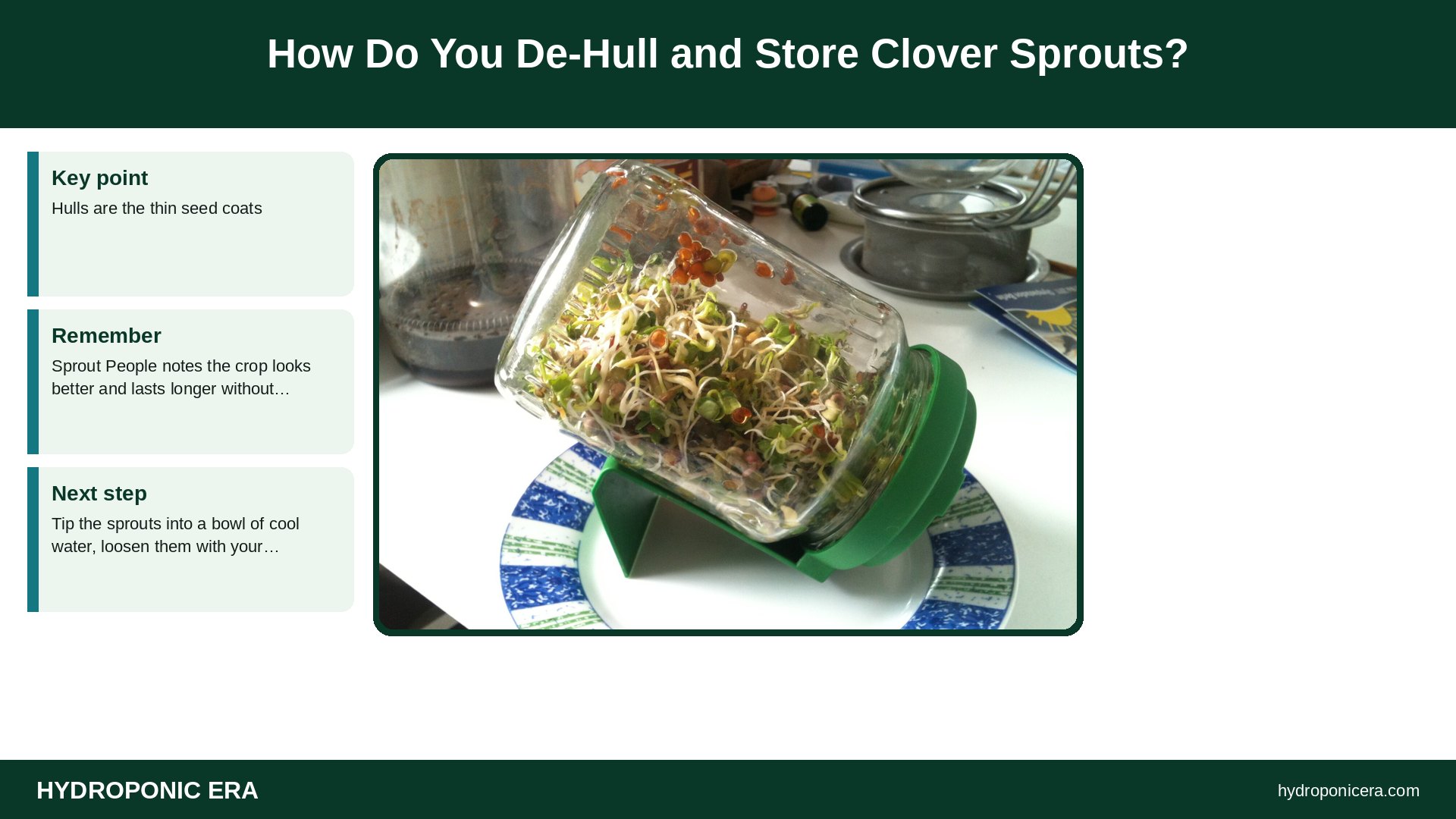
Hulls are the thin seed coats. Sprout People notes the crop looks better and lasts longer without them. Tip the sprouts into a bowl of cool water, loosen them with your fingers or a fork, and skim off the hulls that float. Clover sheds hulls more easily than alfalfa, so this goes quickly. Drain well, let them dry 8–12 hours, then refrigerate in a sealed container. Sprout People says leafy sprouts are best within a week. NC State suggests 38–50°F (3–10°C).
Clover Sprouts vs Alfalfa Sprouts: What Is the Difference?
| Trait | Clover | Alfalfa |
|---|---|---|
| Flavor | Mild, fresh | Mild, nearly the same |
| Leaf color | Lighter green | Darker green |
| Hulls | Shed easily | Harder to remove |
| Grow time | About 5–6 days | About 5–6 days |
Clover is also the base of many leafy sprout mixes, combined with radish, broccoli or fenugreek.
Why Did My Sprouts Spoil?
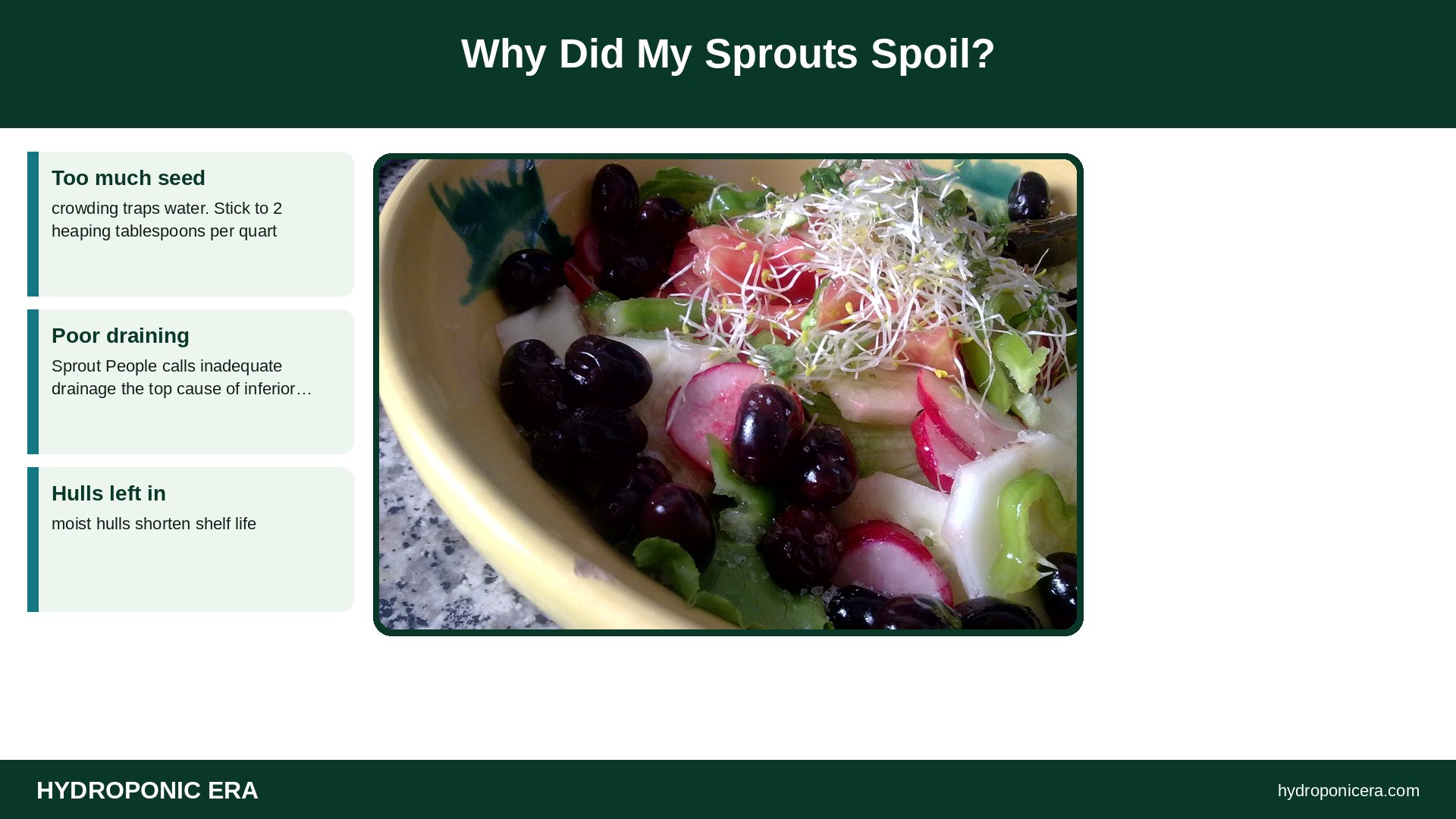
- Too much seed: crowding traps water. Stick to 2 heaping tablespoons per quart.
- Poor draining: Sprout People calls inadequate drainage the top cause of inferior sprouts.
- Hulls left in: moist hulls shorten shelf life.
- Stored wet: dry the surface before refrigerating.
- Warm room: rinse more often in hot weather.
How Do You Use Clover Sprouts?
Use them like alfalfa: in sandwiches, wraps, salads, grain bowls and on avocado toast. Sprout People also suggests eating them as a salad by themselves. For higher-risk eaters, add them to soups or a quick stir-fry instead of serving them raw. Want more greens from seed? Try hydroponic microgreens.
FAQs
Are clover sprouts the same as alfalfa sprouts?
No, but they taste nearly the same and grow the same way.
Can I use lawn clover seed?
No. Lawn and forage seed is not sold as food and may be treated.
Do clover sprouts need to be de-hulled?
No, but it improves look and shelf life.
How much do 2 tablespoons make?
About 4 cups, per Sprout People.
Can I grow them in a tray?
Yes. Tray sprouters drain small seeds well.
Sources
- Sprout People — Clover Sprouts – Red Clover growing guide
- CDC — E. coli O103 Infections Linked to Clover Sprouts (2020)
- U.S. FDA — Selecting and Serving Produce Safely
- UC ANR — Growing Seed Sprouts at Home (Publication 8151)
- NC State Extension — Bean Sprouts and Other Vegetable Seed Sprouts
- University of Saskatchewan — Sprouts
- Photo credits (Wikimedia Commons, edited with titles): Growing bean sprouts by User:tlcoles (CC BY-SA 3.0); Medicago sativa (alfalfa) by No machine-readable author provided. Hans B.~commonswiki assumed (based on copyr (Public domain); Growing bean sprouts by User:tlcoles (CC BY-SA 3.0); Salad, Romaine lettuce, cucumber, tomato, green pepper, radish, alfalfa sprouts, black olives, lemon juice, salt & olive oil (7765310086) by Lablascovegmenu from London (CC BY 2.0); Mung bean sprouts, close-up by pics_pd (CC0)