
Do ladybugs for aphids actually work? They can, but only with enough beetles and good timing. Store-bought convergent lady beetles eat about 100 aphids a day each, yet most fly away within 1–2 days. Release them at dusk onto misted, aphid-infested plants, at the plant base. A heavily infested rose needed about 1,500 beetles per release in UC research.
Key takeaway: Ladybugs for aphids are a short-term boost, not a permanent fix. Keep them cold until use, give them water, release them in the evening where aphids are plentiful, and plan on repeat releases. Indoors and in hydroponic grow rooms, an enclosed tent helps keep them on the plants.
| Fact | Detail | Source |
|---|---|---|
| Species sold | Convergent lady beetle (Hippodamia convergens) | UC IPM |
| Aphids eaten | About 100 per adult per day; larvae up to 500 | UC ANR |
| Dispersal | About 95% leave within 48 hours | UC ANR |
| Rate for a large rose | About 1,500 beetles, repeated in 1–2 weeks | UC IPM |
| Best release time | Evening or after sunset | UC ANR |
What Kind of Ladybugs Are Sold for Aphids?
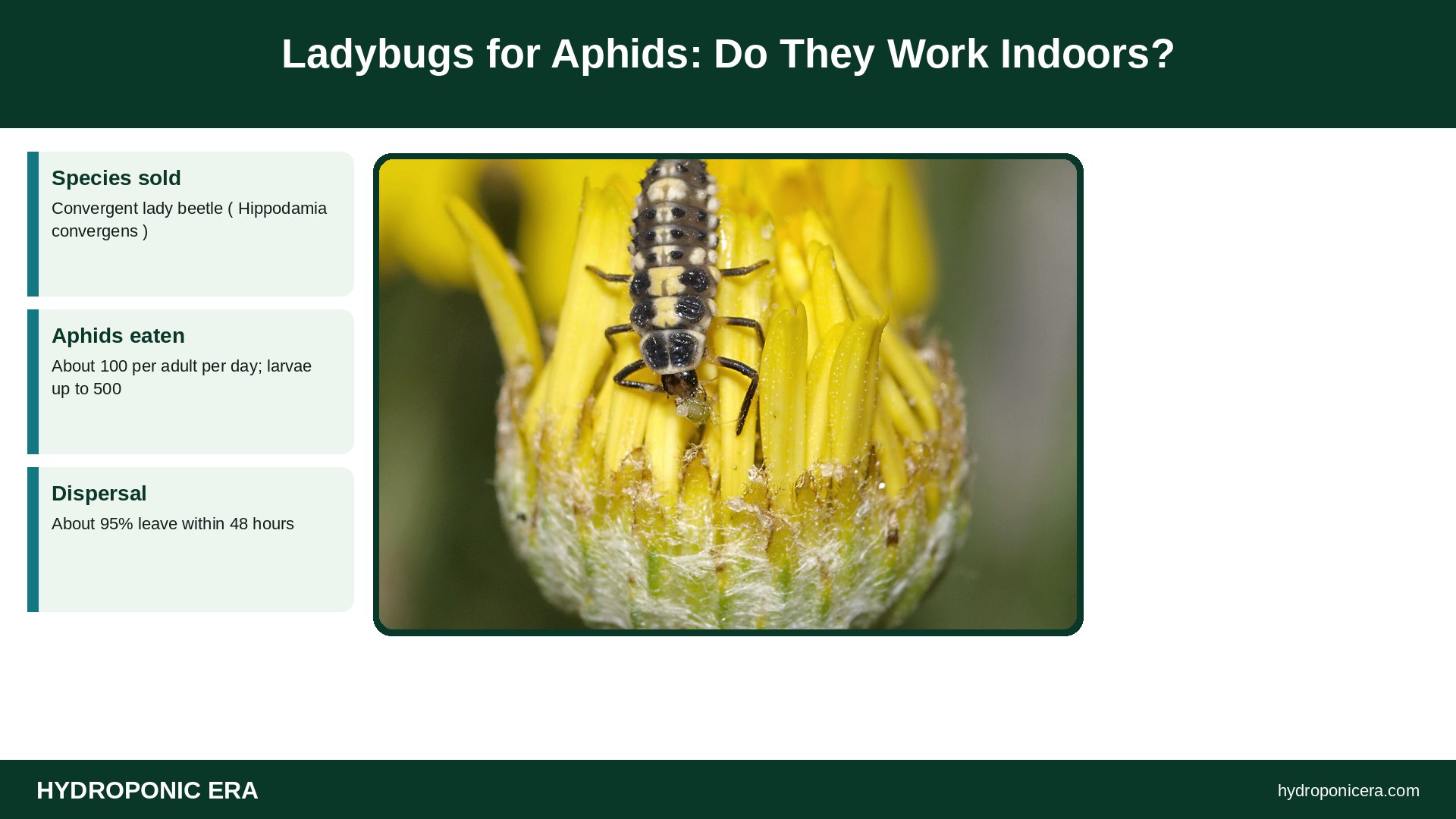
UC IPM explains that the ladybugs sold for aphid control are convergent lady beetles, named for two white markings on the thorax that angle toward each other. Adults are 1/6–1/4 inch (4–7 mm) long with orange wing covers, often with 13 black spots. Suppliers collect them from large overwintering groups in California’s foothills and mountains. Because the beetles are gathered while preparing to migrate, they naturally tend to disperse after release.
How Many Aphids Do Ladybugs Eat?
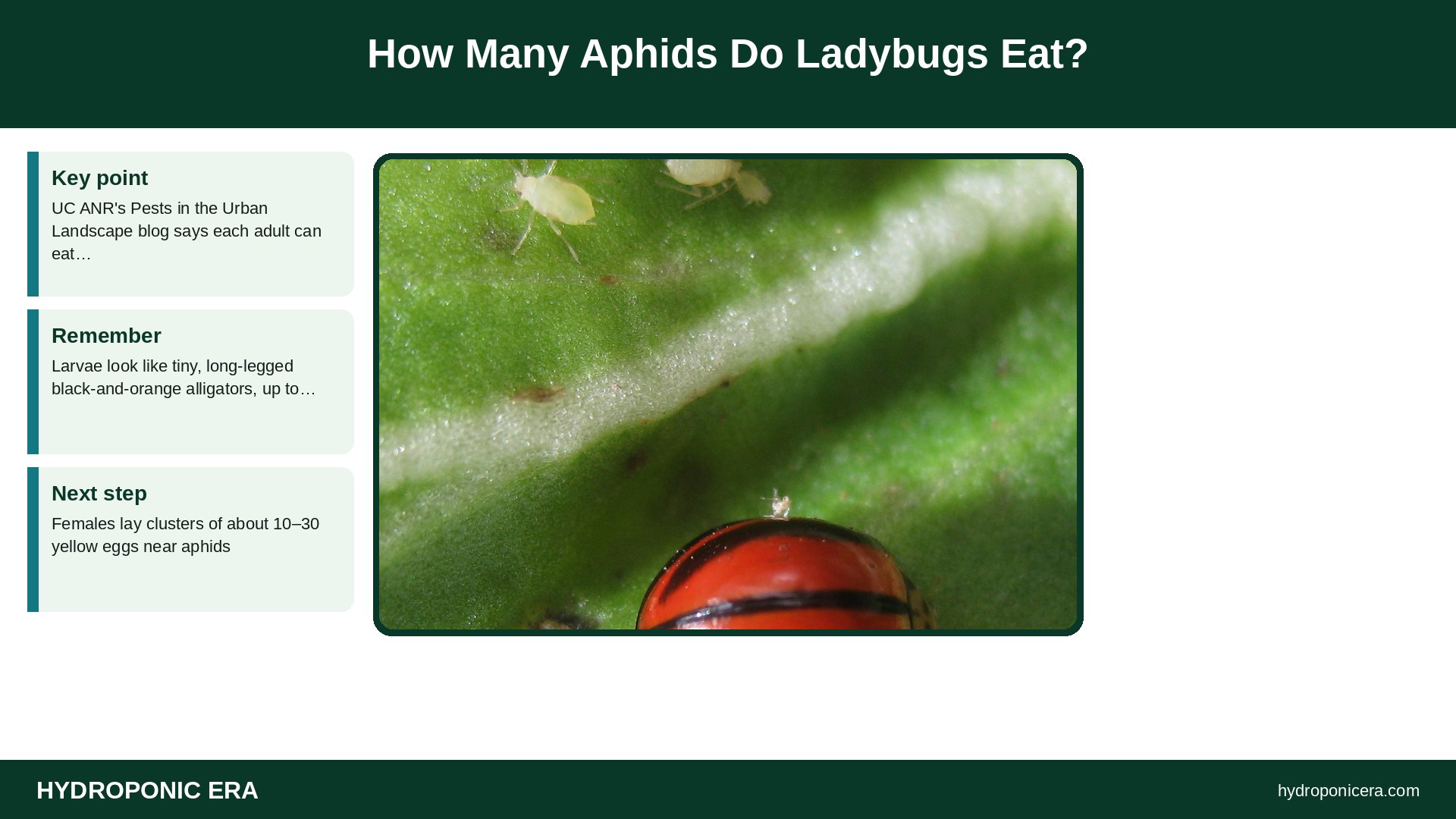
UC ANR’s Pests in the Urban Landscape blog says each adult can eat about 100 aphids a day before it leaves, and larvae, which cannot fly, can eat up to 500 aphids. Larvae look like tiny, long-legged black-and-orange alligators, up to ¼ inch (6 mm) long, per UC IPM. Females lay clusters of about 10–30 yellow eggs near aphids. Learning to recognize larvae, eggs and pupae keeps you from mistaking these helpers for pests.
Do Ladybugs for Aphids Stay After Release?
Mostly no. UC research found about 95% of released beetles flew away within 48 hours, and the rest were gone within 4–5 days. UC’s retail nursery newsletter adds that released beetles are unlikely to lay eggs on the plants they are released on. That is why ladybugs for aphids work best as a fast knock-down on a limited area, followed by a check a week or two later.
How Do You Release Ladybugs for Aphids?
- Buy fresh, live beetles and toss out packets with many dead ones.
- Refrigerate them, never freeze. UC notes refrigerated beetles can give off an odor, so keep them away from food.
- Hydrate them: mist lightly before storing; don’t let water puddle.
- Wait for plenty of aphids. Beetles leave sooner when food is scarce.
- Mist the plants with water right before release.
- Release at dusk or after sunset, never in midday heat or sun.
- Place beetles at the base of plants or in low branch crotches; they crawl up to find aphids.
- Repeat at 1–2 week intervals while aphids persist, as UC IPM describes for roses.
How Many Ladybugs for Aphids Do You Need?
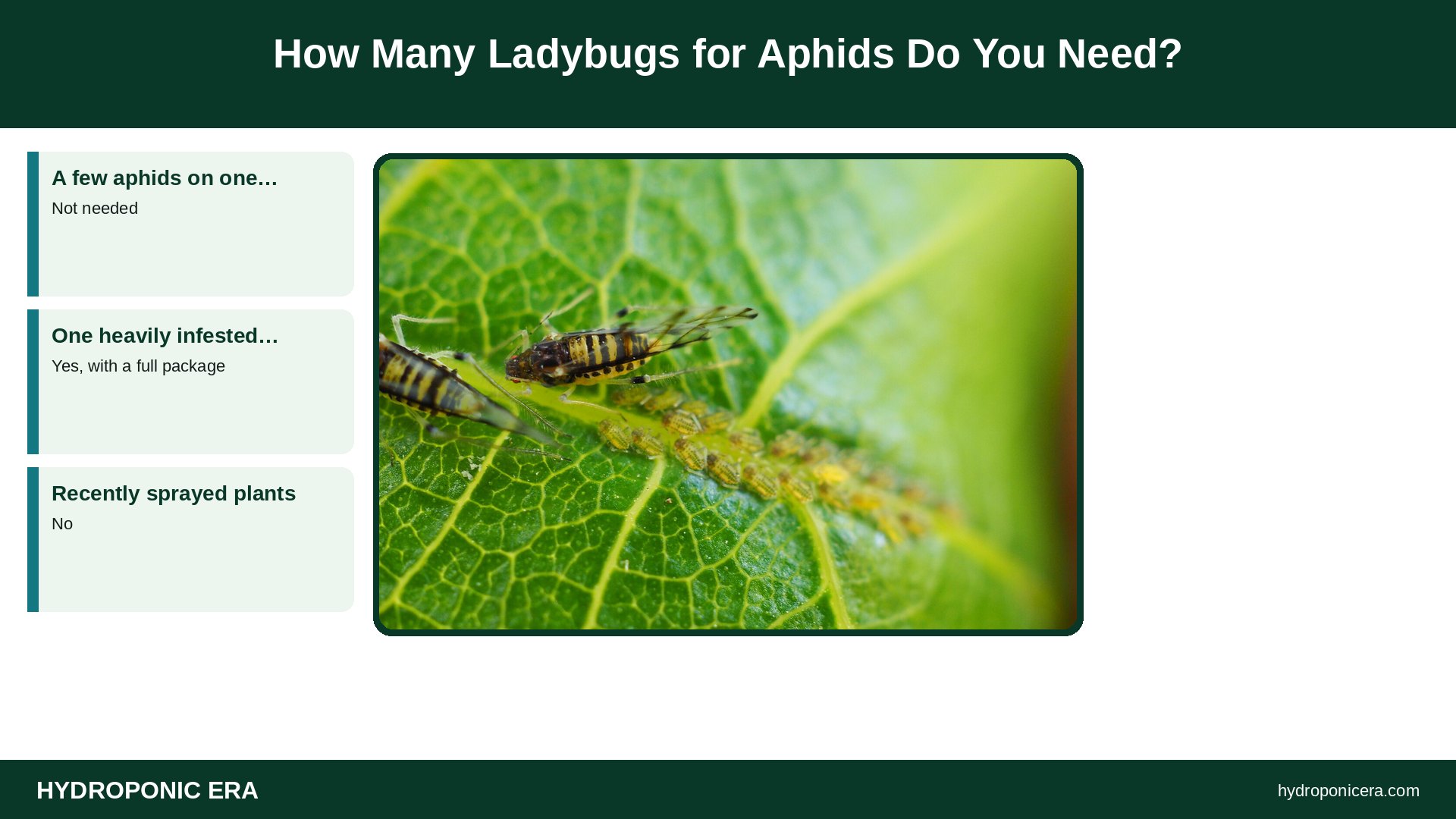
More than most people expect. UC’s retail newsletter says one large, heavily infested rose bush needed two applications of about 1,500 lady beetles each, a week apart, and that most packages sold in stores hold only enough beetles for one infested shrub or a few small plants. If you store extra beetles in the fridge for later releases, UC IPM suggests warming them weekly to room temperature and feeding them very dilute sugar water.
| Situation | Ladybugs for aphids? | Better first step |
|---|---|---|
| A few aphids on one plant | Not needed | Hose or wipe aphids off |
| One heavily infested shrub | Yes, with a full package | Release at dusk, repeat |
| Recently sprayed plants | No | Wait for residues to clear |
| Enclosed grow tent | Can work | Seal gaps; check daily |
When Should You Use Ladybugs for Aphids?
Use ladybugs for aphids when a colony is large and concentrated on a few plants, the weather is mild, and nothing toxic has been sprayed recently. Those are the conditions where a dense release can eat through aphids before the beetles disperse. They make less sense for a light infestation that a strong spray of water would clear, or for a large yard where beetles scatter across many plants. If you already see wild lady beetles, larvae or eggs near the colony, give them a few days; UC notes resident lady beetles are important predators.
How Do Ladybugs for Aphids Compare With Other Controls?
UC’s retail newsletter says that if aphids return a week or two after a release, the options are to release more beetles, hose aphids off with water, use insecticidal soap sprays, or wait for native beneficial insects to fly in.
| Option | Speed | Notes |
|---|---|---|
| Ladybugs for aphids | Fast but brief | Need high numbers; repeat |
| Strong water spray | Immediate | Cheap; repeat every few days |
| Insecticidal soap | Fast | No toxic residue once dry, per UC |
| Resident natural enemies | Slow | Encourage with flowers; avoid broad sprays |
Do Ladybugs for Aphids Work Indoors or in Hydroponics?
UC research is outdoor research, so treat indoor use as a trial. The same rules apply: release onto infested plants in dim light, mist the leaves and expect beetles to wander. In an open room, released beetles tend to head for windows and lights. A zipped grow tent or a closed greenhouse keeps them near the plants, but without enough aphids they will starve, so release only when there is a real infestation. Ladybugs hunt foliage pests; they do not reach root aphids in media. For identification and other tools, see aphids and mites in hydroponics.
How Do You Keep Ladybugs Working Long Term?
- Avoid broad-spectrum, persistent insecticides; UC says residues from most insecticides can kill the beetles.
- Use soap or oil sprays carefully: UC notes insecticidal soaps and oils leave no toxic residue once dry.
- Plant flowers that offer nectar and pollen, which adult beetles also eat.
- Encourage resident lady beetles; UC suggests this can be cheaper than buying them for small gardens.
- Monitor aphid numbers with leaf checks and sticky traps.
FAQs
Are ladybugs for aphids worth buying?
For a limited area with heavy aphids, yes, if you release enough beetles correctly.
Why did my ladybugs fly away?
Purchased beetles naturally disperse; about 95% leave within 48 hours.
Can I release ladybugs during the day?
No. UC says daytime releases fly away faster.
Do ladybug larvae eat aphids?
Yes, up to 500, and larvae cannot fly away.
Will ladybugs hurt my plants?
The convergent lady beetle is a predator, not a plant feeder.
Sources
- UC IPM — Convergent Lady Beetle
- UC ANR Pests in the Urban Landscape — Releasing Ladybugs in the Garden
- UC IPM Retail Nursery and Garden Center IPM News — Lady Beetles: Do They Really Work for Aphid Control?
- Photo credits (Wikimedia Commons, edited with titles): 14-spotted Ladybird larva eating an aphid (16475286350) by Line Sabroe from Denmark (CC BY 2.0); Striped ladybird with aphids (4560537745) by Ton Rulkens from Mozambique (CC BY-SA 2.0); Aphids on a leaf, 2025 early summertime Alconbury Weald by ISAAC THE BOY (CC BY 4.0); Basil plant in a pot 02 by Netha Hussain (CC BY-SA 4.0); Hydroponic g12 by Giancarlo Dessì (CC BY-SA 3.0)