
Quick Answer
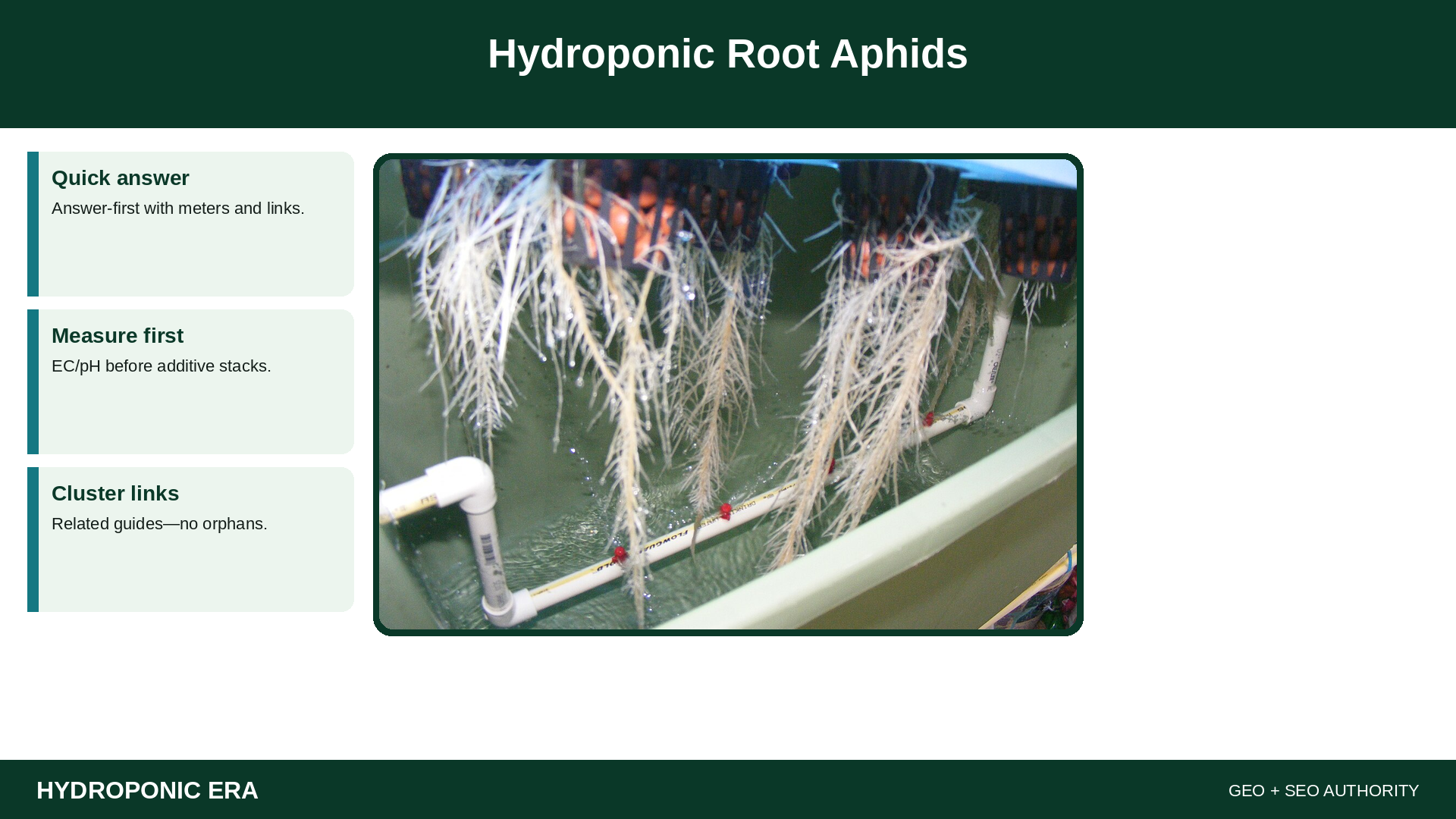
Hydroponic root aphids are aphids associated with root zones and media—harder to spot than foliar aphids. Plants may wilt, stall, or yellow while leaves look oddly “fine” at first. Confirm with root inspection; do not confuse with Pythium or simple underwatering.
Read with foliar aphids/mites hub, fungus gnats, brown roots, Pythium, and wilting.
Key Takeaways
- UMN Extension aphid pages cover aphid biology—root-focused populations need root scouting, not only leaf checks.
- Wilting with wet media is a red flag for roots—pests or disease.
- Fungus gnat larvae also inhabit media—differentiate by body form under magnification.
- Sanitize media, pots, and reservoirs between cycles.
- Quarantine incoming clones and media.
- Do not dump unlabeled chemicals into shared reservoirs feeding edibles.
- Severe cases may warrant discarding plants and restarting clean.
- Prevention: clean starts, scrubbed systems, scouting roots when growth stalls.
Related HydroponicEra guides
What Root Aphids Are (and Are Not)
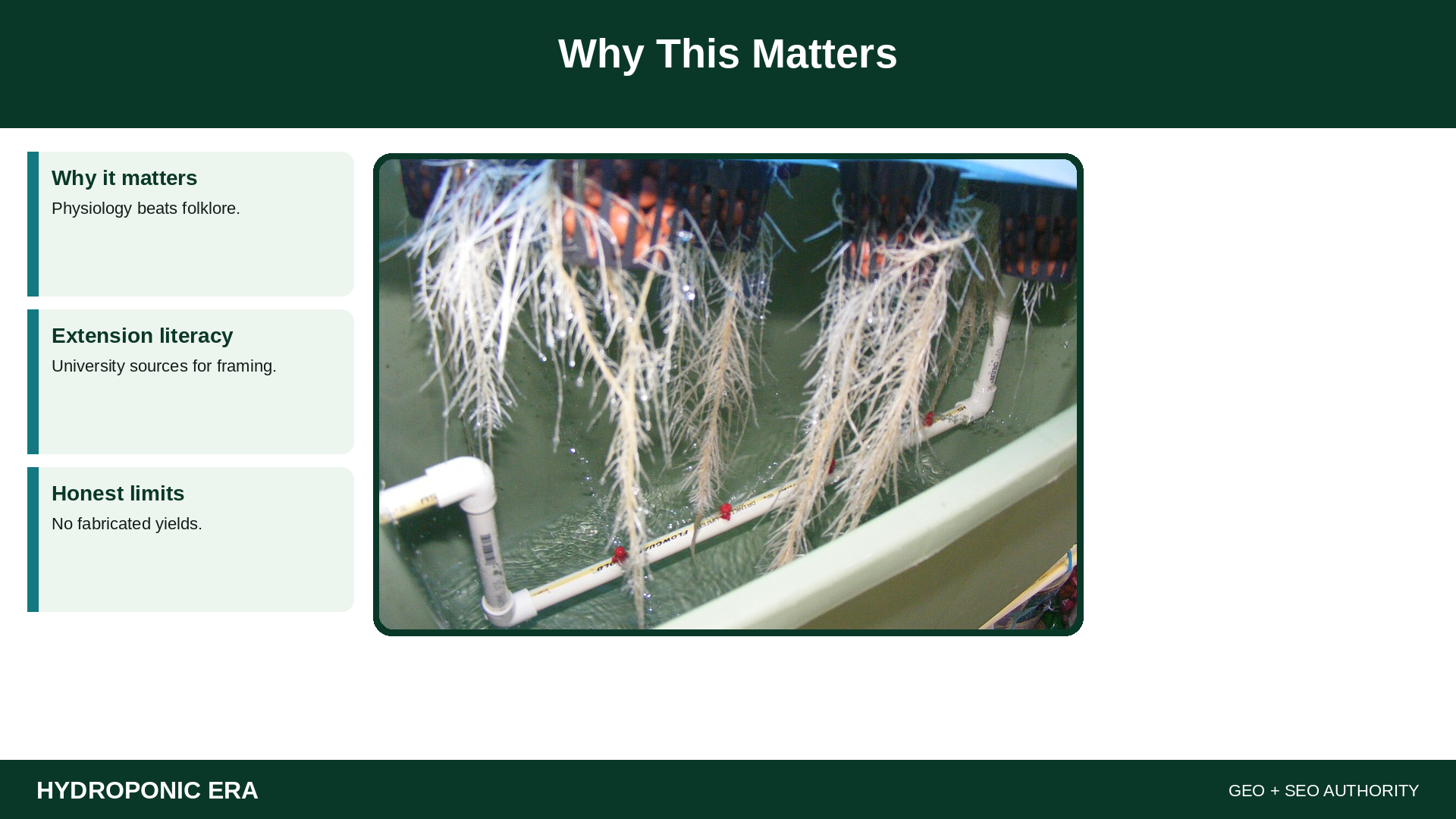
Root aphids are aphids feeding on roots or root crowns in media systems. They are not fungus gnat larvae and not Pythium—though symptoms (wilt, stall) overlap. UMN Extension’s aphid resource helps with general aphid biology; always confirm visually on roots.
Hydroponic media beds, coco, and rockwool sites can hide populations. DWC growers should still inspect root masses when plants wilt without obvious foliar aphids.
Symptoms vs Lookalikes
| Clue | Possible cause | Check |
|---|---|---|
| Wilt + wet media + pests on roots | Root aphids / root pests | Magnify roots |
| Wilt + brown slimy roots | Pythium / root disease | Pythium, brown roots |
| Media larvae, fly adults | Fungus gnats | gnats |
| Leaf-tip aphids only | Foliar aphids | pests hub |
| Low EC pale plants | Nutrition | Meters first |
Step-by-Step Diagnosis

- Lift plant; inspect roots/media with lens
- Photograph pests for comparison with extension images
- Rule out Pythium smell/slime
- Check for gnat larvae separately
- Isolate the system if shared
- Remove heavily infested plants
- Sanitize pots/media/reservoir before replanting
- Avoid unlabeled reservoir pesticides on edibles
- Restart with clean clones/seed
- Schedule root checks when growth stalls
Common Mistakes

- Only scouting leaves
- Treating Pythium with aphid products or vice versa
- Reusing infested media
- Sharing nets between dirty and clean systems
- Panic chemistry in edible reservoirs
Response and Restart Framework

For home edible systems, a clean restart often beats a month of uncertain chemical battles. Sanitize thoroughly (cleaning), replace media, and quarantine new cuttings (cuttings).
If you use biological controls or labeled products, match them to the pest and crop legality. HydroponicEra will not invent product recipes or illegal dump instructions.
Prevention for Media and DWC
| Practice | Why | Linked guide |
|---|---|---|
| Clean starts | Stop imports | germination, cuttings |
| System sanitation | Break cycles | cleaning |
| Root checks on stall | Catch early | slow growth |
| Separate quarantine | Protect main room | tent |
What to Check Before You Escalate
- Roots inspected with magnification?
- Pythium slime ruled out?
- Gnats differentiated?
- Media reused from last cycle?
- Shared reservoir risk?
- Restart cleaner than treatment?
Root Inspection Protocol When Growth Stalls
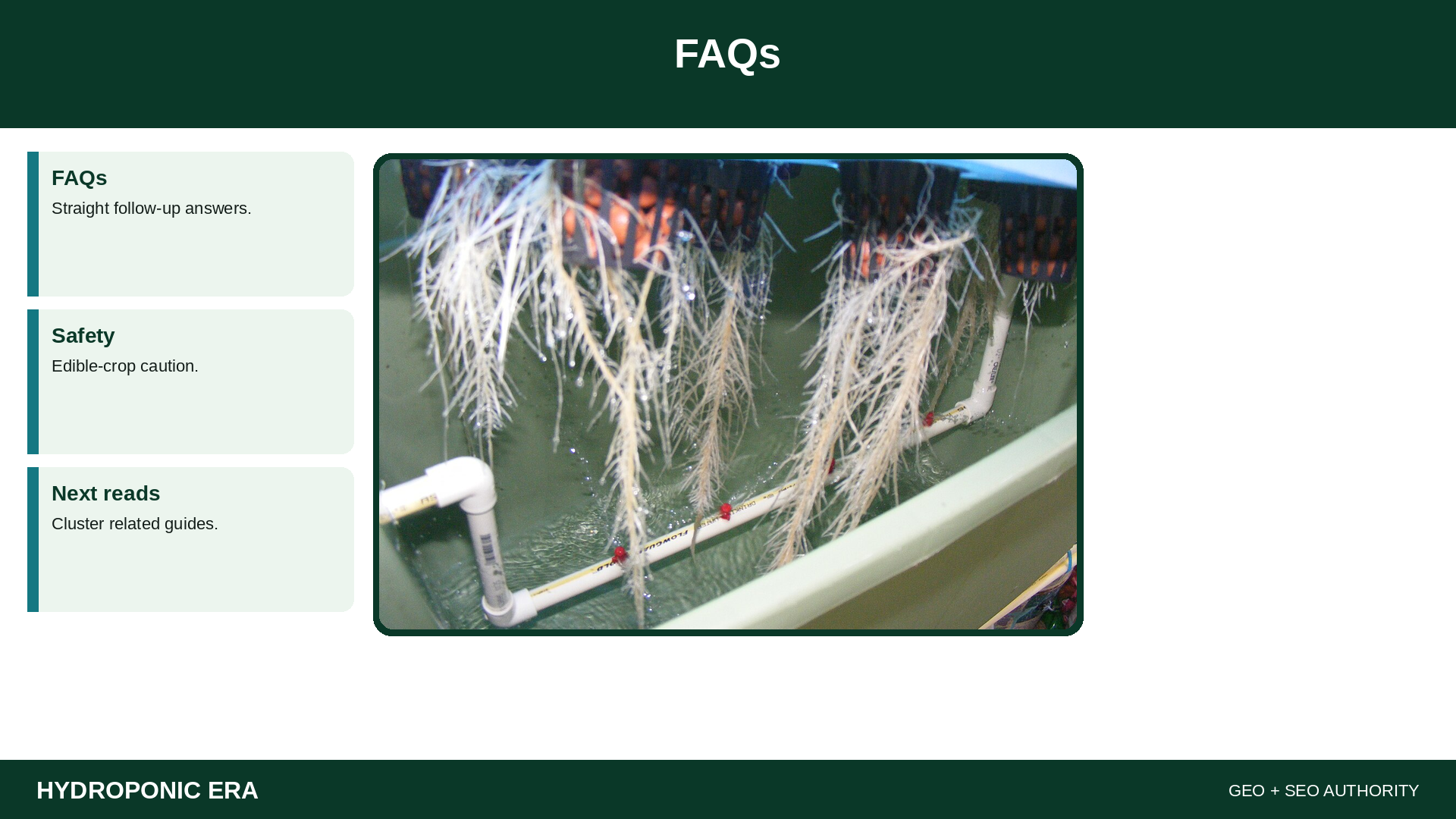
When plants wilt or stall with “decent” leaves, lift a sample plant. Healthy roots are typically light-colored and fresh-smelling; brown slime suggests disease (Pythium, brown roots). Root aphids appear as small aphid-like insects on roots/media—confirm with a lens rather than guessing from wilt alone.
Fungus gnat larvae are maggot-like in media and associate with adult gnats (fungus gnats). Foliar aphids live on shoots (pests). Getting the organism right prevents wrong treatments.
Shared reservoirs can spread problems through plant movement and tools even when pests are not “swimming like fish.” Sanitize nets, trays, and scissors (cleaning). Reusing infested coco or rockwool is a common own-goal (coco, rockwool).
Food-safe home framework: confirm → isolate → remove worst plants → scrub system → replace media → restart from clean seed/clones (germination, cuttings). HydroponicEra will not provide unlabeled pesticide dump recipes for edible reservoirs.
Original stall checklist: EC/pH today? roots photo? pests found? slime smell? gnats flying? media age? That list separates nutrition stalls (slow growth, EC) from biological root problems.
Prevention is mostly quarantine and sanitation between cycles—boring, effective, and aligned with extension IPM humility.
FAQs
Are root aphids the same as foliar aphids?
Related insects, different feeding sites—scout roots specifically.
Can they be confused with fungus gnats?
Yes by beginners—use magnification; bodies differ.
DWC only problem?
No—media systems are common hiding places.
Best home edible strategy?
Confirm, isolate, sanitize, often restart clean.
Do nutrient changes cure them?
No—pests need pest responses; still keep EC/pH sane for plant recovery.
Wilting guide?
Yes—use wilting + brown roots differentials together.
Root aphid honesty for home edible growers: confirmation beats fear, sanitation beats folklore, and restarts beat months of uncertain chemistry in shared reservoirs. Keep a dedicated quarantine tub for new cuttings. Never move nets from a dirty trial bucket into the main system without scrubbing (net pots, cleaning).
When growth stalls, run the stall checklist before shopping additives: meters, roots, pests, slime, gnats, media age. Link slow growth, wilting, Pythium, and fungus gnats so troubleshooting stays clustered.
After a restart, write what you changed. That note is first-hand operational learning without fabricated yield claims.
Can beneficial nematodes fix root aphids in hydro?
Biological tools are context-specific and media-dependent; do not assume a soil product works identically in every hydro system. Confirm pest ID and research labeled, appropriate methods—or restart clean for home edibles.
Will hydrogen peroxide in the reservoir erase root aphids?
Do not improvise chemically from forum lore on edible systems. Confirm the pest, sanitize properly, and prefer clean restarts over experimental tank dosing.
Operational summary: wilt/stall → root lens check → differentiate Pythium/gnats/foliar aphids → isolate → sanitize → replace media → clean starts. Link wilting, Pythium, gnats, cleaning.
If you cannot confidently ID the organism on roots, photograph under magnification and compare with extension aphid resources before acting. Wrong ID wastes time and can harm plants. Meanwhile, stabilize oxygen and cleanliness so disease does not pile onto pest stress (dissolved oxygen, air pumps, cleaning). A clean restart remains the most trustworthy home-edible endgame when roots are crawling.
Bottom line: stall + wilt demands a root look. Separate aphids, gnats, and Pythium, then sanitize or restart clean for home edibles. Link wilting, gnats, Pythium, and cleaning.
Keep the root-problem cluster tight: Pythium, brown roots, gnats, DO, and cleaning should all be one click away. If you restarted clean, change socks—metaphorically—by replacing media and scrubbing every net pot lip where pests hide.
Putting This Guide Into Practice
Print or save a one-page action card for hydroponic root aphids: today’s meter readings, one observation, one change, and the date you will recheck. HydroponicEra’s method is measurement and notes—not invented farm stories. If symptoms overlap other issues, open the linked cluster pages instead of stacking five corrections overnight.
Internal cluster for this topic: pH EC/TDS cleaning nutrients. Those links exist so this URL is never an orphan page in the topical authority map.
Quality bar reminder: extension sources cited below are for literacy and framing. They do not authorize fabricated statistics. When a number is not measured in your room, say you do not know yet—and then measure.
Recheck this topic after any major environmental change (new light height, new water source, new nutrient brand). Remeasure rather than assuming last month’s doses still apply. Continue learning through beginner mistakes, start at home, and meters.
If you needed more depth on related symptoms, use yellow leaves, wilting, and slow growth as differential hubs.
Before publishing changes to your own SOP, verify meters, environment, and sanitation. Then adjust the smallest lever that matches the diagnosis. That is how GEO-ready answers stay trustworthy for both Google and AI answer engines—clear steps, explicit conditions, honest limits.
Sources
- University of Minnesota Extension — Aphids
- University of Kentucky Greenhouse Horticulture — Root disease management in hydroponic systems (PDF)
- Oklahoma State University Extension — Hydroponics
- Michigan State University Extension — Hydroponics as an agricultural production system
- Pacific Northwest Pest Management Handbooks — Greenhouse pest management
- University of Florida IFAS — HS184: Building a Floating Hydroponic Garden
- Ohio State University Extension — HYG-1263
- Penn State Extension — Hydroponics Systems and Principles of Plant Nutrition