
How do you use a sprouting tray? Soak seeds in a bowl first, then spread them in the tray’s mesh or slotted base. Rinse with cool 60–70°F (16–21°C) water every 8–12 hours until it runs clear, drain thoroughly, and keep the tray covered and out of direct sun. Uncover leafy sprouts once leaves appear so they green. Harvest in 3–7 days.
Key takeaway: A sprouting tray gives seeds more room, airflow and light than a jar, which suits leafy sprouts like alfalfa and clover and lets you stack several crops. The rules stay the same as any sprouter: clean seed, a clean tray, frequent rinsing, very good draining and a cool spot.
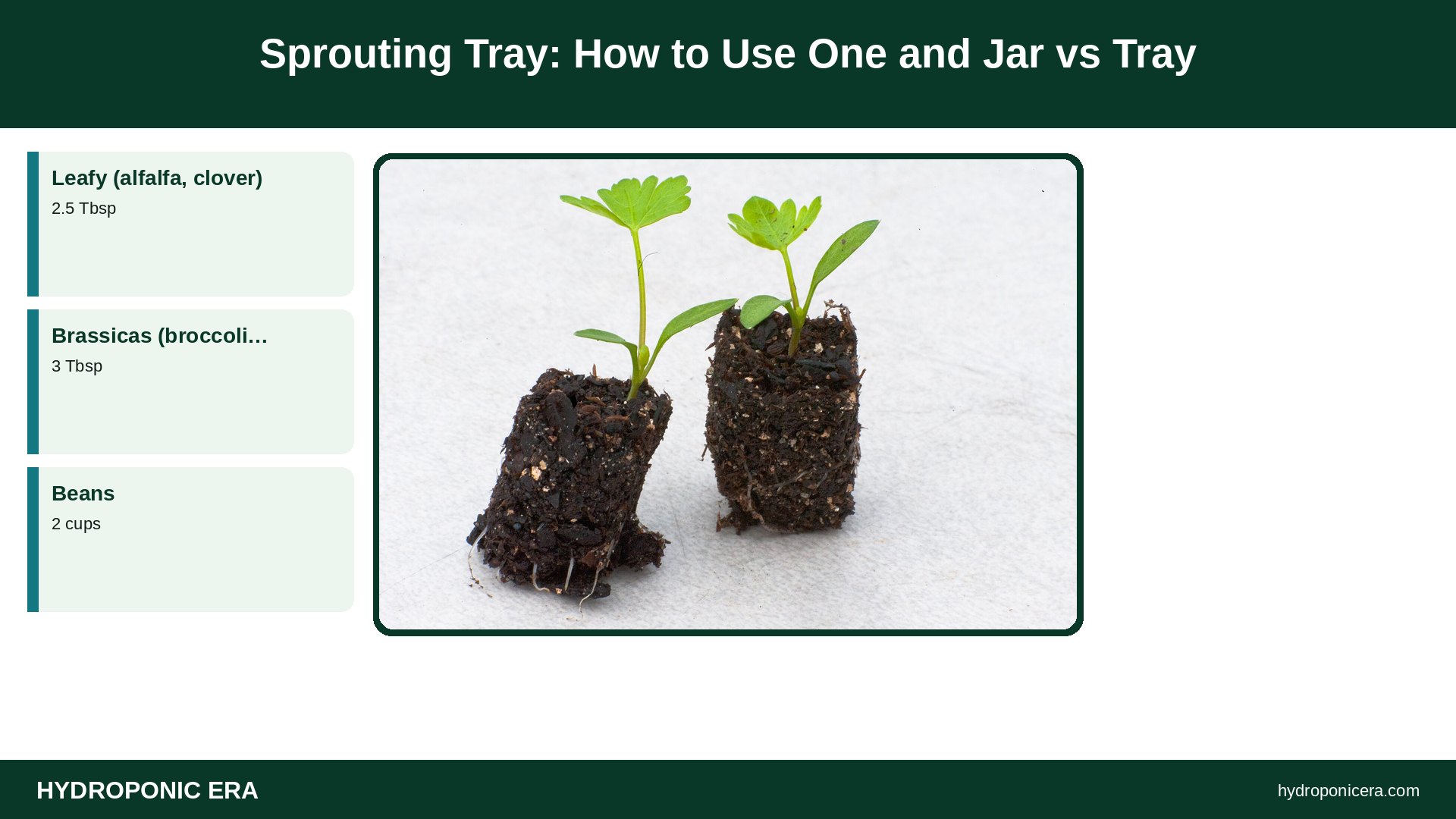
| Seed type | Max dry seed, 8×10 in (20×25 cm) tray | Max dry seed, 5×6 in (13×15 cm) tray |
|---|---|---|
| Leafy (alfalfa, clover) | 2.5 Tbsp | 1 Tbsp |
| Brassicas (broccoli, radish) | 3 Tbsp | 1⅛ Tbsp |
| Beans | 2 cups | ¾ cup |
| Onion, garlic, leek | 5 Tbsp | 2 Tbsp |
Source: Sprout People SproutMaster tray instructions; trays are 2 in (5 cm) deep.
What Is a Sprouting Tray?
A sprouting tray is a shallow container with a drainage screen or slotted bottom that holds seeds in a thin layer while they sprout. Many are stackable, with a cover on top and a base underneath to catch drips. Sprout People’s SproutMaster trays are 2 inches (5 cm) deep, and its stainless steel tray is a 7.5-inch (19 cm) circle with a fine mesh screen used between two household plates. Because seeds sit in an open layer, a sprouting tray is easy to rinse with a sink sprayer and lets light reach the leaves.
Sprouting Tray vs Jar: Which Is Better?
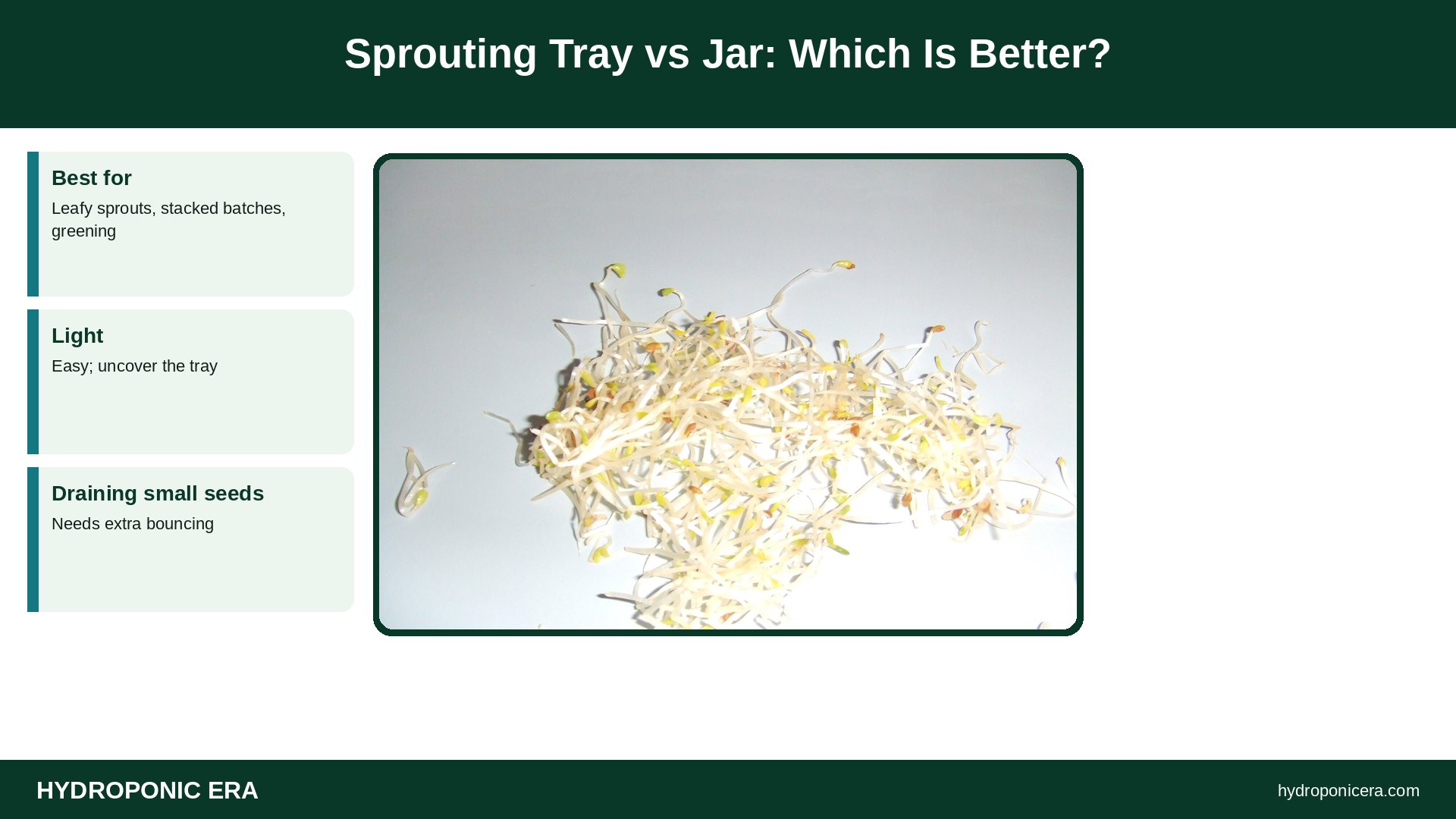
| Feature | Sprouting tray | Mason jar |
|---|---|---|
| Best for | Leafy sprouts, stacked batches, greening | Beans, lentils, small batches |
| Light | Easy; uncover the tray | Limited by the glass and crowding |
| Draining small seeds | Needs extra bouncing | Tilt at an angle |
| Hull removal | Spray hulls off at an angle | Float hulls in a bowl |
| Soaking | Usually in a separate bowl | In the jar |
Sprout People notes that tray growers can give leafy sprouts more light than enclosed sprouters, and that very small seeds always hold some water, so bounce the tray more than you think necessary. If you’re new, start with our guide on how to grow sprouts in a jar.
How Do You Use a Sprouting Tray Step by Step?
- Sanitize the tray and lids. UC ANR suggests soaking sprouting containers in a bleach solution (3 tablespoons per quart, or about 45 mL per liter) for at least 5 minutes, then rinsing.
- Soak seeds in a bowl, not the tray, following the seed’s instructions; Sprout People advises this especially for small seeds.
- Spread seeds in the tray, staying under the maximum amounts above.
- Rinse 15–20 seconds with cool 60–70°F (16–21°C) water, moving the spray over the whole crop until the water runs clear.
- Drain hard: tilt, tap and bounce until no more water drips.
- Stack and cover with the lid, or set on a plate with a plate on top.
- Repeat every 8–12 hours. In hot, humid rooms, rinse more often with cool water.
- Uncover leafy sprouts when leaves form and move them to indirect light to green.
- Final drain: let sprouts dry 8–12 hours after the last rinse, then refrigerate.
How Do You Grow Leafy Sprouts Vertically in a Sprouting Tray?
Sprout People describes a vertical method for leafy sprouts like alfalfa and clover that grows roots down and leaves up. Keep the seeds massed in one corner for the first rinses so they warm and sprout faster. At about the fourth rinse, spray them evenly across the tray. For rinses 5 and 6, use low pressure so the sprouts stay put, then return to high pressure once they are rooted. Hulls rise as leaves open; tilt the tray and spray them off, which Sprout People calls “shaving.” This method gives the most even greening because almost all leaves face the light.
Which Seeds Grow Best in a Sprouting Tray?
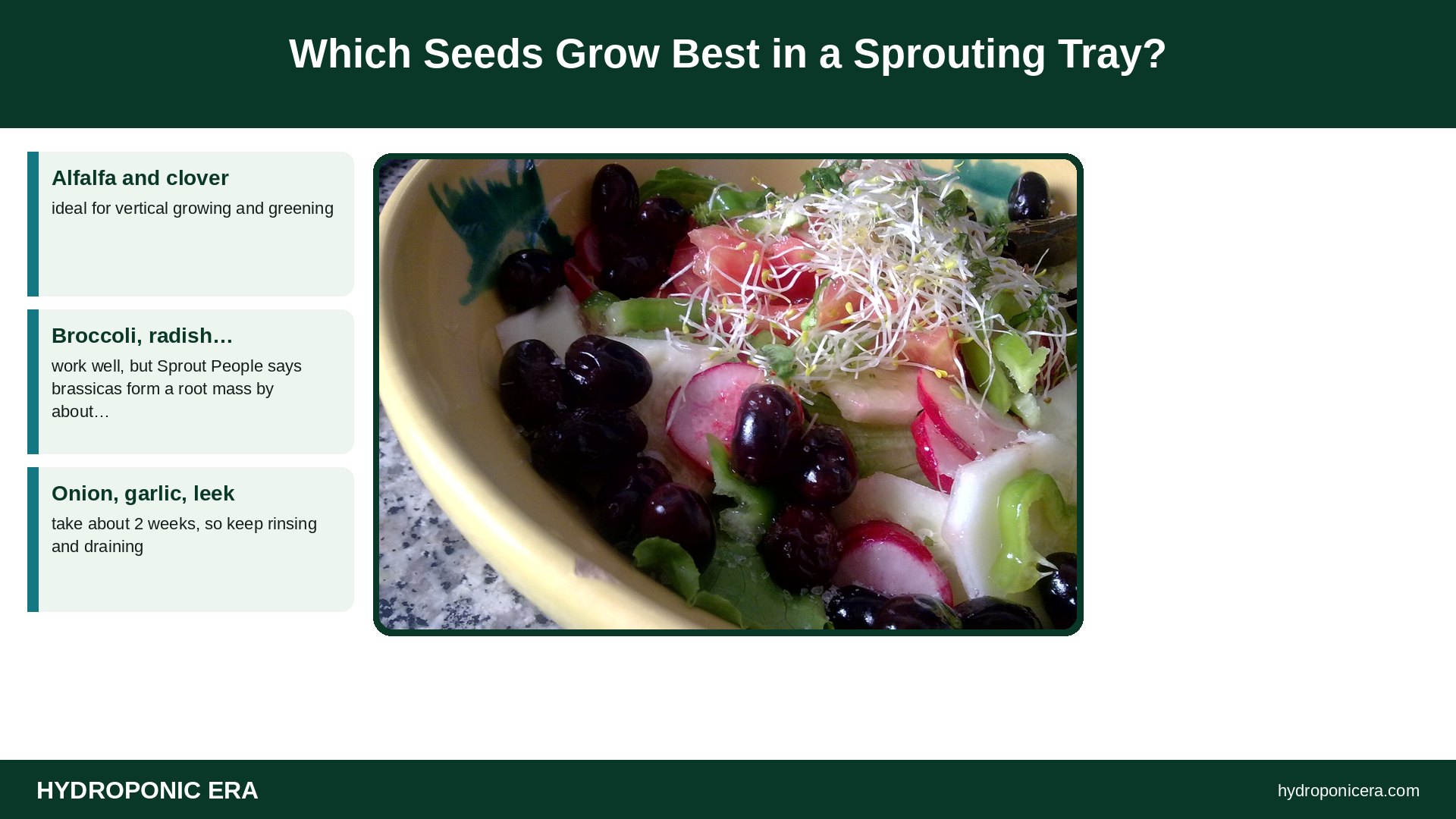
- Alfalfa and clover: ideal for vertical growing and greening.
- Broccoli, radish, mustard: work well, but Sprout People says brassicas form a root mass by about day 3; loosen them at every rinse or two.
- Onion, garlic, leek: take about 2 weeks, so keep rinsing and draining.
- Mung beans: possible; press thick sprouts under a weight in the dark.
- Microgreens: some trays can grow them; see our hydroponic microgreens guide.
How Do You Keep Sprouts in a Sprouting Tray Safe?
Raw sprouts carry a food-safety risk because warm, moist sprouting conditions also favor bacteria. The FDA advises children, older adults, pregnant people and anyone with a weakened immune system to avoid raw or lightly cooked sprouts. UC ANR recommends clean seed, sanitized containers kept away from raw meat prep areas, and cooking sprouts to 165°F (74°C) for those at higher risk. NC State suggests refrigerating finished sprouts at 38–50°F (3–10°C).
How Do You Clean a Sprouting Tray Between Batches?
Clean it every time. UVM Extension advises washing sprouting containers in hot, soapy water, and UC ANR adds a sanitizing soak in a bleach solution of 3 tablespoons of plain, unscented laundry bleach per quart of water (about 45 mL per liter) for at least 5 minutes, followed by a thorough rinse. Scrub the mesh or slots with a soft brush so no roots or hulls stay trapped, since leftover plant matter can spoil the next crop. Let every part air-dry fully before stacking it away. Sprout People also recommends routine care for stainless steel trays.
Why Are My Sprouts Moldy or Smelly in the Tray?
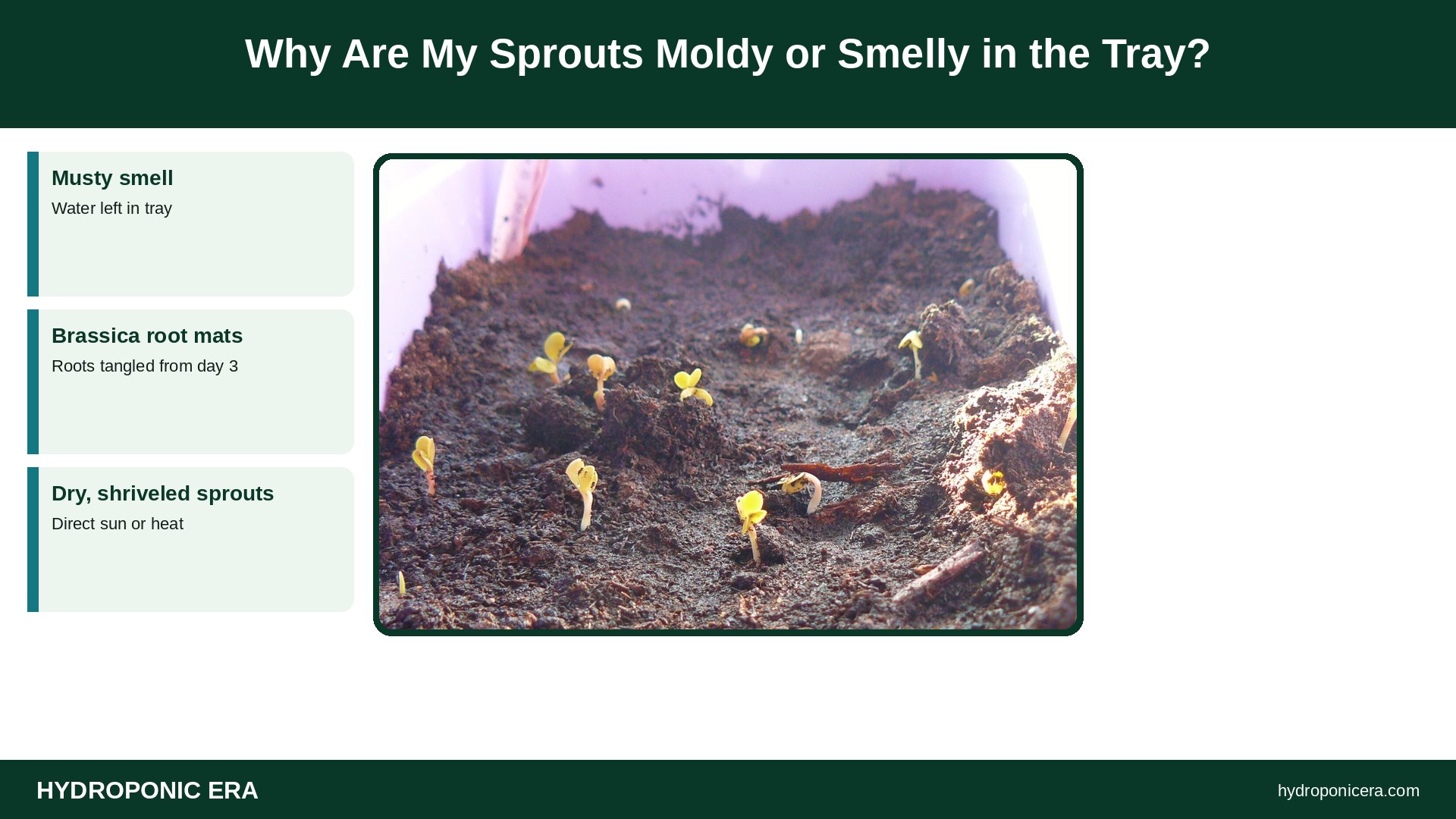
| Problem | Likely cause | Fix |
|---|---|---|
| Musty smell | Water left in tray | Bounce and drain longer |
| Brassica root mats | Roots tangled from day 3 | Loosen in a bowl of water |
| Dry, shriveled sprouts | Direct sun or heat | Rinse more; move to indirect light |
| Seeds falling through | Mesh too coarse | Use a finer screen or divider |
| Slime or sour odor | Spoilage | Discard; sanitize the tray |
Fine white root hairs on brassica sprouts are normal and disappear when rinsed; fuzzy growth that stays after rinsing is not.
FAQs
Can I soak seeds directly in a sprouting tray?
Usually no; soak in a bowl, then move seeds to the tray.
How often should I rinse a sprouting tray?
Every 8–12 hours, until water runs clear.
Can I stack different seeds?
Yes, but match seeds with similar timing in each stack.
Does a sprouting tray need light?
Only leafy sprouts need indirect light after leaves form.
Plastic or stainless steel?
Both work; Sprout People sells stainless trays as a non-plastic option.
How long do tray sprouts take?
Most leafy and brassica sprouts finish in about 3–7 days; onion and garlic take about 2 weeks.
Sources
- Sprout People — SproutMaster 8×10 Tray Sprouter instructions
- Sprout People — Stainless Steel Sprouter instructions
- UC ANR — Growing Seed Sprouts at Home (Publication 8151)
- UVM Extension — Sprouts: The Superfood to Grow at Home
- U.S. FDA — Selecting and Serving Produce Safely
- NC State Extension — Bean Sprouts and Other Vegetable Seed Sprouts
- Photo credits (Wikimedia Commons, edited with titles): Plugs ready for transplant (7027255351) by Dwight Sipler from Stow, MA, USA (CC BY 2.0); Medicago sativa (alfalfa) by No machine-readable author provided. Hans B.~commonswiki assumed (based on copyr (Public domain); Salad, Romaine lettuce, cucumber, tomato, green pepper, radish, alfalfa sprouts, black olives, lemon juice, salt & olive oil (7765310086) by Lablascovegmenu from London (CC BY 2.0); Radish sprouts (1 etap) by MOs810 (CC BY-SA 3.0); Lufa Farms Microgreens in Trays by Lufa Farms (CC BY-SA 2.0)