
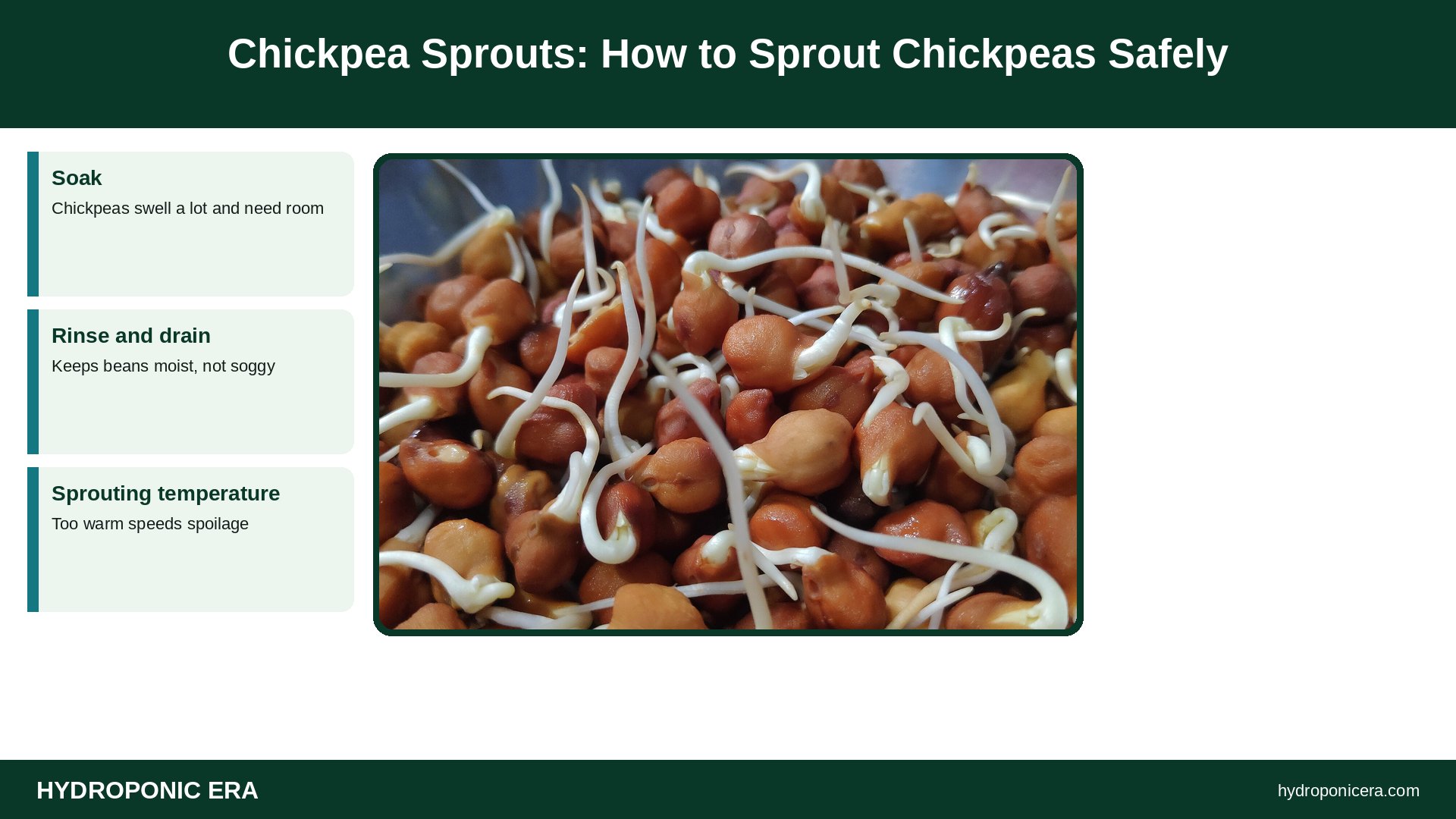
How do you make chickpea sprouts safely? Soak dried chickpeas 8–12 hours in cool water, drain, then rinse and drain them two or three times a day at room temperature. Short tails of 1/4–1/2 in (0.5–1 cm) appear in about 2–3 days. Refrigerate them right away, and cook them before eating if you are in a higher-risk group.
Key takeaway: Chickpea sprouts are one of the easiest sprouts to grow in a jar, but warm, wet sprouting conditions also suit bacteria. Clean gear, seed sold for sprouting, frequent rinsing and cold storage matter more than any special equipment.
| Step | Typical home practice | Why it matters |
|---|---|---|
| Soak | 8–12 hours, about 3 parts water to 1 part beans | Chickpeas swell a lot and need room |
| Rinse and drain | 2–3 times a day | Keeps beans moist, not soggy |
| Sprouting temperature | Room temperature, roughly 65–75°F (18–24°C) | Too warm speeds spoilage |
| Harvest | Day 2–3, tails 1/4–1/2 in (0.5–1 cm) | Longer tails can turn bitter and fibrous |
| Storage | Refrigerate at 40°F (4°C) or below; use within a few days | Cold slows bacterial growth |
What Are Chickpea Sprouts?
Chickpea sprouts are dried chickpeas (garbanzo beans) that have been soaked and kept moist until a small root, or tail, breaks through the seed coat. You harvest them within a few days, long before leaves form. They taste nutty and slightly sweet, with a firmer bite than mung bean sprouts.
Because you eat the whole germinated seed, chickpea sprouts are a sprout, not a microgreen. Microgreens are grown in light on a medium and cut above the roots. If you want the leafy version, see our hydroponic microgreens guide.
What Do You Need to Sprout Chickpeas?
You need very little to grow chickpea sprouts: dried chickpeas sold for sprouting or cooking, a clean wide-mouth quart jar (about 1 liter) or a sprouting tray, a mesh lid or cheesecloth, and cool, clean drinking water. A bowl and a colander work too. Skip anything that can’t be washed and sanitized easily.
- Seed: whole, unsplit chickpeas. Split chana dal and canned chickpeas will not sprout.
- Container: glass jar, stainless colander or food-safe plastic sprouter.
- Drainage: a mesh lid so the jar can tilt and drain.
- Water: drinking-quality water for soaking and every rinse.
How Do You Sprout Chickpeas Step by Step?
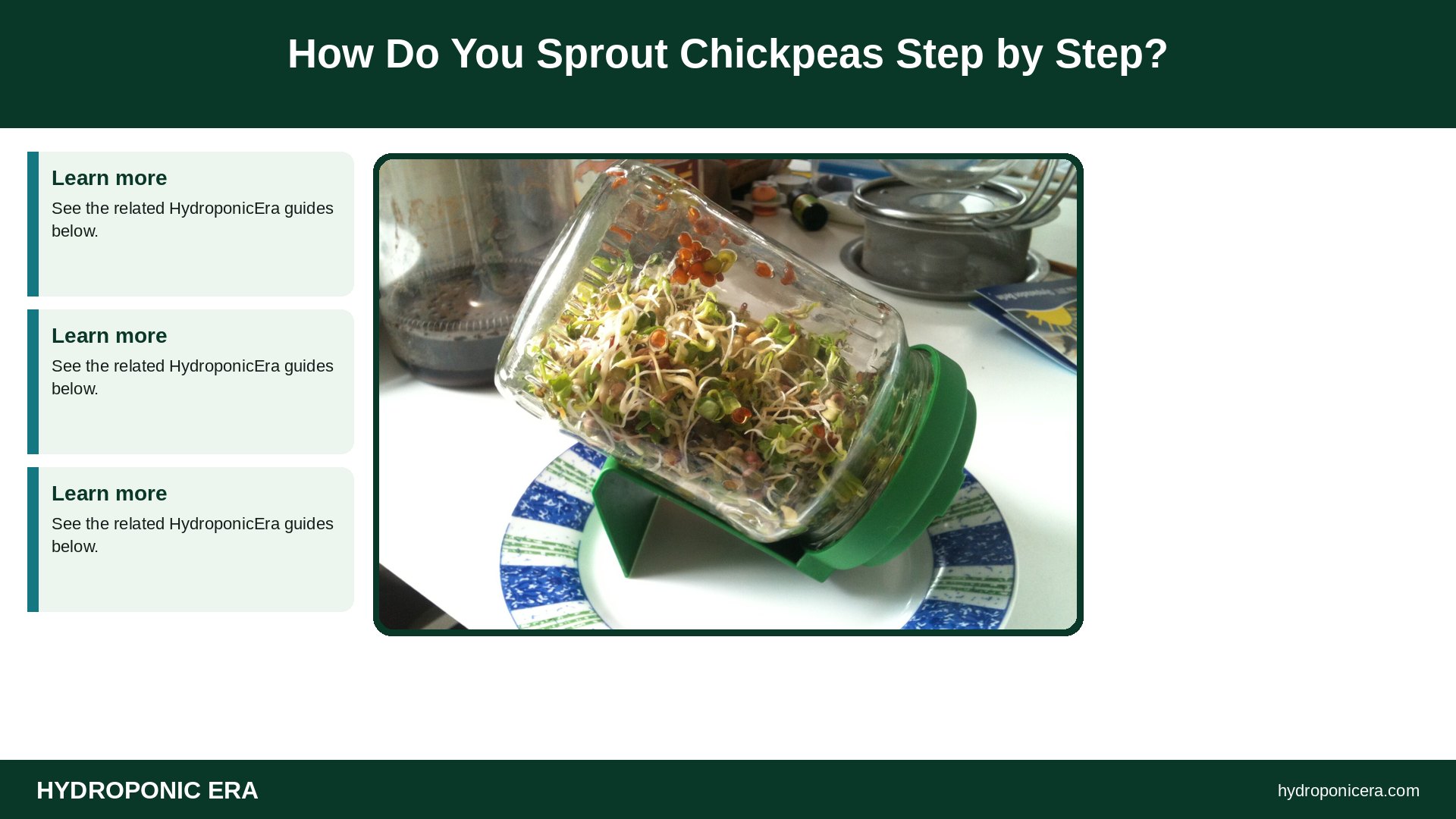
To sprout chickpeas, sort and rinse the beans, soak them overnight, drain well, then rinse and drain twice or three times daily until short tails show. Most batches are ready in 2–3 days. The key is moisture without standing water, plus airflow inside the jar.
- Sort: pick out broken beans, stones and shriveled seeds.
- Wash your hands and gear with hot, soapy water.
- Soak: cover 1/2 cup (about 100 g) of chickpeas with 1 1/2 cups (355 mL) of cool water for 8–12 hours.
- Drain and rinse thoroughly, then tilt the jar mouth-down at an angle so water runs off.
- Rinse and drain every 8–12 hours. Keep the jar out of direct sun.
- Check tails: harvest when most beans show tails of 1/4–1/2 in (0.5–1 cm).
- Final rinse and dry: spread on a clean towel for a few minutes.
- Refrigerate in a covered container.
Are Chickpea Sprouts Safe to Eat Raw?
Raw chickpea sprouts carry the same risk as other raw sprouts. CDC lists any raw or undercooked sprouts as a riskier food choice and says cooked sprouts, heated until steaming hot, are safer. Children, adults over 65, pregnant people and anyone with a weakened immune system should eat sprouts cooked only.
The reason is simple. Bacteria such as Salmonella and E. coli can sit on or inside seeds, and the warm, humid jar helps them multiply. Rinsing does not remove all of them. Safer habits include:
- Buying seed labeled for sprouting from a reputable supplier when you plan to eat sprouts raw.
- Using clean containers and drinking water for every rinse.
- Refrigerating finished sprouts quickly and tossing any that smell sour or look slimy.
- Cooking sprouted chickpeas for higher-risk people.
UC Agriculture and Natural Resources describes a home seed treatment using heated 3% hydrogen peroxide; follow that publication exactly if you try it. For the bigger picture, read our home hydroponic food safety guide.
How Long Do Chickpea Sprouts Take?
Most chickpea sprouts are ready 2–3 days after soaking begins. Warm kitchens move faster, while cool rooms can stretch to 4 days. Harvest when the tails are short, about 1/4–1/2 in (0.5–1 cm). Letting them grow longer often makes the sprouts tougher and more bitter rather than better.
| Day | What you should see |
|---|---|
| Day 0 (night) | Soaking; beans roughly double in size |
| Day 1 | Skins split; a few tiny root tips |
| Day 2 | Most beans show 1/8–1/4 in (3–6 mm) tails |
| Day 3 | Tails 1/4–1/2 in (0.5–1 cm); harvest |
Why Are My Chickpea Sprouts Not Sprouting or Smelling Bad?
Chickpea sprouts usually fail for three reasons: old or heat-treated beans, too much standing water, or too much warmth. A sour, fermented smell or slimy feel means bacteria have taken over, so discard the batch, clean the jar and start fresh with newer seed.
- No tails after 3 days: the beans may be old, split or processed. Try a fresh bag or seed sold for sprouting.
- Sour smell: rinse more often and drain completely; never leave beans sitting in water after the soak.
- Mushy beans: the soak ran too long or the room is too hot.
- Uneven sprouting: stir gently at each rinse so beans in the middle get air.
Are Sprouted Chickpeas Healthy?
Sprouted chickpeas are still chickpeas, so they keep the protein, fiber and minerals of the dried bean. Sprouting changes texture and taste, and many cooks find them easier to cook quickly. Avoid big nutrition promises; the safest claim is that they are a tasty way to eat more legumes.
If you want nutrition numbers, check the chickpea entries in USDA FoodData Central rather than marketing claims. For more on homegrown produce, see are hydroponic vegetables healthy.
How Do You Store and Use Chickpea Sprouts?
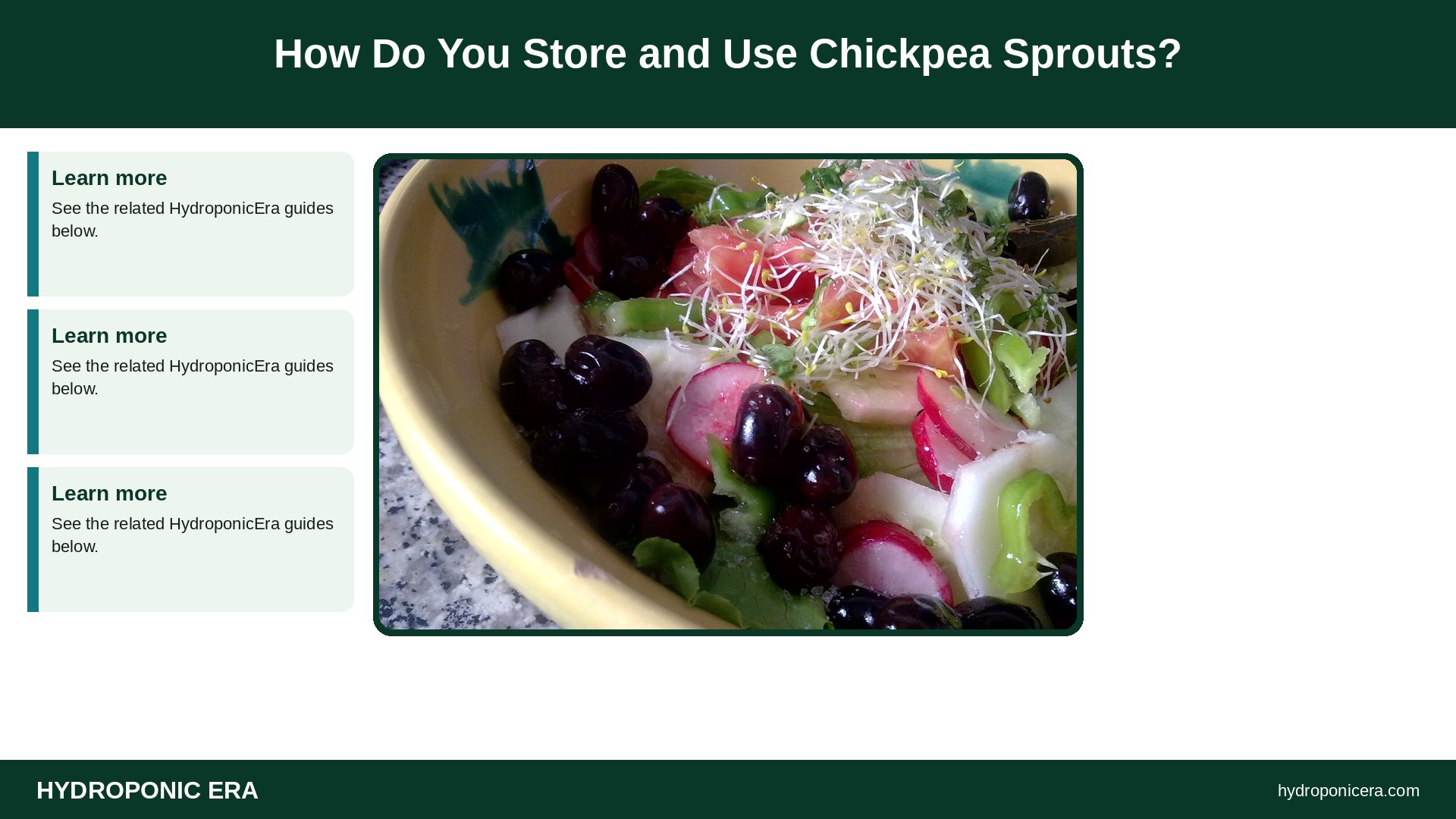
Store chickpea sprouts dry, covered and cold, at 40°F (4°C) or below, and use them within a few days. Cook them in curries, soups or stir-fries, roast them, or blend cooked sprouted chickpeas into hummus. Cooking also lowers the food safety risk.
- Quick boil: simmer until tender, then use in salads or hummus.
- Roast: toss cooked sprouts with oil and spices and roast until crisp.
- Stir-fry: add near the end so they stay firm but heat through.
Want other jar crops? Our sprouts in a jar guide covers mung beans, lentils and more.
FAQ About Chickpea Sprouts
Can you sprout canned chickpeas?
No. Canned chickpeas are cooked, so the seed is dead. Use whole dried chickpeas.
Do chickpea sprouts need light?
No. Grow them out of direct sun; light is not needed for sprouts this short.
How much do chickpeas expand?
They roughly double during soaking, so use a jar no more than one-quarter full of dry beans.
Should I peel the skins?
It is optional. Loose skins can be floated off during rinsing to reduce spoilage.
Who should not eat raw chickpea sprouts?
CDC advises children, older adults, pregnant people and people with weakened immunity to eat sprouts only cooked.
Sources
- CDC — Safer Food Choices
- CDC (archive) — Advice to Consumers on Raw Sprouts
- UC Agriculture and Natural Resources — Growing Seed Sprouts at Home (Publication 8151)
- Kansas State University and University of Missouri Extension — Sprouting Seeds at Home—Safely
- U.S. FDA — Selecting and Serving Produce Safely
- Photo credits (Wikimedia Commons, edited with titles): Chickpeas Sprout by Gaurav Dhwaj Khadka (CC BY-SA 4.0); Growing bean sprouts by User:tlcoles (CC BY-SA 3.0); Cicer arietinum noir MHNT.BOT.2017.12.2 by Roger Culos (CC BY-SA 3.0); Salad, Romaine lettuce, cucumber, tomato, green pepper, radish, alfalfa sprouts, black olives, lemon juice, salt & olive oil (7765310086) by Lablascovegmenu from London (CC BY 2.0)