
Are hydroponic vegetables healthy? Yes. Hydroponic vegetables contain the same vitamins, minerals and fiber as soil-grown ones of the same variety. Research shows small differences in either direction, and those depend more on variety, light, nutrient management, harvest timing and freshness than on soil itself. Eating more vegetables matters far more than how they were grown.
| Question | Evidence-based answer |
|---|---|
| Same nutrients as soil-grown? | Yes. Plants take up the same mineral nutrients; in hydroponics they come from a dissolved solution instead of soil. |
| More or less vitamin C? | Studies disagree. Some find more in hydroponic lettuce, some find no difference. |
| Antioxidants (phenolics)? | Some studies find higher levels in soil-grown lettuce. |
| Nitrate? | Can be higher in hydroponic leafy greens; growers can reduce it before harvest. |
| Are hydroponic vegetables healthy overall? | Yes, when they’re fresh and well grown. |
| Biggest nutrition factor you control | Freshness and how much you eat. |

Are Hydroponic Vegetables Healthy Compared With Soil-Grown?

Plants do not “eat” soil. They absorb dissolved mineral ions such as nitrate, potassium, calcium and magnesium through their roots. In soil, those ions come from minerals and decomposing organic matter. In hydroponics, they come from a measured nutrient solution. Penn State Extension’s overview of hydroponic plant nutrition lists the same essential elements either way.
That is why a hydroponic lettuce is still lettuce. Its vitamin and mineral content falls within the normal range for the variety. So the interesting question isn’t just “are hydroponic vegetables healthy?” but what pushes nutrient levels up or down in any growing system.
What Does the Research Actually Show?
Researchers who ask “are hydroponic vegetables healthy?” often reach different conclusions, because they use different varieties, lights, seasons and nutrient recipes. Two recent lettuce studies show the range:
- A 2023 greenhouse comparison (published open access on PubMed Central) found higher ascorbic acid (vitamin C) and soluble sugar in hydroponic lettuce than in soil-grown lettuce, but also more nitrate. Replacing the nutrient solution with fresh water three days before harvest removed the excess nitrate.
- A 2021 trial in Slovenia (ISHS Acta Horticulturae) found no significant difference in chlorophyll, carotenoids or vitamin C between deep water culture and soil. Soil-grown lettuce had higher total phenolic compounds, a group of antioxidants.
The honest summary: are hydroponic vegetables healthy? Yes, but neither method wins on every measure. Claims that hydroponic food is “more nutritious” or “empty” both overstate the evidence.
What Affects the Nutrition of Hydroponic Vegetables?
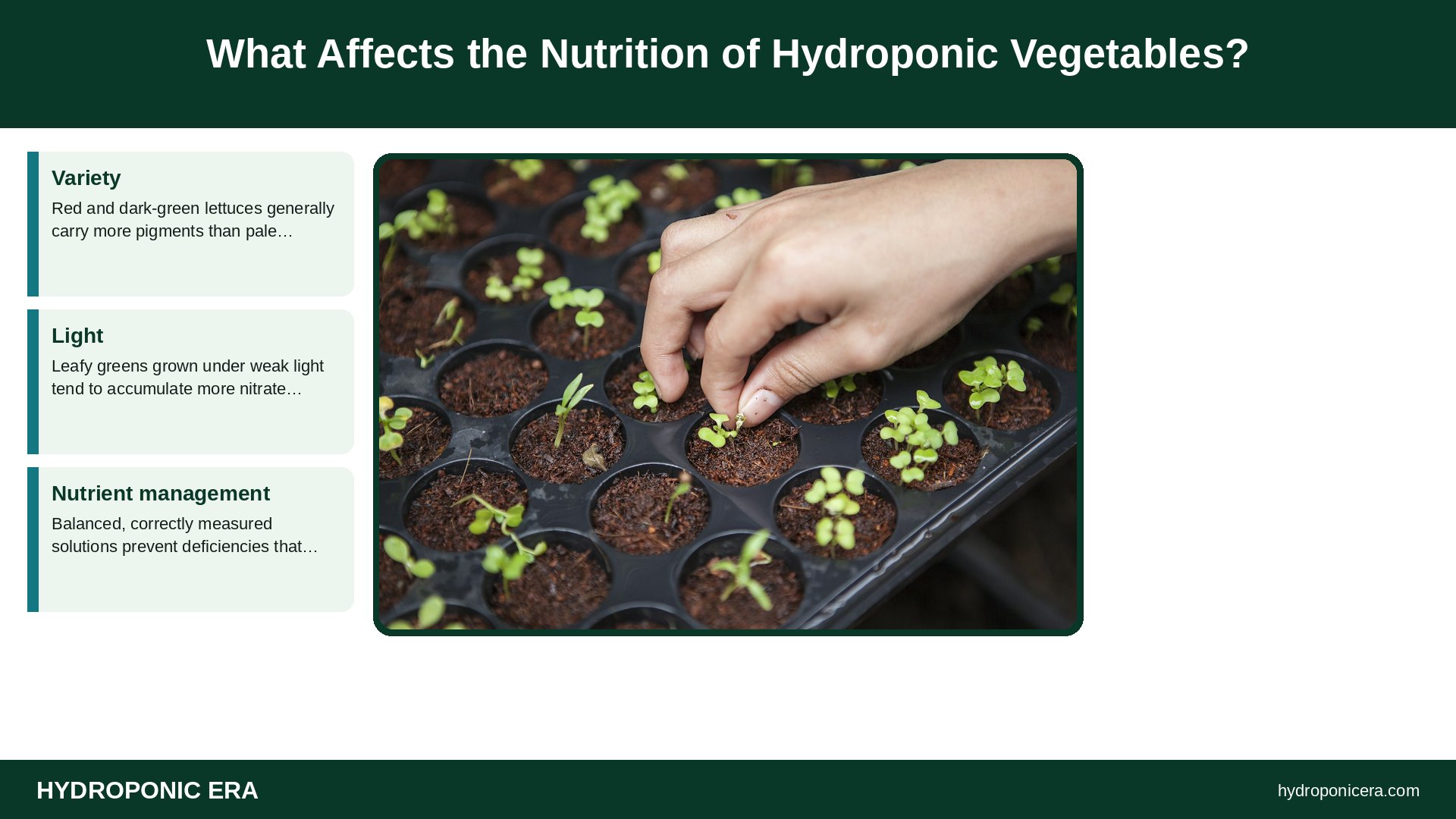
- Variety. Red and dark-green lettuces generally carry more pigments than pale iceberg types, whatever the growing method.
- Light. Leafy greens grown under weak light tend to accumulate more nitrate and build fewer protective compounds. See PPFD and DLI to judge your light.
- Nutrient management. Balanced, correctly measured solutions prevent deficiencies that would lower quality. See how to use hydroponic nutrients.
- Harvest timing. Over-mature or bolting greens turn bitter and tough. See lettuce bitterness and bolting.
- Freshness. Vitamin C in leafy greens declines during storage, so produce eaten soon after harvest has an edge, whether it came from a farm field or your kitchen counter.
Is Nitrate in Hydroponic Greens a Health Concern?
Nitrate is the one result that makes some readers doubt the answer to “are hydroponic vegetables healthy?” Leafy greens naturally accumulate it, and the study above found more of it in hydroponic lettuce. For home growers, practical steps keep levels reasonable:
- Give leafy greens enough light; avoid dim windowsills for the whole crop.
- Avoid feeding far above the label rate for leafy greens. See nutrient burn for signs of overfeeding.
- Harvest after a few hours of light rather than at dawn.
- Consider running plain water for the last few days before a full harvest, as the 2023 study did, if your crop and system allow it.
If you have a specific medical concern about dietary nitrate, talk to your doctor or a registered dietitian. This article is general information, not medical advice.
Are Hydroponic Vegetables Safe and Pesticide-Free?
Safety and nutrition are separate questions. “Are hydroponic vegetables healthy?” is about nutrients; food safety is about germs and residues. Indoor hydroponic growing can reduce some pest and soil-contact risks, but it does not make produce automatically safe or pesticide-free. Commercial growers may still use approved pest controls, and home growers still need clean hands, clean equipment and clean water. Our hydroponic food safety guide covers the practical steps.
Hydroponic produce is also not automatically organic. Whether hydroponic operations can carry the USDA Organic label is explained in our organic farming guide and the USDA National Organic Program.
How Can Home Growers Make Hydroponic Vegetables Healthier?
- Grow dark, colorful varieties such as red leaf lettuce, kale and Swiss chard. See kale and Swiss chard.
- Harvest young and eat fresh. Cut-and-come-again picking keeps leaves tender.
- Keep the solution balanced. Check pH and EC weekly; see EC and TDS.
- Add herbs. Basil, parsley and cilantro boost flavor so you eat more greens. See best herbs for hydroponics.
- Try microgreens. They are quick and easy to grow at home. See microgreens guide.
Common Myths About Hydroponic Vegetables
| Myth | Reality |
|---|---|
| “Hydroponic food is grown in chemicals, so it’s unhealthy.” | Nutrient solutions are mineral salts plants absorb in soil too. |
| “Hydroponic vegetables have no nutrients.” | Studies measure normal vitamin and mineral levels. |
| “Hydroponic is always more nutritious.” | Results vary; some measures favor soil-grown. |
| “Hydroponic means organic.” | Not automatically; certification is a separate question. |
| “Hydroponic produce can’t carry germs.” | Any produce can be contaminated; hygiene still matters. |
How Do You Pick Healthy Hydroponic Vegetables at the Store?
In US grocery stores, hydroponic greens are often sold as “hydroponically grown,” “greenhouse grown” or “living lettuce” with roots still attached. When shoppers ask “are hydroponic vegetables healthy enough to pay more for?”, freshness is the part you can actually judge in the aisle.
- Check the leaves. Choose crisp, deeply colored leaves with no slime or browning.
- Look for a pack or harvest date and buy the freshest container.
- Consider living lettuce. Heads sold with roots attached tend to stay crisp longer in the fridge.
- Refrigerate promptly. The FDA advises keeping your refrigerator at 40°F (4°C) or below.
- Eat within a few days to get the most flavor and vitamin C.
The Bottom Line: Are Hydroponic Vegetables Healthy?
Yes. Are hydroponic vegetables healthy enough to be a regular part of your diet? Absolutely. They supply the same kinds of nutrients as soil-grown produce, with differences that depend on how they were grown, how fresh they are and which variety you choose. Pick fresh, colorful produce, or grow it yourself under good light, and focus on eating more vegetables overall.
FAQs: Are Hydroponic Vegetables Healthy?
Do hydroponic vegetables have less flavor?
Flavor depends on variety, light and harvest timing. Well-grown hydroponic herbs and greens can taste excellent; weak light and overfeeding are the usual causes of bland produce.
Is hydroponic lettuce as healthy as soil lettuce?
Broadly, yes. Studies find similar vitamin levels, with some differences in antioxidants and nitrate that depend on how the lettuce was grown.
Are hydroponic tomatoes less nutritious?
There is no consistent evidence of that. Variety, ripeness at harvest and storage affect tomato nutrition more than the growing method.
Are hydroponic vegetables healthy if they’re grown under LED lights?
Yes. Light intensity matters more than whether it comes from the sun or LEDs. Greens grown under weak light tend to hold more nitrate, so give them enough light for the crop.
Should I wash hydroponic vegetables?
Yes. Rinse them under running water before eating, just like any produce.
Are hydroponic vegetables healthy for kids?
Yes, and growing them together can encourage kids to try more vegetables. See hydroponics with kids.
Related HydroponicEra Guides
Sources
- PubMed Central — Performance analysis of two typical greenhouse lettuce production systems: commercial hydroponic production and traditional soil cultivation (2023)
- ISHS Acta Horticulturae — Biochemical and morphological characteristics of lettuce cultivated in a hydroponic system and soil
- Penn State Extension — Hydroponics Systems and Principles of Plant Nutrition
- U.S. Food and Drug Administration — Are You Storing Food Safely?
- USDA Agricultural Marketing Service — National Organic Program