
Aloe vera can grow in hydroponics, but it is one of the harder houseplants to keep healthy without soil. Aloe is a succulent from dry climates that stores water in thick leaves and is very prone to rot when its roots or base sit in water. Aloe vera pups can root in water and survive in semi-hydro setups such as clay pebbles or a wick pot with lots of air, but a pot of fast-draining cactus mix remains the more reliable home for most growers in the US.
Key takeaway: Aloe vera prefers “wet, then dry.” Hydroponic systems that keep roots wet all the time fight that preference, so use airy media and shallow water if you try it.
| Question | Short answer |
|---|---|
| Can aloe vera grow in water? | Pups can root in water; long-term water culture risks rot |
| Best soil-free method | Semi-hydro (clay pebbles) with a low water line |
| Light | Bright light; several hours of direct sun or a strong grow light |
| Temperature | About 55–85°F; protect from frost |
| Outdoors | Hardy only in the warmest parts of the US (roughly USDA zones 10–11) |
| Pets | Toxic to cats, dogs, and horses (ASPCA) |

Why Aloe Vera Struggles in Hydroponics

Most hydroponic crops, such as lettuce and basil, are thirsty, fast-growing plants that thrive with constant water and oxygen. Aloe vera is the opposite: slow-growing, drought-adapted, and built to survive long dry spells. Its roots expect to dry out. In stagnant water, the base can turn soft and translucent, a classic sign of rot.
We include aloe vera in our list of plants that struggle in home hydroponics for this reason. It is possible, just not beginner-friendly.
How to Root Aloe Vera Pups in Water
- Separate a pup with a few leaves from the mother plant, ideally with a bit of root attached.
- Let it callus for several days in a dry, shaded spot.
- Suspend the base just above the water, or touching it lightly. Do not submerge the base.
- Place in bright, indirect light while rooting.
- Change the water weekly.
- Move to an airy medium once roots are about an inch long.
Some growers skip water entirely and root pups directly in dry-ish cactus mix. Both work; water lets you watch the roots form.
Semi-Hydro Setup for Aloe Vera

If you want a soil-free display, semi-hydro is the best compromise:
- Use clay pebbles (LECA), which hold air between them. See our clay pebbles guide.
- Keep the water line low, only in the bottom inch or so of the container.
- Let the reservoir dry out for a few days before refilling.
- Feed very lightly, using a diluted complete fertilizer a few times during the growing season.
- Flush with plain water occasionally to clear salts.
Light Is the Other Half of the Battle
Aloe vera needs a lot of light. In a dim room it stretches, leans, and turns pale. A south- or west-facing window or a strong LED grow light helps. Our PPFD and DLI guide explains how to measure light, and our grow light guide covers fixtures.
Moving an indoor aloe suddenly into full summer sun can sunburn leaves. Acclimate it over a week or two.
Aloe Vera Problems and Fixes

| Symptom | Likely cause | Fix |
|---|---|---|
| Soft, translucent base | Rot from constant moisture | Remove rot, dry the plant, restart in airy medium |
| Thin, curled leaves | Underwatering or root loss | Check roots, water thoroughly then let dry |
| Stretched, pale growth | Too little light | Brighter window or grow light |
| Brown or red tint | Sun stress or cold | Acclimate gradually; protect from cold |
| Brown, mushy roots | Root rot | Trim, dry, replant |
Common Mistakes With Aloe Vera Hydroponics
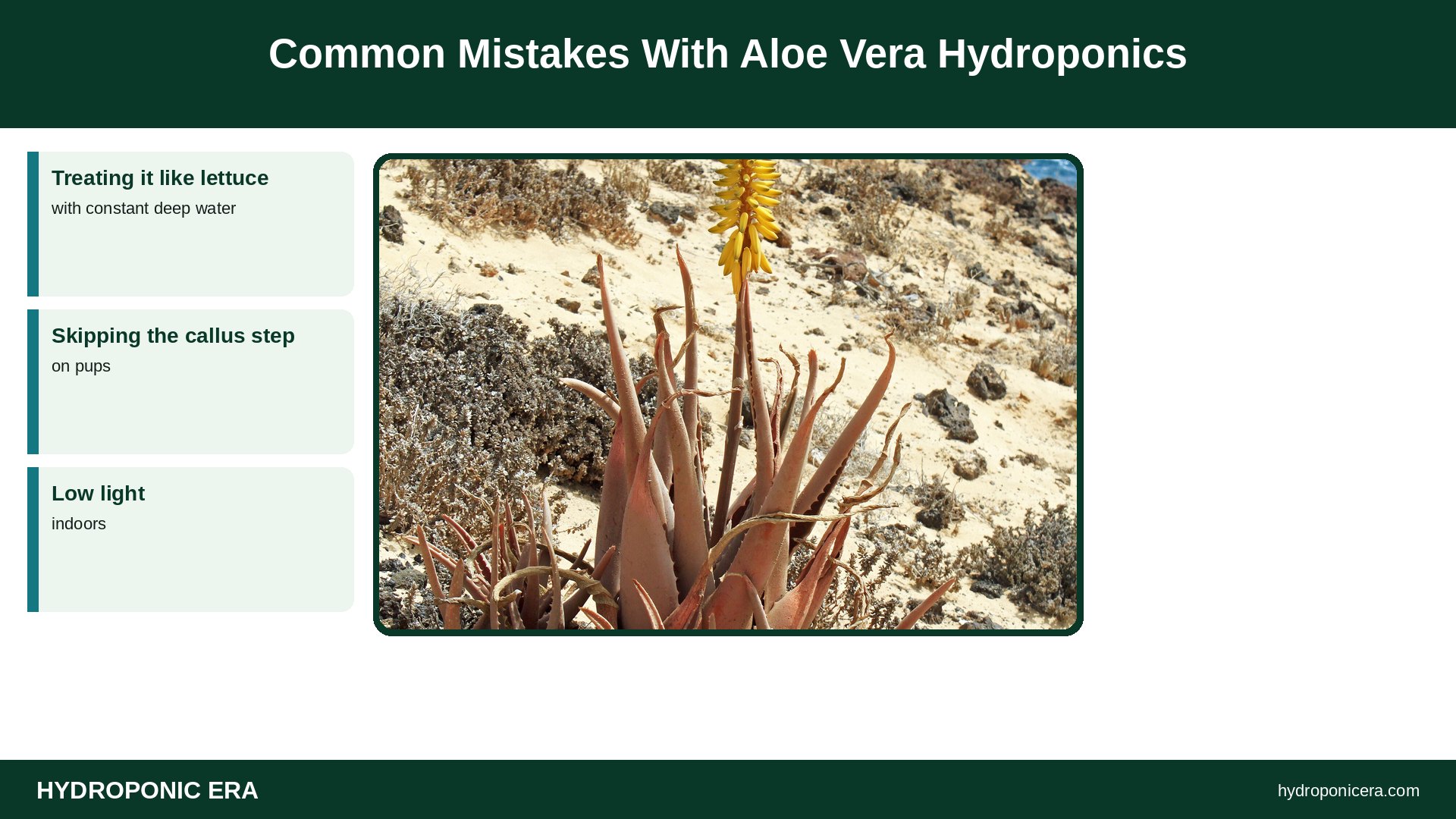
- Treating it like lettuce with constant deep water.
- Skipping the callus step on pups.
- Low light indoors.
- Heavy feeding. Aloe is a light feeder.
- Using aloe gel from home plants internally. Ingesting aloe latex can cause digestive upset; stick to commercial products for any personal use.
Semi-Hydro Watering Rhythm for Succulent Plants
- Fill the reservoir to about an inch.
- Let it run dry and wait a few days.
- Refill with plain water most times and dilute nutrients occasionally.
- Flush monthly with plain water to remove salts.
- Slow down in winter when growth pauses.
This wet-then-dry rhythm is closer to how the plant grows in nature, and it is the single biggest difference between success and rot in soilless setups.
Variables That Change Results
| Variable | Effect | Adjustment |
|---|---|---|
| Pot size | Oversized pots stay wet longer | Choose a snug container |
| Medium particle size | Fine particles hold too much water | Use larger clay pebbles or pumice |
| Season | Winter growth slows | Water and feed less |
| Light | Low light causes stretch | South window or LED |
When Soil Is the Better Choice
If your goal is a thriving, low-maintenance plant, a terracotta pot with cactus mix is hard to beat. Terracotta breathes and dries quickly, matching the plant’s preferences. Choose soilless growing mainly if you enjoy experimenting, want to see the roots, or need a soil-free plant for a specific display. There’s no shame in moving a struggling plant back to soil.
Harvesting Gel Responsibly
Cut an outer leaf at the base with a clean knife, let the yellow latex drain away, and use the clear gel for topical purposes only. Don’t harvest more than a few leaves at a time from a small plant. For anything you plan to ingest, rely on commercial products made for that purpose.
Pet Safety and Placement
The ASPCA lists aloe as toxic to cats and dogs, so keep jars, semi-hydro pots, and fallen leaves out of reach. Choose a heavy pot, since aloe gets top-heavy as it grows, and place it in the brightest window you have or under a grow light. Turning the pot every week or two keeps growth even rather than leaning toward the light.
FAQs: Aloe Vera Hydroponics
Can aloe vera live in water permanently?
It is risky. Some pups survive in water, but long-term aloe vera hydroponics works better with semi-hydro media and a low water line.
How long does an aloe pup take to root?
Often a few weeks, depending on warmth and light.
Is aloe vera toxic to pets?
Yes. The ASPCA lists aloe as toxic to cats, dogs, and horses.
Can I grow aloe vera outdoors in the US?
Only in frost-free areas, roughly USDA zones 10–11. Elsewhere, grow it indoors or move it inside before frost.
Related HydroponicEra Guides
- Plants that struggle in home hydroponics
- Clay pebbles for hydroponics
- Plants that grow in water
- Growing media for hydroponics
Sources
- NC State Extension Plant Toolbox — Aloe vera
- ASPCA — Aloe toxicity
- University of Minnesota Extension — Cacti and succulents
- Photo credits (Wikimedia Commons, edited with titles): Aloe vera Lanzarote by H. Zell (CC BY-SA 3.0); Vahona – Aloe vera 01 by ApexDynamo (CC BY-SA 4.0)