
Can you use worm castings hydroponics style? Not directly. Worm castings hydroponics works poorly with raw solid castings, because they leave sediment, use up oxygen and can turn a reservoir anaerobic. Research shows that strained vermicompost leachate or tea, pH-adjusted and aerated, can replace part of a standard nutrient solution.
Key takeaway: Worm castings hydroponics is a supplement, not a full recipe. University studies found vermicompost extracts can replace roughly half of a mineral nutrient solution for lettuce, but they struggled over a long tomato crop. If you try it, strain the liquid, aerate it and check pH, and keep a mineral base nutrient in the tank.
| Form | Use in hydroponics | Main concern |
|---|---|---|
| Solid worm castings | Top-dress soil, not recirculating tanks | Sediment and low oxygen in water |
| Vermicompost tea (aerated extract) | Partial nutrient replacement or booster | Needs straining, aeration and fresh batches |
| Vermicompost leachate (worm liquid) | Tested as a complete fertilizer after treatment | Alkaline pH and high sodium |
| Mineral nutrients | Reliable base for any system | Needs good mixing and pH control |

What Do Studies Say About Worm Castings Hydroponics Use?
Published trials show that worm castings hydroponics can work, but only with processed liquid, not castings dumped into a tank. A University of Hawaii at Hilo study replaced part of a mineral solution with vermicompost tea, while an Australian study grew pak choi on treated vermicompost leachate.
In the Hawaii work reported in BioCycle, lettuce grown in a 50% nutrient solution with 1.6% vermicompost by volume yielded as well as lettuce with more vermicompost, and the authors concluded vermicompost could replace roughly half of the mineral nutrients for a short crop.
Tomatoes did less well over a long season, and the 100% mineral solution produced the most fruit. The authors noted the tanks may have turned oxygen-poor.
A 2023 study in Horticulturae grew lettuce in recirculating NFT channels on aerated vermicompost tea and found yield and root biomass comparable to mineral fertilizer. However, harvest took 50 days instead of 35, and the solution was short on phosphorus and magnesium. That is a real result for worm castings hydroponics, but it shows why a mineral top-up is still needed., pak choi on pH-buffered vermicompost leachate reached 70–98% of the fresh weight of plants fed mineral fertilizer, while leachate left unbuffered failed. Those are research systems, not typical home setups, so treat the results as guidance rather than a recipe.
Why Does Worm Castings Hydroponics Need pH Control?
Worm castings hydroponics needs pH control because vermicompost leachate tends to be alkaline. The Queensland researchers measured a pH of 7.8–9.2 before treatment, far above the 5.5–6.5 range most hydroponic crops prefer. High pH locks out iron and phosphorus and causes pale leaves.
They lowered pH to 5.5 with nitric acid and saw far better growth than at pH 7.0 or untreated liquid. That works in a research lab, but it also adds nitrogen and needs careful measuring. A reliable meter matters, so read our guide on pH in hydroponics before experimenting.

Can Raw Worm Castings Go in a Hydroponic Reservoir?
Raw castings are a poor fit for a reservoir. They contain fine particles that settle, feed microbes and use up dissolved oxygen as they break down. In recirculating systems that sediment can clog drippers, coat roots and contribute to the low-oxygen conditions that favor root rot.
- Sediment: fine particles settle in tanks and channels and build up over days.
- Oxygen demand: microbes feeding on the organic matter use dissolved oxygen that roots need.
- Odor and slime: stagnant organic liquid can smell and grow slimy biofilm.
- Pathogens: non-sterile organic matter can carry unwanted microbes, so wash hands and sanitize tools.
Compare this to the strained approach in our compost tea in hydroponics guide and the notes on root rot caused by Pythium, which thrives when oxygen drops.
How Do You Make Vermicompost Tea for Worm Castings Hydroponics Trials?
To try worm castings hydroponics at home, brew a small batch of tea from quality castings, then strain it finely before it goes anywhere near a pump. Use fresh, finished vermicompost, dechlorinated water and an air stone, and use the tea soon after brewing.
- Place a mesh bag of castings in a bucket of dechlorinated water.
- Aerate with an air pump and stone for 12 to 24 hours, the typical range reported in vermicompost tea studies.
- Strain through fine cloth or a paint-strainer bag so particles are removed.
- Dilute and test the pH and EC before adding to a mineral nutrient solution.
- Use it the same day, and clean the bucket and air stone between batches.
Always run a small worm castings hydroponics test on a few plants before changing a whole system. Keep your regular mineral nutrients in the tank, because the Hawaii study found that vermicompost could not fully replace the mineral solution.
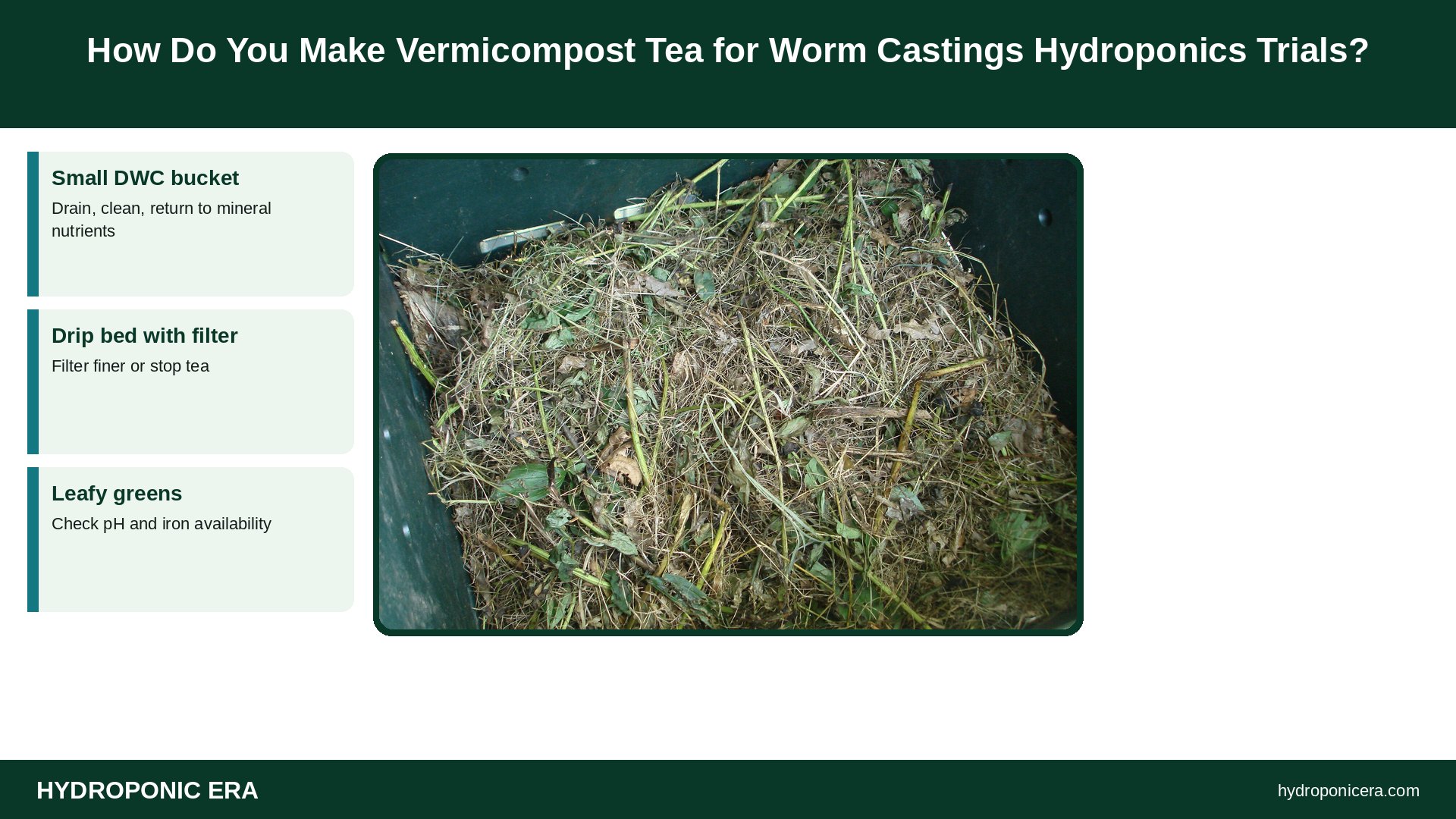
| Test setup | What to watch | What to do if it fails |
|---|---|---|
| Small DWC bucket | Roots turning brown or slimy | Drain, clean, return to mineral nutrients |
| Drip bed with filter | Clogged emitters | Filter finer or stop tea |
| Leafy greens | Pale new leaves | Check pH and iron availability |
Is Worm Castings Hydroponics Better Than Mineral Nutrients?
No. Mineral nutrients are easier to measure, more consistent and better for long crops like tomatoes. Worm castings hydroponics may add beneficial microbes and plant hormones, but research shows nutrient content, not magic, does most of the work, and yields from vermicompost-only solutions trailed the mineral controls.
If you like organic inputs, our guide to organic and bioponic nutrients explains better-tested options. For a simple start, use worm castings in a soil or coir mix for herbs and seedlings, then switch to a mineral recipe for a recirculating system.
Where Do Worm Castings Fit Alongside Hydroponics?
Worm castings fit best in growing media for hybrid or soilless pots. Mix a small portion into a coco blend or top-dress a bucket for slow nutrients, then irrigate with a mineral solution. This keeps organic matter out of recirculating pumps and keeps pH easier to control.
Use it for seed starting only in small amounts, since heavy organic content can invite fungus gnats. If gnats appear, see fungus gnats in hydroponics for control steps.

FAQ About Worm Castings Hydroponics
Can I add worm castings to DWC?
It is not recommended. Castings cloud the water, use oxygen and can encourage root problems. Use a strained, aerated tea at low strength if you experiment.
Do worm castings hydroponics solutions need pH adjustment?
Yes. In the Queensland study, vermicompost leachate measured pH 7.8–9.2 and needed adjustment to about 5.5.
Is worm tea the same as worm leachate?
No. Tea is brewed from castings in aerated water, while leachate is liquid drained from a worm bin.
Can I replace all my nutrients with vermicompost?
Research suggests not. Lettuce trials replaced about half, and tomatoes needed full mineral nutrients.
How long does worm tea last?
Use it soon after brewing, ideally the same day, because it goes anaerobic and smells.
Sources
- Horticulturae (MDPI) — Vermiliquer (Vermicompost Leachate) as a Complete Liquid Fertilizer for Hydroponically-Grown Pak Choi
- BioCycle — Testing Vermicompost in Hydroponic Systems
- Horticulturae (MDPI) — Nutrient Solution from Aqueous Extracts as an Alternative to Fertigation in Hydroponic
- Photo credits (Wikimedia Commons, edited with titles): Maintaining a 5 gallon vermicompost bucket that is buried in a plot at the Garfield Neighborhood Garden in Phoenix, Arizona by Matthew.kowal (CC BY 4.0); Redwiggler-copulation-compost by Fubar Obfusco (CC BY-SA 4.0); Compost pile by Ksd5 (CC0); Worm composting 2 by Quadell (CC BY 3.0)