
How do you use an indoor mini greenhouse for seeds? Use an indoor mini greenhouse with the vents closed until seeds sprout, then open one vent, then two, and remove the dome after emergence. Keep the medium moist, warm at about 70°F (21°C), and give 12–14 hours of light so seedlings stay compact and avoid rot.
Key takeaway: An indoor mini greenhouse is a humidity dome that holds warmth and moisture for germination. Its main risk is leaving the dome on too long, which brings fungus, mold and leggy seedlings. Vent early, add airflow and light, and pull the lid once true leaves form.
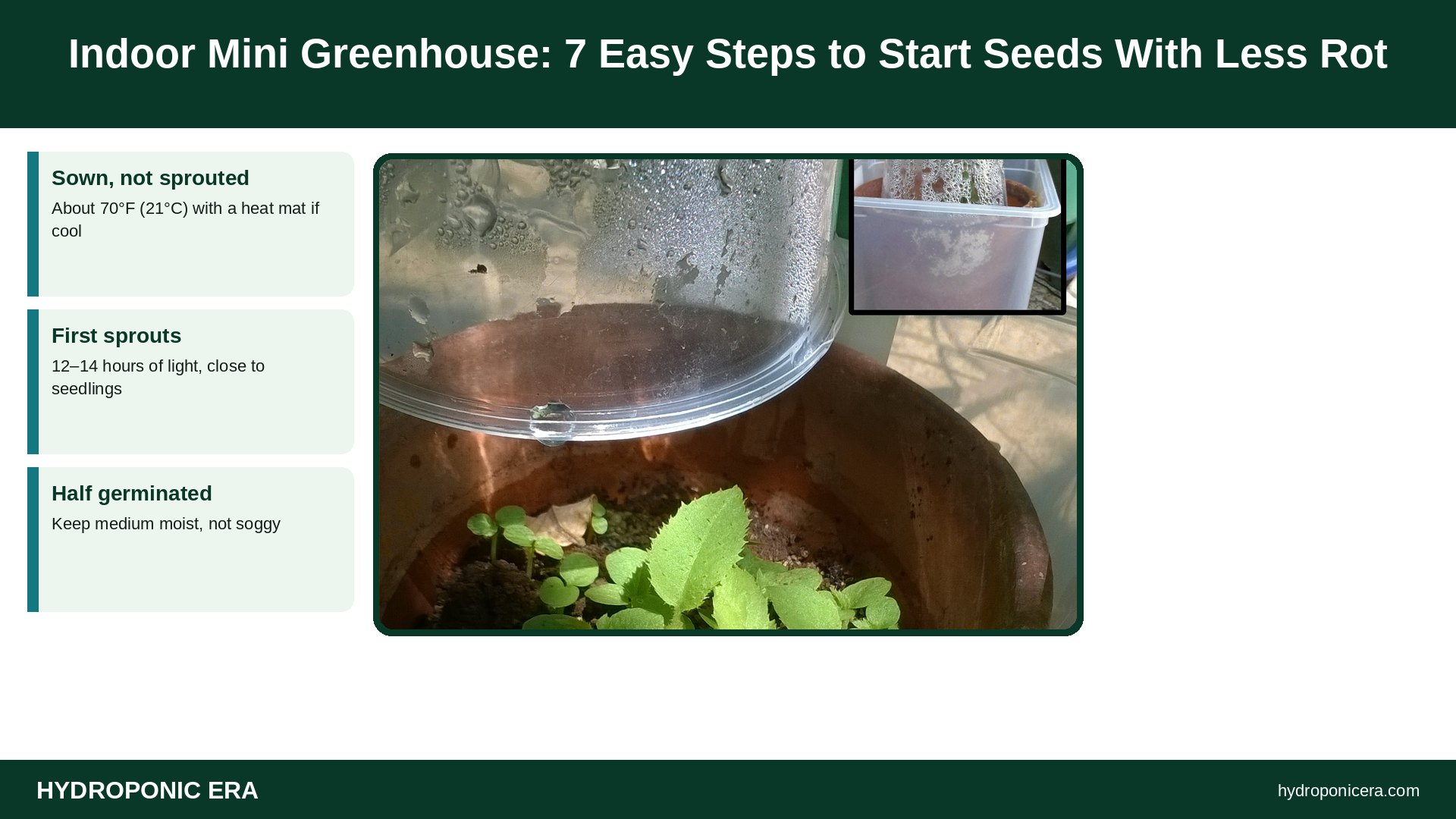
| Stage | Dome and vents | Light and heat |
|---|---|---|
| Sown, not sprouted | Closed | About 70°F (21°C) with a heat mat if cool |
| First sprouts | Open one vent | 12–14 hours of light, close to seedlings |
| Half germinated | Open two vents | Keep medium moist, not soggy |
| Fully emerged | Remove the dome | Fan on low, begin dilute feeding |
What Is an Indoor Mini Greenhouse?
An indoor mini greenhouse is a seed tray with a clear, vented dome, or a small shelf unit with a plastic cover, that holds humidity around seeds and cuttings. It works like a tiny greenhouse because the clear lid traps warmth and moisture. Most kits include cells or a flat tray, and some include a heat mat.
Choose an indoor mini greenhouse that fits your light. A 10 by 20 inch (25 by 51 cm) tray is the common size, and fits under a shop light or LED panel. Our guide to seed starting trays and seedling heat mats and humidity domes cover tray options in more detail.
How Should You Vent an Indoor Mini Greenhouse?
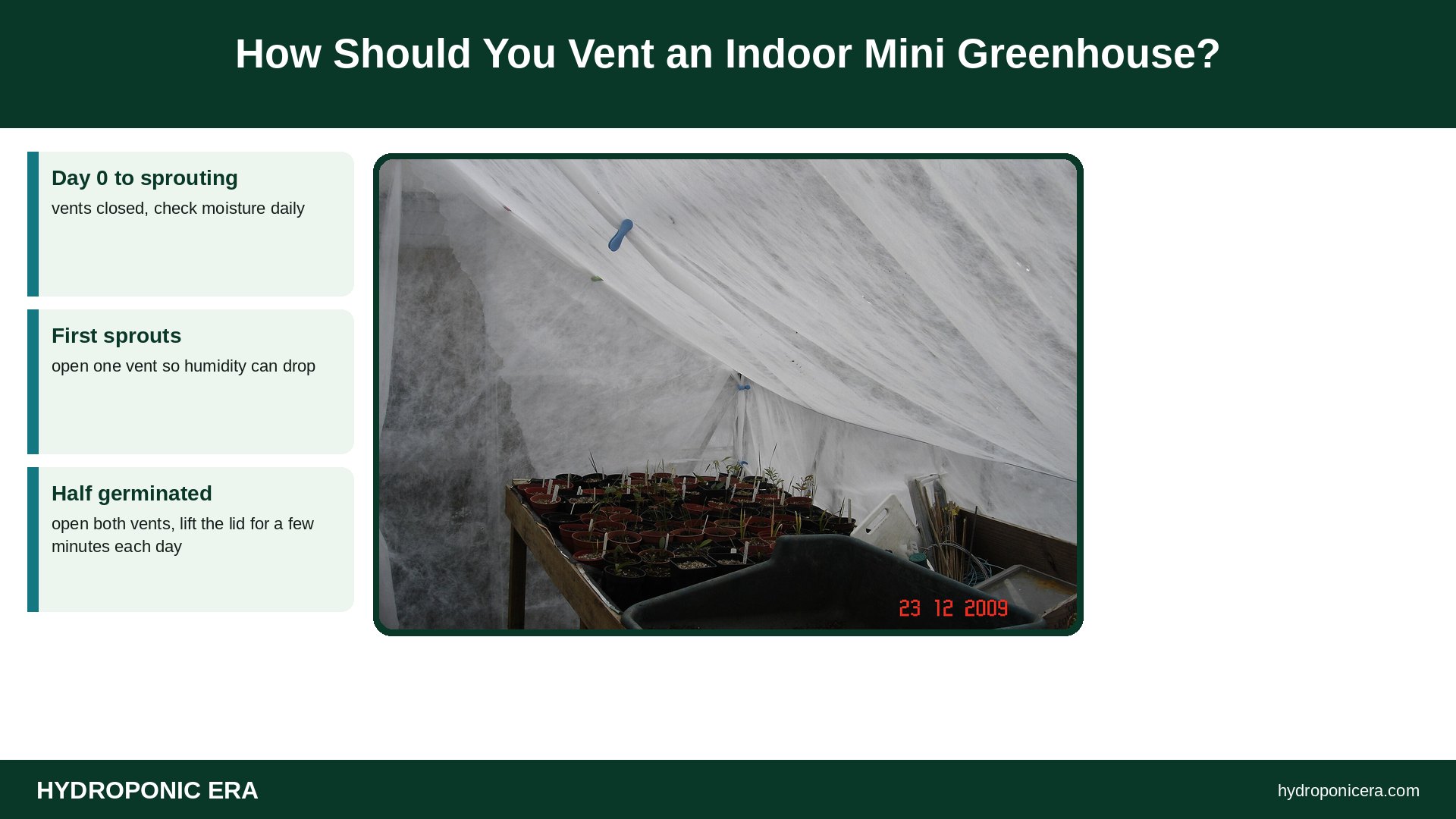
Keep the vents closed until the first seedlings appear, then open one vent, and open the second when about half the seeds have germinated. After full emergence remove the dome. Utah State University Extension describes this staged approach, because constant humidity encourages fungal diseases.
- Day 0 to sprouting: vents closed, check moisture daily.
- First sprouts: open one vent so humidity can drop.
- Half germinated: open both vents, lift the lid for a few minutes each day.
- Fully emerged: remove the dome and add a small fan for airflow.
A dome left on for weeks produces tall, weak seedlings and gray fuzz. If you see damping off, read our guide to damping off in seedlings.
What Temperature and Light Does an Indoor Mini Greenhouse Need?
Most vegetable seeds germinate best around 70°F (21°C), and a heat mat under the tray helps in a cool room. Once seedlings emerge, they need 12–14 hours of bright light close to the plants. An indoor mini greenhouse holds heat well, so watch for overheating under strong lights.
Keep LED or fluorescent lights a few inches above the dome or the plants, and raise them as seedlings grow. Windowsills are rarely bright enough in winter. For a complete shelf setup, see seed starting shelf with grow lights. Use a simple thermometer in the tray, because the temperature under a dome can run several degrees warmer than the room.
| Problem | Likely cause | Fix |
|---|---|---|
| Leggy seedlings | Too little light | Lower the light or add a brighter fixture |
| Mold on the soil | Constant humidity | Vent, remove dome, add airflow |
| Seeds not sprouting | Too cold or dry | Add heat mat, mist, check seed age |
| Wilting under dome | Too hot | Open vents, move away from light |
How Do You Water Seeds in an Indoor Mini Greenhouse?
Bottom watering keeps seeds from washing away and the surface drier. Pour water into the tray and let the medium absorb it for 15–30 minutes, then pour off the excess. Mist the surface lightly only if it dries before sprouting. The goal is damp, not soggy, because soaked mix lacks air.
Use a sterile seed starting mix in an indoor mini greenhouse rather than garden soil, which can carry fungi and weed seeds. Hydroponic growers can use rockwool, peat pellets or foam plugs instead. Tell-tale signs of overwatering include a green film on the surface and a sour smell.
Which Seeds Benefit Most From an Indoor Mini Greenhouse?
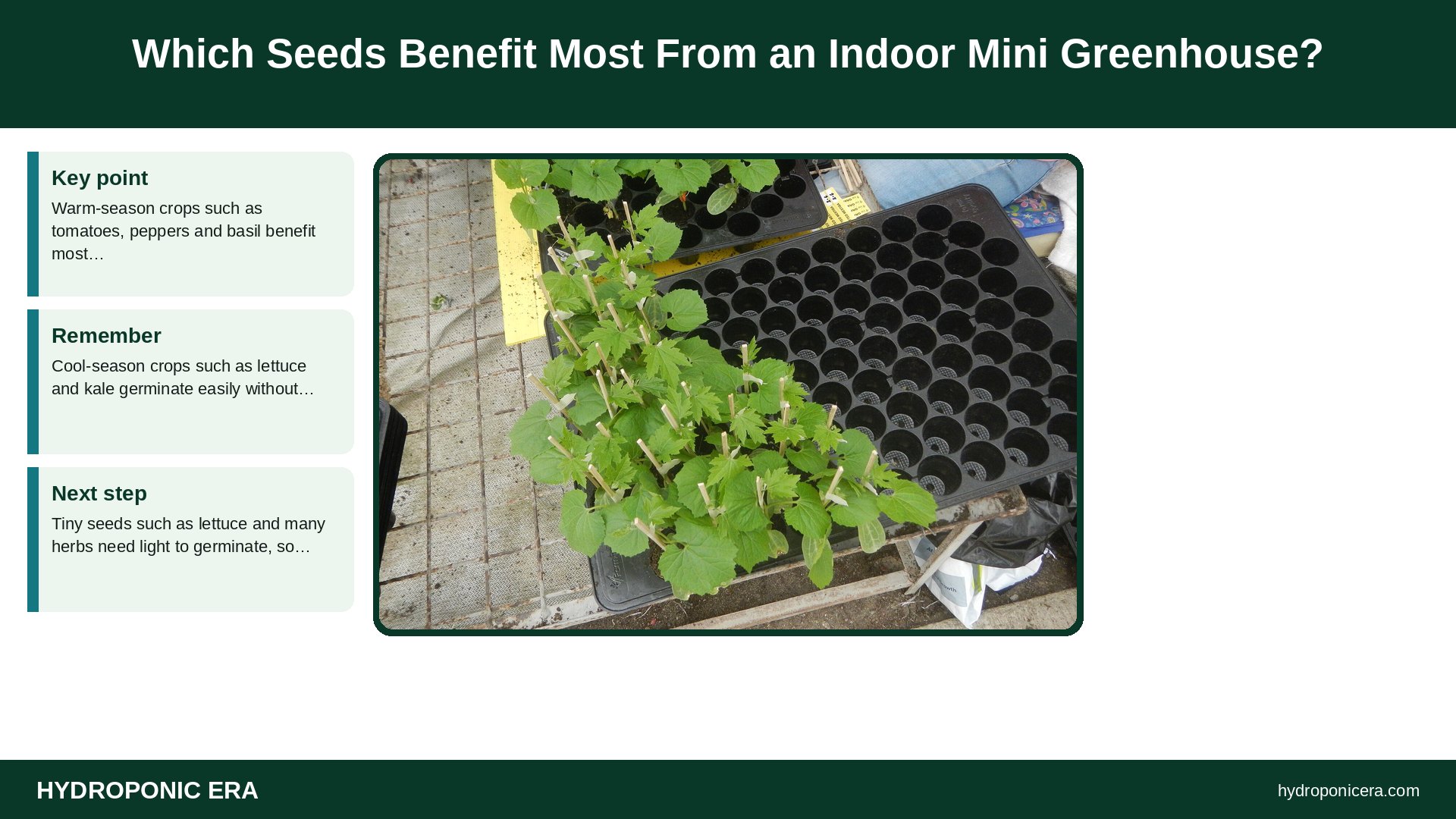
Warm-season crops such as tomatoes, peppers and basil benefit most, because the dome and a heat mat keep them near 70°F (21°C) in a cool room. Cool-season crops such as lettuce and kale germinate easily without added heat, so give them a vented dome for a short time or none at all.
Tiny seeds such as lettuce and many herbs need light to germinate, so press them onto the surface instead of burying them. Larger seeds such as squash can go deeper. The seed packet gives the depth, and a clear lid helps you see progress without opening the dome each day. Use an indoor mini greenhouse for the first week or two only, then move the tray under open air and light.
Outdoors, the same idea appears as a cold frame. Utah State University notes that cold frames can run 10 to 15°F (6 to 8°C) hotter than the air outside, so they must be vented promptly on sunny days. An indoor mini greenhouse under lights behaves the same way, so check it often.
Can You Use an Indoor Mini Greenhouse for Cuttings?
Yes. An indoor mini greenhouse is also useful for rooting cuttings, because the humid air reduces leaf water loss while roots form. Use a clean medium, keep bright but not direct light, and vent every day to keep leaves dry. Remove the dome as soon as roots appear.
For propagation in particular, our guide on humidity domes and tents for cuttings and clones explains how to balance humidity and airflow.
How Do You Clean an Indoor Mini Greenhouse Between Batches?
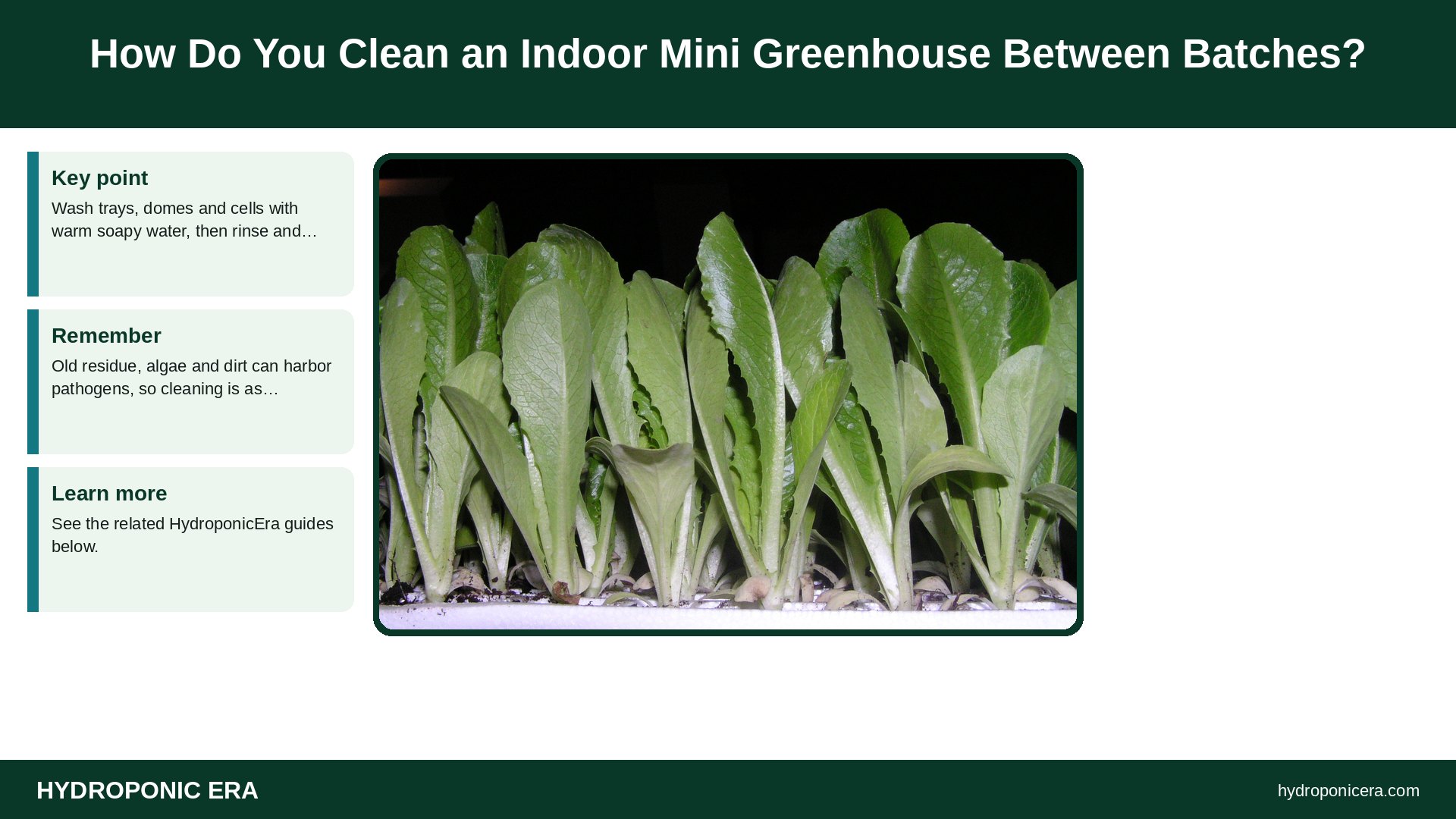
Wash trays, domes and cells with warm soapy water, then rinse and sanitize with a diluted bleach solution or hydrogen peroxide. Let everything air dry. Old residue, algae and dirt can harbor pathogens, so cleaning is as important as the seed starting mix you use.
- Remove all spent medium and roots.
- Scrub the tray and dome with soapy water.
- Soak in a 1:9 bleach and water solution for ten minutes, or use a hydrogen peroxide rinse.
- Rinse thoroughly and dry in the open air.
- Store flat so plastic does not warp.
FAQ About the Indoor Mini Greenhouse
When should I remove the dome?
Remove it once most seeds have sprouted and true leaves are forming, usually within a week or two of emergence.
Why is there mold under my dome?
High humidity without airflow. Vent daily, remove the lid sooner and reduce watering.
Does an indoor mini greenhouse need a heat mat?
Not always, but it helps seeds that like warmth, such as peppers and tomatoes, in a cool room.
Can I leave seedlings in it until I transplant?
Not under a closed dome. Grow them uncovered with light and a gentle fan.
What can I use instead of a store-bought kit?
A clear plastic storage lid or a clean takeout container works if you vent it.
Sources
- Utah State University Extension — Starting vegetable seeds indoors: materials
- Utah State University Extension — Gardening indoors
- Royal Horticultural Society — Cold frames and mini greenhouses
- Photo credits (Wikimedia Commons, edited with titles): Makeshift sprouting greenhouse for Actinidia deliciosa by Eiku (CC BY-SA 4.0); Fleece lined greenhouse potting tray and seed pots – Flickr – peganum by peganum from Small Dole, England (CC BY-SA 2.0); 5670Farm Ready Seedling Facility East West Seed Philippines 20 by Judgefloro (CC0); Lettuce Plugs by Apapac at English Wikipedia (Public domain)