
What is a wicking bed? A wicking bed is a self-watering garden bed with a water reservoir under the soil. Capillary action draws water upward like a wick, so moisture spreads evenly and you water less often. The Botanic Gardens of Sydney says it can use up to 50% less water than a conventional bed.
Key takeaway: A wicking bed works by sealing a reservoir under the soil, separating it with geotextile, adding an overflow and filling it through a pipe. Keep the reservoir no deeper than the soil can wick, use porous loamy soil and water from above for the first two weeks.
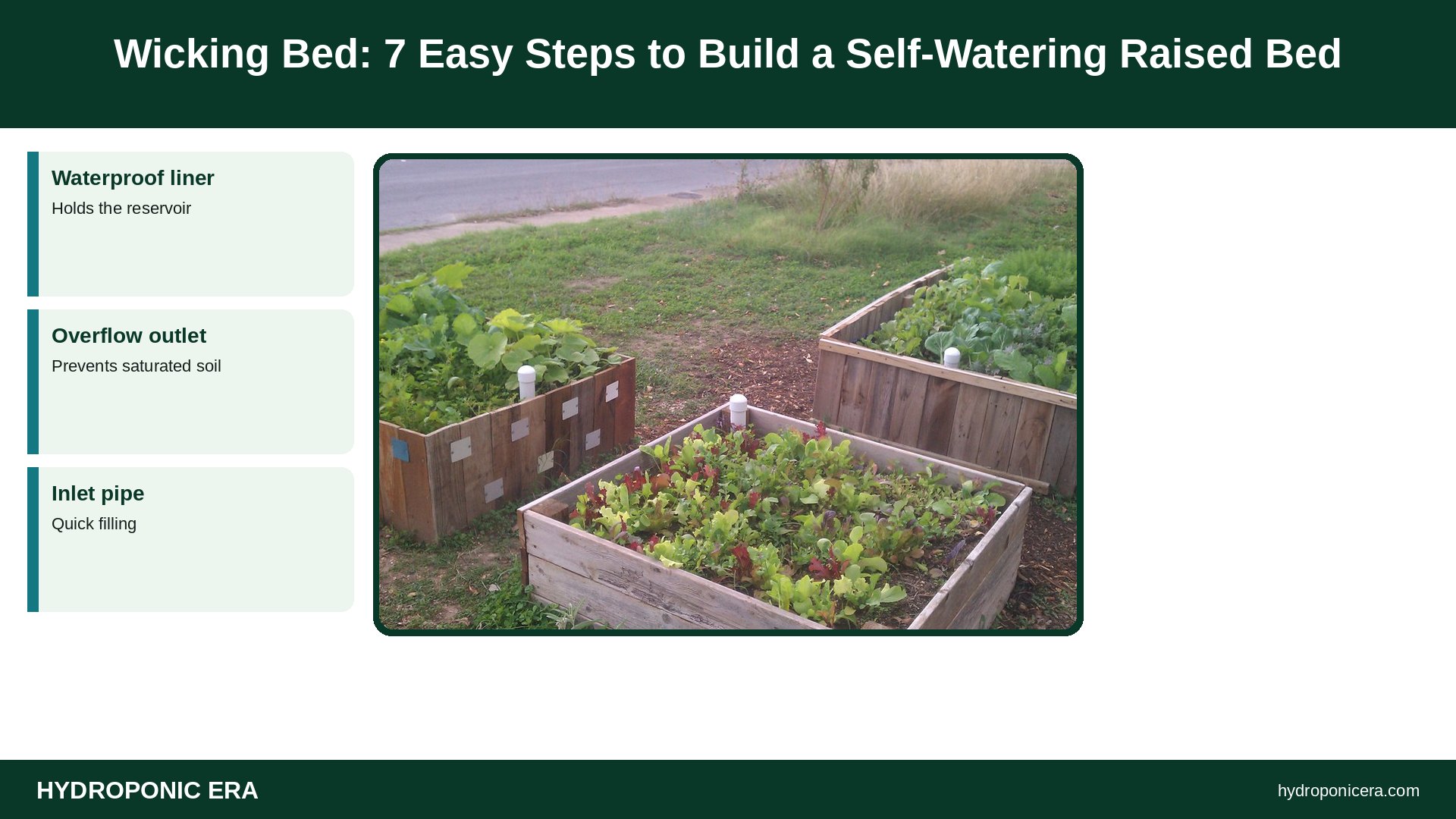
| Part | Purpose | Note |
|---|---|---|
| Waterproof liner | Holds the reservoir | Pond liner or other non-porous material |
| Overflow outlet | Prevents saturated soil | At top of reservoir |
| Inlet pipe | Quick filling | Held in place by reservoir material |
| Reservoir fill | Stores water | Stones, pebbles, crates or ag pipe |
| Geotextile layer | Separates soil and reservoir | Lets water pass, holds soil |
How Does a Wicking Bed Work?
This design stores water in a lined reservoir beneath the growing soil. Capillary action pulls water up through a cloth layer into the soil as plants and evaporation draw moisture. Because water enters from below, the surface stays drier, which reduces evaporation and makes it harder for weeds to establish.
The Botanic Gardens of Sydney also notes that the design gives good drainage in heavy rain, since an overflow lets extra water escape, and that it can keep plants watered for a week or two without topping up.
What Are the Benefits and Limits of a Wicking Bed?
Benefits include up to 50% water savings, fewer weeds, steady moisture and less frequent watering. Limits include building cost, the need for a liner and overflow, and care to prevent mosquito breeding in the reservoir. The depth of the reservoir must also match how far the soil can wick water upward.
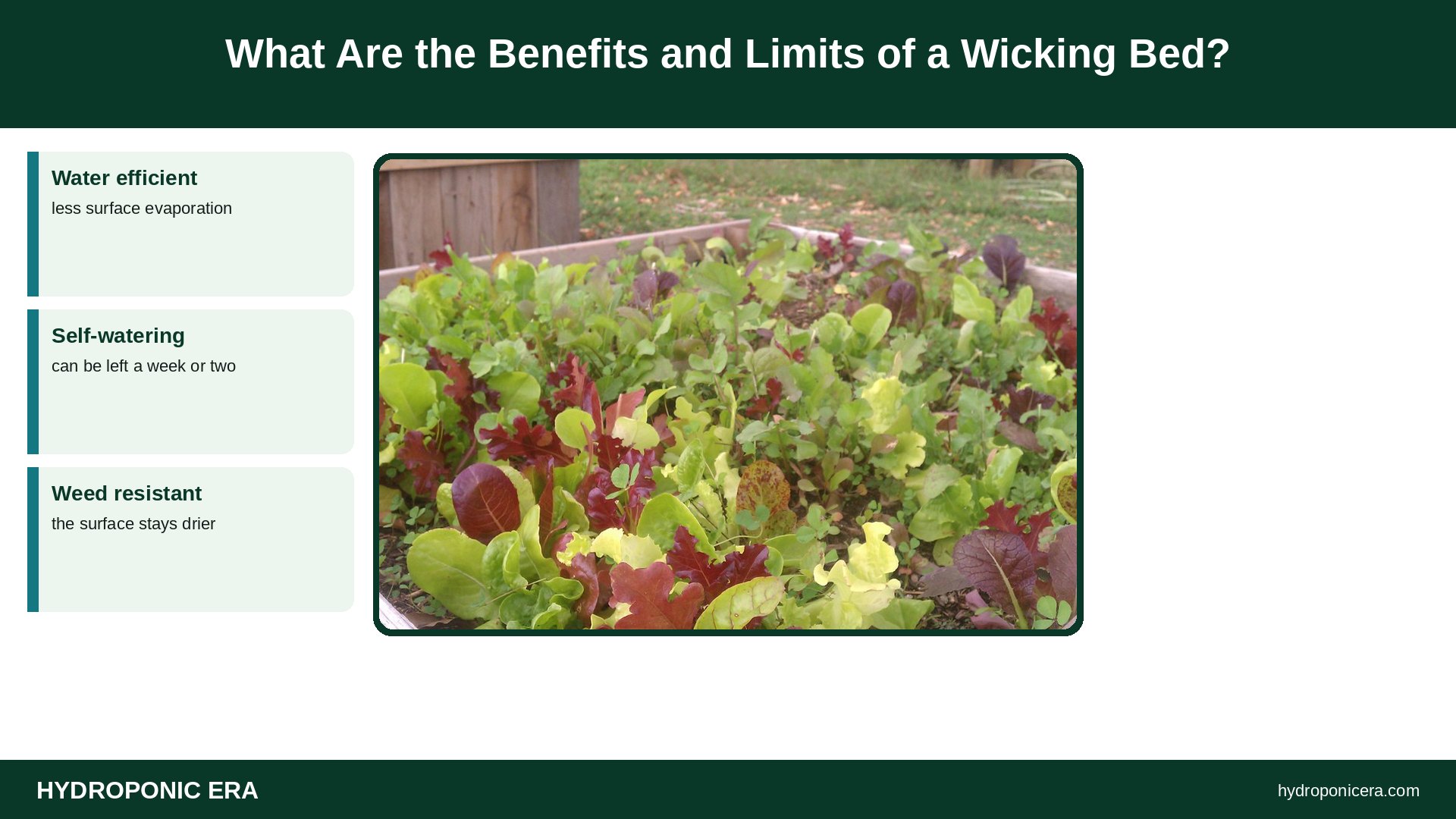
- Water efficient: less surface evaporation.
- Self-watering: can be left a week or two.
- Weed resistant: the surface stays drier.
- Limits: build effort, liner cost and mosquito control.
See also our comparison of hydroponics vs soil for how steady moisture changes crop care.
What Materials Do You Need for a Wicking Bed?
You need a container or raised bed, a pond liner or other non-porous material, a drainage or overflow pipe, an inlet pipe, reservoir fill such as stones or crates, geotextile fabric and loamy soil. Choose smooth reservoir fill that will not puncture the liner, and use a rigid inlet pipe tall enough to reach above the soil.
Use a mix suited for wicking. A porous loamy soil is best, according to the Botanic Gardens of Sydney. Dense clay holds too much water, and pure sand wicks poorly. For more on mixes, see our growing media guide.
How Do You Build a Wicking Bed Step by Step?
- Line the base and sides with pond liner up to the height of the reservoir.
- Create an overflow by fitting a pipe or lowering the liner edge at the top of the reservoir.
- Install an inlet pipe for quick filling.
- Add the reservoir material, such as pebbles, crates or ag pipe.
- Lay geotextile fabric over the reservoir, tucking some down the sides.
- Add porous, loamy soil and plant.
- Fill the reservoir until water runs from the overflow.
- Water from above for the first week or two to encourage strong roots.
Do not skip the overflow. Without it, heavy rain saturates the soil and plants rot.
How Deep Should a Wicking Bed Reservoir Be?
Many designs use a reservoir about 8–12 inches (20–30 cm) deep under a similar depth of soil, but depth should never exceed how far the soil can wick. If the reservoir is deeper than the wicking height, the water below the reach of the soil is wasted. Match the soil, depth and plants to your design source.
Shallow-rooted vegetables and herbs do well in modest depths. Deep-rooted plants like tomatoes may need a deeper bed, but the same wicking limit applies. If in doubt, build a small test bed first and observe how moisture spreads.
How Do You Maintain a Wicking Bed?
Fill the reservoir through the inlet pipe until water flows from the overflow, usually every week or two in hot weather. Cover the inlet to keep out debris and mosquitoes. Mulch the surface, and check for blocked overflow. Flush with extra water now and then to wash out salts from fertilizer.
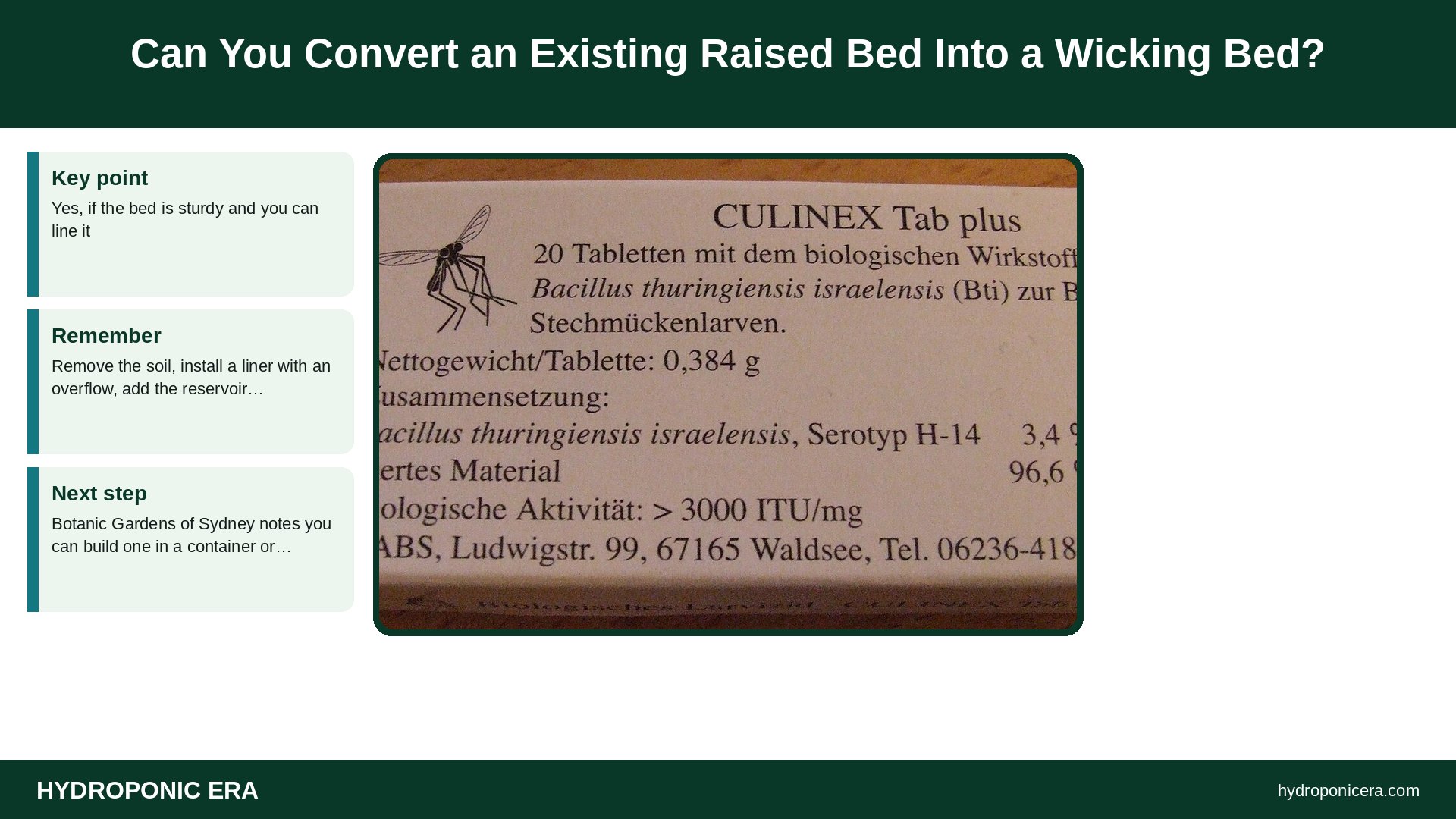
If mosquitoes breed in the reservoir, a mesh cover and a dunk of Bti, covered in our mosquito bits guide, can help. Use rainwater to keep salts low.
Which Plants Grow Best in a Wicking Bed?
Vegetables and herbs that like steady moisture do well, including lettuce, beans, cucumbers, tomatoes and basil. Avoid plants that need dry roots, such as lavender or rosemary, unless you keep the reservoir low. Because the surface stays drier, seeds may need surface watering until they sprout, then the roots find the moisture below.
Plant in rows or clusters sized for the bed and mulch the surface to reduce evaporation further. Rotate crops each season to limit disease, and top up the soil with compost between plantings.
Can You Convert an Existing Raised Bed Into a Wicking Bed?
Yes, if the bed is sturdy and you can line it. Remove the soil, install a liner with an overflow, add the reservoir fill and geotextile, then put the soil back. Botanic Gardens of Sydney notes you can build one in a container or an existing raised bed with a few elements, and ready-made kits also exist.
Check the bed’s frame for strength, since the water adds weight, and avoid sharp edges that could puncture the liner. Raised beds near trees can benefit, since it is difficult for invasive roots to penetrate a lined wicking bed.
FAQ About Building a Wicking Bed
How much water does it save?
The Botanic Gardens of Sydney says up to 50% compared with a conventional bed.
Do plants need extra watering at first?
Water from above for the first week or two, then rely on the reservoir.
Can I build one in a container?
Yes. The technique works in small containers, too.
What soil is best?
A porous loamy soil, since dense clay wicks poorly.
Do they attract mosquitoes?
Open reservoirs can, so cover the inlet and use mesh or Bti.
Sources
- Botanic Gardens of Sydney — Building a wicking bed
- University of Kentucky Extension — Raised wicking bed (AEN-158)
- Gbiota — Bed depths for wicking beds
- Photo credits (Wikimedia Commons and Flickr, edited with titles): Wicking Bed Gardens – Fall 2011 by Glamour Schatz via Flickr (CC BY 2.0); Wicking Bed Gardens – Fall 2011 by Glamour Schatz via Flickr (CC BY 2.0); 5670Farm Ready Seedling Facility East West Seed Philippines 20 by Judgefloro (CC0); Culinex Tab plus by Claus Ableiter (CC BY-SA 3.0)