
How do you care for a bromeliad? Bromeliad care means bright, diffused light, loose well-draining mix and watering about every 1–2 weeks once the mix dries. Keep the central cup filled with water, but flush it now and then to prevent stagnation, salt buildup and mosquito larvae. Feed lightly during growth.
Key takeaway: Bromeliad care is simple once you know three rules: give bright diffused light, water the mix only when it dries while keeping the central cup fresh, and fertilize at 1/3 to 1/2 strength during active growth, applying it to the soil, not the cup.
| Need | Guideline | Source |
|---|---|---|
| Light | Bright, diffused light | UF/IFAS, UNL |
| Water | Every 1–2 weeks, let the mix dry between | UF/IFAS |
| Central cup | Keep filled, flush periodically | UF/IFAS, CSU |
| Mix | Loose, well-draining | UF/IFAS |
| Fertilizer | Every 1–2 months at 1/3–1/2 strength | UF/IFAS |
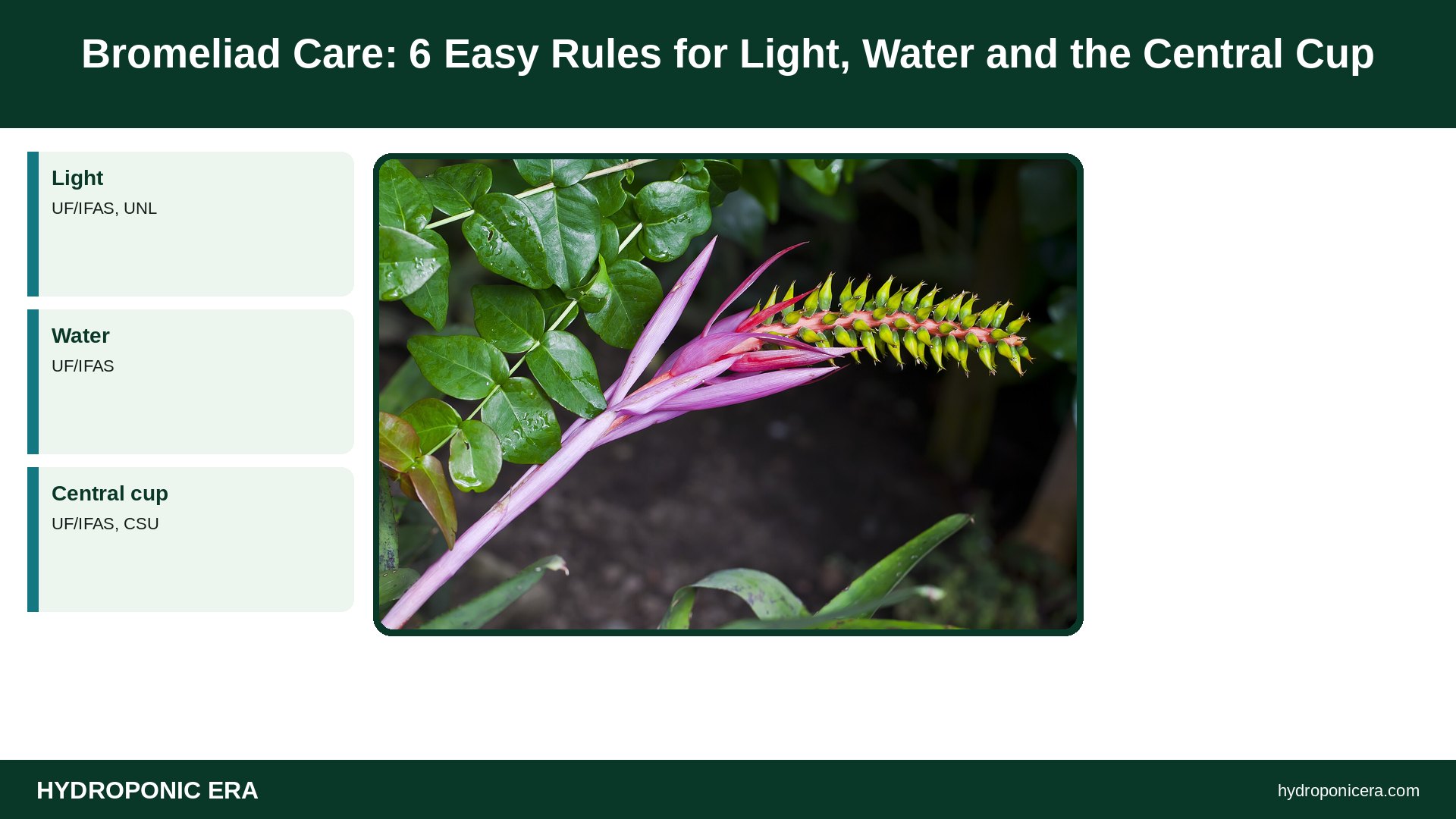
What Is a Bromeliad?
Bromeliads are tropical plants in the Bromeliaceae family, many of which form a rosette of stiff leaves with a central cup, called a tank, that holds water. Common houseplant types include guzmania, vriesea and aechmea. Many grow on trees in nature, which is why they like open, airy mix and good drainage.
The flower spike lasts for months, and the mother plant slowly declines after blooming while producing pups. Good bromeliad care focuses on light, water and airflow.
How Much Light Does Bromeliad Care Require?
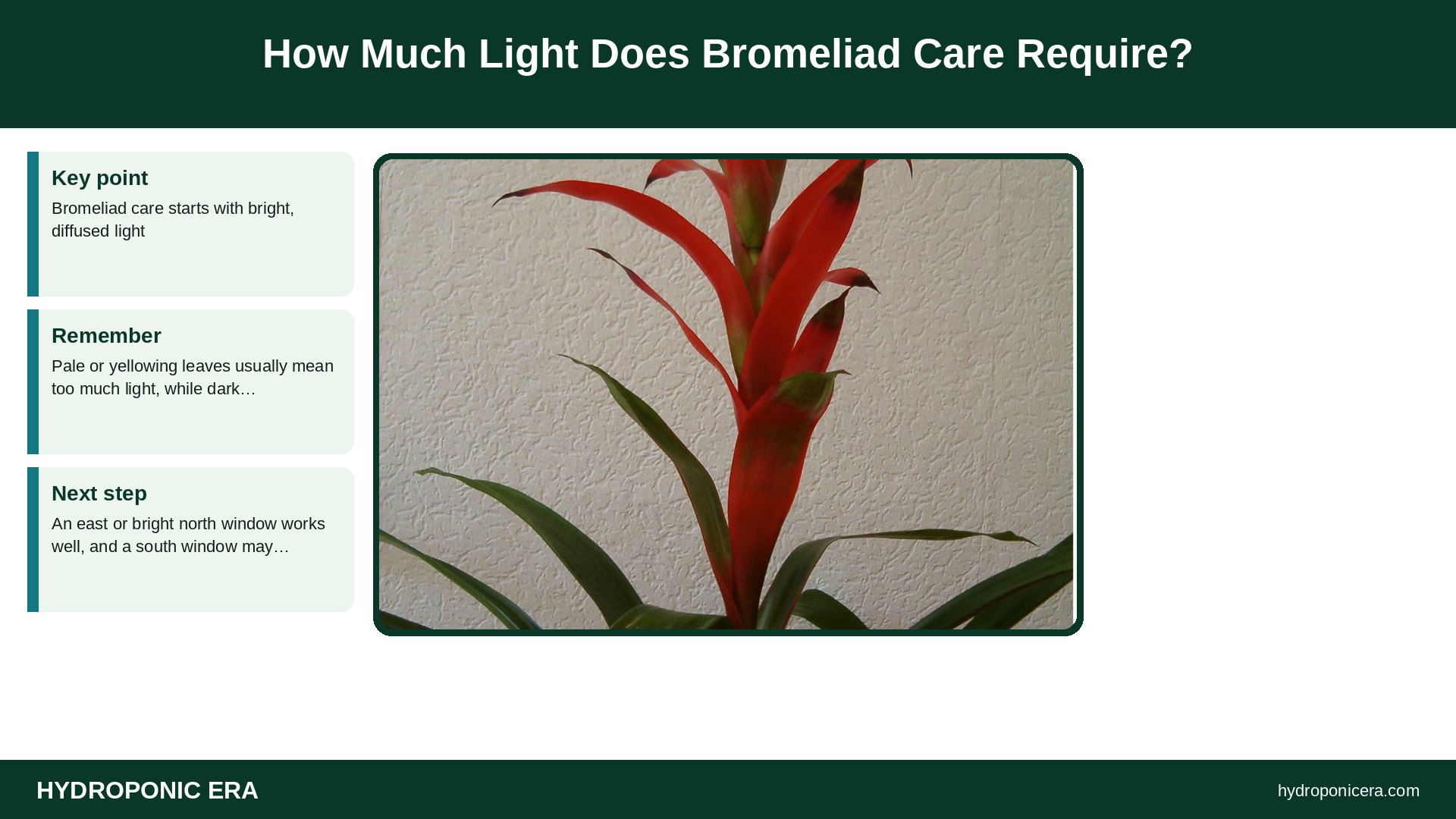
Bromeliad care starts with bright, diffused light. Pale or yellowing leaves usually mean too much light, while dark, soft, drooping leaves suggest too little, according to UF/IFAS and Nebraska Extension. An east or bright north window works well, and a south window may need a sheer curtain. A small grow light also works, as in our LED grow light guide.
How Do You Water in Bromeliad Care?
For bromeliad care, water the potting mix about every 1–2 weeks, letting it dry between waterings, and keep the central cup filled with fresh water. UF/IFAS and Colorado State both warn that standing water in the cup can turn stagnant. Flush the cup every week or two, and use rainwater or low-salt water where possible.
- Check the mix by touch, and water when the top is dry.
- Pour water slowly into the mix until it drains.
- Fill the cup about a quarter to half full with fresh water.
- Every 1–2 weeks, tip out the cup and refill it.
- Empty the saucer so roots never sit in water.
For water tips, see rainwater collection and chlorine and chloramine in tap water.
What Soil Is Best for Bromeliad Care?
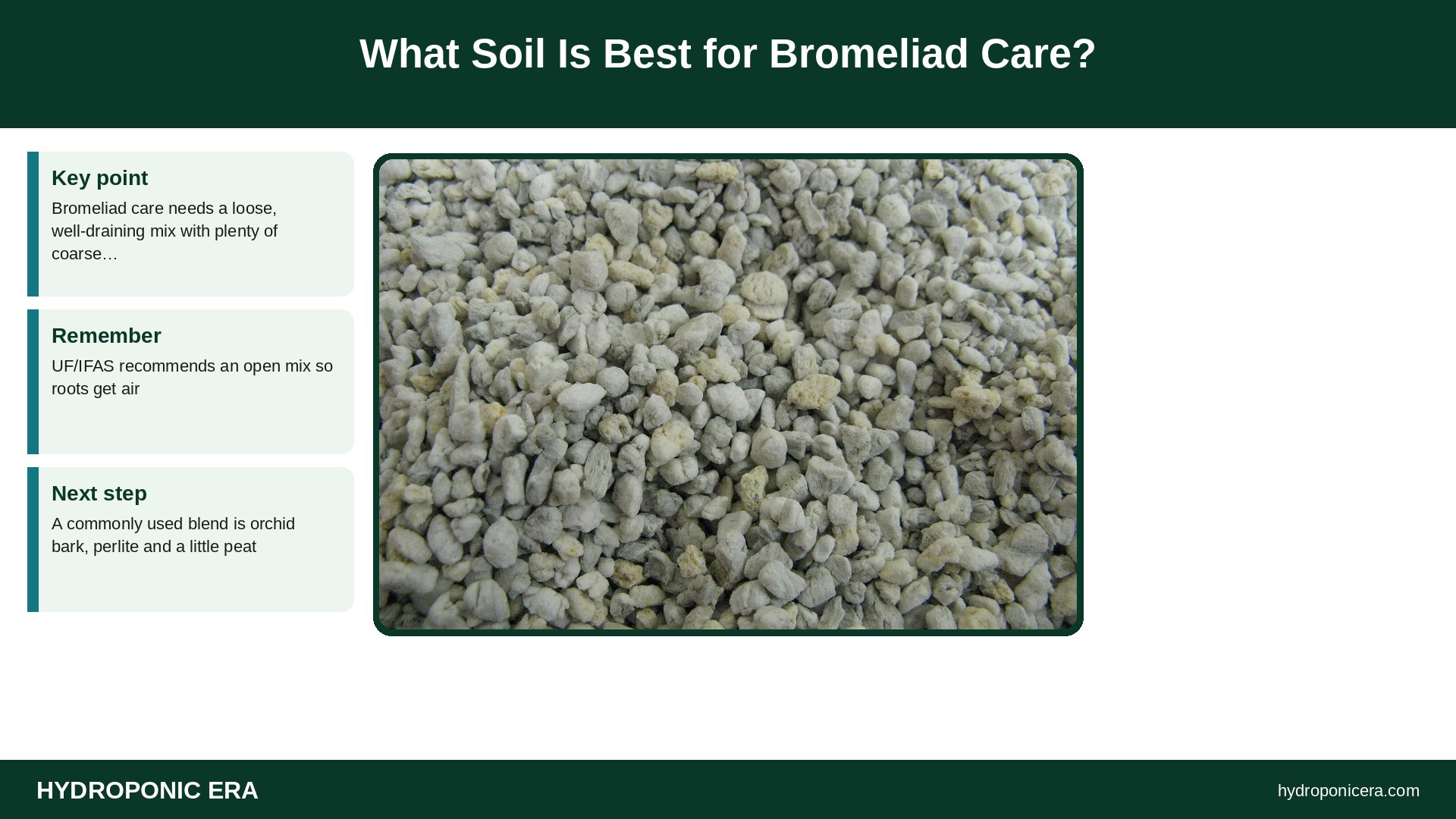
Bromeliad care needs a loose, well-draining mix with plenty of coarse material. UF/IFAS recommends an open mix so roots get air. A commonly used blend is orchid bark, perlite and a little peat. Avoid dense garden soil, which stays wet and rots roots. Use a pot with drainage holes and a heavy base, since the plants can be top-heavy.
Learn more about airy mixes in our guides to growing media and perlite and vermiculite.
Should Bromeliad Care Include Fertilizer?
Lightly, yes. UF/IFAS suggests feeding every 1–2 months during active growth at about 1/3 to 1/2 strength, applying it to the potting mix. Avoid pouring fertilizer into the central cup, where salts can build up and burn tissue. Skip feeding in winter when growth slows, and flush the mix occasionally with plain water.
What Temperature and Humidity Does Bromeliad Care Need?
Good bromeliad care means warm rooms and moderate to high humidity. Keep them away from cold drafts and frost. Dry indoor air can brown the leaf tips, so group plants or use a pebble tray if needed. Our humidity and VPD guide explains how to read and manage room humidity.
| Problem | Likely cause | Fix |
|---|---|---|
| Pale or yellow leaves | Too much light | Move to diffused light |
| Dark, soft, drooping leaves | Too little light | Move closer to a window |
| Brown tips | Dry air or salts | Flush cup, raise humidity |
| Rotting center | Stagnant water or cold | Empty cup, warm up, improve airflow |
How Do You Mount or Pot Different Types of Bromeliads?
Tank-type bromeliads, with a central cup, do best in a small pot with a heavy base, since the roots mainly anchor the plant. Some bromeliads can be mounted on bark or wood and misted, like air plants. Choose a pot only slightly wider than the root ball. A pot that is too big holds extra wet mix, and wet mix is the main cause of root rot.
When you repot, handle the plant gently and keep the crown above the mix line, so water does not pool in the leaf bases. Water lightly afterward and keep the plant out of strong light for a few days while it settles.
How Do You Prevent Pests and Rot in Bromeliad Care?
Pests in bromeliads are usually scale, mealybugs and, in standing cup water, mosquito larvae. Check leaf bases weekly, and wipe pests with a soft cloth dipped in soapy water. Flushing the cup regularly prevents larvae, and good airflow prevents rot. If a center turns soft and smelly, tip out water, dry the plant and move it somewhere warmer and brighter.
Never leave a plant sitting in a saucer of water. Remove old, brown lower leaves with clean scissors, since they trap moisture against the base. Consistent routines make bromeliad care easy, and the colorful flower spike can last for months.
What Happens After a Bromeliad Blooms Despite Good Bromeliad Care?
The mother plant slowly declines after flowering, but it produces offsets called pups. When pups are large enough to handle, you can separate them with a clean knife and pot them. Many growers leave pups attached until they are a good size. Keep caring for the mother plant until it fades, since it feeds the pups.
FAQ About Bromeliad Care
How often should I water a bromeliad?
Water the mix every 1–2 weeks once it dries, and refresh the cup regularly.
Should the bromeliad cup always have water?
Keep it filled, but flush it to avoid stagnation and mosquito larvae.
Why is my bromeliad turning yellow?
Often too much light, or too little care. Check light and water first.
Do bromeliads need direct sun?
No. Bright, diffused light is best.
Will my bromeliad bloom again?
The mother blooms once, but pups can bloom later.
Sources
- UF/IFAS EDIS — Bromeliads (EP337)
- UF/IFAS Gardening Solutions — Bromeliads
- Colorado State PlantTalk — Bromeliads
- University of Nebraska–Lincoln — Bromeliads need strong light and warm temperatures
- Photo credits (Wikimedia Commons, edited with titles): Aechmea nudicaulis, jardín botánico de Tallinn, Estonia, 2012-08-13, DD 01 by Diego Delso (CC BY-SA 3.0); Guzmania Hybrid Rana Orange Habitus by Unknown (CC BY-SA 3.0); Perlite1 by KENPEI (CC BY-SA 3.0); 2008-09-20 Thermometer reading by Ildar Sagdejev (Specious) (CC BY-SA 4.0)