
How do you care for an asparagus fern? Give an asparagus fern bright indirect light, keep the soil evenly moist in spring and summer, water less in winter and feed monthly while it grows. University of Wisconsin Extension notes it is a tender evergreen hardy only in zones 9 to 11, so most growers keep it as a houseplant.
Key takeaway: An asparagus fern is not a true fern. It stores water in tuberous roots, prefers bright light, yellows when too dry or too dark, and has berries that are toxic to cats and dogs. It is also invasive in Florida, Texas and Hawaii, so keep it in a pot.
| Care rule | What to do | Source |
|---|---|---|
| 1. Light | Bright indirect or some direct light indoors | UW Extension |
| 2. Water | Evenly moist in growth, drier in winter | UW Extension |
| 3. Feeding | Monthly in the growing season, none in winter | UW Extension |
| 4. Pruning | Cut old or yellow stems at the base | UW Extension |
| 5. Repotting | Early spring, when tubers fill the pot | UW Extension |
| 6. Safety | Keep berries away from pets and kids | ASPCA |
Is an Asparagus Fern a Real Fern?
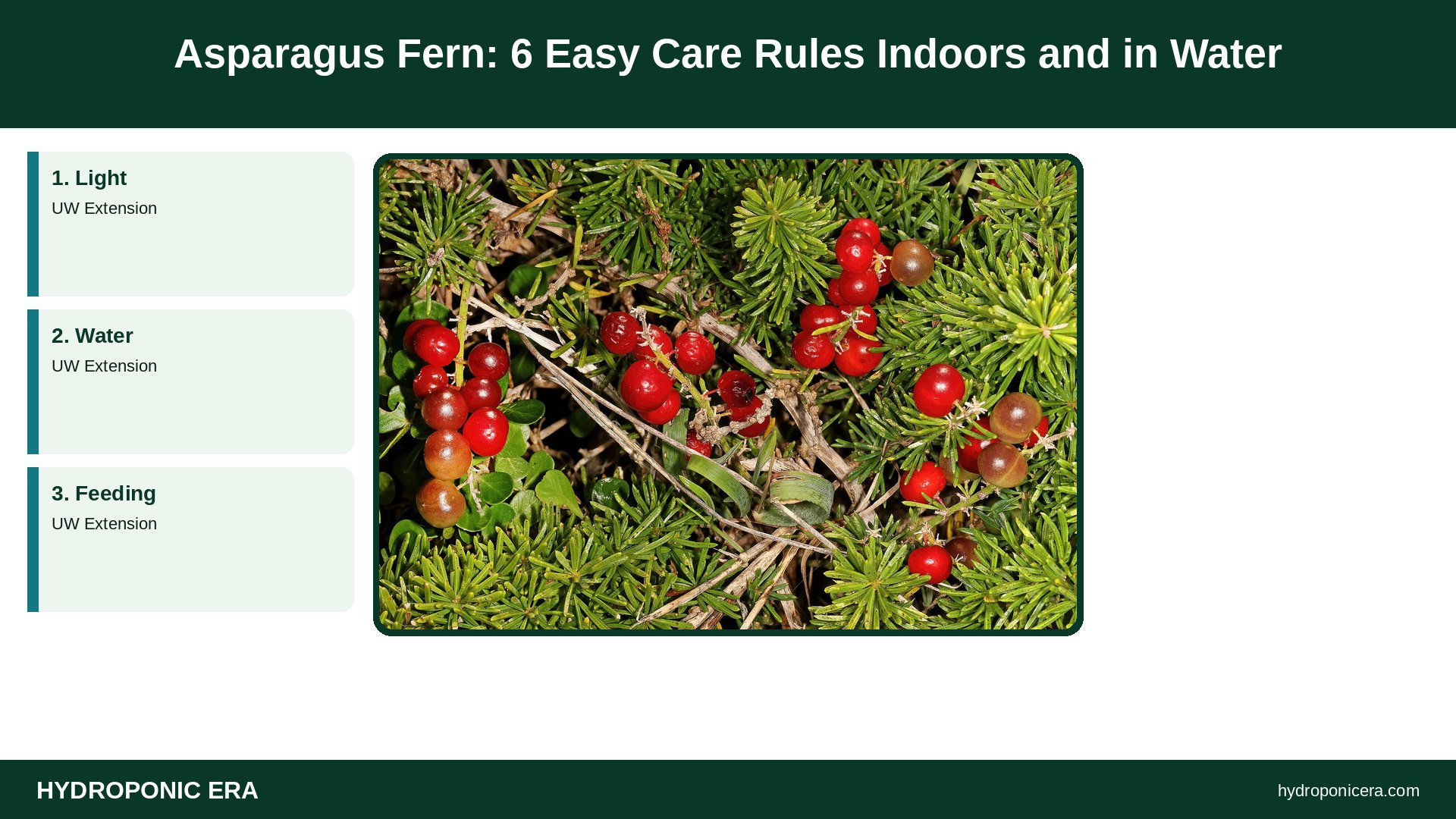
No. Despite the name, this plant is not a fern at all. University of Florida IFAS explains that the soft “leaves” are cladophylls, flattened stems that do the work of leaves. Asparagus densiflorus is related to edible asparagus, flowers and sets berries, and grows from spiny, woody stems with water-storing tuberous roots.
That background explains its care. Because it stores water in its roots, the plant is more forgiving of a missed watering than a true fern such as a Boston fern in water, which needs constant moisture and high humidity to stay green.
How Much Light Does an Asparagus Fern Need?
An asparagus fern grows best in bright light indoors. University of Wisconsin Extension recommends direct or bright indirect light, and says low light is one cause of yellowing and dropping cladophylls. Outdoors in hot climates, UF IFAS warns that strong direct sun can scorch it, so give afternoon shade there.
- Indoors: an east or west window, or a few feet from a south window.
- Outdoors in summer: bright shade or morning sun.
- Too little light: sparse, pale, yellowing stems.
- Too much hot sun: bleached or scorched tips.
How Often Should You Water an Asparagus Fern?
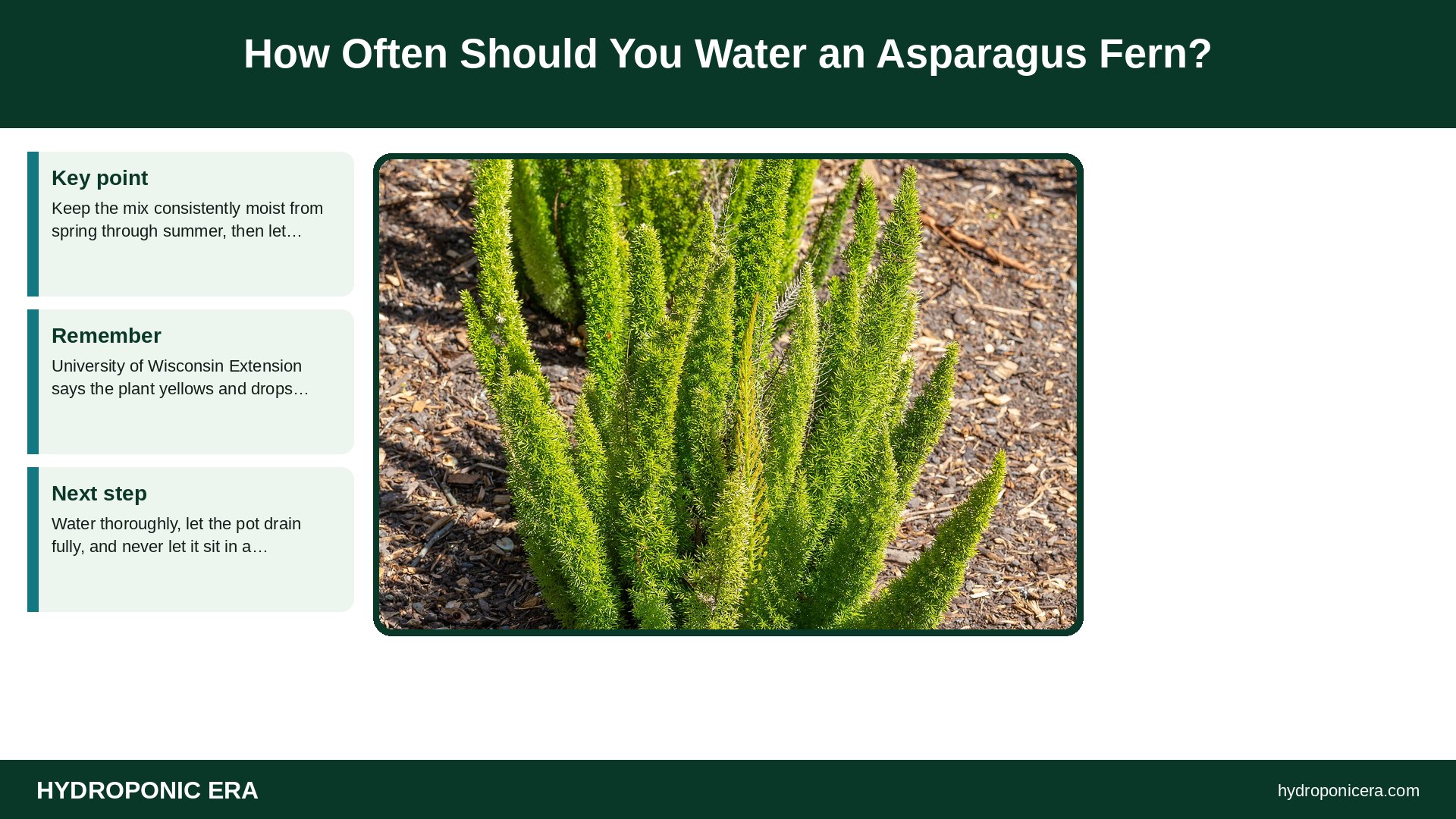
Keep the mix consistently moist from spring through summer, then let it dry somewhat more between waterings in winter. University of Wisconsin Extension says the plant yellows and drops its foliage if it gets too dry. Water thoroughly, let the pot drain fully, and never let it sit in a saucer of water.
The tuberous roots buffer short dry spells, but repeated drought stress shows quickly as yellow needles that crunch underfoot. If you are unsure, push a finger into the mix; water when the top inch (2.5 cm) feels dry. Our humidity and VPD guide explains why dry indoor air speeds up water loss.
Why Is My Asparagus Fern Turning Yellow?
Yellowing usually means the plant got too dry or too little light. University of Wisconsin Extension lists both as causes of yellow and falling cladophylls. Older stems also yellow naturally with age. Check soil moisture first, then move the pot somewhere brighter, and cut any fully yellow stems back to the base.
| Symptom | Likely cause | Fix |
|---|---|---|
| Yellow, shedding needles | Soil too dry | Water thoroughly and more often |
| Pale, thin, stretched stems | Low light | Move to a brighter spot |
| A few old yellow stems | Natural aging | Cut them at the base |
| Fine webbing, sticky leaves | Spider mites, mealybugs, aphids | Rinse foliage, treat early |
Dry, warm rooms also favor spider mites. See our guide to spider mites if you notice stippling or fine webs.
How Do You Prune and Feed an Asparagus Fern?
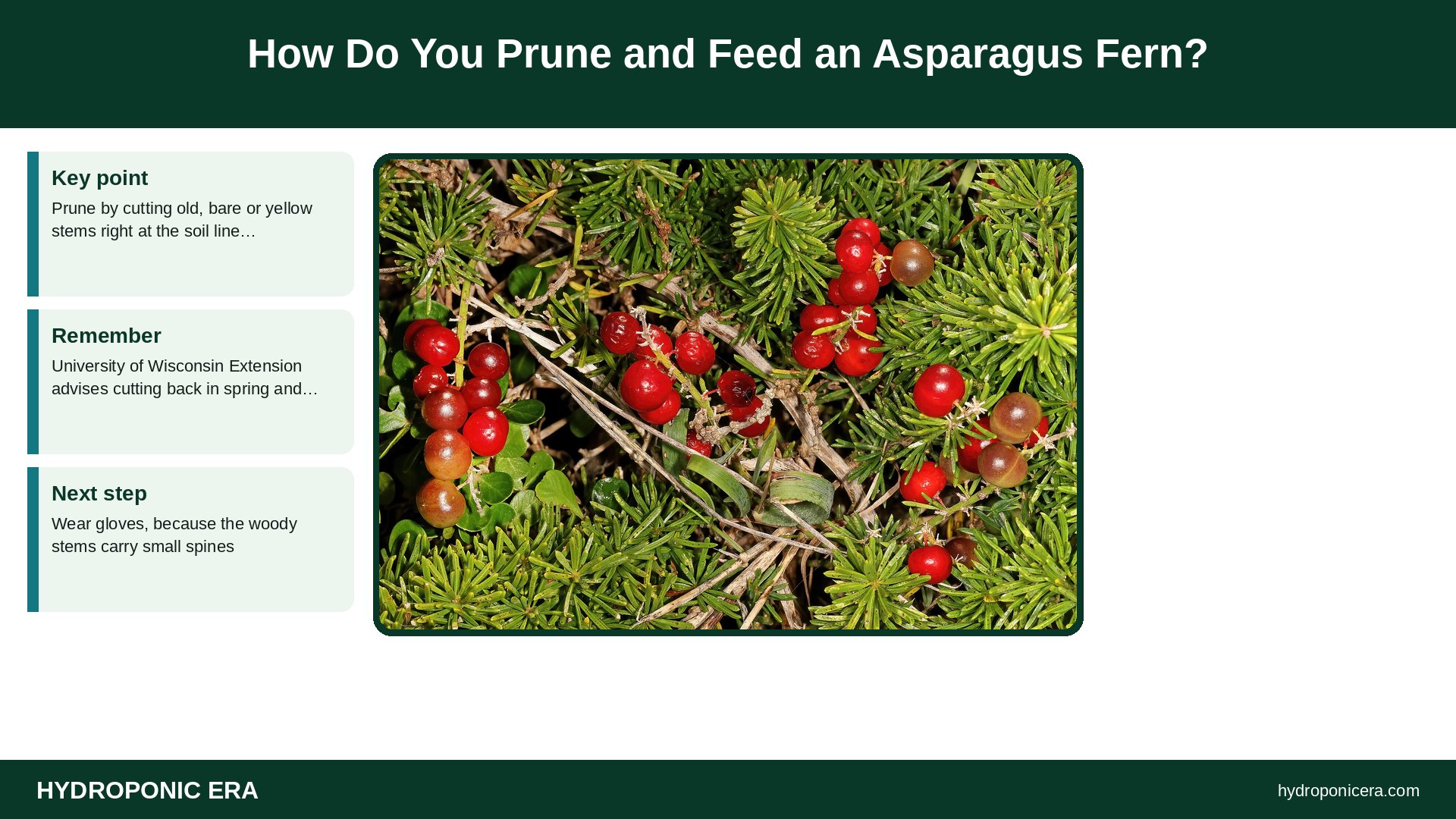
Prune by cutting old, bare or yellow stems right at the soil line, and do a heavier trim in spring. University of Wisconsin Extension advises cutting back in spring and fertilizing monthly during the growing season, with no feeding in winter. Wear gloves, because the woody stems carry small spines.
- Put on gloves to protect hands from the spines.
- Remove dead or yellow stems at the base with clean pruners.
- Shorten overly long stems to keep the shape tidy.
- Feed with a balanced houseplant fertilizer monthly in spring and summer.
- Stop feeding once growth slows in fall and winter.
When Should You Repot an Asparagus Fern?
Repot in early spring, when the thick white tubers crowd the pot or push the plant up. University of Wisconsin Extension recommends early spring repotting. This is also the easiest time to divide a large clump: tease or cut the root mass into sections, each with stems and tubers, and pot them separately in fresh mix.
Use a pot with drainage holes and a standard, well-drained houseplant mix. UW Extension adds that division works at almost any time of year, because the tubers regenerate new plants.
Is Asparagus Fern Toxic to Cats and Dogs?
Yes. The ASPCA lists asparagus fern as toxic to dogs and cats. Repeated skin contact can cause allergic dermatitis, and eating the berries can cause vomiting, diarrhea and abdominal pain. University of Wisconsin Extension gives the same warning about the berries. Keep plants out of reach of pets and young children.
Is Asparagus Fern Invasive?
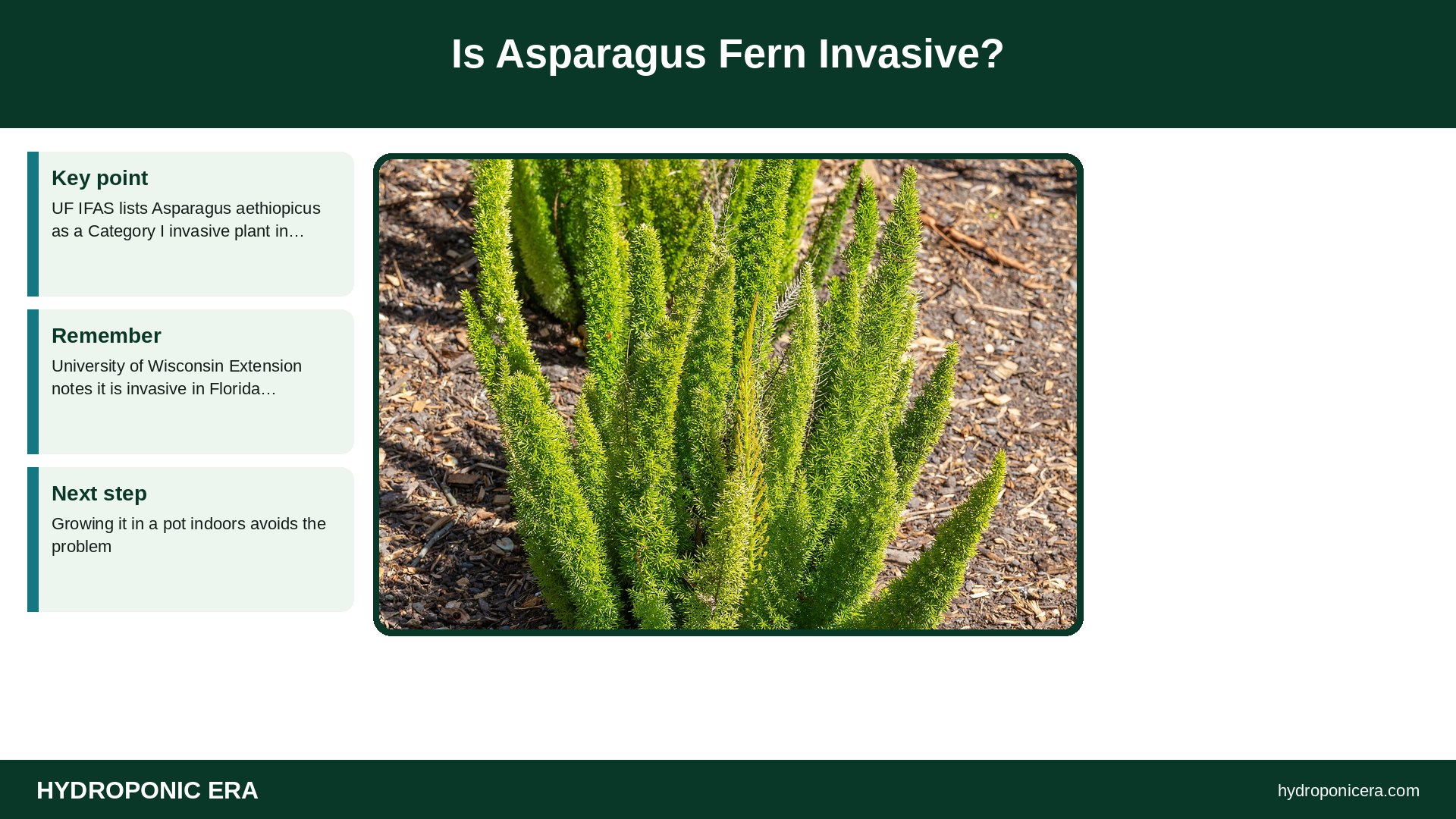
In warm climates, yes. UF IFAS lists Asparagus aethiopicus as a Category I invasive plant in Florida and recommends not planting it, because birds spread the seed and tubers resprout. University of Wisconsin Extension notes it is invasive in Florida, Texas and Hawaii. Growing it in a pot indoors avoids the problem.
- Do not dump old plants or tubers in yards or woods.
- Remove berries before they ripen if the pot goes outside.
- Bag unwanted plants with the trash, not the compost.
FAQ About Asparagus Fern
Can asparagus fern live indoors year-round?
Yes. It makes a durable houseplant in bright light with regular watering in the growing season.
How fast does an asparagus fern grow?
Growth is steady in spring and summer with good light and monthly feeding, and slows in winter.
How do you propagate an asparagus fern?
UW Extension says by seed or division. Seeds germinate in 3 to 4 weeks at room temperature; division is fastest.
Should I mist my plant?
Misting gives only brief relief. Consistent soil moisture and bright light matter far more.
Why does it drop needles everywhere?
Dry soil or low light is usually the cause, along with natural shedding of old stems.
For more easy-care greenery, browse our English ivy in water guide.
Sources
- University of Wisconsin Extension. Asparagus fern, Asparagus densiflorus.
- UF IFAS. Asparagus densiflorus ‘Sprengeri’ (FP051).
- UF IFAS Center for Aquatic and Invasive Plants. Asparagus aethiopicus.
- ASPCA. Asparagus fern.
- Photo credits (Wikimedia Commons, edited with titles): Asparagus aethiopicus 5Dsr 7566 by SAplants (CC BY-SA 4.0); Asparagus densiflorus, Christchurch Botanic Gardens, New Zealand 14 by Michal Klajban (CC BY-SA 4.0)