
What is a moss pole? A moss pole is a support wrapped in damp sphagnum or coir that climbing aroids such as monstera, pothos and philodendron root into. Penn State Extension says a monstera trained upright grows larger, greener leaves with the classic splits. It is optional, but it helps climbers mature indoors.
Key takeaway: A moss pole copies the mossy tree trunks that climbing aroids grow on in the wild. Set it in the pot early, tie stems with the aerial roots facing the pole, keep the moss damp, and extend it before new growth passes the top.
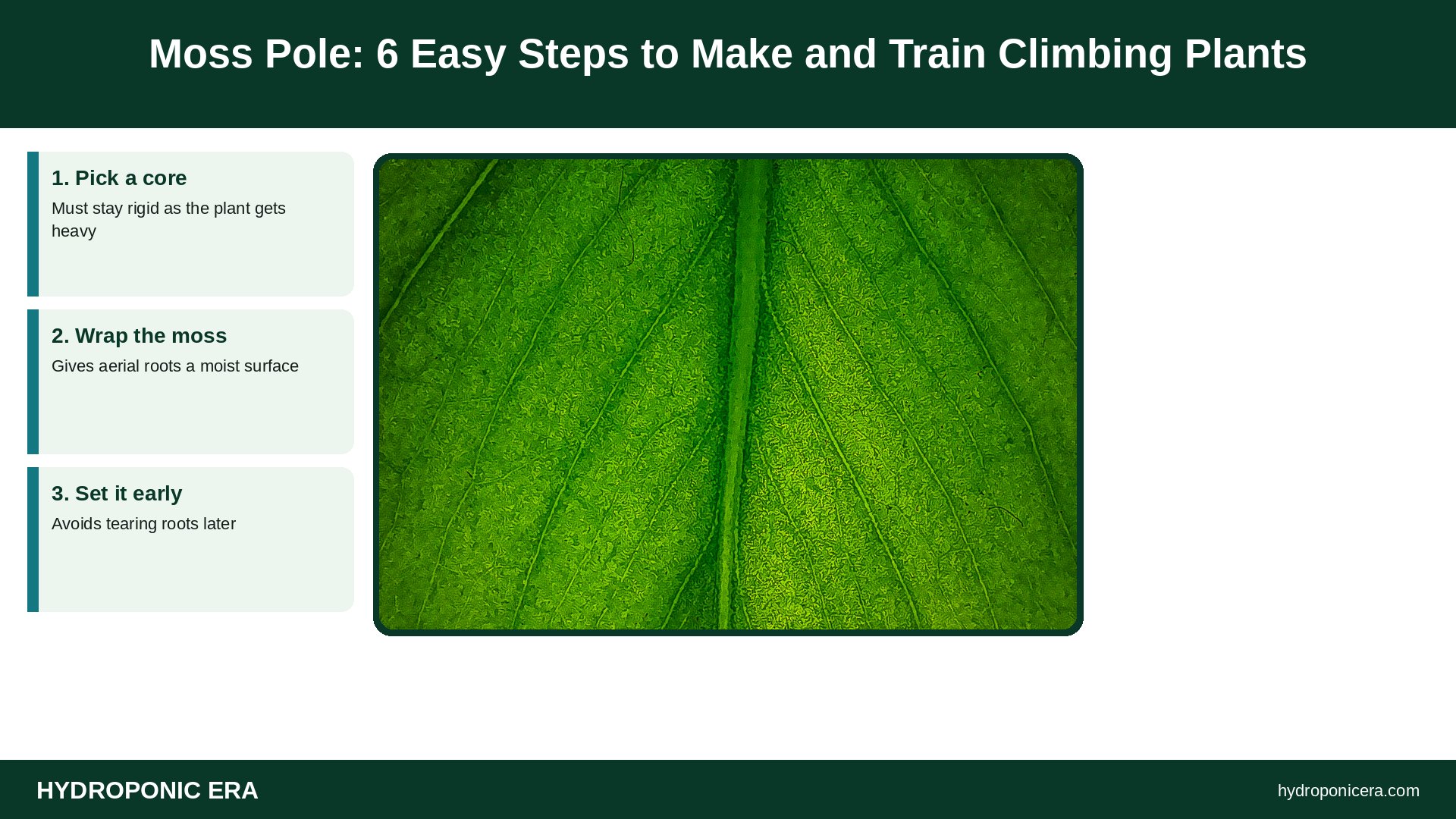
| Step | What to do | Why it matters |
|---|---|---|
| 1. Pick a core | Wooden slat, stake or plastic pipe | Must stay rigid as the plant gets heavy |
| 2. Wrap the moss | Damp sphagnum or coir, tied with fishing line | Gives aerial roots a moist surface |
| 3. Set it early | At potting time, next to the main stem | Avoids tearing roots later |
| 4. Face the roots | Aerial roots and nodes toward the pole | Roots attach where they touch |
| 5. Tie loosely | Soft ties or plant clips | Prevents stem damage |
| 6. Keep it moist | Water the pole when the moss dries | Dry moss does not attract roots |
What Does a Moss Pole Do for Climbing Plants?
It gives climbing plants something porous and moist to grip. University of Connecticut Extension says moss poles mimic the natural surfaces monsteras climb in the wild. Aerial roots that touch damp moss can grow into it, anchoring the stem so the plant climbs instead of sprawling across the pot and floor.
Penn State Extension notes that a monstera can still reach 6 to 8 feet (1.8 to 2.4 m) indoors and needs something sturdy to climb. Moss sticks, trellises, bamboo stakes and boards covered with sphagnum all work. The key difference is that damp moss holds moisture, so roots attach rather than simply being tied on.
Which Plants Grow Best on a Moss Pole?
Climbing aroids with aerial roots benefit most. That includes monstera, climbing philodendrons, pothos, satin pothos (Scindapsus) and mini monstera (Rhaphidophora). Iowa State University lists climbing philodendrons as plants that look great on a trellis or moss pole. Self-heading philodendrons and trailing succulents do not need one.
- Monstera deliciosa: the classic climber. See our guide to monstera in water.
- Philodendron: climbing types root into moss readily. Read philodendron in water.
- Pothos: grows bigger leaves when allowed to climb. See pothos in water.
- Mini monstera: a fast climber for small spaces. Read mini monstera in water.
How Do You Make a DIY Moss Pole?
To make a DIY moss pole, simply wrap damp sphagnum moss around a rigid core and tie it in place. University of Wisconsin Extension suggests sphagnum wrapped around a wooden slat and secured with monofilament fishing line or nylon thread. Size the pole so it sits firmly in the pot and stands well above the current growth.
- Soak long-fiber sphagnum moss in water, then squeeze out the excess.
- Choose a core: a wooden stake, slat or a length of plastic pipe.
- Lay the moss along the core in an even, firm layer.
- Wind fishing line or nylon thread around it in a spiral every few inches.
- Trim loose strands so the surface is firm and even.
- Push the base deep into the pot, or set it in place before adding mix.
Coir-wrapped poles are a cheaper, longer-lasting alternative, but they hold less water. If you want to learn more about the moss itself, see our sphagnum moss propagation guide.
How Do You Attach a Plant to a Moss Pole?
Place the stem against the pole with the nodes and aerial roots facing the moss, then tie it loosely with soft plant ties or clips. Iowa State University says aerial roots can be adjusted to help a plant climb. Tie every few nodes, and never wrap ties so tightly that they pinch the stem.
Not every aerial root will grab the pole, and that is normal. Guide roots toward the moss when they are young and flexible. Iowa State also notes that removing aerial roots will not harm the plant, so you can trim ones that grow in awkward directions.
- Add the support at repotting time to avoid damaging roots.
- Position the pole on the side where aerial roots emerge.
- Use stretchy plant tape, Velcro ties or plant clips, not wire.
- Check ties every few weeks and loosen them as stems thicken.
How Often Should You Water a Moss Pole?
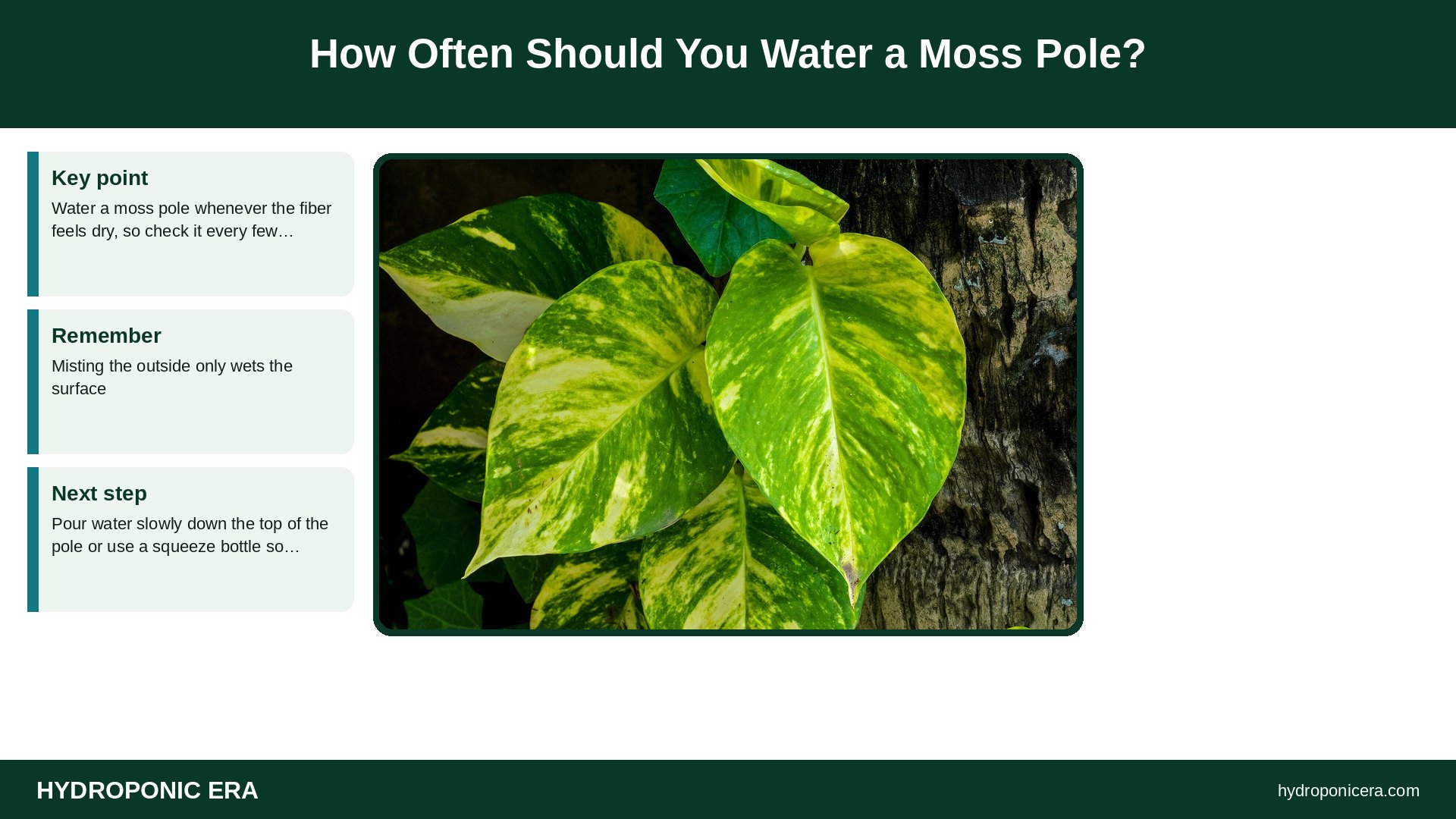
Water a moss pole whenever the fiber feels dry, so check it every few days indoors. Misting the outside only wets the surface. Pour water slowly down the top of the pole or use a squeeze bottle so the moss soaks through. Aerial roots attach far more readily to evenly damp moss than to dry fiber.
Keep the potting mix on its own watering schedule. A soggy pot leads to root rot, so let the mix dry as your plant prefers. Our guide to humidity and VPD explains why moist air around the pole also helps.
Sphagnum vs Coir: Which Moss Pole Is Better?
A sphagnum pole holds more water and gives aerial roots the easiest surface to penetrate, which is why many growers prefer it for monstera. A coir pole is cheaper, cleaner and slower to break down, but it dries out faster and roots attach less readily. Either works if you keep it damp.
| Feature | Sphagnum | Coir |
|---|---|---|
| Water holding | High | Moderate |
| Root attachment | Easy | Slower |
| Upkeep | Needs regular watering | Less watering, less mess |
| Lifespan | Breaks down over time | Longer lasting |
| Best for | Monstera, philodendron | Pothos, budget setups |
When Should You Extend a Moss Pole?
Extend the support when the newest growth approaches the top, not after it has flopped over. Stack a new section on the old core, overlap the moss and tie it firmly, or slide a hollow extension over the top. Then keep training new nodes onto the added length so the plant keeps climbing.
If your plant has outgrown its pole and pot, combine the job with repotting. A taller plant needs a heavier, wider pot so the pole does not tip over.
What Are Common Moss Pole Mistakes?
The most common mistakes are letting the moss dry out, adding the pole after roots fill the pot, tying stems too tightly and using a pole that is too short or flimsy. Each one stops roots from attaching or damages the plant. Fix them by keeping moss damp and planning height early.
- Dry moss: roots will not attach; water the pole itself.
- Late install: pushing a pole into a root-bound pot tears roots.
- Wrong side: nodes facing away from the pole cannot grab it.
- Wobbly pole: sink it deeper or use a heavier pot.
FAQ About Moss Poles
Do all climbing plants need a moss pole?
No. It is optional, but climbing aroids often grow larger leaves when trained upright.
Can I use a stake instead of a moss pole?
Yes. Penn State lists stakes and trellises as options, though roots will not grow into bare wood.
How do I keep the moss moist?
Pour water down the top of the pole when the moss dries, rather than only misting.
Should I cut aerial roots that miss the pole?
You can. Iowa State says removing aerial roots will not harm the plant.
How tall should the pole be?
Pick one that stands well above the current growth so you do not need to extend it right away.
Sources
- Penn State Extension — Monstera as a Houseplant
- University of Connecticut Home and Garden Education Center — Monstera deliciosa
- University of Wisconsin Extension — Swiss-Cheese Plant, Monstera deliciosa
- Iowa State University Extension — What do I do with the aerial roots of a philodendron?
- Iowa State University Extension — Growing Philodendrons at Home
- Photo credits (Wikimedia Commons, edited with titles): Macroscopic picture of Monstera Deliciosa by Iva508 (CC BY 4.0); Nationaal Park Drents-Friese Wold. Locatie Fochteloërveen 01-09-2020. (actm.) 15 by Agnes Monkelbaan (CC BY-SA 4.0); Epipremnum aureum 31082012 by Joydeep (CC BY-SA 3.0)