
Monstera in water can live for months and even years if you give it bright indirect light, clean water, and a dilute nutrient solution, but it usually grows slower and smaller than a monstera in soil or a chunky aroid mix. Water alone has almost no nutrients, so the real secret to keeping monstera in water long-term is feeding it like a hydroponic plant, keeping the roots oxygenated, and changing the water before it turns stale.
Key takeaway: Rooting a cutting in water is easy. Keeping a monstera in water as a permanent display takes a weak fertilizer, regular water changes, and realistic expectations about size.
| Question | Short answer |
|---|---|
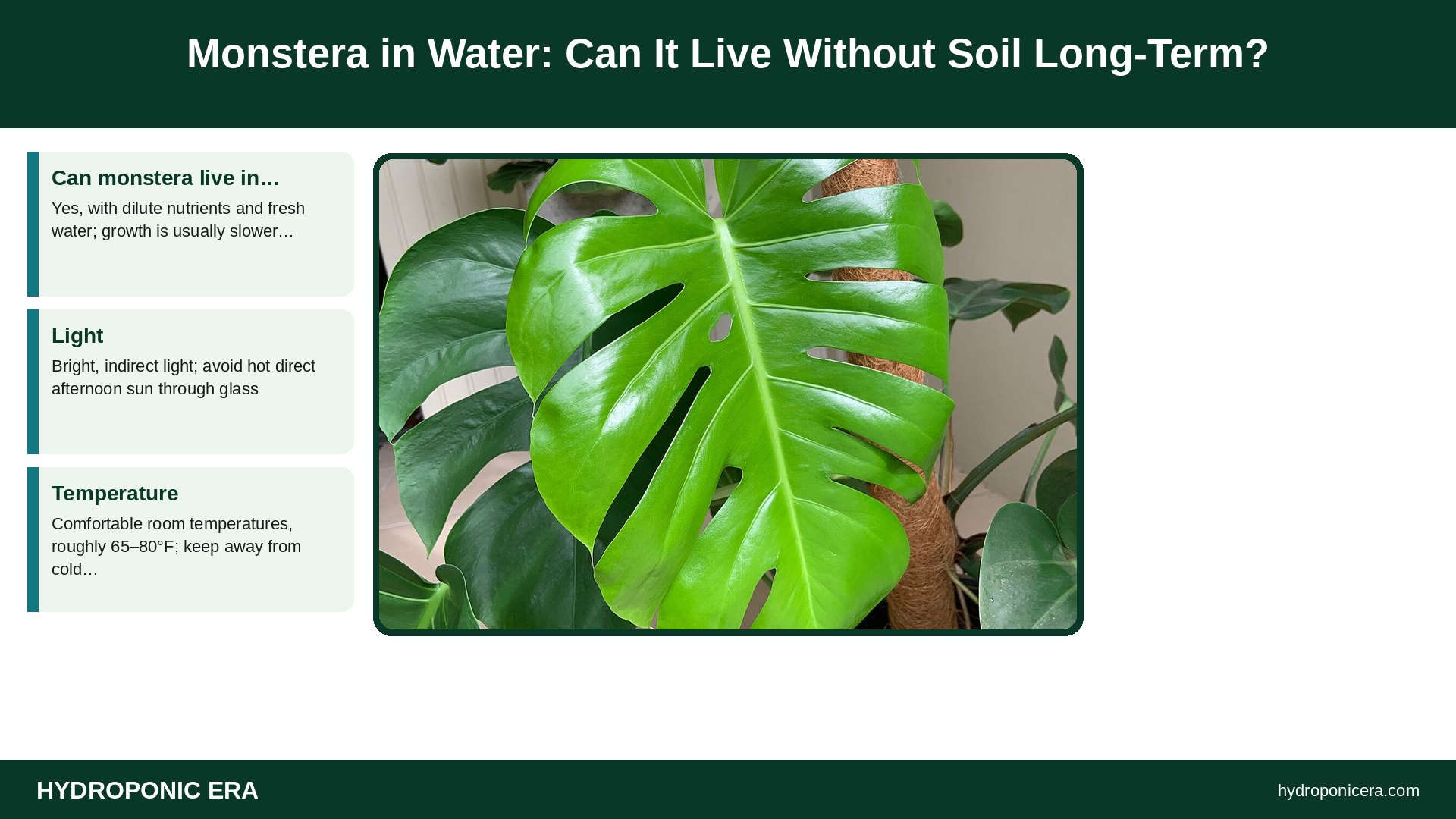
| Can monstera live in water permanently? | Yes, with dilute nutrients and fresh water; growth is usually slower than in soil |
| Light | Bright, indirect light; avoid hot direct afternoon sun through glass |
| Temperature | Comfortable room temperatures, roughly 65–80°F; keep away from cold drafts |
| Water change | About every 1–2 weeks, or sooner if cloudy or smelly |
| Feeding | A quarter- to half-strength liquid houseplant or hydroponic fertilizer |
| Main risk | Root rot from stagnant, warm, low-oxygen water |
Can Monstera in Water Really Survive Long-Term?

Monstera deliciosa is a tropical aroid that climbs trees and sends aerial roots down toward the forest floor. Those aerial roots adapt surprisingly well to water, which is why a node cutting roots so easily in a glass jar. The plant does not need soil itself. It needs water, oxygen, light, and mineral nutrients, and soil is simply one way to deliver those.
The problem with plain tap water is nutrition. After the cutting uses the energy stored in its stem, it has very little to build new leaves with. That is why many people see one or two new leaves and then a stall. A monstera in water that is fed a weak nutrient solution behaves much more like a hydroponic plant and can keep pushing new growth.
Expect trade-offs. Leaves often come in smaller, fenestrations (the splits and holes) may develop more slowly, and a very large specimen becomes top-heavy in a vase. For a big, mature monstera, soil, a chunky aroid mix, or clay pebbles in a self-watering setup usually give better support.
How to Start a Monstera in Water From a Cutting
- Cut below a node. Take a cutting with at least one node (the bump where leaf and aerial root emerge) and ideally one leaf. A cutting without a node will not grow a new plant.
- Use a clean container. Clear glass lets you watch roots, but it also lets algae grow. Rinse it well first.
- Submerge only the node. Keep the node and any aerial roots under water and the leaf above it.
- Use room-temperature water. Tap water is usually fine; letting it sit out or using filtered water can help if your tap water is heavily chlorinated. See our guide to chlorine and chloramine in tap water.
- Give bright, indirect light. An east window or a spot a few feet back from a south or west window works well.
- Change the water weekly while roots form, and wait until new roots are a few inches long before adding nutrients.
Root growth speed varies with warmth and light. A warm room speeds things up; a cold winter windowsill slows rooting down a lot.
Feeding Monstera in Water the Right Way
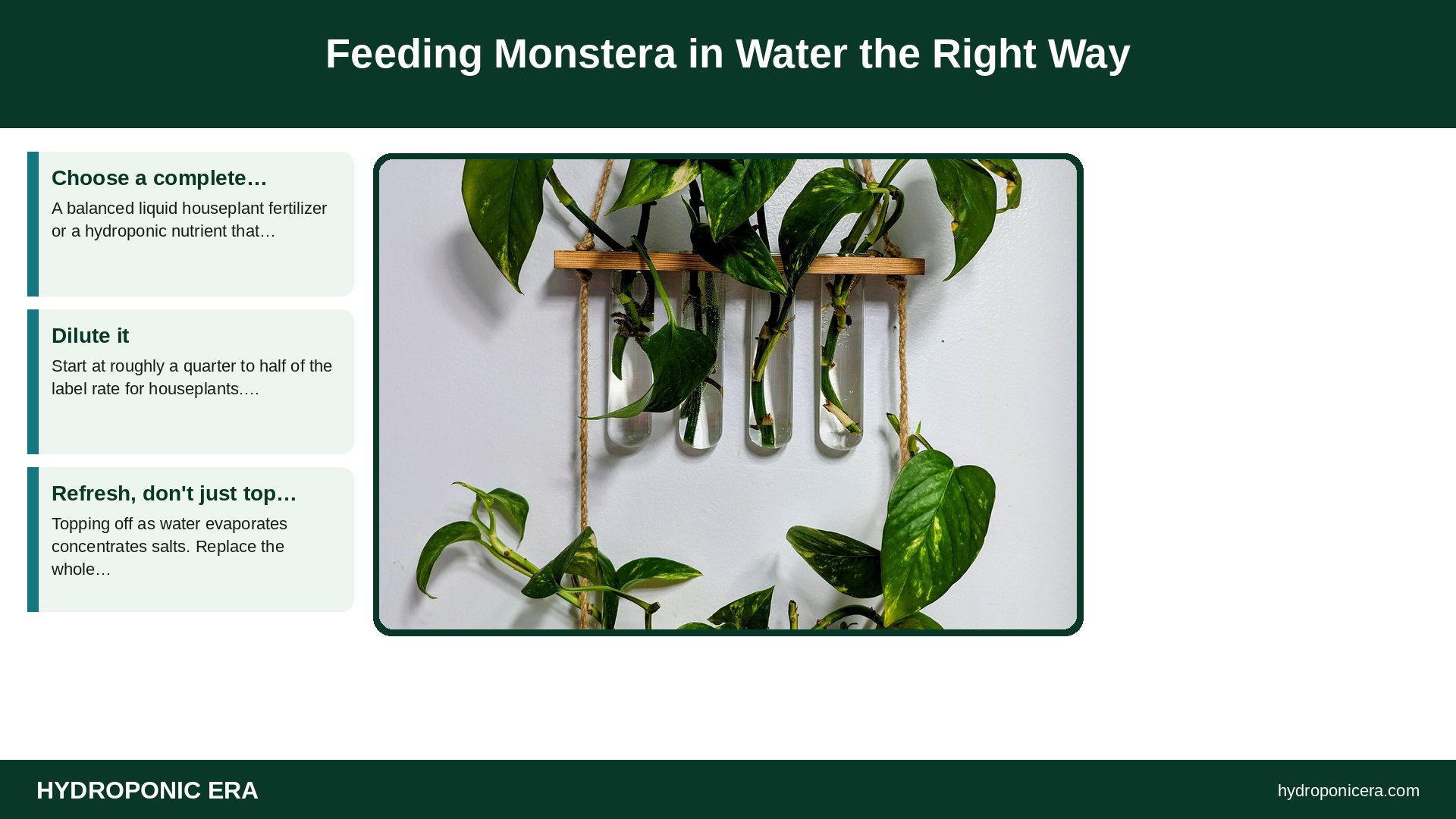
This is the step most guides skip. Plain water plus a cutting is a short-term arrangement. To keep a monstera in water growing, add a complete fertilizer at low strength once it has a healthy root system.
- Choose a complete formula. A balanced liquid houseplant fertilizer or a hydroponic nutrient that includes calcium, magnesium, and micronutrients is better than a single-ingredient product.
- Dilute it. Start at roughly a quarter to half of the label rate for houseplants. Water culture has no soil to buffer excess salts, so it is easy to overdo it.
- Refresh, don’t just top off. Topping off as water evaporates concentrates salts. Replace the whole volume every 1–2 weeks.
- Watch the leaves. Pale new growth can point to underfeeding; brown crispy edges can point to too much fertilizer. Our nutrient deficiency chart helps sort the symptoms.
If you own a TDS or EC meter, keep the solution on the light side for foliage plants. Our EC and TDS guide explains how to read the numbers.
Keeping Monstera Roots Healthy in Water
Healthy roots in water are usually white to cream and firm. Brown, mushy, or slimy roots with a sour smell point to rot. Stagnant water loses oxygen, and warm stagnant water loses it faster, which favors root rot organisms.
- Use a wide container. More surface area helps oxygen exchange.
- Keep it out of hot sun. Sun on a glass vase warms the water and feeds algae.
- Trim dead roots with clean scissors during a water change.
- Consider a small air stone for a large display. See our dissolved oxygen guide for why it helps.
Green film on the glass is algae. It is mostly cosmetic, but it competes for nutrients and can make roots slimy. An opaque sleeve or a colored vase reduces it. Our article on algae in hydroponic reservoirs covers fixes.
Monstera in Water vs Soil vs Semi-Hydro
| Method | Best for | Pros | Cons |
|---|---|---|---|
| Water only (vase) | Cuttings, small displays | Easy, you can see roots, no pests from soil | Slower growth, needs feeding and water changes, top-heavy |
| Soil or aroid mix | Large, mature plants | Strong support, buffers mistakes | Overwatering risk, fungus gnats |
| Semi-hydro (LECA, clay pebbles) | Medium plants, people who like hydro | Good oxygen, consistent moisture, stable support | Needs nutrient management and occasional flushing |
If you ever move a monstera in water into soil, expect an adjustment period. Water roots and soil roots differ, and the plant may pause or drop an older leaf while it adapts. Our transplant shock guide covers what to watch.
Common Mistakes With Monstera in Water
- No node on the cutting. A leaf with a petiole alone may root but will not grow a new stem.
- Submerging leaves. Leaves under water rot and foul the water.
- Never feeding. Plain water leads to stalled growth after a few months.
- Feeding at full strength. Salt buildup burns root tips and leaf edges.
- Only topping off. Evaporation concentrates minerals; replace water instead.
- Cold, dark corners. Low light means slow growth and leggy, small leaves.
Troubleshooting Table
| Symptom | Likely cause | Fix |
|---|---|---|
| Yellowing older leaf | Natural aging, low nutrients, or root problem | Check roots; start dilute feeding |
| Brown mushy roots, bad smell | Root rot from stagnant water | Trim rot, clean container, fresh water, more oxygen |
| Brown crispy leaf edges | Fertilizer too strong or low humidity | Dilute solution, change water |
| No new leaves for months | Low light or no nutrients | Brighter indirect light, weak fertilizer |
| Green slime on glass | Algae from light hitting water | Clean vase, use opaque container |
Weekly Care Checklist for Monstera in Water
A simple routine prevents most problems. Use this checklist once a week and you’ll catch issues while they are still small.
- Look at the roots. White or cream and firm is good. Tan is fine. Dark brown and soft needs attention.
- Smell the water. Clean water has almost no smell. A sour or rotten odor means it’s time to clean and trim.
- Check the waterline. The node and roots should be covered; the stem above the node should stay mostly dry.
- Wipe the container. A quick scrub stops algae before it coats the glass.
- Rotate the vase. Turning it a quarter turn keeps growth even instead of leaning toward the window.
- Dust the leaves. Clean leaves capture more light, which matters in dimmer rooms.
Variables That Change Your Results
| Variable | Effect on monstera in water | What to do |
|---|---|---|
| Season | Growth slows in winter as days shorten | Feed less, change water a bit less often |
| Container size | Small volumes foul and warm faster | Size up as roots fill the vase |
| Water source | Hard or softened water can leave mineral or sodium buildup | Use filtered or mixed water if tips brown |
| Cutting size | Larger cuttings with aerial roots establish faster | Choose cuttings with one or more aerial roots |
| Light hours | Short days mean small leaves | Add a small LED on a timer in winter |
One honest note: results vary from home to home. Two people can follow the same steps and see different speeds of growth because their light, temperature, and water differ. Treat timelines as rough guides, keep notes, and adjust one thing at a time. A simple log helps; see our record keeping guide.
Bottom line: monstera in water is a rewarding, low-mess way to grow one of the most popular houseplants, as long as you feed it and keep the water fresh.
FAQs: Monstera in Water
How long can a monstera stay in water?
There is no fixed limit. With dilute feeding, fresh water, and good light, a monstera in water can keep growing for a long time, though it often stays smaller than a soil-grown plant.
Why are my monstera leaves turning yellow in water?
The most common causes are lack of nutrients, root rot, or a natural shedding of the oldest leaf. Inspect the roots first, then review feeding.
Is monstera toxic to pets?
Yes. The ASPCA lists Monstera deliciosa as toxic to cats and dogs because of insoluble calcium oxalates. Keep vases out of reach and call your vet or a pet poison hotline if a pet chews it.
Do I need fertilizer for monstera in water?
For long-term growth, yes. Use a complete fertilizer at a quarter to half strength once roots are established.
Related HydroponicEra Guides
- Pothos in water
- Plants that grow in water
- White fuzz on roots in water
- Hydroponic cuttings and cloning
Sources
- ASPCA — Cutleaf Philodendron (Monstera deliciosa) toxicity
- NC State Extension Plant Toolbox — Monstera deliciosa
- Photo credits (Wikimedia Commons, edited with titles): New Monstera Deliciosa Leaf by Kittykittymaomao (CC BY-SA 4.0); Pothos plant on water by Joli Rumi (CC BY-SA 4.0); Spathiphyllum wallisii hydroponically grown by Kephalian (CC BY-SA 4.0)
1 thought on “Monstera in Water: Can It Live Without Soil Long-Term?”