
What are aerial roots, and should you cut them? Aerial roots are roots that grow from a stem above the soil. Climbing houseplants such as monstera, philodendron and pothos use them to grip trees and take in moisture. They are normal and healthy. You can leave them, tuck them into the pot, train them onto a moss pole or trim them off.
Key takeaway: Aerial roots are a sign of a healthy climbing plant, not a problem. Iowa State Extension says removing them will not harm a philodendron, while the New York Botanical Garden recommends keeping monstera aerial roots and guiding some onto a moss pole for better growth.
| Option | When to choose it | Source |
|---|---|---|
| Leave them alone | You like the look; plant is healthy | Iowa State |
| Train onto a moss pole | Climbing plants such as monstera | NYBG, NC State |
| Tuck into the soil | Plant needs extra support | Iowa State |
| Prune near the stem | Roots are in the way or untidy | Iowa State |
| Use for propagation | Taking stem cuttings or air layers | NC State, Iowa State |
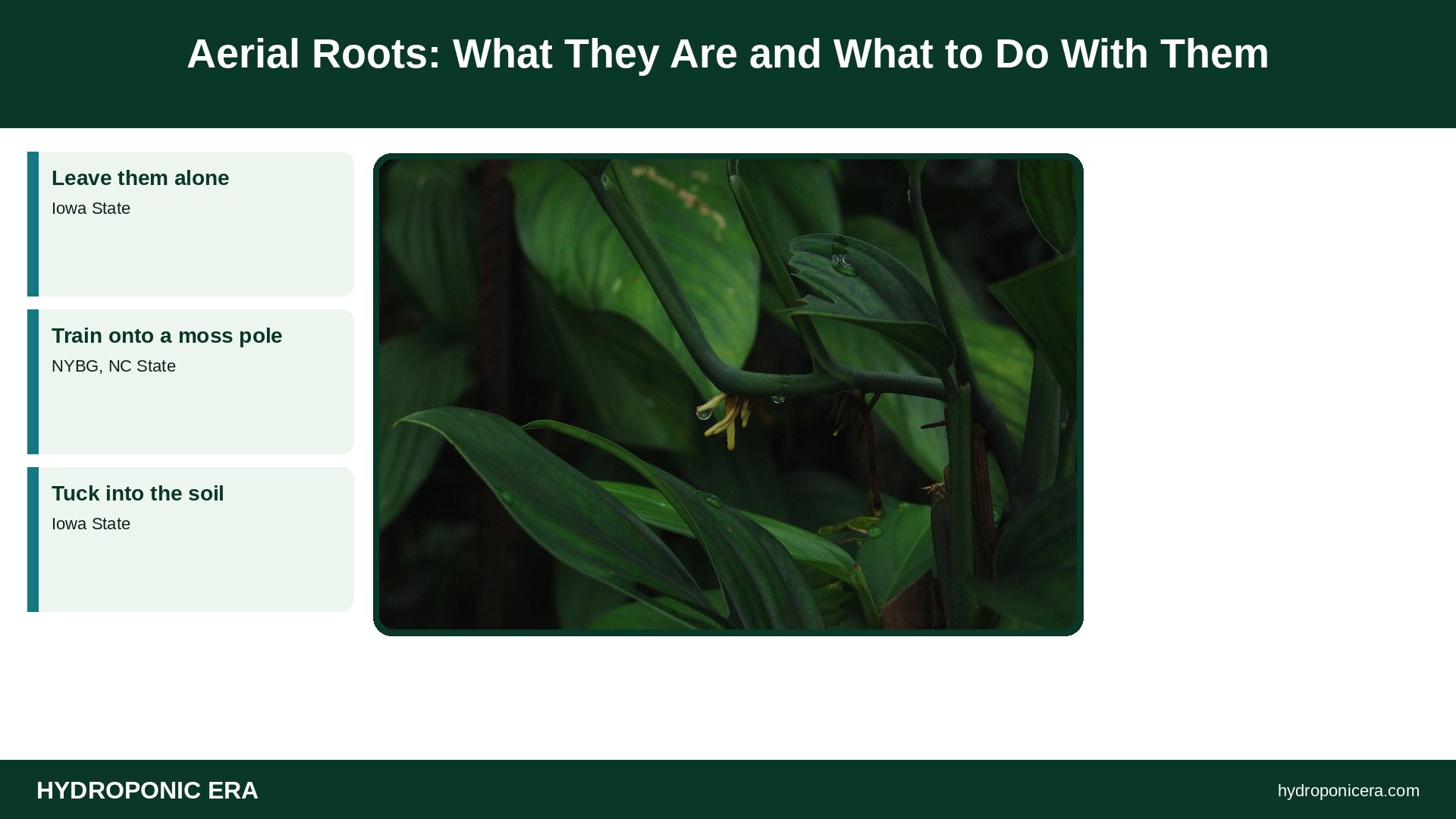
What Are Aerial Roots?
Aerial roots are roots that form on stems above the ground instead of below it. In the wild, climbing aroids use them to attach to tree trunks and branches. NC State Extension notes that Monstera deliciosa starts life on the ground and becomes epiphytic once it reaches a sturdy tree it can climb, and that Mini Monstera’s slender stems carry aerial roots that help it attach and climb.
Iowa State Extension says most philodendron species make these roots, which let them grow on or up other trees in their native habitats.
Which Houseplants Grow Them?
Many climbing tropical houseplants grow aerial roots, especially members of the arum family (Araceae). Common examples include:
| Plant | How the roots appear | Related guide |
|---|---|---|
| Monstera deliciosa | Thick brown roots from the stem | Monstera in water |
| Mini Monstera (Rhaphidophora) | Small roots along slender stems | NC State plant profile |
| Philodendron | Roots at nodes on climbing stems | Philodendron in water |
| Pothos | Short brown nubs at each node | Pothos in water |
Epiphytic orchids have them too, though their care differs. See our water culture orchids guide.
What Do Aerial Roots Do for the Plant?
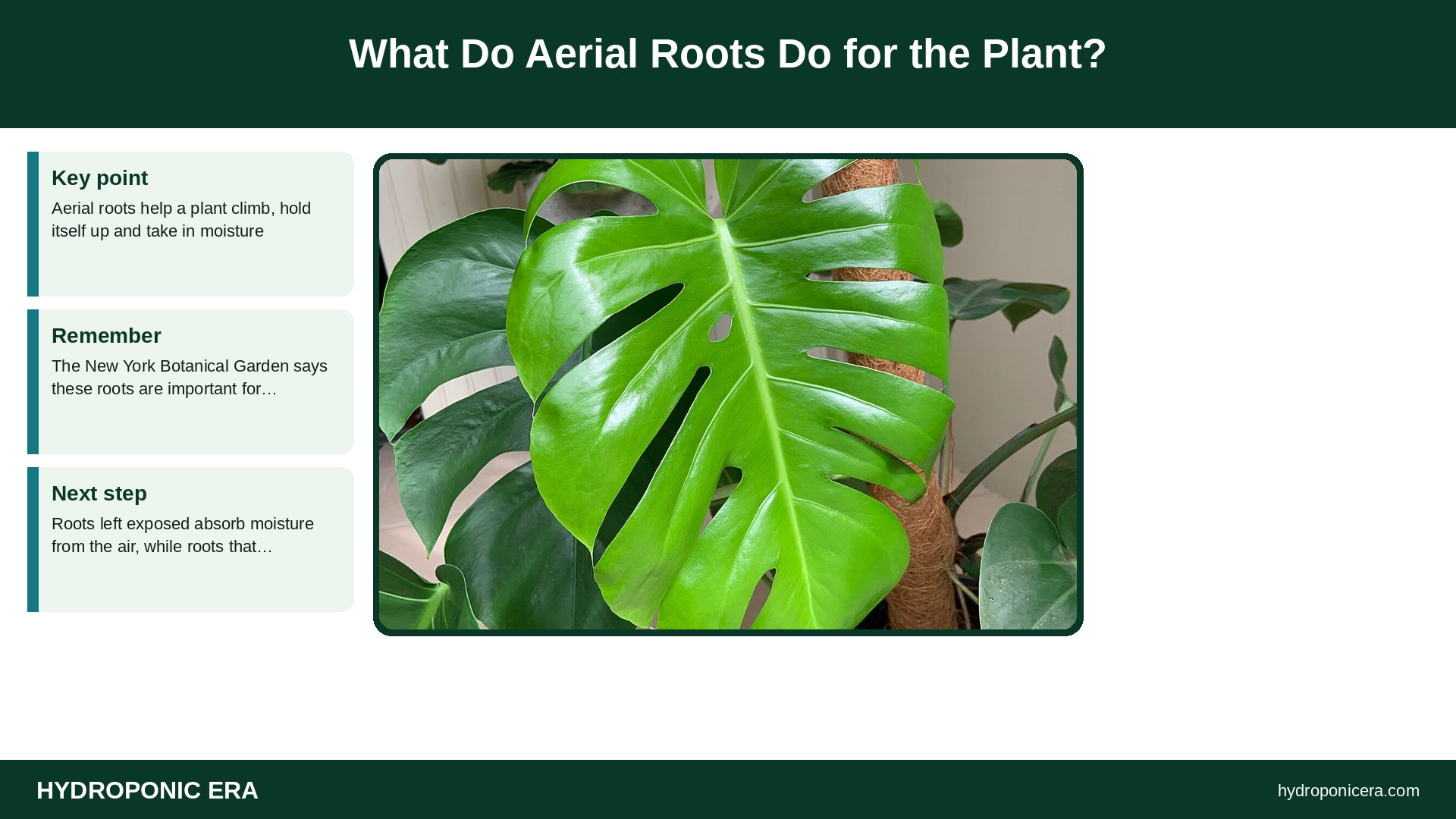
Aerial roots help a plant climb, hold itself up and take in moisture. The New York Botanical Garden says these roots are important for monstera, for both climbing and nutrition, and that healthy roots produce the most attractive plants. Roots left exposed absorb moisture from the air, while roots that reach a moist pole or soil can anchor and feed the plant.
Should You Cut Aerial Roots?
You can, but you do not have to. Iowa State Extension says you can do nothing and enjoy their look, adjust them to help the plant climb, or place them in the soil to root in. If you dislike how they look, prune them with sharp pruners near the main stem; Iowa State says removing them will not harm a philodendron.
The New York Botanical Garden takes a more protective view for monstera: do not remove healthy ones, because they support climbing and nutrition. A middle path is to trim only the few roots that get in the way.
How Do You Train Aerial Roots Onto a Moss Pole?
Train aerial roots by guiding them onto a moist moss pole and tying the stem loosely so roots can grip. NC State suggests a trellis, totem or moss pole for Mini Monstera, and the New York Botanical Garden recommends encouraging some monstera roots into a moss-covered support while letting the rest stay exposed.
- Set a pole deep in the pot so it stands firm.
- Tie the stem to the pole with soft plant ties, keeping the roots touching the moss.
- Keep the moss moist. NYBG suggests misting the plant and pole daily.
- Add ties as new growth climbs.
- Tuck long roots into the moss or down into the soil.
NYBG notes you can make your own pole by filling a rolled tube of plastic netting with sphagnum moss and sinking the end deep into the potting soil.
Can You Put Aerial Roots in Soil or Water?
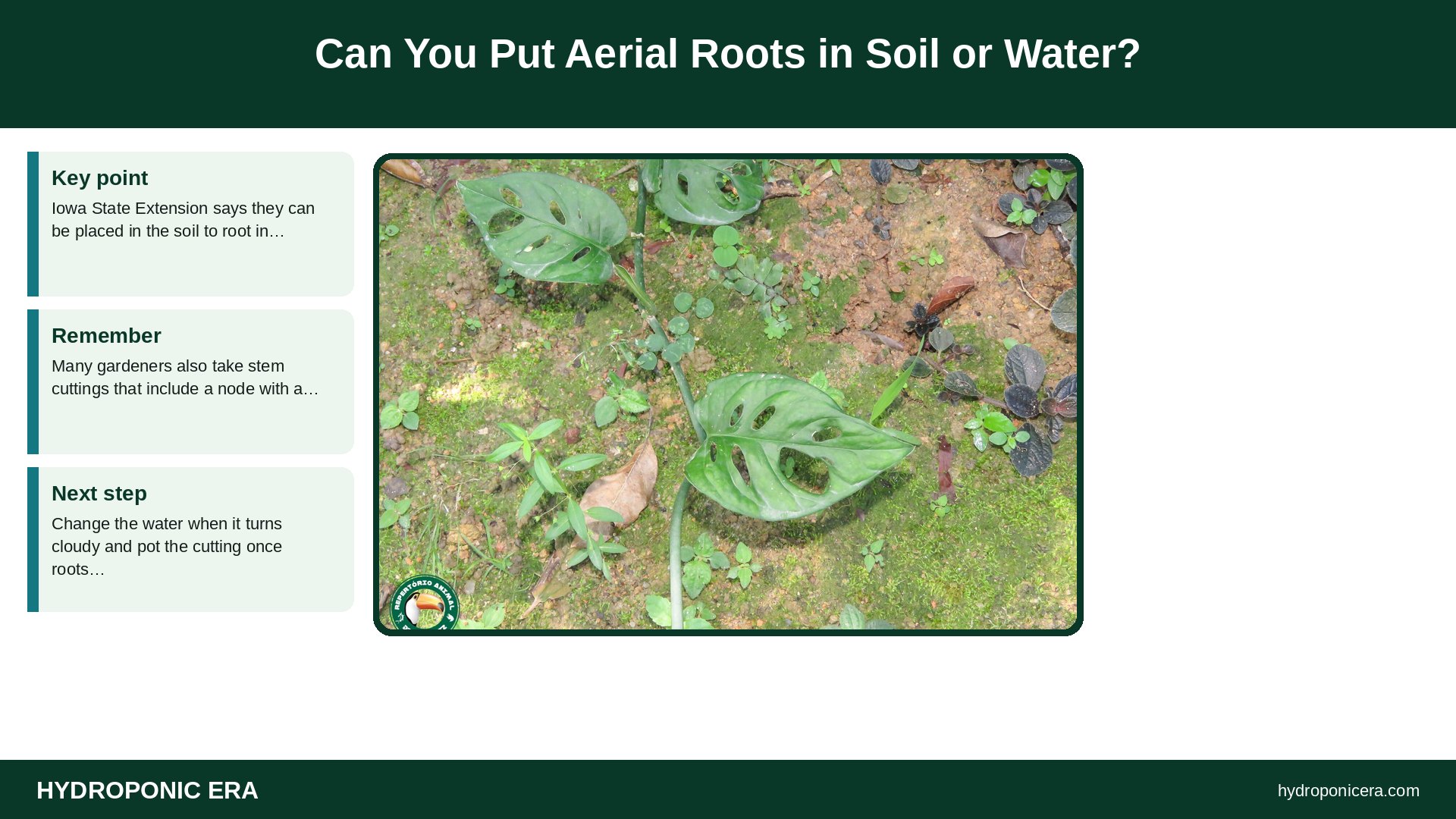
Yes. Iowa State Extension says they can be placed in the soil to root in and help support the plant. Many gardeners also take stem cuttings that include a node with a short aerial root, since that root is already formed when the cutting goes into water. Change the water when it turns cloudy and pot the cutting once roots branch.
They also make air layering simple: wrap moist sphagnum around a node with roots, and new soil roots form faster. Iowa State’s guide to air layering explains the method for rubber plants and other houseplants.
How Do You Trim Them Safely?
Trim them with clean, sharp pruners and cut close to the main stem, as Iowa State Extension advises. Wipe blades with rubbing alcohol or a 1:9 bleach solution between plants to avoid spreading disease, the same tool hygiene Virginia Cooperative Extension recommends for cuttings. Remove only the roots you need to, and leave the rest to support the plant.
Why Are My Aerial Roots Brown, Dry or Long?
- Dry, papery roots: low humidity. NC State says Mini Monstera thrives at about 60% humidity; group plants or use a pebble tray.
- Very long roots: the plant is searching for support. Add a pole or tuck roots into the pot.
- Brown, firm roots: normal for mature roots.
- Mushy, smelly roots: rot, usually from soggy soil. Trim damaged roots and water less.
- Roots out of drainage holes: NYBG says to move monstera up only one pot size when roots come through the drain hole.
How Do You Care for These Climbing Plants?

Give these plants bright, indirect light, steady warmth and good humidity. NC State recommends 65–80°F (18–27°C) and moist, well-drained mix for Mini Monstera, watering when the top 1 inch (2.5 cm) is dry. For Monstera deliciosa, NC State suggests 60–85°F (16–29°C), no direct sun and sturdy support so stems do not break.
Many aroids are toxic if eaten. NC State warns that Mini Monstera can irritate the mouth and skin, so keep plants away from pets and wear gloves when pruning aerial roots.
FAQs
Do aerial roots mean my plant needs repotting?
Not by themselves. Repot when roots fill the pot or come out the drainage hole.
Will cut roots grow back?
New ones form along new growth; the cut root itself does not regrow.
Can I bury them?
Yes. Iowa State says they can root into the soil.
Should I mist them?
NYBG suggests daily misting of monstera and its moss pole.
Are they a sign of stress?
Usually not. They are normal on climbing plants.
Sources
- Iowa State University Extension — What do I do with the aerial roots of a philodendron?
- Iowa State University Extension — How to Propagate Houseplants: Air Layering and Simple Layering
- New York Botanical Garden — Monstera (Monstera deliciosa) Research Guide
- NC State Extension — Rhaphidophora tetrasperma (Mini Monstera)
- NC State Extension — Monstera deliciosa
- Virginia Cooperative Extension — Propagation by Cuttings, Layering and Division (426-002)
- Photo credits (Wikimedia Commons, edited with titles): Aerial roots 01 (3) by Dbxsoul (CC BY 3.0); New Monstera Deliciosa Leaf by Kittykittymaomao (CC BY-SA 4.0); Monstera adansonii 127416487 by Diogo Luiz (CC BY-SA 4.0); Epipremnum aureum 31082012 by Joydeep (CC BY-SA 3.0); Basilikum (Ocimum basilicum) Stecklinge — Josef Schlaghecken by Schlaghecken Josef (CC BY-SA 4.0)