
Can you root scindapsus in water? Yes. Scindapsus in water roots readily from a stem cutting with at least one node. Take a 4-inch (10 cm) cutting, strip the lower leaves, set the node in clean water in bright indirect light near 70°F (21°C), and change the water twice a week. Pot it once the roots are established.
Key takeaway: Satin pothos (Scindapsus pictus) is a tropical climbing vine that forms roots along its stems. That makes water propagation easy: one node, clean water, warmth and bright indirect light are all a cutting needs. Keep leaves above the waterline and move rooted cuttings to a peaty, well-drained mix.
| Step | What to do | Source |
|---|---|---|
| 1. Cut | 4 to 6 in (10 to 15 cm) stem with a node | MoBot, NC State |
| 2. Strip | Remove the lower third to half of the leaves | NC State |
| 3. Submerge the node | No leaves under water | University of Maryland |
| 4. Place | Bright indirect light, about 70°F (21°C) | University of Maryland |
| 5. Refresh | Change water twice a week or when cloudy | University of Maryland |
| 6. Pot up | After roots grow another 1 to 2 weeks | University of Maryland |
What Is Scindapsus and Why Does It Root Easily?
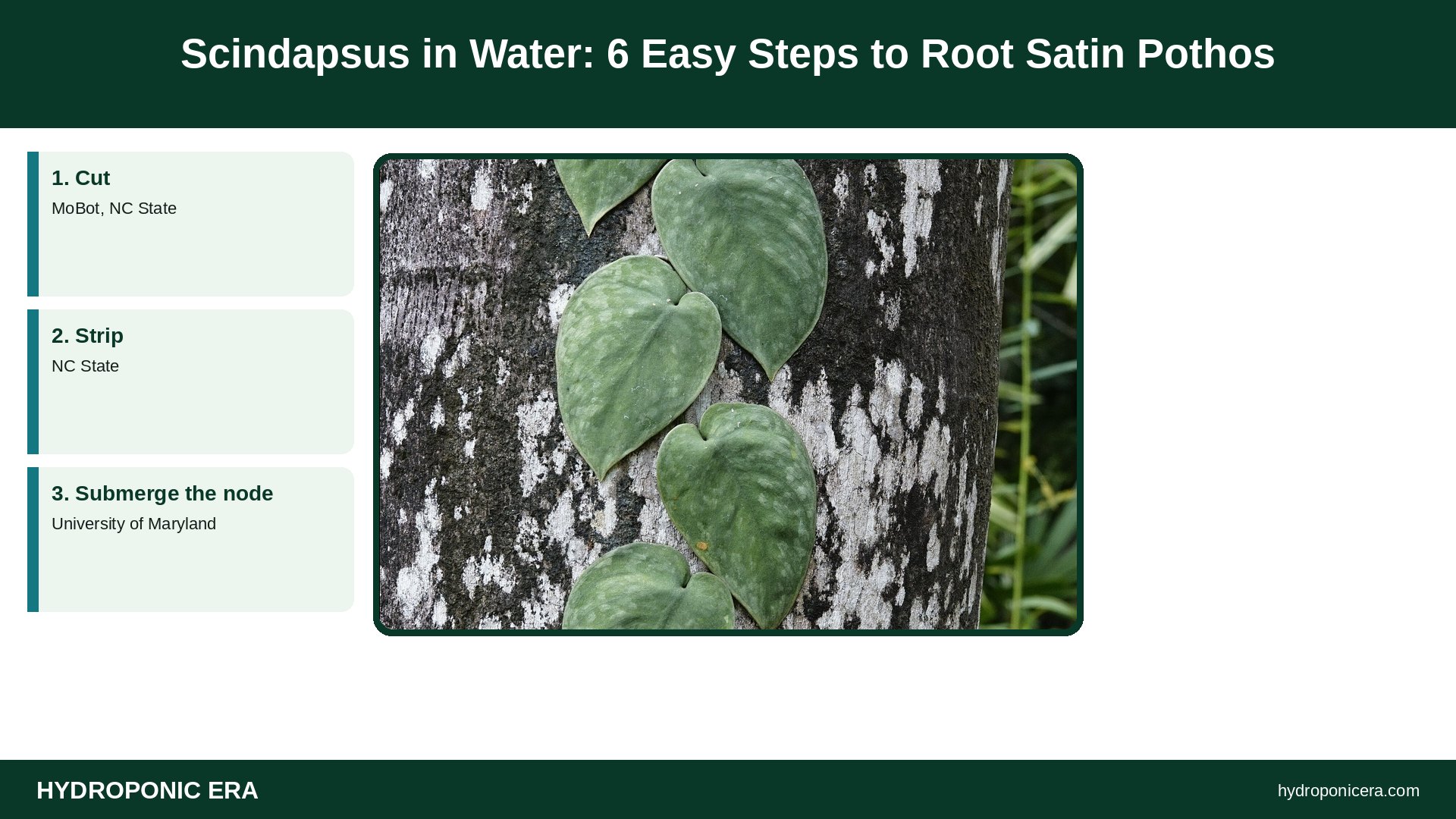
Scindapsus pictus, often sold as satin pothos or silver philodendron, is a tropical climbing vine in the aroid family. NC State Extension notes that it climbs with rootlets along its stems and can reach up to 10 feet (3 m). Those stem nodes are ready to grow roots, which is why scindapsus in water roots so dependably.
It is not a true pothos, but care is similar. If you also grow the green or golden type, our pothos in water guide uses the same basic method.
How Do You Take a Cutting for Scindapsus in Water?
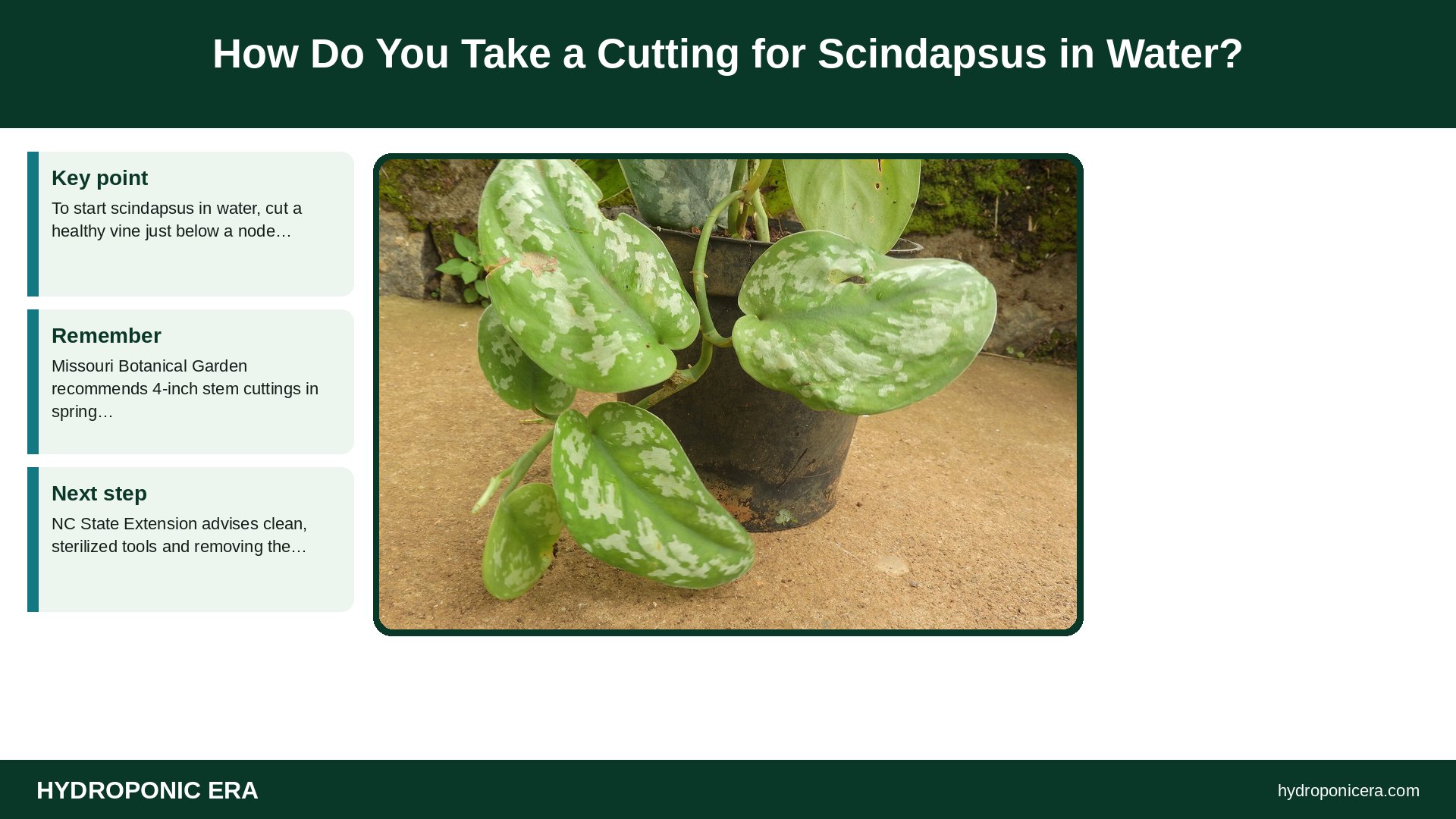
To start scindapsus in water, cut a healthy vine just below a node, leaving a piece about 4 to 6 inches (10 to 15 cm) long with two to four leaves. Missouri Botanical Garden recommends 4-inch stem cuttings in spring or early summer. NC State Extension advises clean, sterilized tools and removing the lower third to half of the leaves.
- Wipe pruners with rubbing alcohol or a 1:9 bleach solution.
- Choose a vine with firm, healthy leaves and visible nodes.
- Cut just below a node with one clean stroke.
- Remove the leaves that would sit under water.
- Take cuttings in the morning when stems are full of water.
Taking two or three cuttings at once gives you a backup if one fails to root.
How Do You Root Scindapsus in Water Step by Step?
Stand the cutting in a clear glass or jar so the node is submerged and every leaf stays above the water. University of Maryland Extension recommends bright but not direct light, a temperature around 70°F (21°C), and changing the water at least twice a week or whenever it turns cloudy. Then let your scindapsus in water sit undisturbed while roots form.
- Use room-temperature tap water; let chlorinated water stand overnight if you prefer.
- Several cuttings can share one wide jar.
- Top up evaporated water between changes so the node never dries.
- Rinse the jar when you see slime or film.
Rooting hormone is optional for scindapsus in water. See our guide to rooting hormone for water propagation if a cutting is slow.
How Long Does Scindapsus in Water Take to Root?
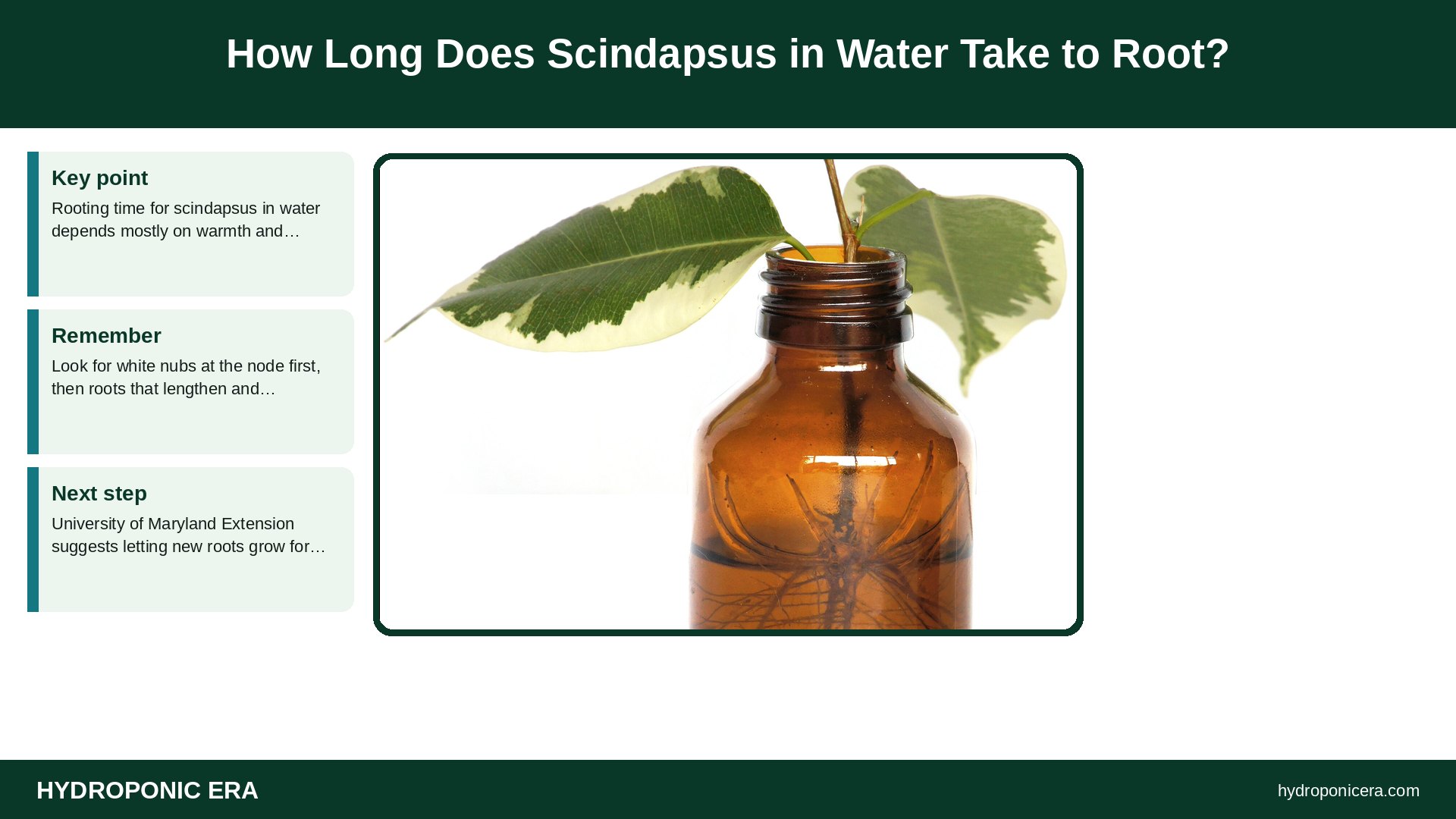
Rooting time for scindapsus in water depends mostly on warmth and light, so cuttings in a bright, warm room root fastest. Look for white nubs at the node first, then roots that lengthen and branch. University of Maryland Extension suggests letting new roots grow for another one to two weeks before potting, so they are sturdy enough to move.
Cool rooms slow everything down. Missouri Botanical Garden advises keeping Scindapsus above 60°F (16°C), and NC State lists an ideal range of 65 to 85°F (18 to 29°C). Keep jars away from windows that turn cold at night.
What Light and Temperature Does Scindapsus in Water Need?
Bright indirect light and steady warmth are ideal for scindapsus in water. NC State Extension says the plant prefers bright indirect light and temperatures of 65 to 85°F (18 to 29°C), and warns against direct sun and cool drafts. Too much direct sun heats the water and can scorch the silver-splashed leaves.
| Condition | Ideal | Warning sign |
|---|---|---|
| Light | Bright, indirect | Scorched or faded leaves in direct sun |
| Temperature | 65 to 85°F (18 to 29°C) | Stalled roots below 60°F (16°C) |
| Water | Clear, changed twice weekly | Cloudy water, slimy or brown roots |
| Leaves | All above the waterline | Rotting leaves under water |
Can Scindapsus in Water Live There Permanently?
Scindapsus in water can stay there for a long time if you change the water and add a dilute fertilizer, but the plant is naturally grown in a peaty, well-drained mix. Missouri Botanical Garden recommends feeding monthly in the growing season and less in winter. For long-term growth, most growers move rooted cuttings to soil.
If you want to compare the two routes, read water propagation vs soil propagation. Roots grown in water are more fragile, so handle them gently when you pot up.
How Do You Move Scindapsus in Water to Soil?
Plant the rooted cutting in a small pot of moist, peaty, well-drained mix, firm it gently, and keep it evenly moist for the first couple of weeks while roots adjust. NC State Extension recommends moist, well-drained soil. Put it back in bright indirect light and resume normal watering once new growth appears.
- Choose a pot with drainage, only slightly larger than the root mass.
- Fill with a peaty houseplant mix.
- Set the roots in a hole and backfill without packing hard.
- Water well and let excess drain.
- Keep the mix lightly moist while the plant settles.
Pinching the tips later encourages a fuller plant, according to NC State. You can also plant several cuttings in one pot.
FAQ About Scindapsus in Water
Why is my scindapsus in water not rooting?
Check for a node under water, warmth above 65°F (18°C) and bright indirect light. Cuttings without a node rarely root.
Why are the roots turning brown?
Stale water or rot. Trim soft roots, rinse the jar and change the water more often.
When should I take scindapsus cuttings?
Missouri Botanical Garden recommends spring or early summer, when the vine is actively growing.
Should I put my plant on a support?
It is a climber, so a pole or trellis helps older plants grow larger leaves.
Want more cloning tips? See our hydroponic cuttings and cloning guide.
Sources
- NC State Extension Gardener Plant Toolbox. Scindapsus pictus.
- Missouri Botanical Garden. Scindapsus pictus.
- University of Maryland Extension. Make more plants from cuttings: 5 plants that root easily in water.
- NC State Extension. Extension Gardener Handbook: Propagation.
- Photo credits (Wikimedia Commons, edited with titles): Scindapsus pictus 3358 by Vengolis (CC BY-SA 4.0); Scindapsus pictus argyraeus-3-nature love-yercaud-salem-India by Yercaud-elango (CC BY-SA 4.0); Ficus cuttings with roots in a bottle, White background by Biusch (CC BY-SA 3.0)