
Which is better, water propagation vs soil propagation? It depends on the plant. Water propagation is easy and lets you watch roots form, and University of Maryland lists pothos, philodendron and coleus as easy water rooters. But Illinois Extension warns water roots are often weak and adapt poorly to potting mix, so cuttings bound for pots usually do better rooted in a moist, soilless medium.
Key takeaway: In the water propagation vs soil propagation debate, use water for easy vining houseplants and short root lengths, and use a light rooting medium for succulents, geraniums and anything you want to transplant with minimal shock.
| Factor | Water propagation | Soil (rooting medium) propagation |
|---|---|---|
| Visibility | See roots form | Hidden; tug test or wait for new growth |
| Setup | A clean jar and tap water | Pot, moist perlite/vermiculite/peat mix, humidity cover |
| Main risk | Rot from stale water; weak roots | Drying out or overwatering |
| Transplant shock | Higher; roots must adapt to mix | Lower; roots already in a medium |
| Best for | Pothos, philodendron, coleus, Swedish ivy, arrowhead | Succulents, cacti, geraniums, rubber plant |
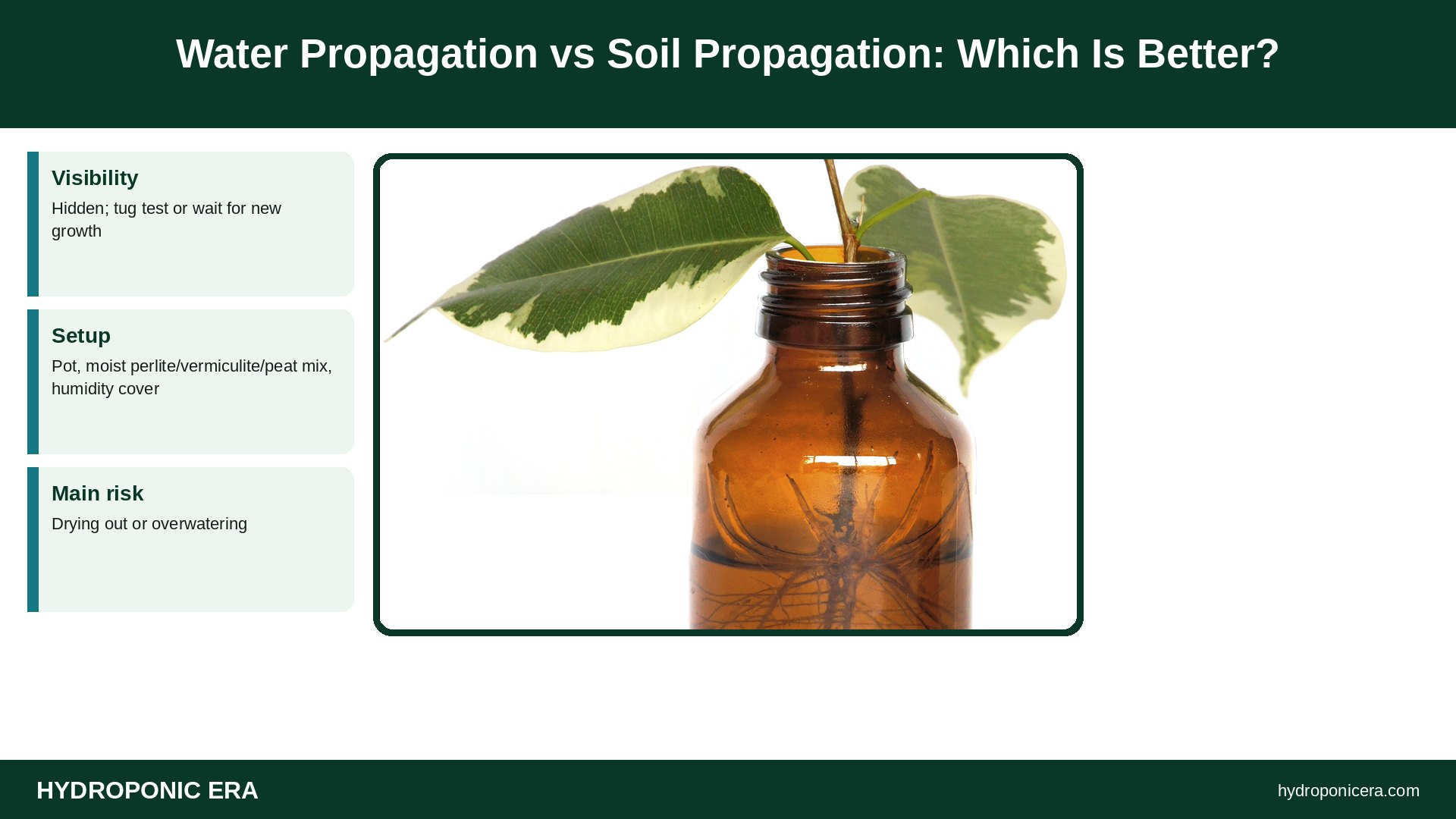
What Is the Difference Between Water Propagation vs Soil Propagation?
Both methods root a cutting, a piece of stem or leaf, so it grows into a new plant identical to the parent. In water propagation, the cut end sits in a jar of water. In “soil” propagation, the cutting goes into a rooting medium. Penn State Extension notes the best media are sand, vermiculite, perlite or bark, used alone or mixed, because they’re light and free of pathogens. It says compost and garden soil aren’t the best choices, since they’re heavy, poorly aerated and may carry disease and weed seeds.
What Are the Pros in Water Propagation vs Soil Propagation?
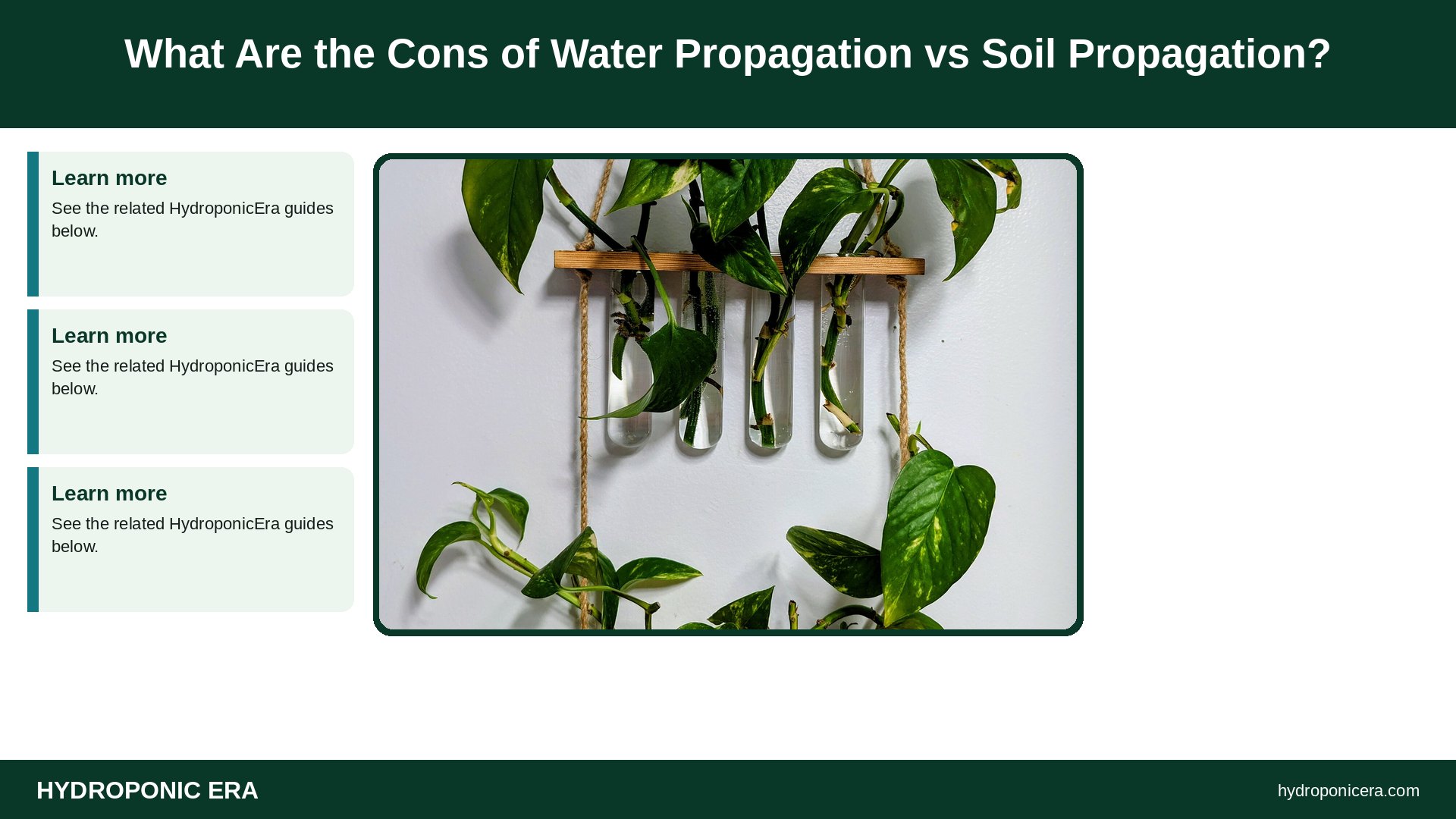
- You can see progress. The RHS notes that rooting fuchsias in water lets you easily see when they are rooted.
- It’s cheap and simple. University of Maryland says several common houseplants root in clean, plain tap water.
- Little equipment. No humidity dome or misting is needed, since the cutting draws water directly.
- Penn State lists water as a medium for leaves, stem tips, branch tips and stem sections.
What Are the Cons of Water Propagation vs Soil Propagation?
Illinois Extension is direct: although plants such as ivy and philodendron root easily in water, it does not recommend it, because roots that develop in water are often weak and don’t adapt as easily to potting mix as roots formed in rooting media. University of Maryland adds that bacterial growth in the water can lead to rotting, so you must change the water at least twice a week or whenever it looks cloudy. Thick stems may rot before they root.
Where Does Soil Win in Water Propagation vs Soil Propagation?
In water propagation vs soil propagation, rooting in a medium avoids the water-to-soil switch. Penn State recommends bright, indirect light, a medium that is moist but not saturated, high humidity and a rooting medium temperature of 75–80°F (24–27°C). The tradeoff is more care: you must keep humidity up without inviting disease, and you can’t see the roots. Our guides to perlite and vermiculite and a humidity dome for cuttings cover the setup.
Which Plants Suit Water Propagation vs Soil Propagation?
| Plant | Better method | Why | Source |
|---|---|---|---|
| Pothos, heartleaf philodendron | Water | Root easily in plain tap water | UMD |
| Coleus, Swedish ivy, arrowhead | Water | Root easily in plain tap water | UMD |
| Fuchsia | Either | Water is generally trouble-free; media 2–4 weeks | RHS |
| Succulents, cacti, geranium, rubber plant | Medium, after callusing | Cut end should air dry and heal first | Illinois |
| Jade, Christmas cactus, African violet | Soil | Root easily in soil from leaf or stem cuttings | UMD |
How Do You Do Water Propagation the Right Way?
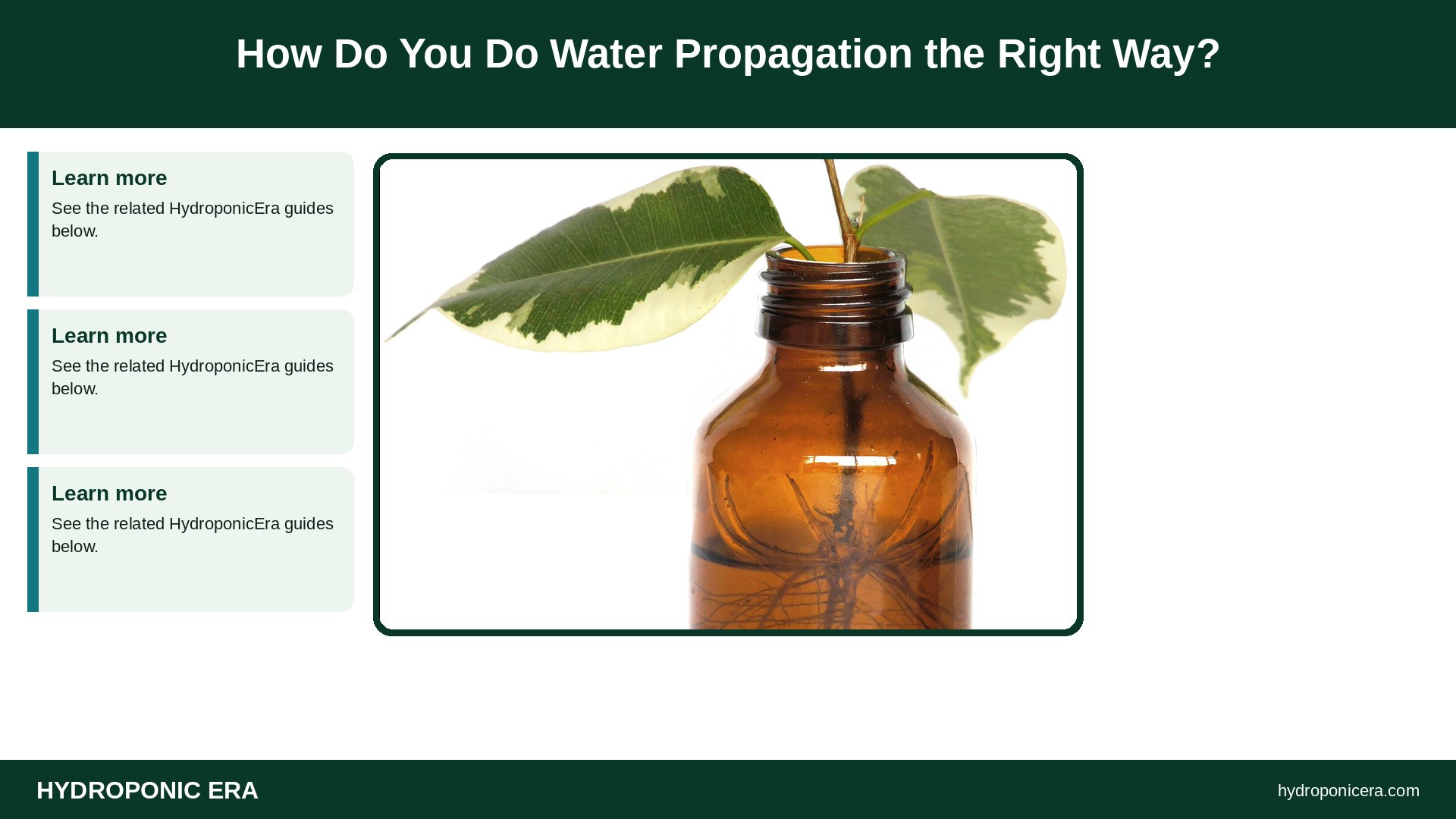
- Cut 3–5 in (8–13 cm) of healthy stem with at least one node, per University of Maryland.
- Remove leaves that would sit under water.
- Use a clean container with fresh tap water.
- Give bright light, not direct sun, at about 70°F (21°C).
- Change the water at least twice a week.
- Pot up early: UMD suggests letting roots grow another week or two after they appear, then planting in a small, well-draining pot.
- Keep the mix moist until new leaves start, then reduce watering.
How Do You Do Soil Propagation the Right Way?
- Take a 3–6 in (8–15 cm) tip with at least two nodes, as Penn State suggests.
- Remove lower leaves and any flowers.
- Pre-moisten the medium and make a hole with a pencil.
- Insert 1–3 in (2.5–8 cm) deep, per Illinois Extension, and firm the medium.
- Mist and cover to hold humidity, venting regularly.
- Keep the medium warm at 75–80°F (24–27°C).
For succulents, cacti, geraniums and rubber plants, Illinois says to let the cut surface air dry and heal over first so callus tissue forms and helps prevent disease.
Does Rooting Hormone Help in Water Propagation vs Soil Propagation?
Illinois Extension says rooting hormones are chemical substances that increase the rooting percentage of many plants, and describes dipping the cut end before inserting it into the rooting medium. That’s where powder works best: the medium holds it against the stem. In a jar, powder tends to wash off into the water. Easy water rooters such as pothos rarely need it anyway. Save hormone for slower, woodier cuttings rooted in a medium, and tap off the excess before sticking.
Can You Switch From Water Propagation to Soil Later?
Yes, and most people do. The trick is timing. Short roots adjust better than a long, tangled mass; the RHS, for example, pots fuchsia cuttings once roots reach 0.4–0.8 in (1–2 cm). A commenter on UMD’s article put it simply: pot rooted cuttings sooner rather than later, because overgrown water roots get broken during potting. Keep the new pot evenly moist for the first couple of weeks while roots adapt. Our guide to pothos in water walks through the move for one of the easiest plants.
Is There a Middle Ground in Water Propagation vs Soil Propagation?
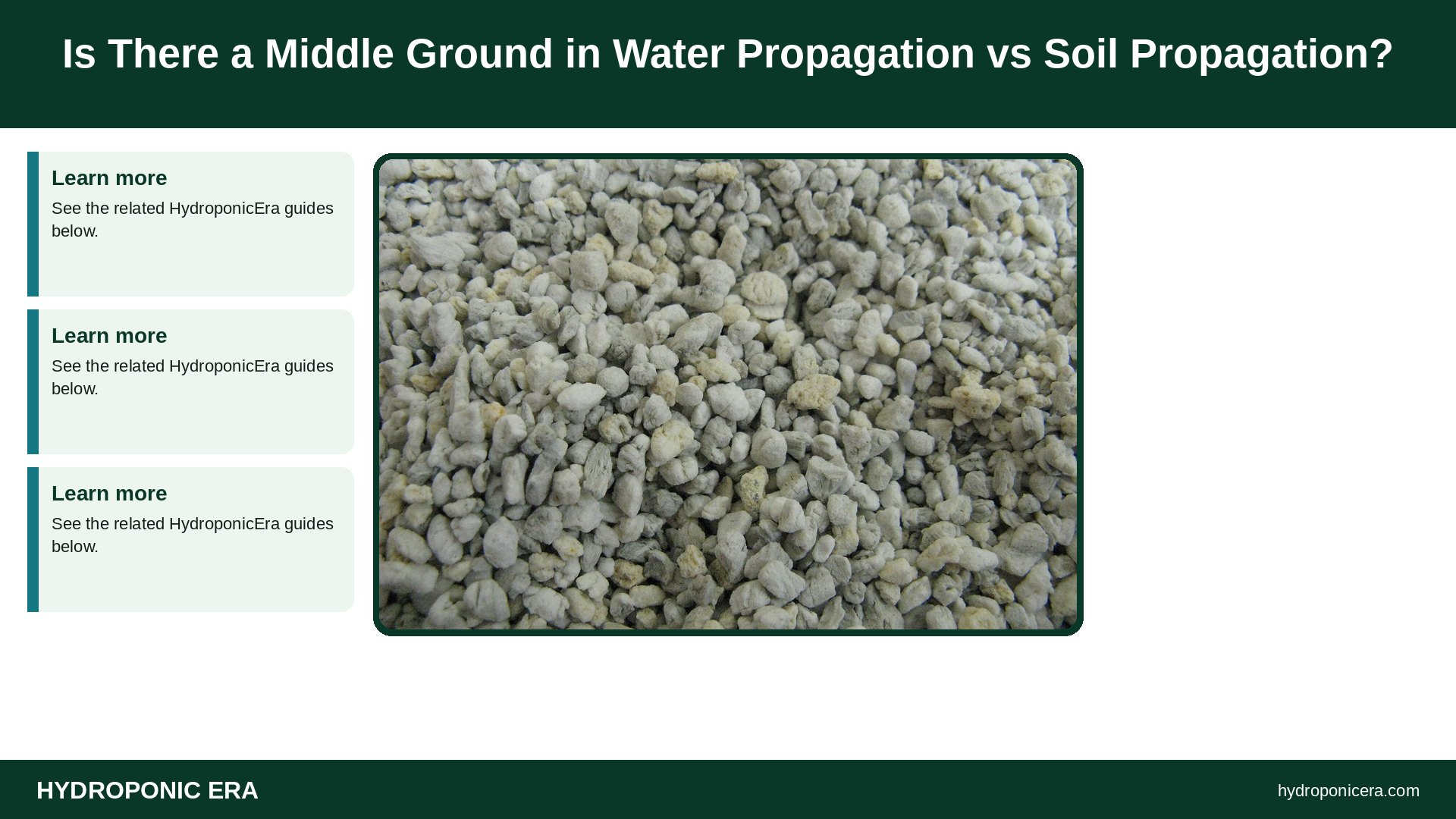
Yes. Many growers root cuttings in foam or stone wool cubes, or in clay pebbles, which hold moisture while giving roots air. These cuttings move straight into hydroponic systems without a soil stage. See our guides to Oasis cubes for propagation and hydroponic cuttings and cloning.
FAQ About Water Propagation vs Soil Propagation
Which is faster, water propagation vs soil propagation?
Not reliably. Rooting speed depends more on the plant, warmth and cutting quality than the method.
Why do water-propagated cuttings die in soil?
Illinois Extension says water roots are often weak and adapt poorly to potting mix.
Can I use garden soil for cuttings?
Penn State says no; it’s heavy and may carry pathogens.
How often should I change propagation water?
At least twice a week, per University of Maryland.
Which plants should never go in water?
Succulents and cacti are better callused and rooted in a dry-ish medium.
Sources
- University of Illinois Extension — Houseplant Propagation
- University of Illinois Extension — Houseplant Cuttings
- Penn State Extension — Propagating Houseplants
- University of Maryland Extension, Maryland Grows — 5 Plants That Root Easily in Water
- Royal Horticultural Society — How to Grow Tender Fuchsias
- Photo credits (Wikimedia Commons, edited with titles): Ficus cuttings with roots in a bottle, White background by Biusch (CC BY-SA 3.0); Pothos plant on water by Joli Rumi (CC BY-SA 4.0); Ficus cuttings with roots in a bottle, White background by Biusch (CC BY-SA 3.0); Perlite1 by KENPEI (CC BY-SA 3.0); Basilikum (Ocimum basilicum) Stecklinge — Josef Schlaghecken by Schlaghecken Josef (CC BY-SA 4.0)