
Can you grow a pomegranate tree in a container? Yes. A dwarf pomegranate tree thrives in a large container in full sun. Use a well-drained mix with a pH of 5.5–7.0, keep moisture even to reduce fruit splitting, and in cold regions move the pot to a sheltered spot for winter. Most bear well in about 3 years.
Key takeaway: Pomegranates are tough, drought-tolerant shrubs, and compact forms suit patios. Sun, steady water and light pruning matter most for fruit.
| Growth factor | Target | Source |
|---|---|---|
| Light | Full sun for best fruit | Clemson HGIC |
| Soil pH | 5.5–7.0, well drained | Clemson HGIC, UF/IFAS |
| Hardiness | USDA Zones 8–10 (7b with protection) | Clemson HGIC |
| Dormant cold damage | Severe injury possible at 12°F (-11°C) | UF/IFAS |
| Fruit size | 2–5 in (5–12 cm) across | UF/IFAS |
| Good yields begin | About 3 years after planting | Clemson HGIC |
Which Pomegranate Tree Is Best for a Container?
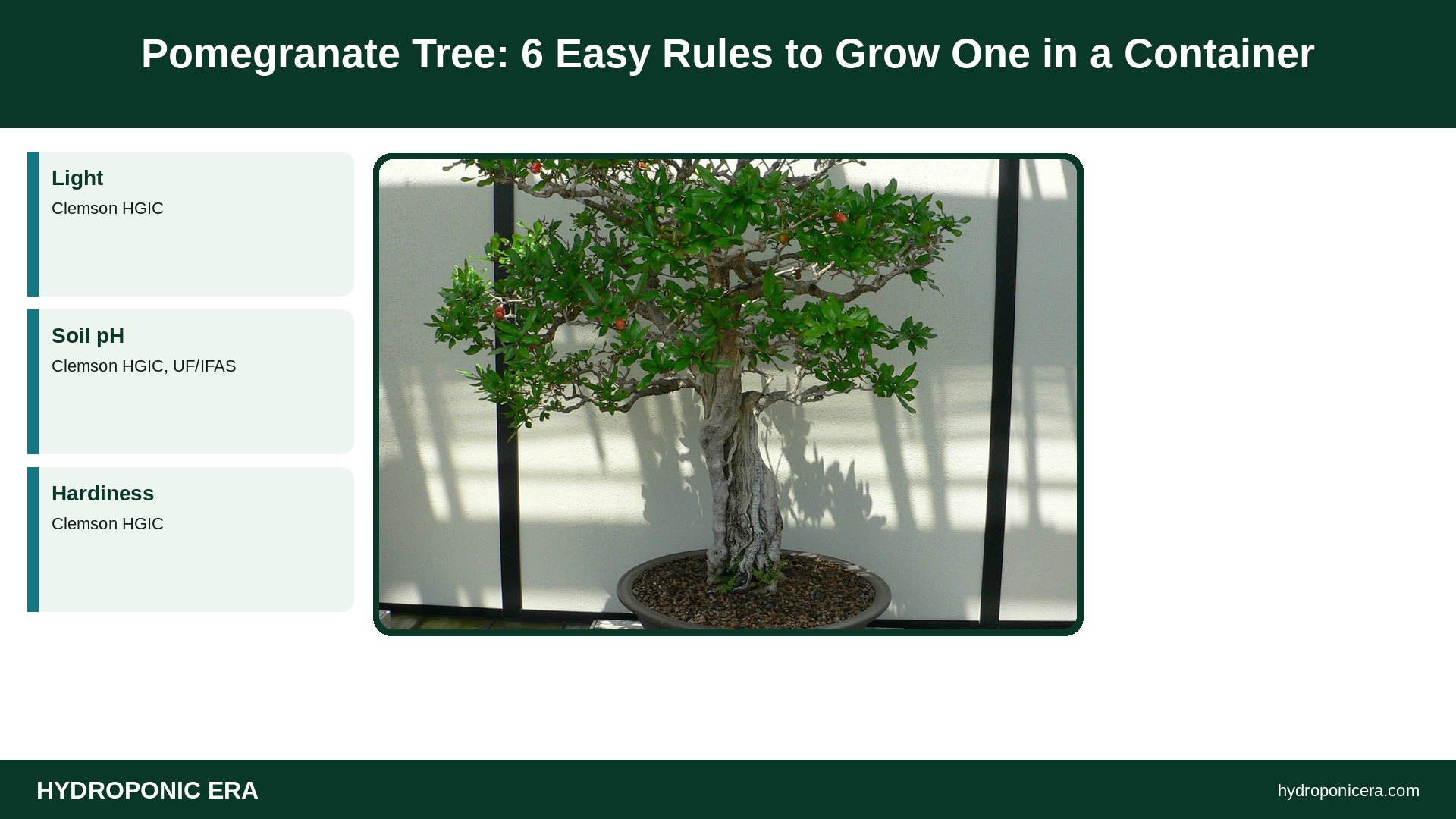
Choose a dwarf or compact variety. Clemson Extension says compact pomegranate forms perform quite well in large containers, while standard plants reach 12–20 ft (3.7–6 m) tall and wide. Michigan State’s Ask Extension experts suggest a dwarf variety in a pot that sits outside in summer and moves to a sheltered spot for winter.
Avoid double-flowered types if you want fruit; Clemson notes they produce few, if any. Our dwarf fruit trees guide compares other compact trees, and the fig tree guide covers a similar Mediterranean fruit.
What Pot and Soil Does a Pomegranate Tree Need?
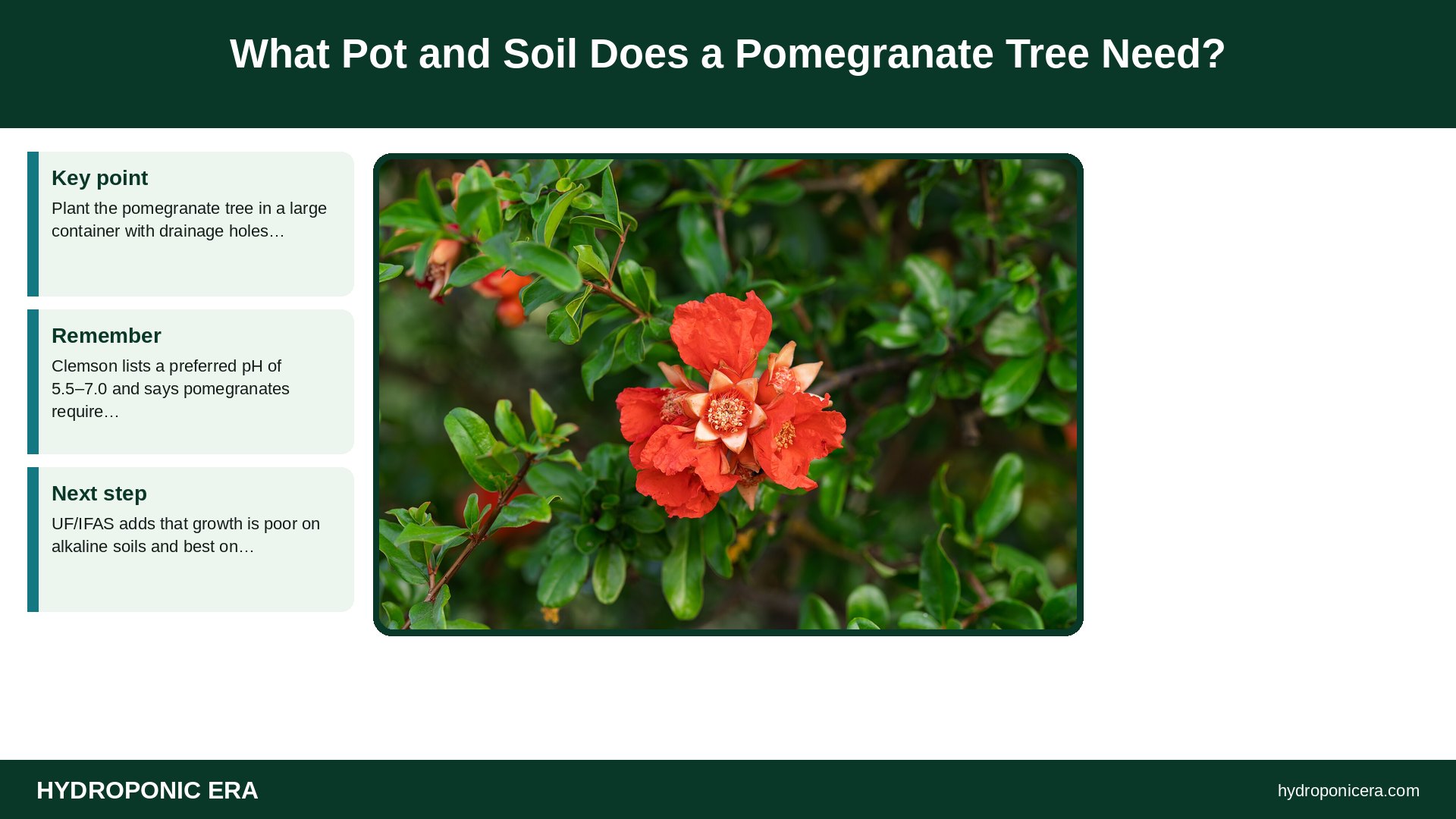
Plant the pomegranate tree in a large container with drainage holes and a loose, well-drained mix. Clemson lists a preferred pH of 5.5–7.0 and says pomegranates require good drainage. UF/IFAS adds that growth is poor on alkaline soils and best on well-drained, not heavy or wet, soils. Move up one pot size as roots fill the container.
- Pick a pot with several drainage holes.
- Fill with a fast-draining potting mix.
- Set the plant at its original depth.
- Water deeply until water drains out.
- Place in the sunniest spot you have.
How Much Sun and Water Does a Potted Pomegranate Need?
Give a potted pomegranate tree full sun. Clemson says partial shade reduces fruit set. Established plants tolerate drought, but steady moisture matters for fruit: Clemson advises even moisture to reduce fruit drop and splitting, and UF/IFAS warns that sudden changes in irrigation often cause splits. Containers dry faster than the ground, so check soil every few days in summer.
UF/IFAS also recommends reducing water gradually as fruit matures to limit splitting and improve flavor and color.
How Cold Can a Pomegranate Tree Get?
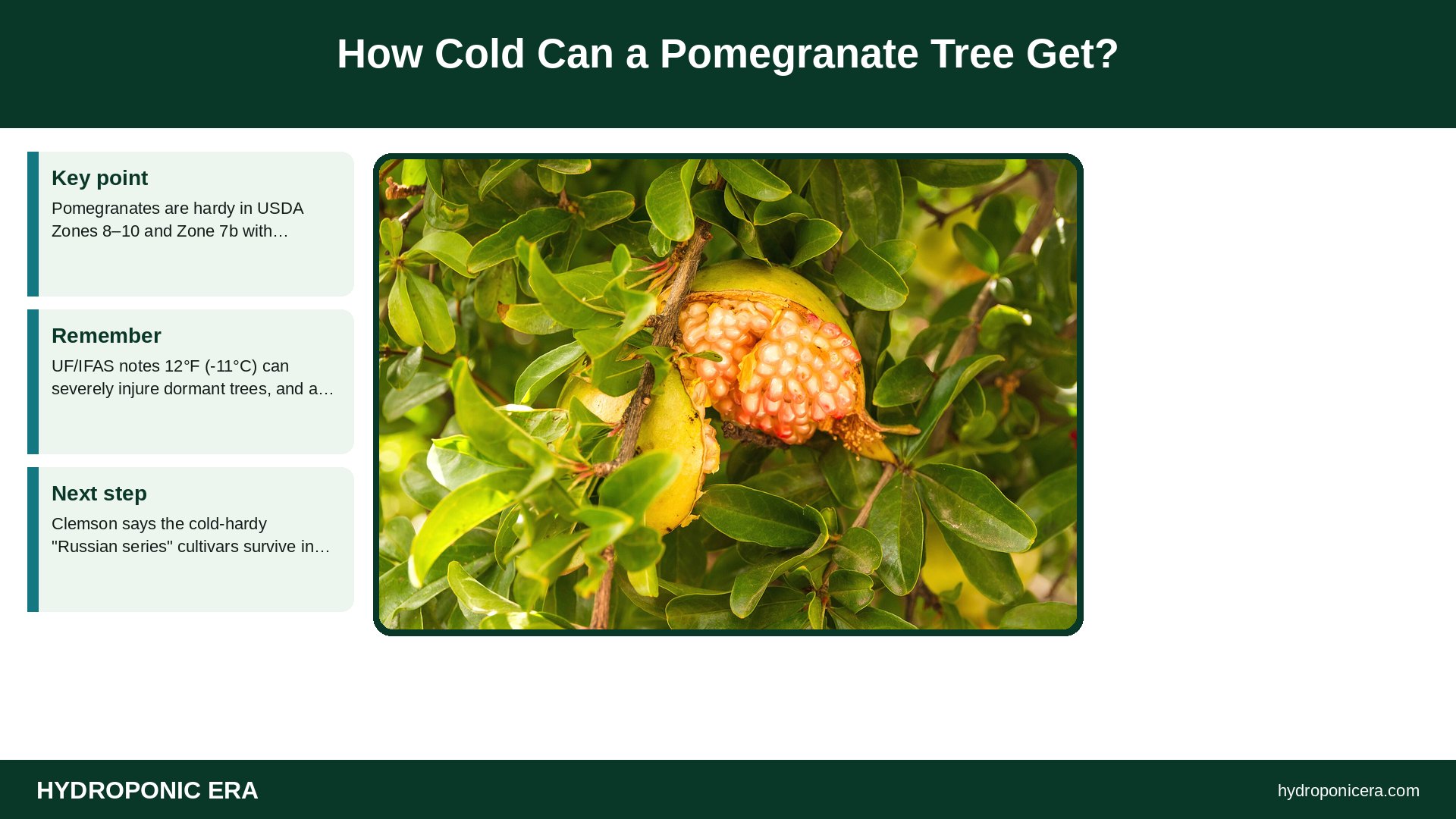
Pomegranates are hardy in USDA Zones 8–10 and Zone 7b with protection, per Clemson, where temperatures below 10°F (-12°C) may kill plants to the ground. UF/IFAS notes 12°F (-11°C) can severely injure dormant trees, and a late 28°F (-2°C) freeze can damage trees already in growth. Clemson says the cold-hardy “Russian series” cultivars survive in Zone 6 and warmer areas.
In colder areas, Ask Extension notes that low-chill types may wake during a winter warm spell, then lose new growth to a later freeze. A cool, sheltered space for the pot prevents this. Clemson also notes plants that are killed to the ground usually re-sprout vigorously from the crown, so a damaged tree is not always lost.
How Do You Prune a Pomegranate Tree in a Pot?
Prune a pomegranate tree lightly before spring growth starts. Clemson advises removing suckers and dead wood, since light annual pruning encourages new fruiting spurs on 2–3-year-old wood, and warns that heavy pruning reduces fruit. UF/IFAS suggests training to one or a few trunks and removing sprouts and suckers as they appear.
- Cut out suckers from the base.
- Remove dead, crossing or damaged wood in late winter.
- Thin heavy fruit loads so branches do not snap.
Why Is My Pomegranate Tree Not Fruiting?
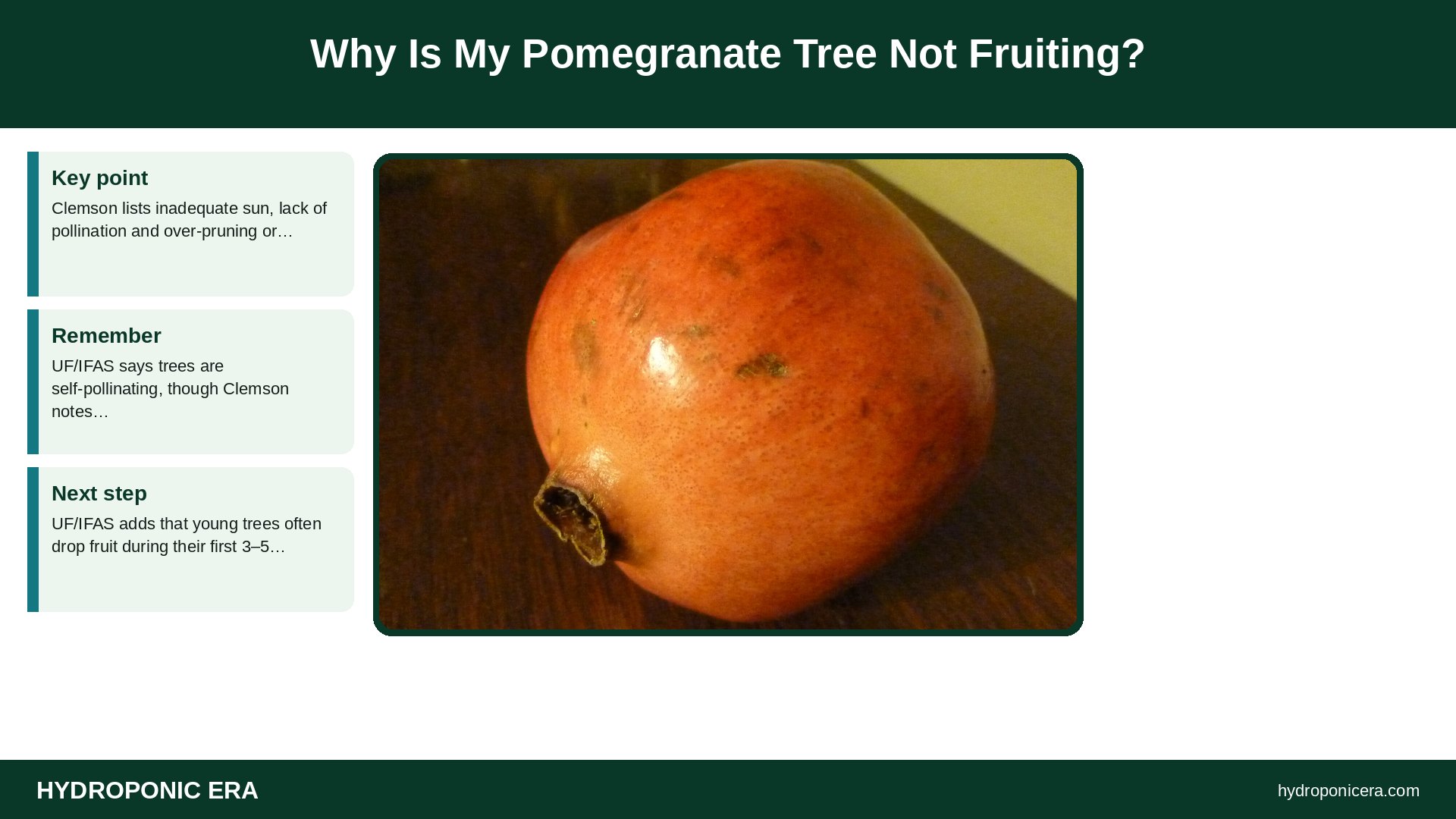
Clemson lists inadequate sun, lack of pollination and over-pruning or cold damage as the most common causes. UF/IFAS says trees are self-pollinating, though Clemson notes cross-pollination from a second plant increases fruit set. UF/IFAS adds that young trees often drop fruit during their first 3–5 years, worsened by too much fertilizer or water.
Flowers are either productive or non-productive, UF/IFAS explains, so some flower drop is normal.
Can You Grow a Pomegranate Tree From Cuttings or Seed?
Cuttings are best. Clemson says seedlings do not come true to variety, but hardwood and softwood cuttings root easily. UF/IFAS recommends pencil-size hardwood cuttings 6–8 in (15–20 cm) long taken in winter, and notes seeds take 45–60 days to germinate. Use rooting hormone with IBA, as Clemson suggests; see our rooting hormone guide.
How Should You Feed a Container Pomegranate Tree?
Feed lightly. Clemson suggests feeding in-ground plants in March and July with a balanced 10-10-10 fertilizer, based on plant height. In a pot, use a balanced slow-release or liquid feed at a lower rate during spring and summer, and stop in fall. UF/IFAS warns that over-fertilizing young trees favors leafy growth and worsens fruit drop.
- Spring: start feeding as new leaves appear.
- Summer: feed again lightly after flowering.
- Fall and winter: no feeding while the tree is dormant.
FAQ About Potted Pomegranates
How long until a potted pomegranate fruits?
Plants may bear one or two fruit the first year and bear well by year three.
Is a pomegranate evergreen?
It is deciduous, rarely evergreen.
Can I keep a pomegranate indoors all year?
Fruit needs full sun; outdoors in summer is best.
Why are my pomegranates splitting?
Uneven watering is the most common cause.
Do I need two plants?
No, but a second plant may improve fruit set.
Sources
- Clemson Cooperative Extension HGIC — Pomegranate: How to Grow, Care for, and Enjoy
- UF/IFAS Extension — The Pomegranate (MG056)
- Ask Extension (Michigan State University Extension) — Growing a Pomegranate Tree in Michigan
- Photo credits (Wikimedia Commons, edited with titles): Punica granatum bonsai 2 by Mark Pellegrini (CC BY-SA 2.5); Pomegranate flowers (Punica granatum), Ponte de Sor, Portugal (approx. GPS location) julesvernex2 by Jules Verne Times Two (CC BY-SA 4.0); Punica granatum fruit Grenade by Jebulon (CC0); Pomegranate uncut by Chris Haines (CC BY-SA 3.0)