
What is the difference between short day vs long day plants? Short day plants flower when nights are long, usually when daylight falls below about 12 hours. Poinsettias and chrysanthemums are examples. Long-day plants such as lettuce, spinach and potatoes flower when days run longer than about 12 hours, and day-neutral tomatoes flower at any day length.
Key takeaway: Photoperiodism is how plants use the length of day and night to decide when to flower. Indoor growers control it with light timers and blackout covers.
| Group | Flowers when | Examples (source) |
|---|---|---|
| Short-day (long-night) | Day length is under about 12 hours | Chrysanthemum, poinsettia, Christmas cactus (OSU) |
| Long-day (short-night) | Day length is over about 12 hours | Lettuce, spinach, potatoes, asters (OSU) |
| Day-neutral | Regardless of day length | Tomatoes, corn, cucumbers, some strawberries (OSU) |
| June-bearing strawberry | 13 hours of light or less | ‘Chandler’, ‘Radiance’ (Ohio State CEAC) |
| Florist chrysanthemum | 14 hours of light or less | Potted mums (Purdue) |
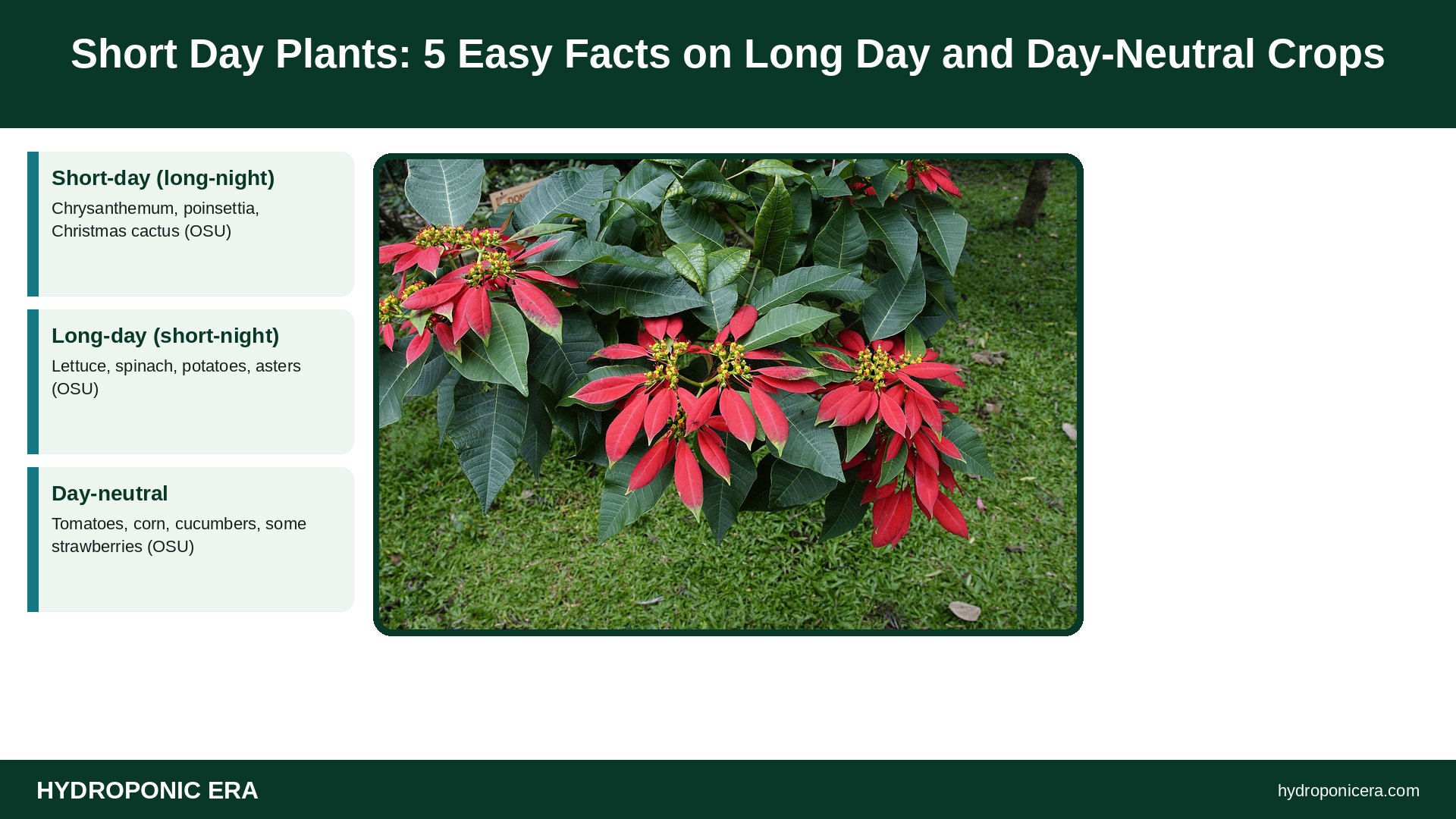
What Does Short Day Mean for Plants?
With short day vs long day plants, “short day” really means long night. Oregon State University Extension explains that the amount of uninterrupted darkness, not daylight, controls flowering in most plants. Purdue Extension agrees: the real signal is night length. A short day plant needs a long, unbroken dark period to start forming flowers.
Our hydroponic light schedule guide explains how to set hours for each crop.
What Is the Difference Between Short Day vs Long Day Plants?
Short day plants flower when the day is at or shorter than a set length, and long-day plants flower when it is at or longer than a set length, according to Purdue. Oregon State puts the usual dividing line near 12 hours. Many summer-blooming flowers and garden vegetables, including lettuce, spinach and potatoes, are long-day plants.
What Are Day-Neutral Plants?
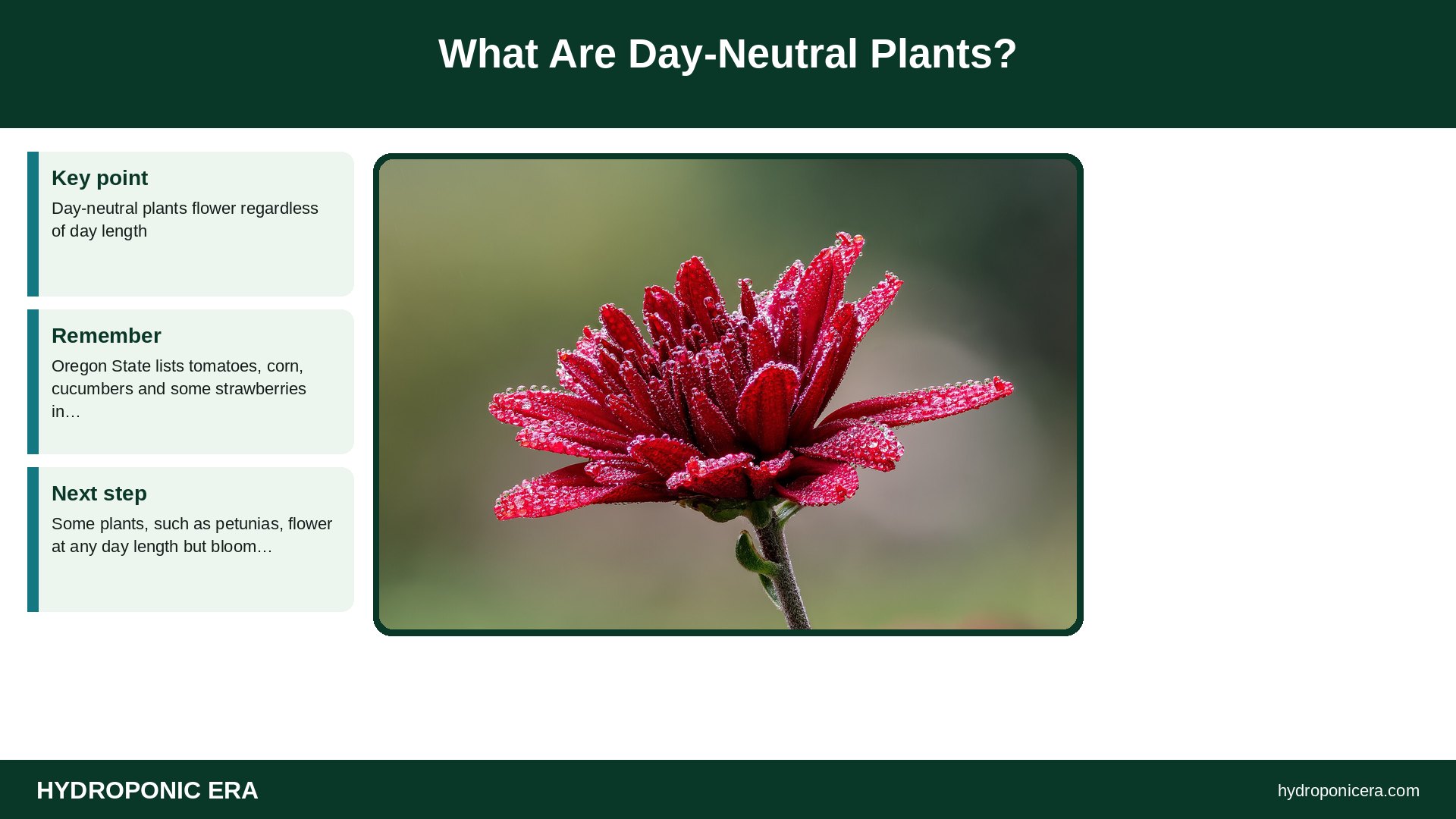
Day-neutral plants sit outside the short day vs long day plants split and flower regardless of day length. Oregon State lists tomatoes, corn, cucumbers and some strawberries in this group. Some plants, such as petunias, flower at any day length but bloom earlier and more heavily with long days. So tomatoes fruit under almost any indoor light schedule.
What Is the Critical Day Length for Short Day Plants?
The critical day length is the exact photoperiod that triggers flowering, and it varies by species and variety. Purdue says florist chrysanthemums flower when days are 14 hours or shorter. Ohio State’s Controlled Environment Agriculture Center found June-bearing strawberries such as ‘Chandler’ and ‘Radiance’ have a critical photoperiod between 13 and 14 hours.
What Is the Difference Between Obligate and Facultative Plants?
Obligate plants must get the right photoperiod or they stay vegetative. Facultative short day plants and long-day plants simply flower faster under the right day length but will eventually flower anyway, Purdue explains. Ohio State notes that everbearing strawberries, including day-neutral types, are generally facultative long-day plants, forming more flowers under longer days.
Are Strawberries Short Day Plants?
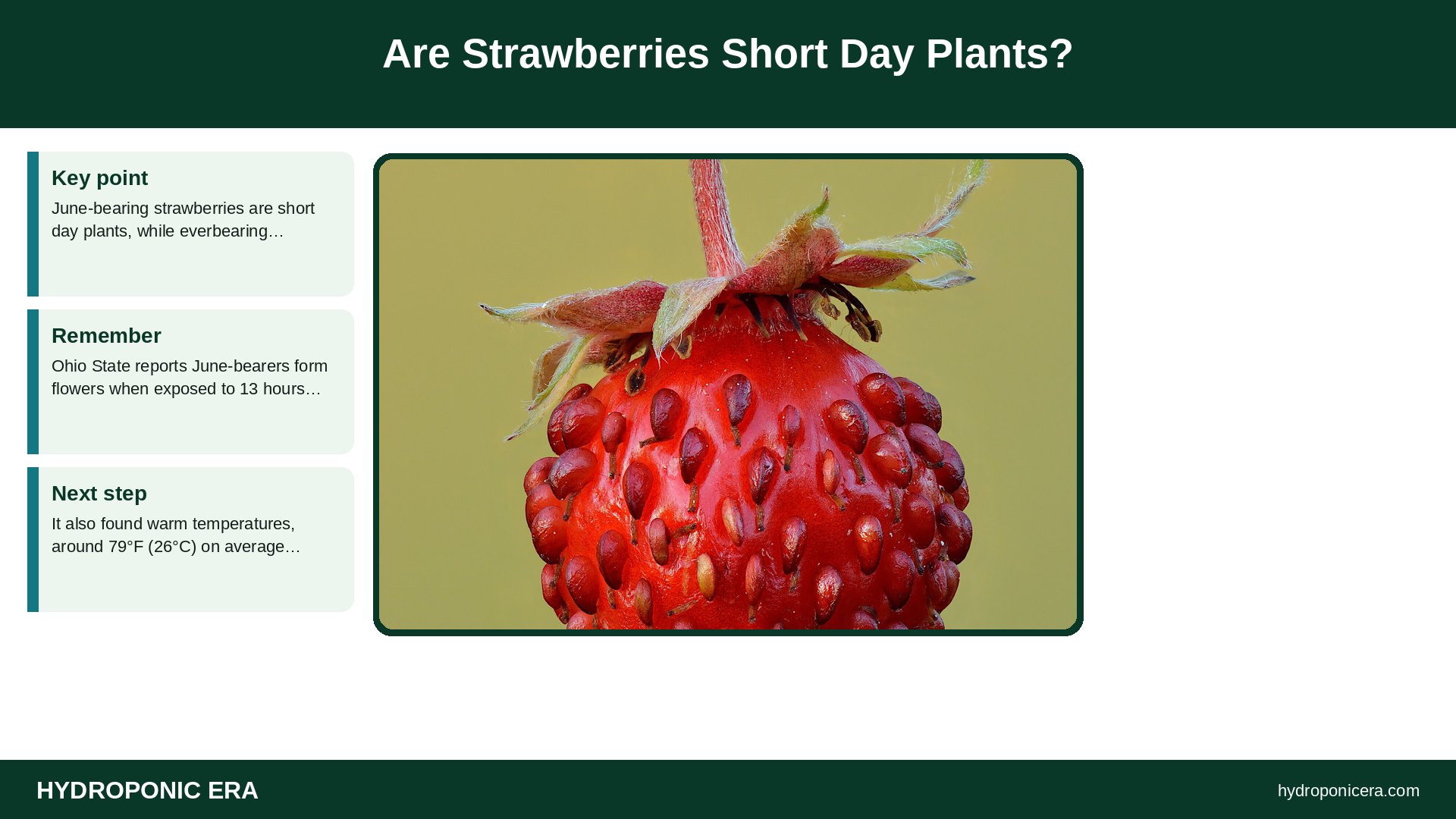
June-bearing strawberries are short day plants, while everbearing types lean long-day. Ohio State reports June-bearers form flowers when exposed to 13 hours or less of light. It also found warm temperatures, around 79°F (26°C) on average, delayed flowering in ‘Chandler’ by many weeks, so temperature matters too.
Learn more in our guide to day-neutral strawberries and runners.
How Do You Make Short Day Plants Flower Indoors?
Give it long, completely dark nights. Oregon State describes covering chrysanthemums for at least 12 hours a day for several weeks to trigger bloom out of season. Purdue notes growers pull blackout cloth over plants in the late afternoon and remove it in the morning.
- Check the critical day length for your variety.
- Set a timer for 12 hours of light or less.
- Block every light leak during the dark period.
- Keep the schedule for several weeks without breaks.
- Hold temperatures moderate, since heat can delay bloom in short day plants.
A reliable hydroponic timer makes this easy to keep consistent.
How Do You Make a Long Day Plant Flower Early?
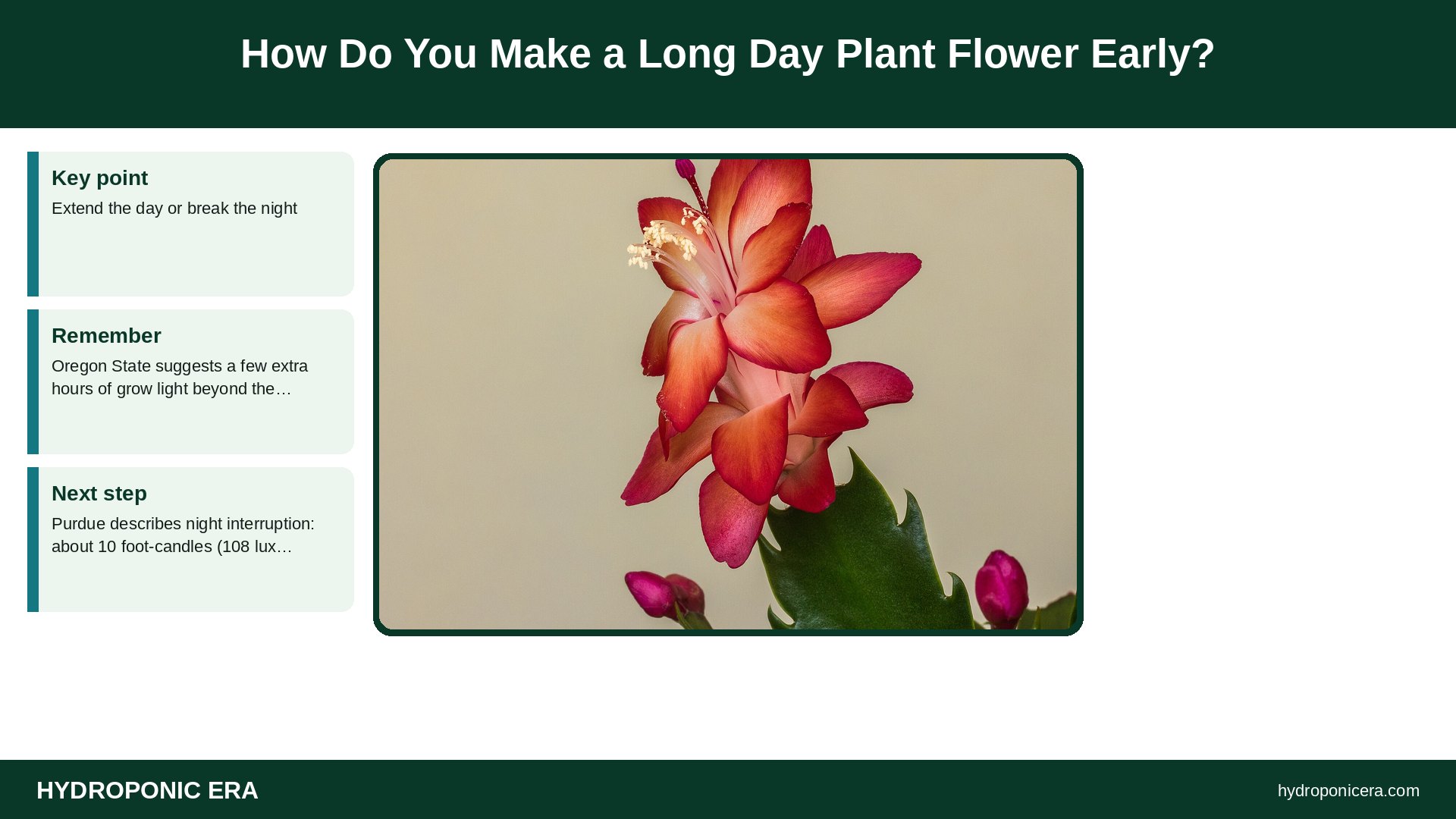
Extend the day or break the night. Oregon State suggests a few extra hours of grow light beyond the natural day for a few weeks. Purdue describes night interruption: about 10 foot-candles (108 lux, or 2 µmol/m²/s) from 10 p.m. to 2 a.m. Ohio State adds hours before sunrise rather than after sunset.
How Does Short Day vs Long Day Plants Timing Affect Lettuce?
Lettuce and spinach are long-day plants, so long days push them toward bolting. Oregon State links lettuce bolting directly to day length. If your goal is leaves rather than flowers, avoid needlessly long light schedules and keep plants cool. See our lettuce bitterness and bolting timeline.
FAQ About Short Day vs Long Day Plants
Are poinsettias short day plants?
Yes, poinsettias need long nights to bloom.
Is lettuce a long day plant?
Yes, along with spinach and potatoes.
Are tomatoes day-neutral?
Yes, tomatoes flower regardless of day length.
Does a short light break ruin the dark period?
It can; night interruption lighting is used to stop short-day flowering.
Do young seedlings respond to day length?
Not until they pass their juvenile stage, Purdue notes.
Sources
- Oregon State University Extension — What are short-day and long-day plants?
- Purdue Extension HO-249-W — Flower Induction of Annuals
- Ohio State CEAC — Flowering Basics (strawberry)
- Photo credits (Wikimedia Commons, edited with titles): Euphorbia pulcherrima 0111 by Vengolis (CC BY-SA 4.0); Chrysantheme rot tautropfen -20191024-RM-102058 by Ermell (CC BY-SA 4.0); Fragaria vesca fruit – Keila by Ivar Leidus (CC BY-SA 4.0); Schlumbergera (actm) 01 by Agnes Monkelbaan (CC BY-SA 4.0)