
What is the best seed germination temperature? Optimum germination temperatures for common vegetables run from about 65°F (18°C) to 95°F (35°C). Cool-season crops such as lettuce and spinach sprout best near 70–75°F (21–24°C), while warm-season crops like tomatoes, peppers and cucumbers prefer 85–95°F (29–35°C). Below a crop’s minimum or above its maximum, seeds sprout slowly, rot or go dormant.
Key takeaway: Each seed has a minimum, optimum and maximum temperature. Hitting the optimum makes germination fast and even, which matters in a hydroponic seedling tray.
| Crop | Minimum | Optimal range | Optimum |
|---|---|---|---|
| Lettuce | 35°F (2°C) | 40–80°F (4–27°C) | 75°F (24°C) |
| Spinach | 35°F (2°C) | 45–75°F (7–24°C) | 70°F (21°C) |
| Celery | 40°F (4°C) | 60–70°F (16–21°C) | 70°F (21°C) |
| Cabbage | 40°F (4°C) | 45–95°F (7–35°C) | 85°F (29°C) |
| Parsley | 40°F (4°C) | 50–95°F (10–35°C) | 75°F (24°C) |
| Tomato | 50°F (10°C) | 70–95°F (21–35°C) | 85°F (29°C) |
| Pepper | 60°F (16°C) | 65–95°F (18–35°C) | 85°F (29°C) |
| Cucumber | 60°F (16°C) | 60–95°F (16–35°C) | 95°F (35°C) |
| Eggplant | 60°F (16°C) | 75–90°F (24–32°C) | 85°F (29°C) |
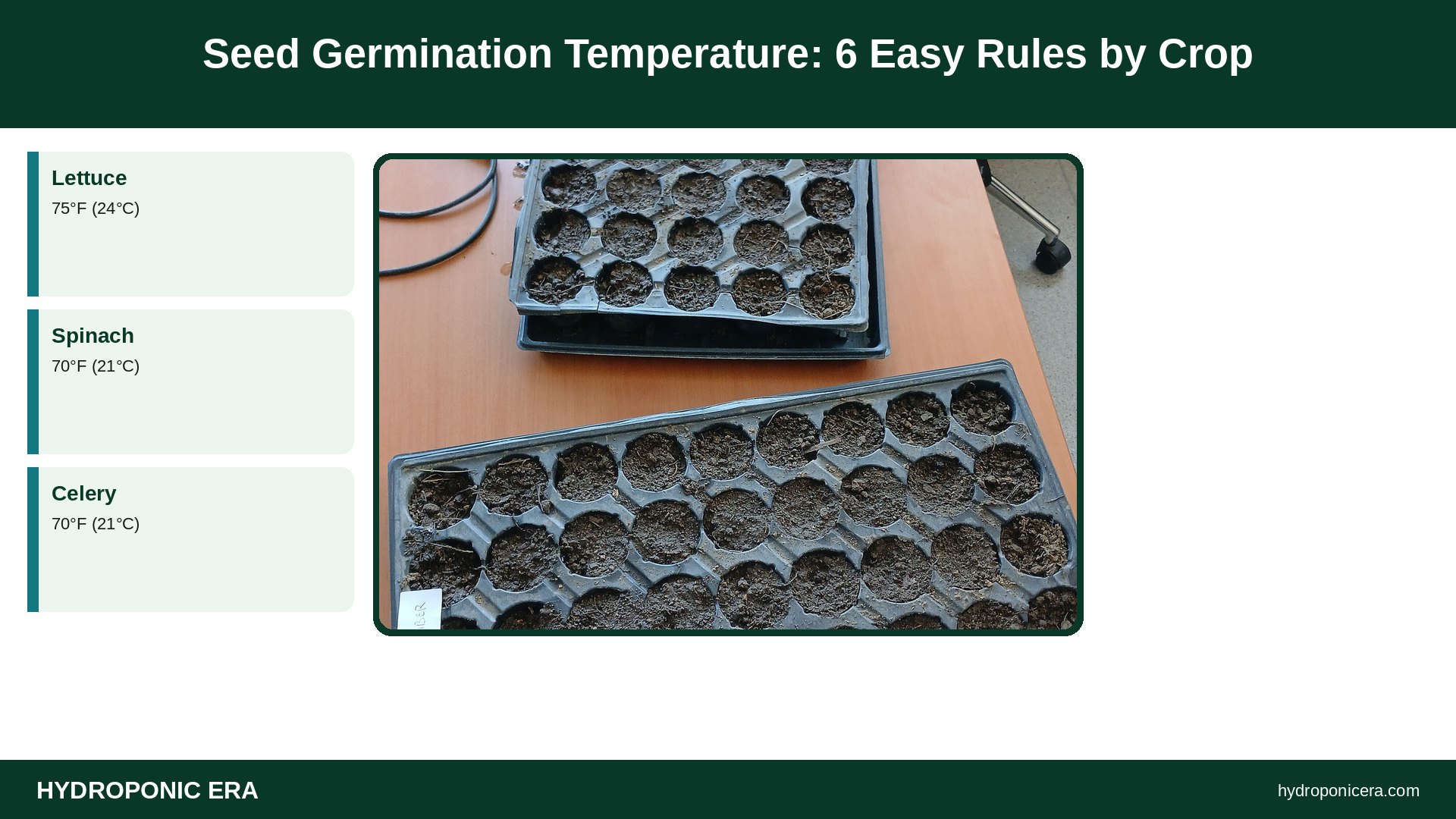
Why Does Seed Germination Temperature Matter?
Seed germination temperature decides how fast and how evenly seeds sprout. Penn State Extension explains that every seed has an optimal range; at optimal temperatures germination is rapid and uniform, while temperatures above or below the range can damage seeds or push them into dormancy. Uneven sprouting means uneven seedlings at transplant time.
If seeds fail completely, also check moisture and seed age in our guide to hydroponic seeds not germinating.
What Are the Minimum, Optimum and Maximum Seed Germination Temperatures?
The minimum is the lowest temperature at which seeds germinate effectively, and the maximum is the highest, Penn State says. The optimum is the single temperature giving the fastest, most uniform result. Alabama Extension’s ANR-1061 table lists all three for common vegetables, and the figures above come from that table.
Which Seeds Like Cool Temperatures?
Lettuce, spinach and parsnip have a low seed germination temperature and can start in cold conditions. Alabama Extension lists a minimum of 35°F (2°C) for lettuce and spinach, with optimums of 75°F (24°C) and 70°F (21°C). Their maximum is about 85°F (29°C), so a warm room or hot heat mat can actually stop them from sprouting.
For lettuce timing after germination, see our lettuce bitterness and bolting timeline.
Which Seeds Need Warm Temperatures?
Warm-season fruiting crops need a high seed germination temperature. Alabama Extension gives peppers, cucumbers, eggplant, squash and melons a minimum of 60°F (16°C), and tomatoes 50°F (10°C). Their optimums run from 85°F (29°C) to 95°F (35°C). Wisconsin Extension notes that seed planted too early in cold soil may rot, or sprout weak and slow.
How Do You Control Seed Germination Temperature Indoors?
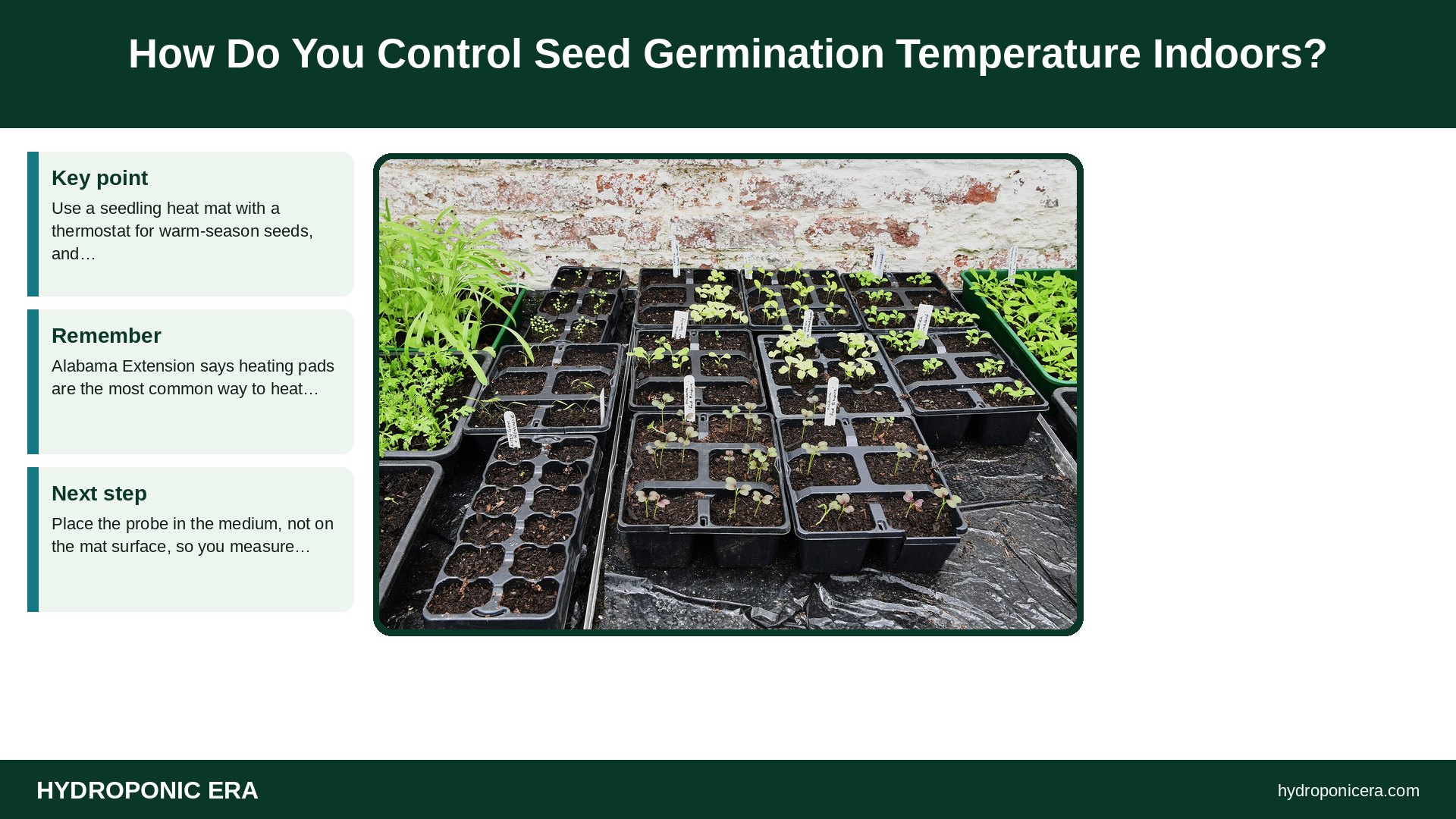
Use a seedling heat mat with a thermostat for warm-season seeds, and skip it for cool-season greens. Alabama Extension says heating pads are the most common way to heat greenhouse soil electrically. Place the probe in the medium, not on the mat surface, so you measure what the seed feels.
- Look up your crop’s ideal seed germination temperature in the table above.
- Set the thermostat to that optimum for warm-season seeds.
- Keep cool-season seeds below about 80°F (27°C).
- Check the medium temperature each morning for three days.
- Remove the heat mat once most seeds have sprouted.
Our seedling heat mats and humidity domes guide covers setup.
How Do You Measure the Right Temperature?
To check seed germination temperature, measure the growing medium, not the air. Wisconsin Extension explains that soil temperature changes far more slowly than air temperature. It recommends a soil thermometer, readings on three mornings at the same time, and a probe depth of 2 in (5 cm) for seeds. Penn State suggests 3–4 in (8–10 cm) in field soil.
Does Temperature Affect Stored Seed?
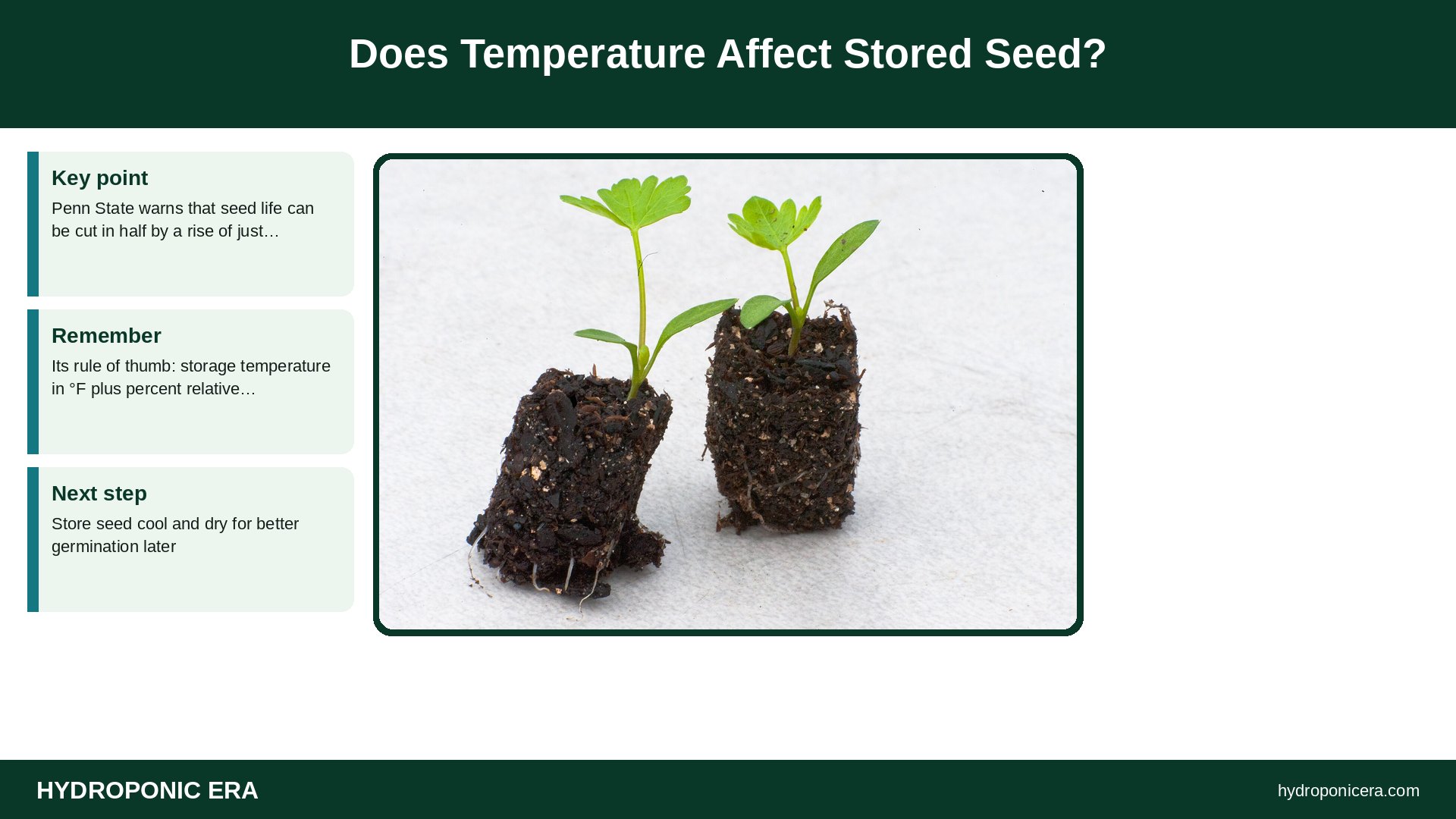
Yes. Penn State warns that seed life can be cut in half by a rise of just 1 percent in seed moisture or a few degrees in storage temperature. Its rule of thumb: storage temperature in °F plus percent relative humidity should not exceed 100. Store seed cool and dry for better germination later.
What Else Do Seeds Need Besides the Right Temperature?
Seed germination temperature is only one factor. Penn State lists temperature, moisture, air and light as the conditions that must be right. In hydroponics, keep plugs moist but not waterlogged so oxygen reaches the seed. Some seeds also have dormancy that warmth alone will not break. Our hydroponic germination methods guide compares plugs, paper towels and sponges.
FAQ About Seed Germination Temperature
What temperature is too hot for lettuce seed?
Above about 85°F (29°C), its listed maximum.
What is the best temperature for tomato seeds?
About 85°F (29°C), within a 70–95°F (21–35°C) range.
Do pepper seeds need a heat mat?
Usually; their minimum is 60°F (16°C) and optimum 85°F (29°C).
Is air temperature the same as seed germination temperature?
No, so measure inside the medium.
Can seeds rot in cold conditions?
Yes, seed sown too cold may rot before it sprouts.
Sources
- Alabama Cooperative Extension ANR-1061 — Soil Temperature Conditions for Vegetable Seed Germination
- Penn State Extension — Seed and Seedling Biology
- University of Wisconsin–Madison Extension — When Is the Right Time to Plant Vegetable Seeds? Check Soil Temperature
- Photo credits (Wikimedia Commons, edited with titles): Pepper and tomato seedling trays at Boğaziçi University 2026 by Furkan Akkurt (CC BY-SA 4.0); Digital Thermometer @ top of Montauk Lighthouse by DanTD (CC BY-SA 4.0); Temple Sowerby, Acorn Bank, Mizuna and lettuce seedlings – geograph.org.uk – 7625183 by Michael Garlick (CC BY-SA 2.0); Plugs ready for transplant (7027255351) by Dwight Sipler from Stow, MA, USA (CC BY 2.0)