
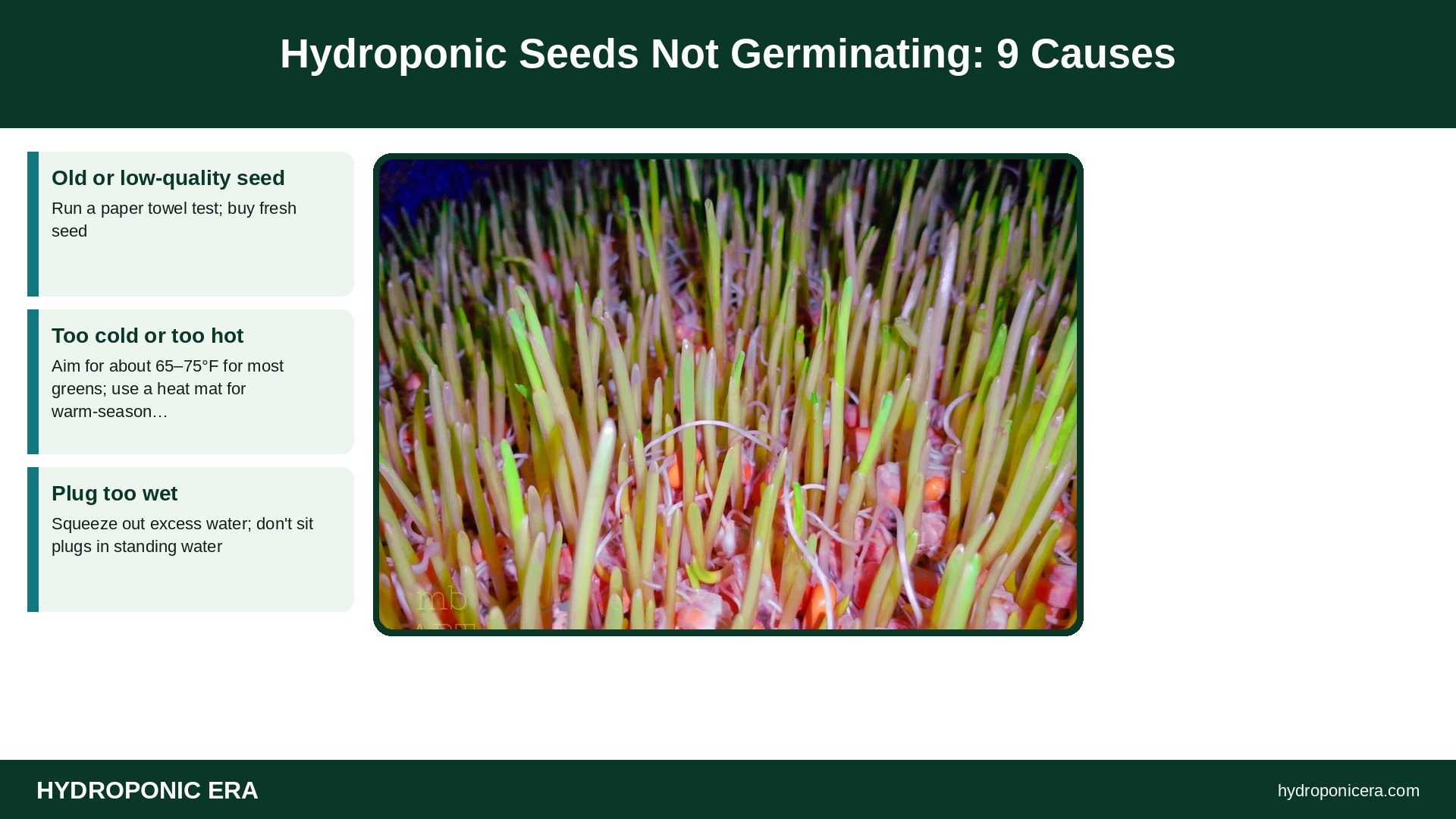
Hydroponic seeds not germinating usually come down to nine causes: old or poor-quality seed, temperatures that are too cold or hot, a starter cube that’s too wet or too dry, seeds planted too deep, missing light for seeds that need it, pH or nutrient strength that’s too high, rockwool that wasn’t pre-soaked, damping-off disease, or simply not waiting long enough. Most leafy greens and herbs germinate best around 65–75°F in evenly moist, well-aerated starter plugs with plain water or very weak nutrient solution.
Key takeaway: Seeds need moisture, oxygen, and the right temperature, not fertilizer. Most germination failures in hydroponics come from soggy plugs or cold rooms.
| Cause | Quick fix |
|---|---|
| Old or low-quality seed | Run a paper towel test; buy fresh seed |
| Too cold or too hot | Aim for about 65–75°F for most greens; use a heat mat for warm-season crops |
| Plug too wet | Squeeze out excess water; don’t sit plugs in standing water |
| Plug dried out | Use a humidity dome; mist as needed |
| Planted too deep | Sow small seeds shallow or on the surface |
| Light-dependent seeds covered | Leave lettuce and similar seeds lightly covered or uncovered |
| Strong nutrients or bad pH | Use plain water or very weak solution; pre-soak rockwool at pH ~5.5 |
| Damping-off | Clean trays, airflow, avoid overwatering |
| Impatience | Check the seed packet’s expected days to emergence |
1. Old or Poor-Quality Seed
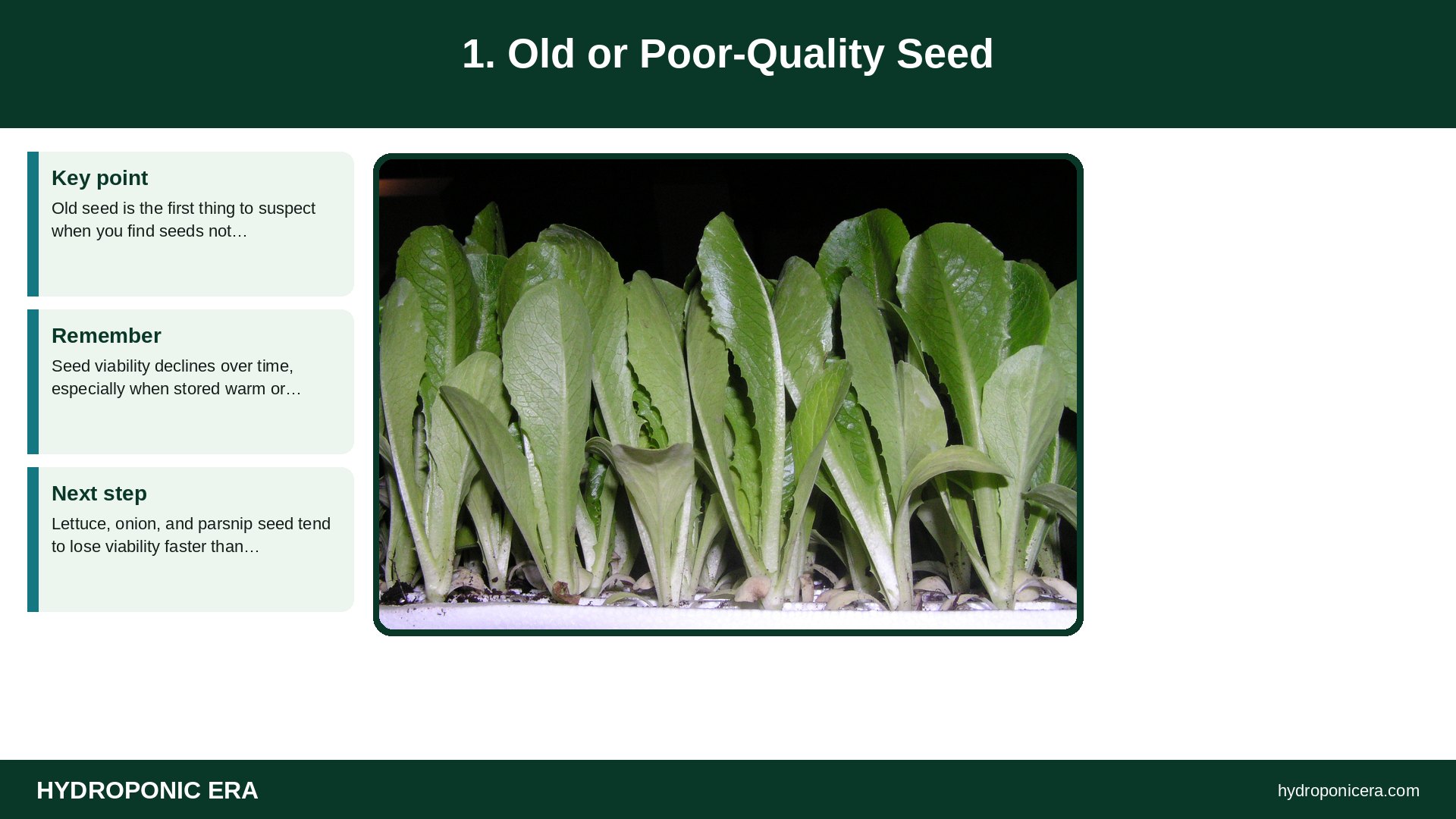
Old seed is the first thing to suspect when you find seeds not germinating. Seed viability declines over time, especially when stored warm or humid. Lettuce, onion, and parsnip seed tend to lose viability faster than tomato seed. Store seed cool and dry. To check, do a quick germination test: place 10 seeds on a damp paper towel in a zip bag at room temperature and count sprouts after the expected time. If fewer than half sprout, replace the seed. See hydroponic germination methods.
2. Seeds Not Germinating Because of Temperature
Most cool-season greens germinate well around 65–75°F. Lettuce can actually fail to germinate at high temperatures (thermodormancy), often when seeds sit much above the mid-70s °F. Warm-season crops like peppers, tomatoes, and basil prefer warmer conditions and benefit from a heat mat with a thermostat. University of Minnesota Extension’s seed-starting guidance emphasizes matching temperature to the crop.
3. Seeds Not Germinating in Soggy Plugs
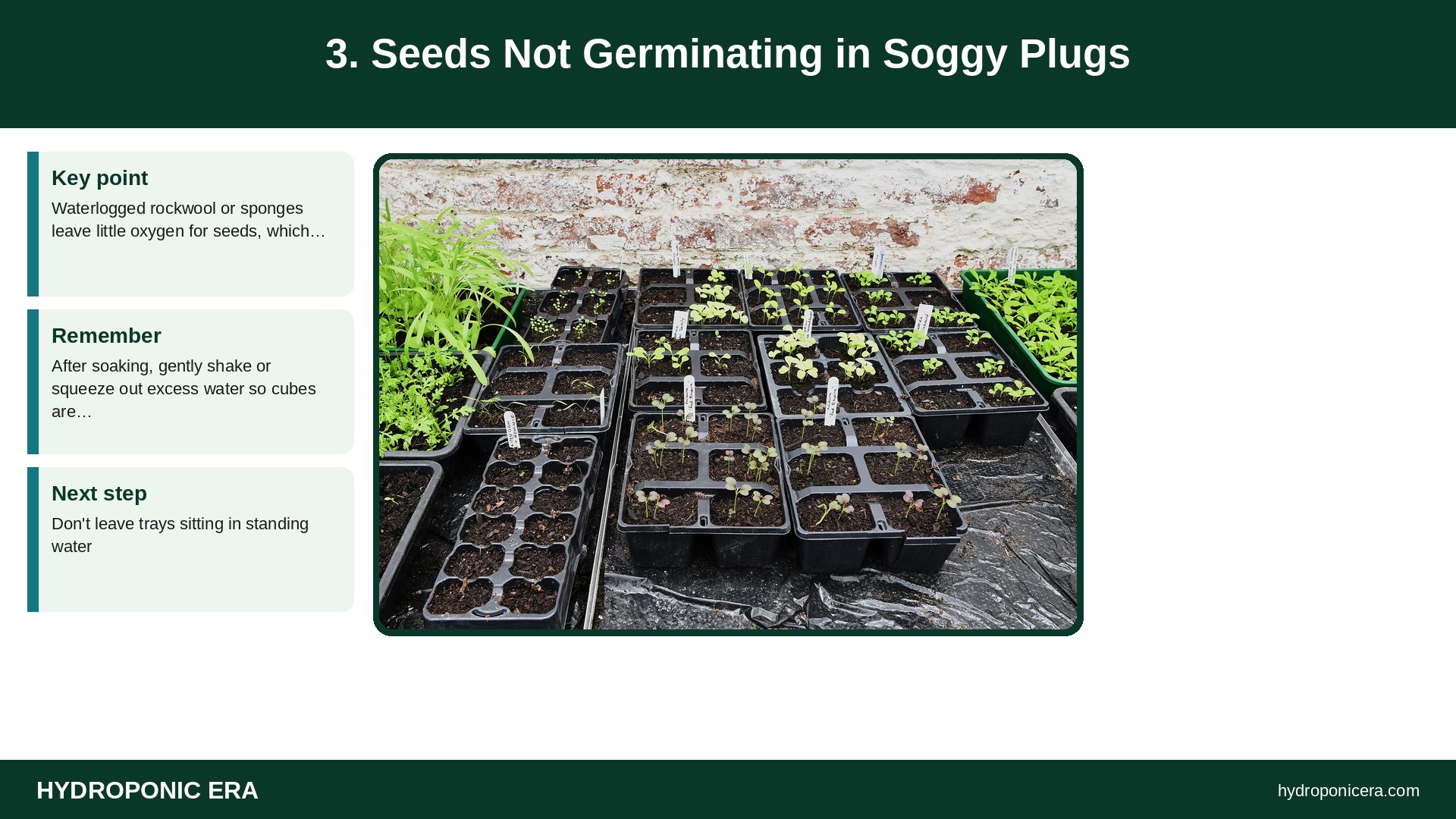
Waterlogged rockwool or sponges leave little oxygen for seeds, which can suffocate or rot. After soaking, gently shake or squeeze out excess water so cubes are moist, not dripping. Don’t leave trays sitting in standing water. See rockwool for hydroponics and Oasis cubes.
4. Plugs Dried Out
A seed that starts to germinate and then dries can die. Use a humidity dome until most seeds sprout, and check daily. Remove the dome once seedlings emerge to prevent damping-off.
5. Seeds Not Germinating Because They’re Too Deep
Small seeds such as lettuce, basil, and many herbs should be sown shallowly. A general rule is to plant at a depth of about two to three times the seed’s diameter, and tiny seeds just pressed into the surface. Deep sowing can exhaust a seed’s energy before it reaches light.
6. Light-Requiring Seeds Covered
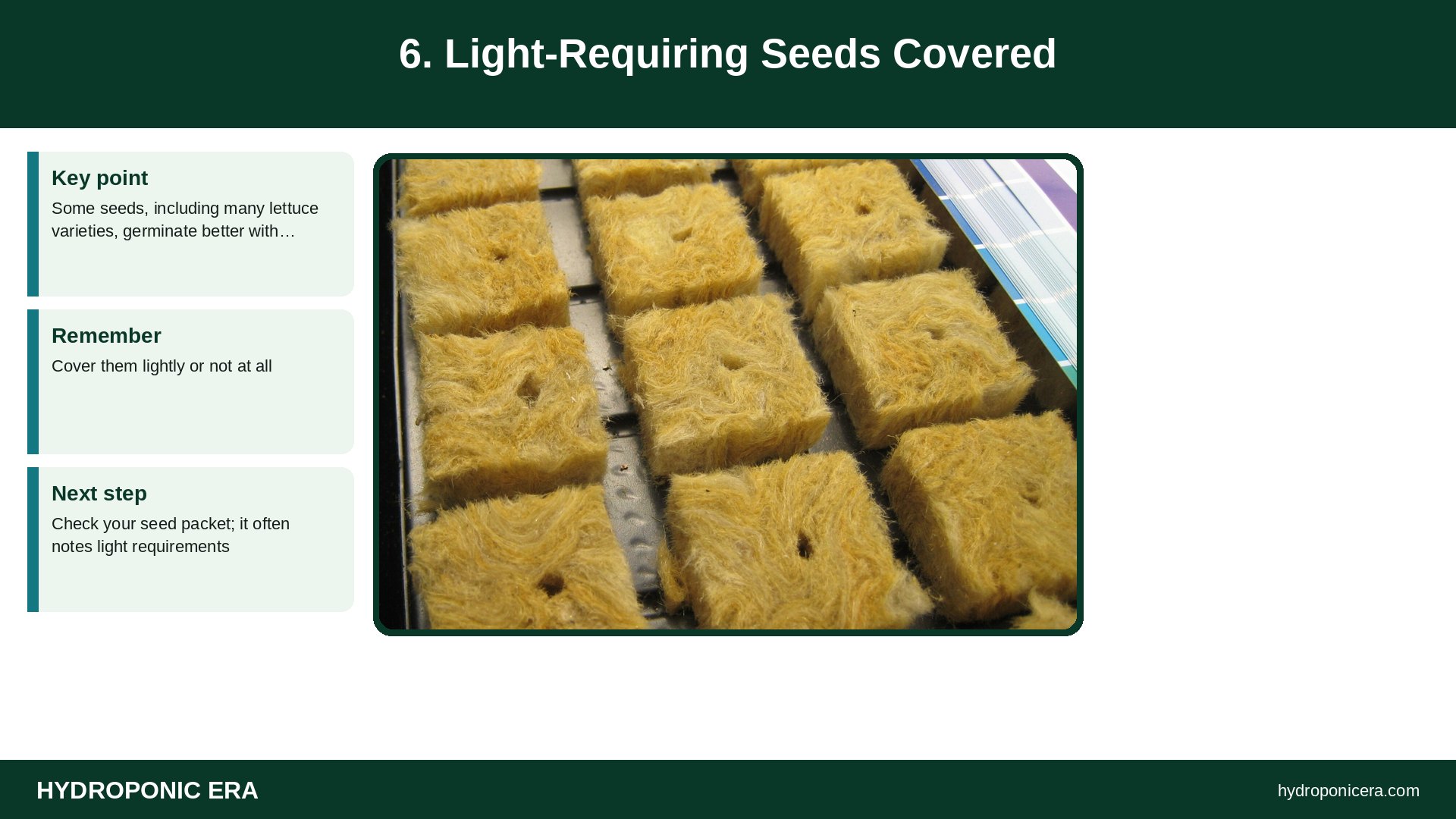
Some seeds, including many lettuce varieties, germinate better with exposure to light. Cover them lightly or not at all. Check your seed packet; it often notes light requirements.
7. Nutrients Too Strong or pH Off
Seeds carry their own food. Strong nutrient solution can inhibit germination and burn emerging roots. Use plain water or very weak solution until the first true leaves appear. New rockwool tends to be alkaline, so soak it in water adjusted to around pH 5.5 before sowing. See media pre-rinse and buffering.
8. Damping-Off: Seeds Not Germinating or Collapsing
If seeds sprout and then collapse at the soil line, or never emerge from a rotting plug, damping-off fungi may be responsible. Clean trays and domes, avoid overwatering, provide gentle airflow once seedlings emerge, and don’t reuse old plugs. See damping-off in hydroponic seedlings.
9. Not Waiting Long Enough
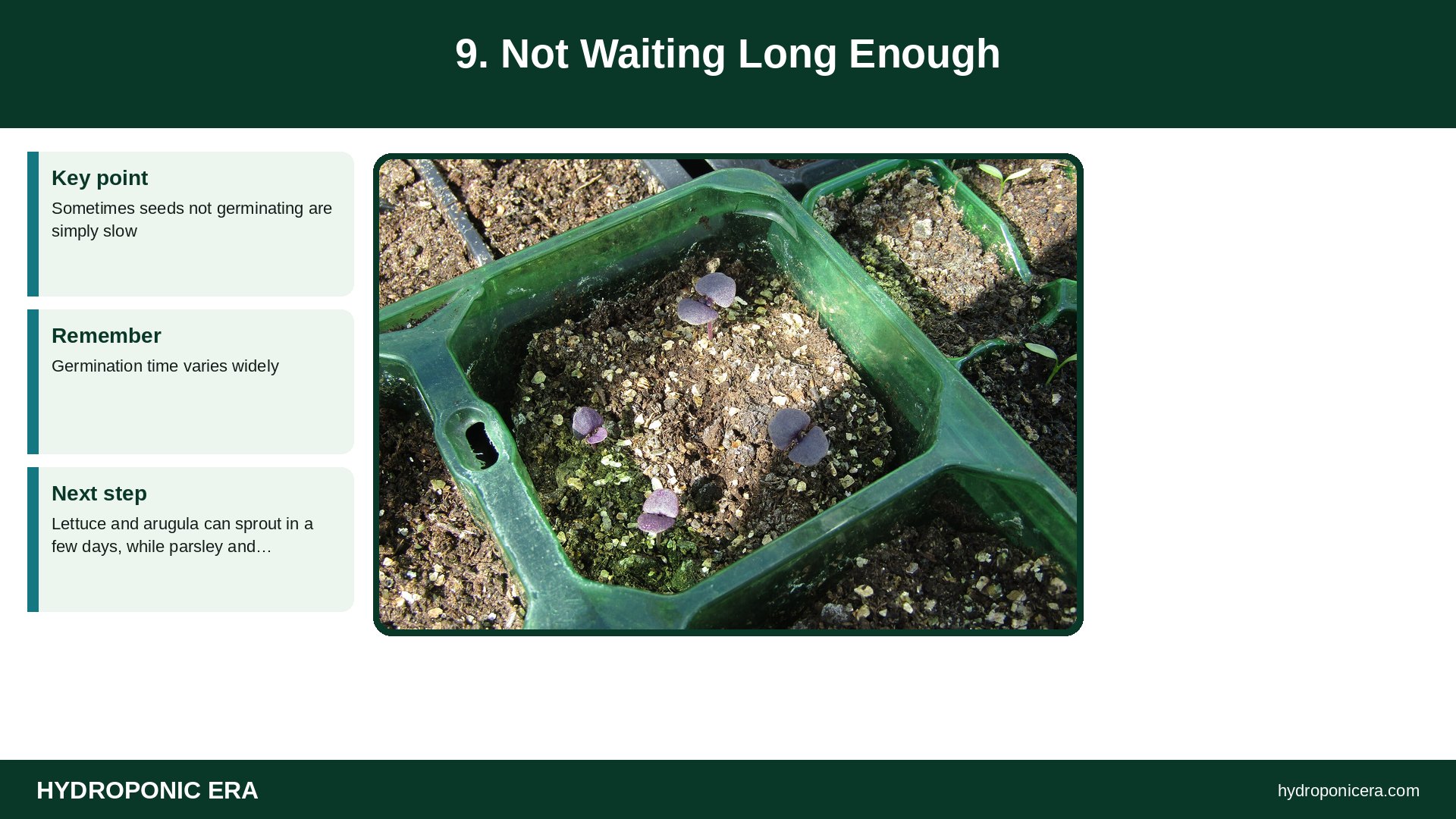
Sometimes seeds not germinating are simply slow. Germination time varies widely. Lettuce and arugula can sprout in a few days, while parsley and peppers can take a week or two or longer, especially in cool rooms. Check the days-to-emergence on the packet before giving up.
Germination Times: When Seeds Not Germinating Is Normal
| Crop | Typical emergence (warm conditions) | Notes |
|---|---|---|
| Lettuce | About 2–7 days | Avoid high temperatures |
| Arugula, mustard | About 2–5 days | Very quick |
| Basil | About 5–10 days | Likes warmth |
| Parsley | About 2–4 weeks | Slow; soak seed overnight |
| Peppers | About 1–3 weeks | Needs warmth |
| Tomatoes | About 5–10 days | Warm conditions help |
These are general ranges; varieties and conditions vary. See how long hydroponics takes.
A Routine That Prevents Seeds Not Germinating
- Soak rockwool cubes in pH-adjusted water, then drain.
- Sow 1–2 seeds per cube at the right depth.
- Cover with a humidity dome and keep at the crop’s ideal temperature.
- Check daily; remove the dome when most seeds sprout.
- Provide light immediately after emergence to prevent leggy seedlings.
- Start weak nutrients when true leaves appear, then transplant. See transplanting seedlings.
Run a Simple Germination Test
If seeds not germinating is a repeat problem, test the seed before you blame the system. Place 10 seeds on a damp paper towel, fold it, slip it into a zip bag, and keep it at about 70°F. Check daily. After the normal germination time for that crop, count how many sprouted. Eight or more out of 10 means the seed is fine and your plugs, temperature, or moisture need attention. Fewer than five means the seed lot is weak, so sow extra or buy fresh. Store leftover seed in a cool, dry, dark place in a sealed container to keep it viable longer.
FAQs: Hydroponic Seeds Not Germinating
Why are my hydroponic seeds not germinating?
Common causes are soggy plugs, wrong temperature, old seed, deep sowing, or strong nutrients. Check each in turn.
Should I use nutrients to germinate seeds?
No. Plain water or very weak solution is best until true leaves appear.
Why won’t my lettuce seeds sprout?
Lettuce often fails at warm temperatures. Keep it around 65–70°F and cover seeds lightly or not at all.
Do I need a heat mat?
For warm-season crops like peppers and tomatoes in cool rooms, a heat mat with a thermostat helps a lot.
How long should I wait before resowing?
Check the packet’s emergence time, then allow a few extra days in cool conditions before resowing.
Sources
- University of Minnesota Extension — Starting seeds indoors
- University of Florida IFAS Extension — Leafy Greens in Hydroponics and Protected Culture for Florida
- Photo credits (Wikimedia Commons, edited with titles): Maize seed germination 3 by TheMbgold (MBart) (CC BY-SA 4.0); Lettuce Plugs by Apapac at English Wikipedia (Public domain); Temple Sowerby, Acorn Bank, Mizuna and lettuce seedlings – geograph.org.uk – 7625183 by Michael Garlick (CC BY-SA 2.0); Rockwool cubes-inlay PNr°0091 by D-Kuru (CC BY-SA 3.0 at); -2020-07-10 Purple basil (Ocimum basilicum) seedlings, Trimingham by Kolforn (Kolforn) I’d appreciate if you could mail me (Kolforn@gmail.com) if you (CC BY-SA 4.0)