
The cost to grow hydroponic lettuce and its selling price both vary widely, so the only reliable numbers are the ones you calculate for your own system and market. Cost per head is the sum of seed, growing media, nutrients, electricity, water, packaging, labor, and a share of equipment and rent, divided by the number of heads you actually sell. Selling price depends on channel: wholesale buyers pay the least, grocery and restaurant accounts pay more, and direct sales at farmers markets or CSAs usually pay the most. Check local prices and USDA AMS Market News terminal prices, then set a price floor above your full cost.
Key takeaway: Track your real cost per head first, then pick sales channels where the price clears that cost with a margin. Labor and electricity usually decide whether lettuce makes money.
| Cost line | What to include | How to measure |
|---|---|---|
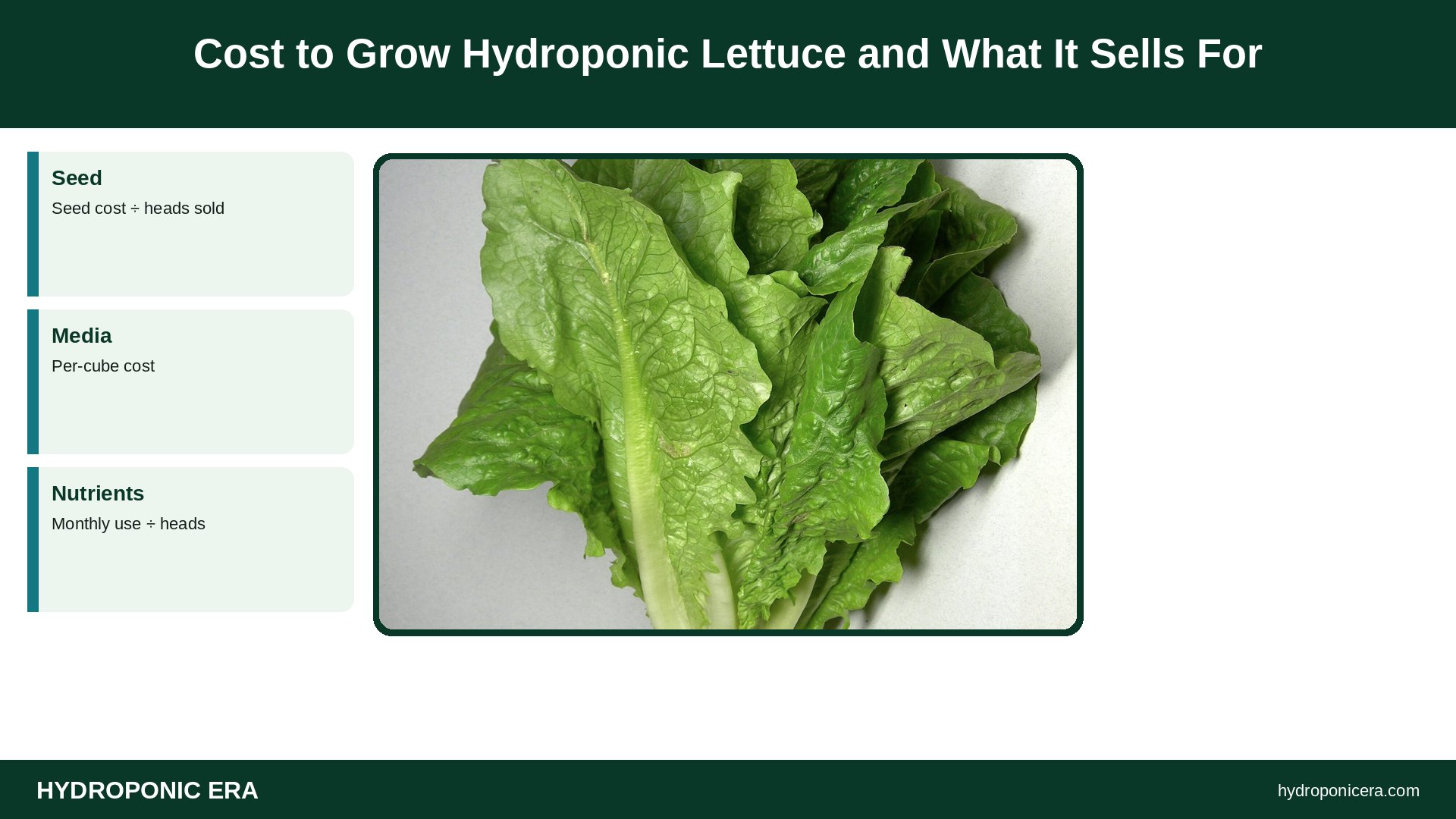
| Seed | Pelleted or raw seed, germination losses | Seed cost ÷ heads sold |
| Media | Rockwool, oasis, or plugs | Per-cube cost |
| Nutrients | Fertilizer and pH adjusters | Monthly use ÷ heads |
| Electricity | Lights, pumps, fans, HVAC | kWh × your rate ÷ heads |
| Packaging | Clamshells, bags, labels | Per-unit cost |
| Labor | Seeding to delivery | Hours × wage ÷ heads |
| Overhead | Rent, insurance, equipment payback | Monthly ÷ heads |
Why There’s No Single Price for Hydroponic Lettuce

A greenhouse grower in a mild climate, a basement grower with LEDs, and a large indoor farm have very different costs. Prices vary by region, season, variety, and buyer. Living lettuce sold with roots attached often commands a different price than cut heads. That’s why it’s better to build your own numbers than rely on someone else’s figure.
Calculating Cost Per Head
- List every monthly cost: inputs, utilities, packaging, labor, rent, insurance.
- Add equipment payback: purchase price divided by expected months of use.
- Count heads actually sold that month, not just harvested.
- Divide total monthly cost by heads sold.
Use a worksheet to keep it consistent; see COGS worksheet and cost tracking framework.
Electricity: The Big Variable

Under LEDs, lighting is often the largest single input cost. Calculate kWh per cycle: fixture watts × hours per day × days per cycle ÷ 1,000. Multiply by your utility rate, then divide by heads per cycle. Iowa State’s OptimIA team and other university researchers have published analyses showing how lighting efficiency and plant density affect indoor lettuce costs. See electricity cost framework.
Labor
Seeding, transplanting, harvesting, packing, cleaning, and delivering add up. Time each task for a full cycle. Even small time savings per head matter at scale.
Yield and Cycle Time
Faster cycles and denser spacing spread fixed costs across more heads, but crowding can reduce quality. Variety choice affects cycle time and head weight. See how to grow lettuce hydroponically and transplant density.
What Hydroponic Lettuce Sells For
Research Local Prices
Visit grocery stores and farmers markets and note prices for hydroponic, living, and organic lettuce. Ask restaurants what they pay their current suppliers.
Use USDA Market News
USDA Agricultural Marketing Service Market News publishes terminal market and shipping-point prices for lettuce. These are wholesale benchmarks, useful for seeing the floor.
Price by Channel
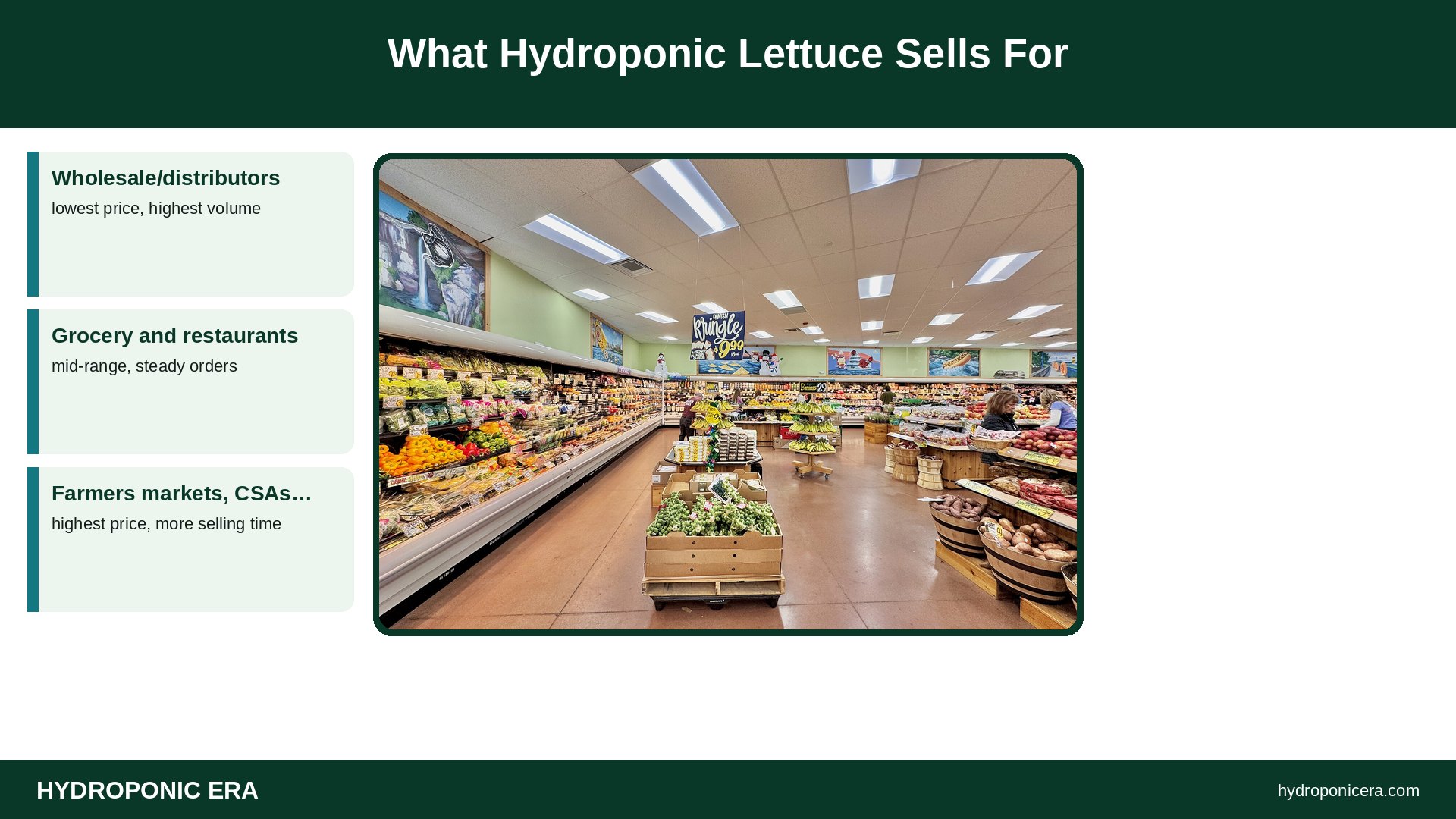
- Wholesale/distributors: lowest price, highest volume.
- Grocery and restaurants: mid-range, steady orders.
- Farmers markets, CSAs, farm stands: highest price, more selling time.
See wholesale vs retail price floor and farmers market pricing.
Setting Your Price Floor
Your floor is full cost per head plus the margin you need. Never price below cost to match supermarket lettuce. Compete on freshness, flavor, shelf life, and local origin instead. See storing hydroponic lettuce for shelf-life tips that support premium pricing.
Ways to Improve Margin

- Sell mixes and specialty varieties rather than commodity heads.
- Offer living lettuce with roots for longer shelf life.
- Reduce losses by matching production to orders.
- Improve lighting efficiency and plant density.
- Bundle with herbs; see herb bundle SKU design.
A Worked Example Structure for Hydroponic Lettuce
Here is how to lay out the math for one hydroponic lettuce cycle using your own numbers:
- Count heads per cycle: number of plant sites × expected survival rate.
- Add inputs per cycle: seed, plugs, nutrients, and pH adjusters.
- Add energy: total watts × hours per day × days per cycle ÷ 1,000 × your rate.
- Add labor: hours per cycle × hourly wage.
- Add packaging per head and a share of monthly overhead.
- Divide total by heads you expect to sell, not heads planted.
The result is your cost per head of hydroponic lettuce. Compare it with prices in each channel you can realistically reach.
Living Lettuce vs Cut Heads
Many growers sell hydroponic lettuce with roots attached in a clamshell or sleeve. Living lettuce usually stays fresh longer and looks distinctive on a shelf, which can support a higher price. It also costs more to package and takes more space in a cooler. Cut heads pack tighter and suit restaurant buyers. Test both with your customers.
Reducing Losses
Unsold hydroponic lettuce is pure cost. Stagger plantings so harvests match weekly orders, keep harvested heads cold, and have a backup outlet for extras such as a food pantry, salad mix, or staff sales. Track losses as a percentage each week; a high loss rate is often the hidden reason lettuce doesn’t pay.
Choosing Varieties for Market
Butterhead, romaine, oakleaf, and red-leaf types each have different cycle times and buyer appeal. Mixed colors attract attention at markets, while restaurants may want consistent heads of one type. See crop selection for hydroponic farms.
FAQs: Hydroponic Lettuce Cost and Price
How much does it cost to grow a head of hydroponic lettuce?
It depends on your system, energy, and labor. Calculate total monthly cost divided by heads sold.
How much does hydroponic lettuce sell for?
Prices vary by region and channel. Check local stores, markets, and USDA Market News.
Is growing hydroponic lettuce profitable?
It can be in direct or specialty markets with controlled costs, but wholesale margins are often thin.
Why is hydroponic lettuce more expensive in stores?
Indoor and greenhouse production costs, packaging such as living lettuce clamshells, and branding all affect price.
What’s the biggest cost in indoor lettuce?
Often electricity for lighting and climate control, followed by labor.
Sources
- USDA Agricultural Marketing Service — Market News
- University of Florida IFAS Extension — Leafy Greens in Hydroponics and Protected Culture for Florida
- Photo credits (Wikimedia Commons, edited with titles): Romaine lettuce by Rainer Zenz (CC BY-SA 3.0); Deepwater Aquaponics Floating Rafts Growing Lettuce, Basil and Arugula by Alabama Extension (CC0); Led digital visuals-leds in grow box PNr°0082 by D-Kuru (CC BY-SA 3.0 at); The interior of a typical Trader Joe’s grocery store produce section by Harrison Keely (CC BY 4.0); Red leaf lettuce J1 by Jamain (CC BY-SA 3.0)