
What is a bog filter for a pond? A bog filter is a shallow, lined gravel bed planted with bog plants. A pump pushes pond water up through slotted pipes under the gravel, bacteria break down waste, and plant roots take up the nutrients that feed green algae. Clean water then flows back to the pond by gravity.
Key takeaway: Keep the gravel no deeper than 12 in (30 cm), size the bed to 10–15% of pond surface for water gardens or 25–30% for koi ponds, and plant densely.
| Design point | Nelson Water Gardens guideline |
|---|---|
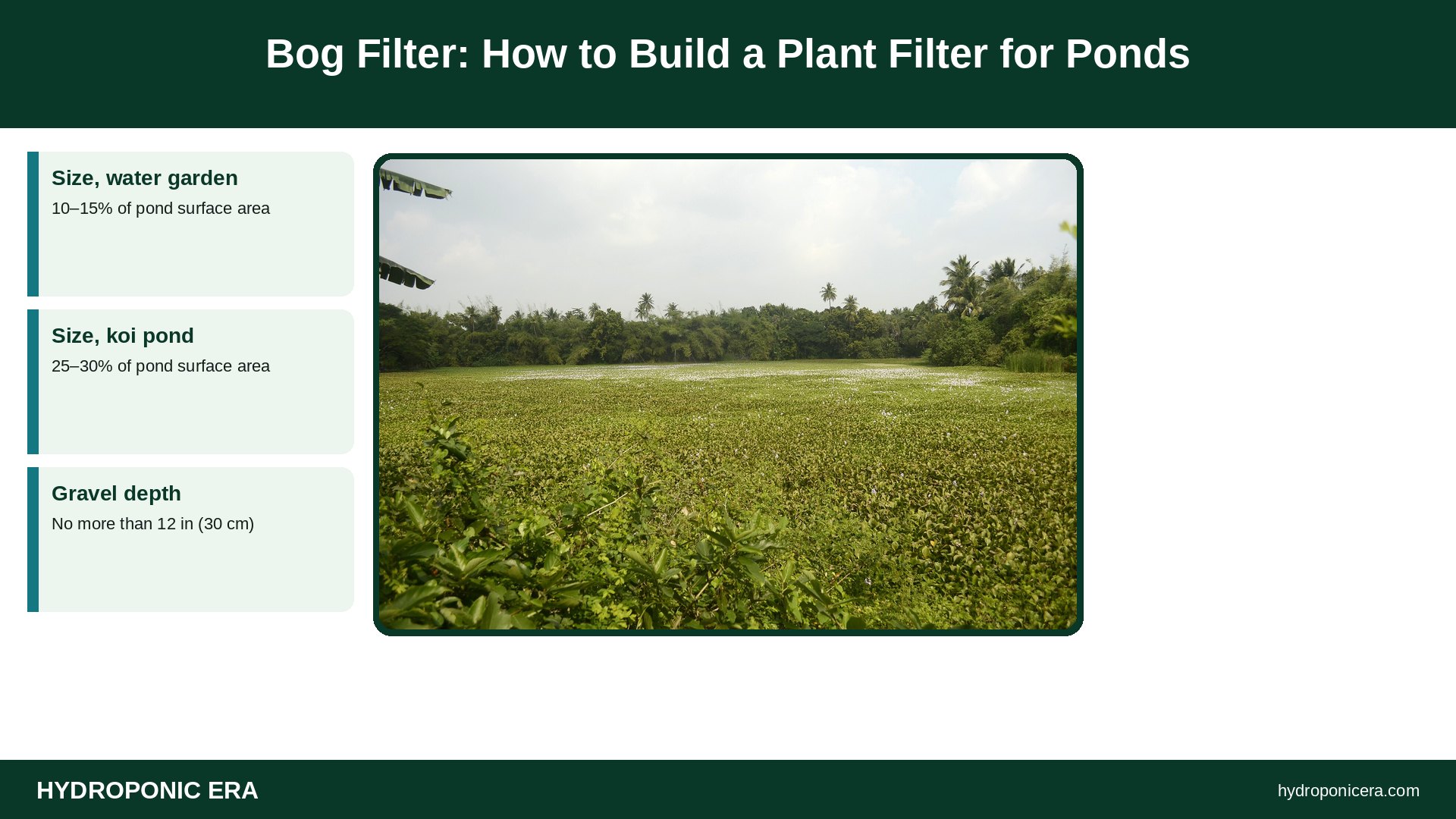
| Size, water garden | 10–15% of pond surface area |
| Size, koi pond | 25–30% of pond surface area |
| Gravel depth | No more than 12 in (30 cm) |
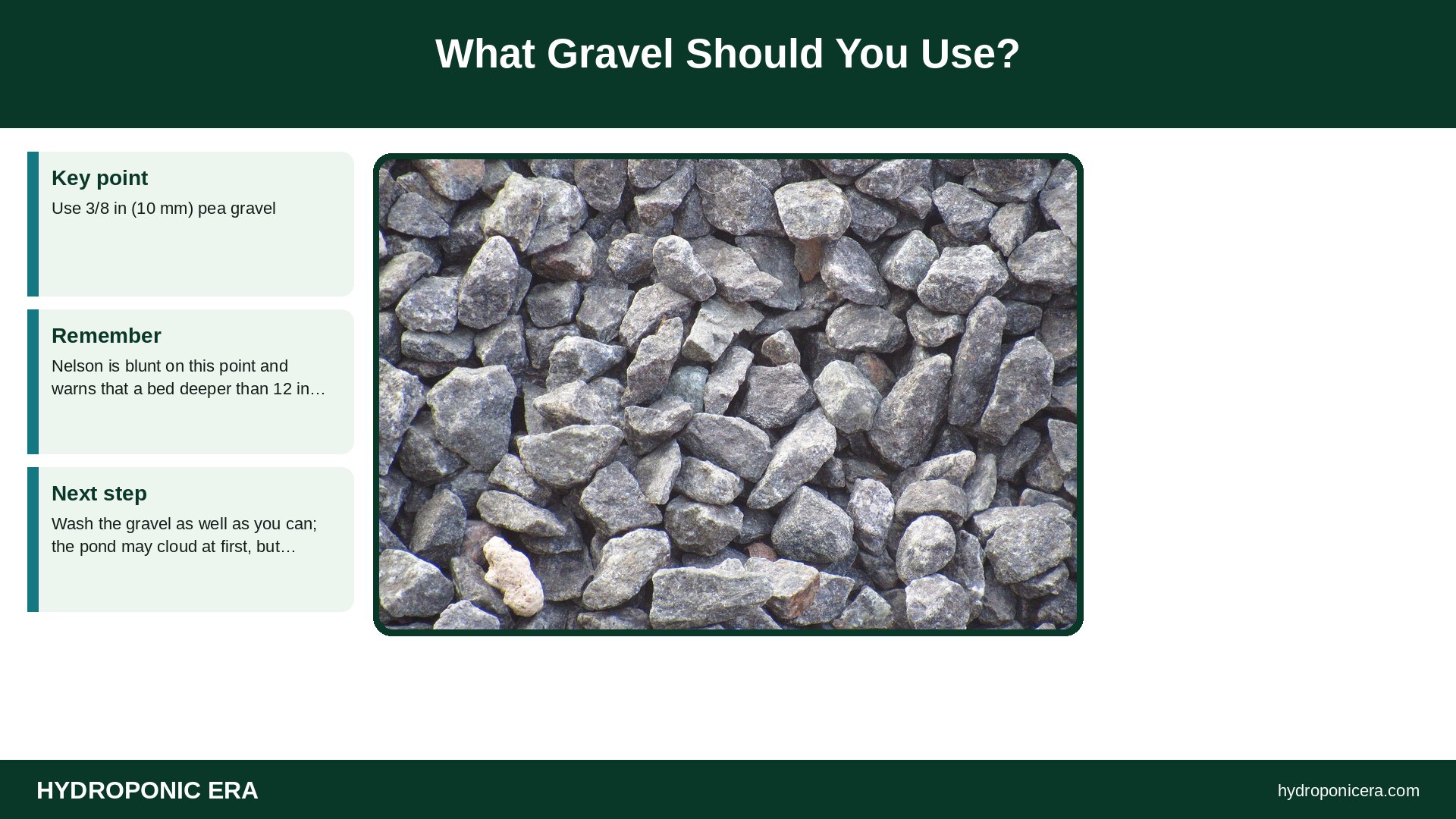
| Gravel size | 3/8 in (10 mm) pea gravel |
| Pipe | 1–2 in (25–50 mm) PVC, slotted about every 1 in (2.5 cm) |
| Plants | About one per sq ft (0.09 m²) at first |
How Does a Bog Filter Work?
A bog filter works by pumping pond water evenly through a gravel bed using perforated pipe. The gravel gives nitrifying bacteria a huge surface to live on, the bacteria turn fish and plant waste into plant food, and bog plants absorb it. Water returns stripped of much of the nutrient load that algae need.
It is the same nitrogen cycle that runs an aquaponics grow bed. Our aquaponics for beginners guide explains it in more detail.
How Big Should a Bog Filter Be?
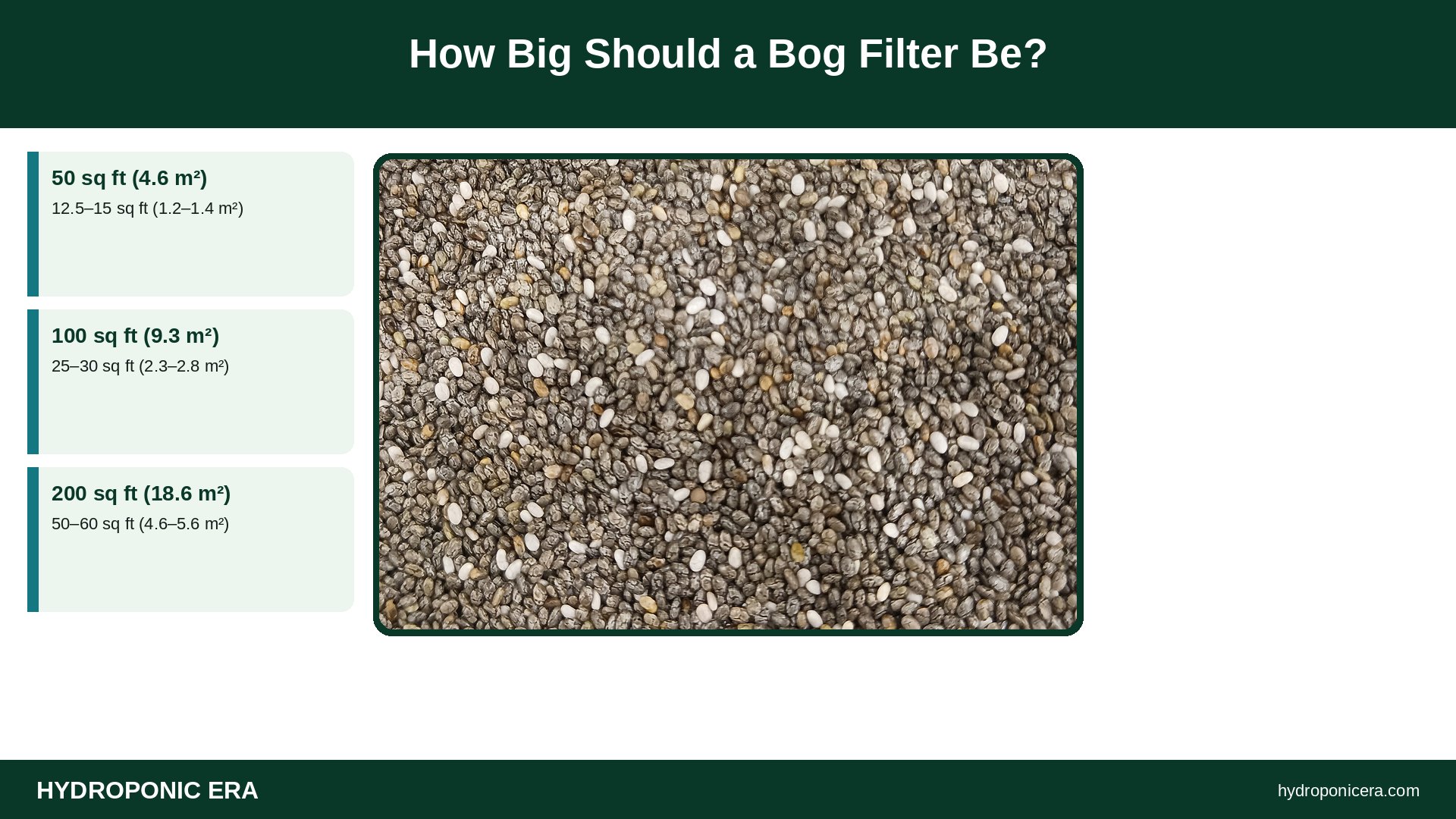
Size it by pond surface area, not volume. Nelson Water Gardens recommends a bed equal to 10–15% of the pond surface for a water garden with plants and a few goldfish, and 25–30% for koi or heavily stocked ponds. A 100 sq ft (9.3 m²) koi pond would need about 25–30 sq ft (2.3–2.8 m²) of bog.
| Pond surface | Water garden (10–15%) | Koi pond (25–30%) |
|---|---|---|
| 50 sq ft (4.6 m²) | 5–7.5 sq ft (0.5–0.7 m²) | 12.5–15 sq ft (1.2–1.4 m²) |
| 100 sq ft (9.3 m²) | 10–15 sq ft (0.9–1.4 m²) | 25–30 sq ft (2.3–2.8 m²) |
| 200 sq ft (18.6 m²) | 20–30 sq ft (1.9–2.8 m²) | 50–60 sq ft (4.6–5.6 m²) |
How Do You Build a Bog Filter Step by Step?
To build a bog filter, make a lined bed about 12 in (30 cm) deep beside or inside the pond, lay slotted PVC pipe on the liner, connect it to a pump on the far side of the pond, fill with washed 3/8 in (10 mm) pea gravel, plant densely, and let water spill back over a stone lip.
- Pick a layout: raised beside the pond, a border shelf, a partition or an island.
- Build the walls to make a pit about 12 in (30 cm) deep.
- Line it with pond liner over underlayment.
- Lay distribution pipe with slots facing up, about 1 in (2.5 cm) apart, and cap the ends.
- Add a cleanout pipe that rises just above the gravel.
- Place the pump on the opposite side of the pond for circulation.
- Fill with gravel halfway, then plant and top off.
Nelson recommends a pump that turns over the pond volume every 1–2 hours. For pump sizing basics, see our guide to pumps and backup power.
What Gravel Should You Use?
Use 3/8 in (10 mm) pea gravel. Nelson is blunt on this point and warns that a bed deeper than 12 in (30 cm) can fail, because surface area matters more than depth. Wash the gravel as well as you can; the pond may cloud at first, but the filter should clear it.
Bigger rock gives bacteria less surface and lets water rush through. Our guide to clay pebbles compares other grow media for aquaponics beds.
Which Plants Work Best in a Bog Filter?
Choose non-aggressive bog and marginal plants with fibrous roots, and plant about one per square foot (0.09 m²) at the start. Nelson advises planting them with their potting soil, roots and all, out of the pot, and avoiding aggressive species that can clog pipes or escape the bed. Native marginals from a local nursery are a safe start.
- Do: remove pots so roots spread through the gravel.
- Do: keep the root ball soil; new bogs lack nutrients.
- Avoid: aggressive runners that clog pipes.
- Avoid: invasive species; check state lists.
What Mistakes Make a Bog Filter Fail?
Most failures come from too-deep gravel, too small a bed, the wrong gravel size, uncapped pipe ends, too few plants, plants left in pots, or a foam pre-filter on the pump that starves the bog of nutrients. Nelson lists these as the top mistakes. An intake screen to protect the pump is fine; a heavy foam pre-filter is not.
| Mistake | Why it hurts | Fix |
|---|---|---|
| Gravel over 12 in (30 cm) | Bed can fail | Use a false bottom |
| Bed too small | Not enough uptake | Follow surface-area rule |
| Uncapped pipes | Water skips the slots | Cap every end |
| Plants in pots | Roots cannot spread | Unpot before planting |
Is a Wetland Filter Good for Aquaponics?
A wetland filter follows the same idea as an aquaponics media bed: water flows through gravel, bacteria convert waste and roots take up nutrients. In aquaponics you grow food crops instead of ornamentals. Our guide to algae control covers why removing nutrients and light keeps water clear.
How Do You Maintain a Bog Filter?
Nelson says a properly built bed needs mainly seasonal care. Trim dead foliage in fall, divide crowded plants, and flush the cleanout pipes if flow slows. Watch for spots where water pools on top, which suggests clogging. Keep the pump running steadily, since bacteria and roots need constant flow.
FAQ About Bog Filters
Do I still need a pump?
Yes; it pushes water through the gravel bed.
Can I add one to an existing pond?
Yes; build a raised bed or a shelf with a porous wall.
Will it clear green water?
It starves algae of nutrients, which usually helps clear it.
How deep should the gravel be?
No more than 12 in (30 cm), per Nelson.
Can I skip the plants?
No; plants remove the nutrients that algae use.
Sources
- Nelson Water Gardens and Nursery — Build an Active Gravel Bog Filter
- Kansas State University Research and Extension — Water Gardening: Biological Balance (MF2911)
- Photo credits (Wikimedia Commons, edited with titles): Eichhornia crassipes covered pond JEG6087 by PJeganathan (CC BY-SA 4.0); PEA GRAVEL by Ranjithkumar Murugesan (CC0); Gravel Stones by Saral Shots (CC0); Koi in a garden pond in Tuntorp 3 by W.carter (CC BY-SA 4.0)