
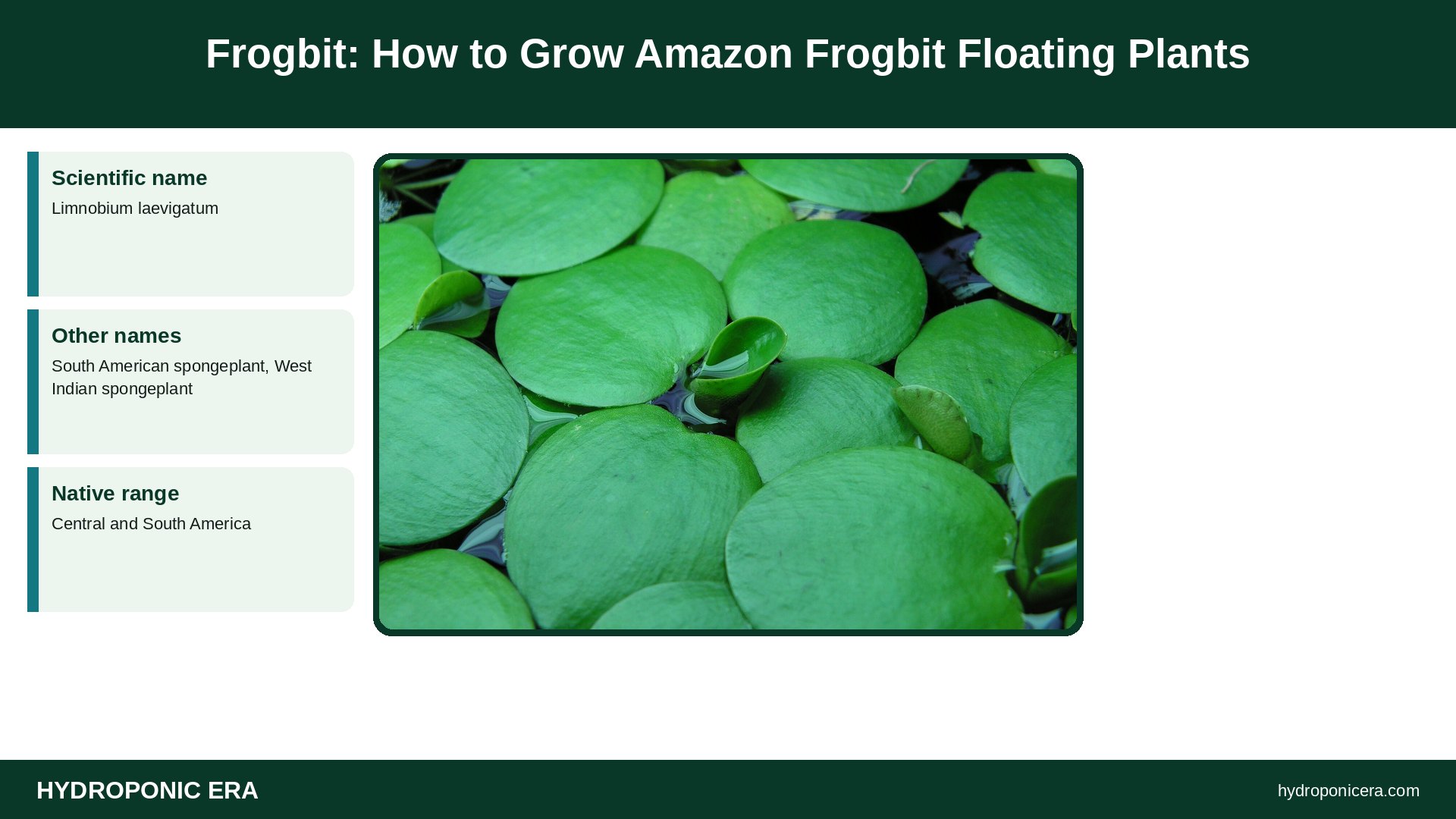
How do you grow Amazon frogbit? Amazon frogbit is a floating plant with round, spongy leaves and long dangling roots. Float it on calm water under moderate light, keep the leaf tops dry, and thin it often. It is invasive and regulated in California, so keep it indoors in closed tanks and never discard it outdoors.
Key takeaway: It is easy to grow, shades algae and soaks up nutrients, but it spreads by runners and seeds. Bag extras for the trash.
| Fact | Amazon frogbit |
|---|---|
| Scientific name | Limnobium laevigatum |
| Other names | South American spongeplant, West Indian spongeplant |
| Native range | Central and South America |
| Growth form | Free-floating perennial |
| Spread | Runners and floating seeds |
| California status | Pest Rating A (CDFA) |
What Is Amazon Frogbit?
Amazon frogbit is a free-floating perennial aquatic plant native to Central and South America. Its round leaves have a spongy underside that keeps them afloat, and its feathery roots hang into the water. When plants crowd together, some leaves rise above the surface. It is sold in the aquarium trade as an easy floater.
Do not confuse it with European frogbit, a different plant regulated as invasive in parts of the Great Lakes region.
Is Frogbit Invasive?
Yes, outside its native range. The California Department of Food and Agriculture gives it a Pest Rating of A, noting it has been found in the San Joaquin River and the Sacramento-San Joaquin Delta, where thick mats cause problems for boats, fish and water systems. CDFA notes aquarium plants could seed new infestations if discarded.
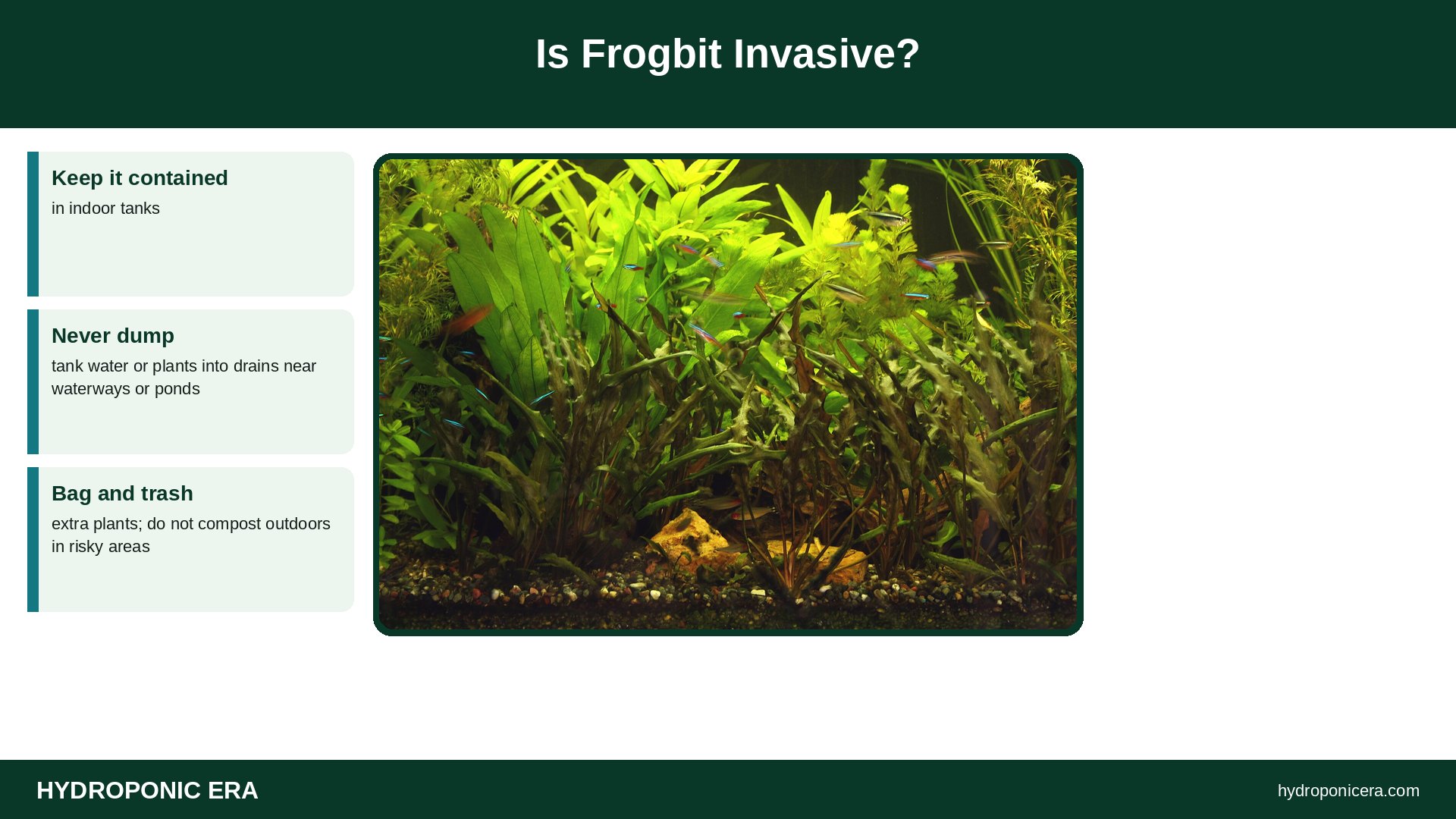
- Keep it contained in indoor tanks.
- Never dump tank water or plants into drains near waterways or ponds.
- Bag and trash extra plants; do not compost outdoors in risky areas.
- Check rules before buying, especially in California.
How Do You Set Up Frogbit in a Tank?
To set it up, float a few plants on a calm part of the tank surface, away from strong filter outflow. Leave a gap between the water and the lid for airflow, and give moderate light. Many keepers find the leaves rot if they stay wet on top, so avoid splashing and heavy condensation.
- Rinse new plants and check for snails.
- Lower the flow or baffle the filter outlet.
- Float plants right side up on still water.
- Leave a lid gap for air and light.
- Light it moderately on a steady timer.
- Thin weekly to keep open surface.
For timer tips, see our guide to light schedules, and our guide to quarantining new plants.
Why Grow a Floating Plant Like This?
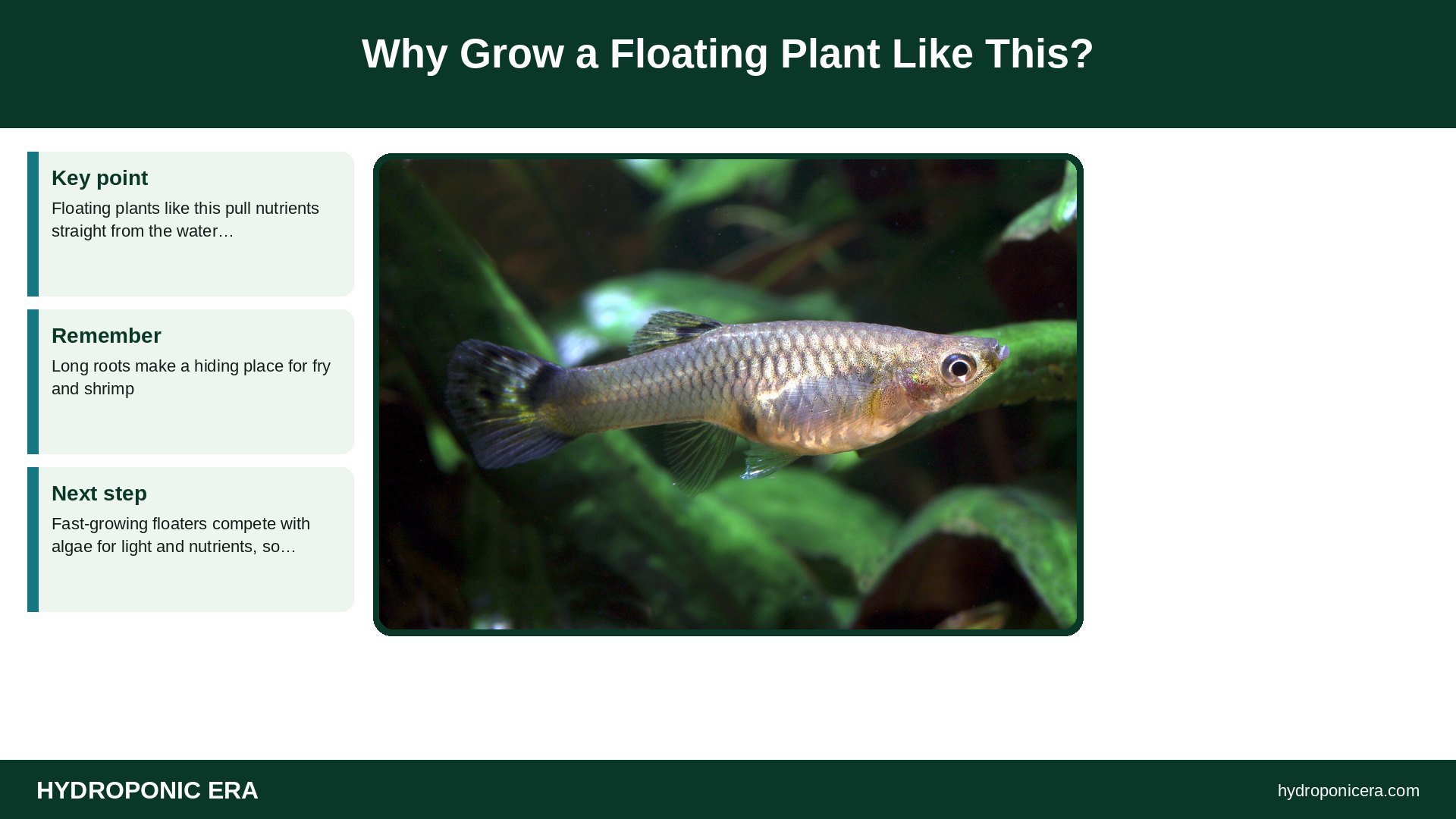
Floating plants like this pull nutrients straight from the water, shades the tank and gives shy fish and fry cover. Long roots make a hiding place for fry and shrimp. Fast-growing floaters compete with algae for light and nutrients, so a partial cover can help keep water clearer.
Our guide to algae control explains the light and nutrient balance.
Can Frogbit Grow in an Aquaponics System?
It can float on a calm fish tank or sump in a small indoor aquaponics system, using fish waste and shading the water. Keep it off pump intakes and away from overflows, and never use it in outdoor systems that could leak into waterways. Our aquaponics for beginners guide covers layout.
What Water and Light Conditions Does It Prefer?
It does best in calm, warm indoor tank water with steady nutrients from fish and moderate light. Stability matters more than chasing exact numbers. Sudden changes in temperature, very soft water with no nutrients, or a lamp placed too close to the leaves can all slow growth or scorch the surface.
- Temperature: normal tropical tank range with a reliable heater; see our aquarium heater guide.
- Nutrients: a stocked tank usually provides enough.
- Light: moderate, with the lamp a few inches above the leaves.
- Flow: gentle surface movement only.
Is It Safe for Fish and Shrimp?
For most tank fish and shrimp, a partial cover of floating plants is safe and helpful. The main risk is covering the whole surface, which can reduce gas exchange and light for plants below. Leave open water near the filter outlet, keep an air stone running in crowded tanks, and remove dying leaves before they decay.
Watch fish behavior after adding floaters. Fish gasping at the surface or hanging near the outlet suggests oxygen is low; thin the plants and add aeration. Our guide to dissolved oxygen explains why surface exchange matters.
How Do You Propagate and Thin It?
Propagation is automatic. Plants send out runners that form new daughter plants, and CDFA notes the species also spreads by seed. To thin, lift whole plants with a net or your fingers and remove the oldest or yellow ones. Keep at least a third of the surface open so light reaches lower plants.
Bag extras for the trash. Do not give them to anyone in an area where the plant is regulated.
What Problems Affect Frogbit?
Most problems come from wet leaves, strong flow, low light or low nutrients. Leaves that stay wet can turn soft, flow pushes plants under, and pale leaves or short roots can mean too little light or too few nutrients. Check one cause at a time and adjust slowly.
| Symptom | Possible cause | Fix |
|---|---|---|
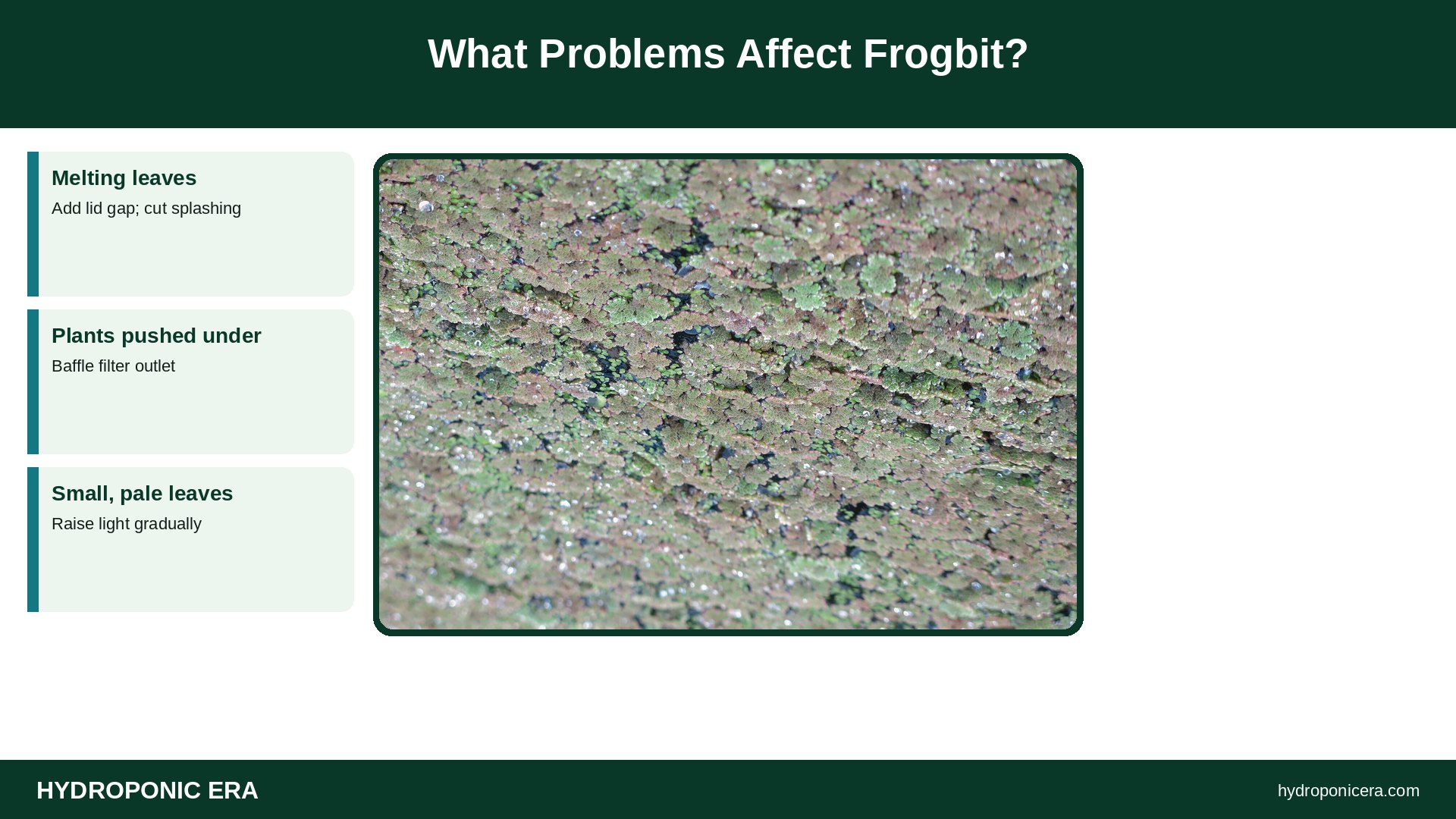
| Melting leaves | Wet tops or condensation | Add lid gap; cut splashing |
| Plants pushed under | Strong flow | Baffle filter outlet |
| Small, pale leaves | Low light or nutrients | Raise light gradually |
| Short roots | Varies | Keep conditions stable |
Frogbit vs Duckweed: Which Is Better?
This plant has larger leaves and is easier to remove by hand, while duckweed is tiny and can be hard to clear once it spreads. Duckweed is more often eaten by fish and is used as feed. Both need regular thinning. See our duckweed guide.
FAQ About Frogbit
Does it need fertilizer?
Fish waste usually feeds it in stocked tanks.
Can it grow outdoors?
Avoid outdoor use where it can escape.
Will fish eat it?
Some fish nibble roots, but most leave it alone.
Why do roots get so long?
Roots hang into the water to take up nutrients.
Is it the same as European frogbit?
No; they are different species.
Sources
- California Department of Food and Agriculture — Limnobium laevigatum Pest Rating
- US Fish and Wildlife Service — Ecological Risk Screening Summary: South American Spongeplant
- US Geological Survey Nonindigenous Aquatic Species — South American Spongeplant Profile
- Photo credits (Wikimedia Commons, edited with titles): Limnobium laevigatum by Cardex (Public domain); Planted Tank 03 – Flickr – The Wandering Angel by The Wandering Angel from Makati City, Philippines (CC BY 2.0); Guppy Poecilia reticulata by Holger Krisp (CC BY 3.0); Floating duckweed by BeanieAll (CC BY-SA 4.0)