
Quick Answer
transplant density after germination planning means re-filling net pots and succession trays after germination or early losses without overcrowding survivors or leaving chaotic empty holes. Empty sites waste light; panicked double-planting creates weak competition.
Use with germination, transplanting, spacing, leggy seedlings, and transplant shock.
Key takeaways for transplant density after germination
- Hydroponic transplant density germination replans should be deliberate, not emotional hole-filling.
- Count live seedlings vs sites before transplant day.
- Keep spacing rules for the crop class even after losses.
- Succession sow extras on purpose—insurance trays beat panic buys.
- Original math: sites needed = live keepers + planned succession, not “every hole at all costs.”
- Hydroponic transplant density germination fails when you cram two weak starts into one net pot forever.
- Cull honestly; empty and clean unused sites.
- Update labels when you backfill different sow dates.
Related HydroponicEra guides
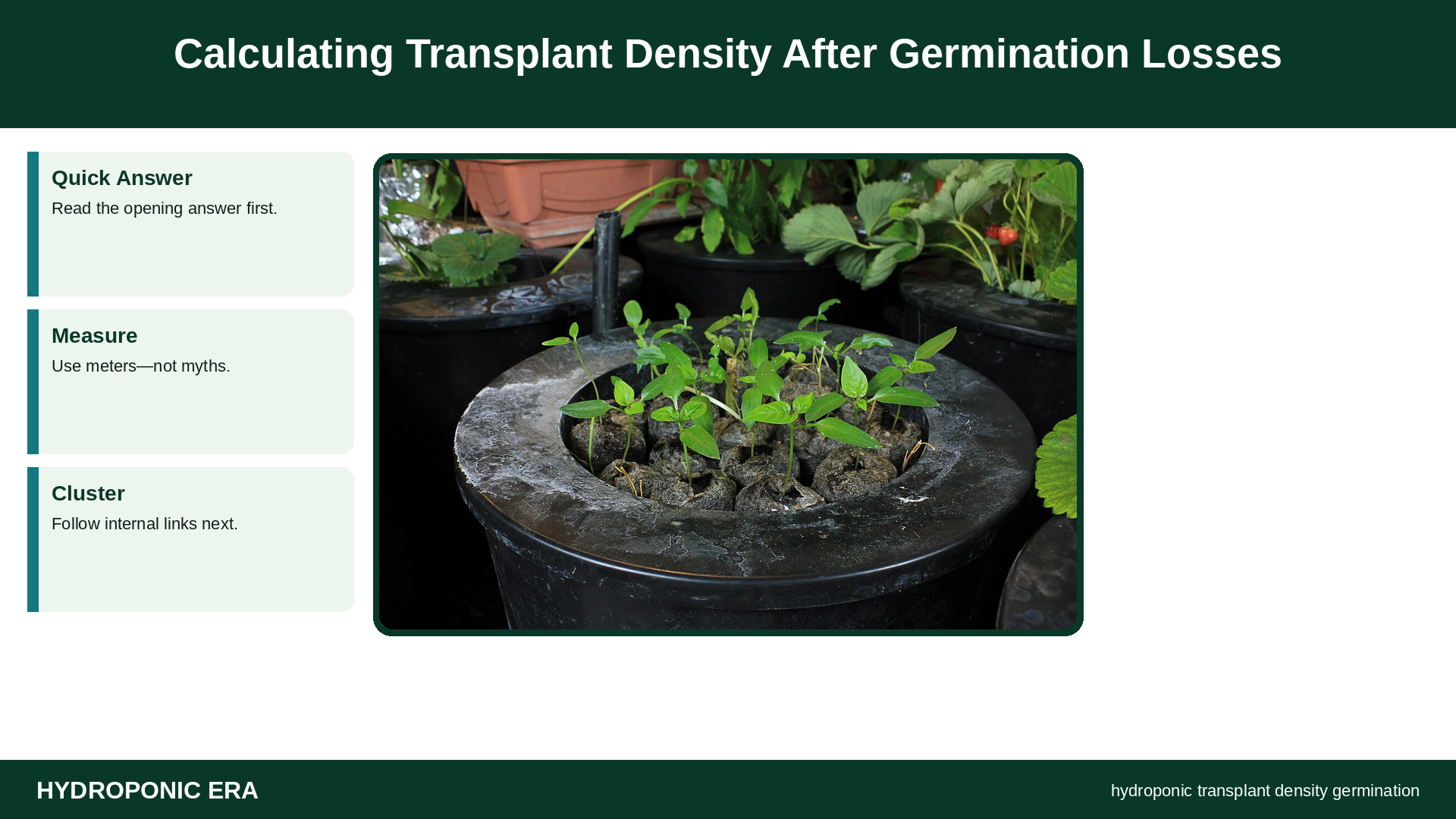
Why Losses Are Normal—and Plannable
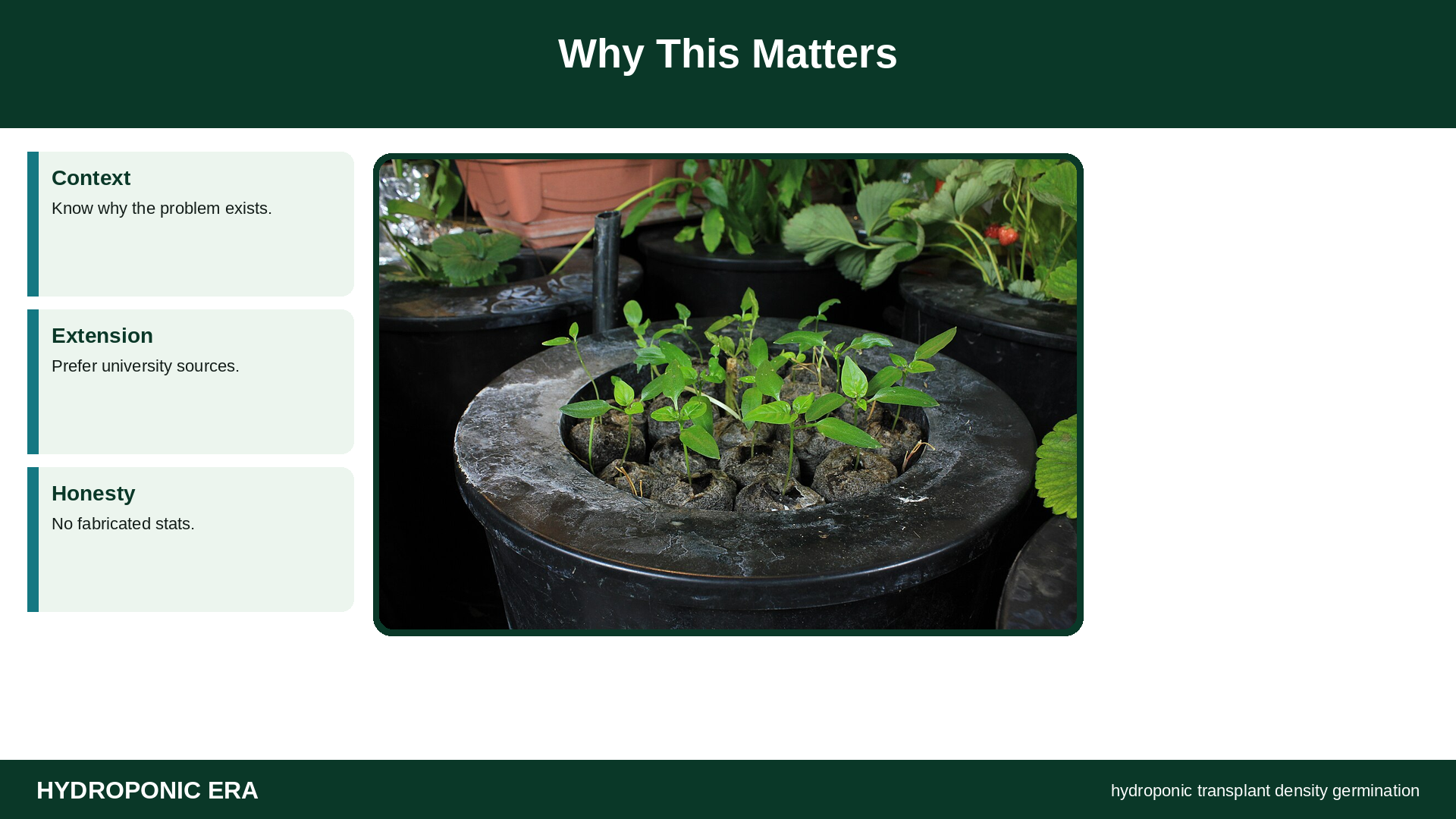
transplant density after germination issues happen to careful growers. Seed lots vary; trays dry; damping risks appear. Extension germination and transplant guidance assumes some attrition. Your job is to replan density with spacing science, not to force a perfect grid with weak plants.
This page is the post-loss replan—not a full germination how-to.
Backfill Options
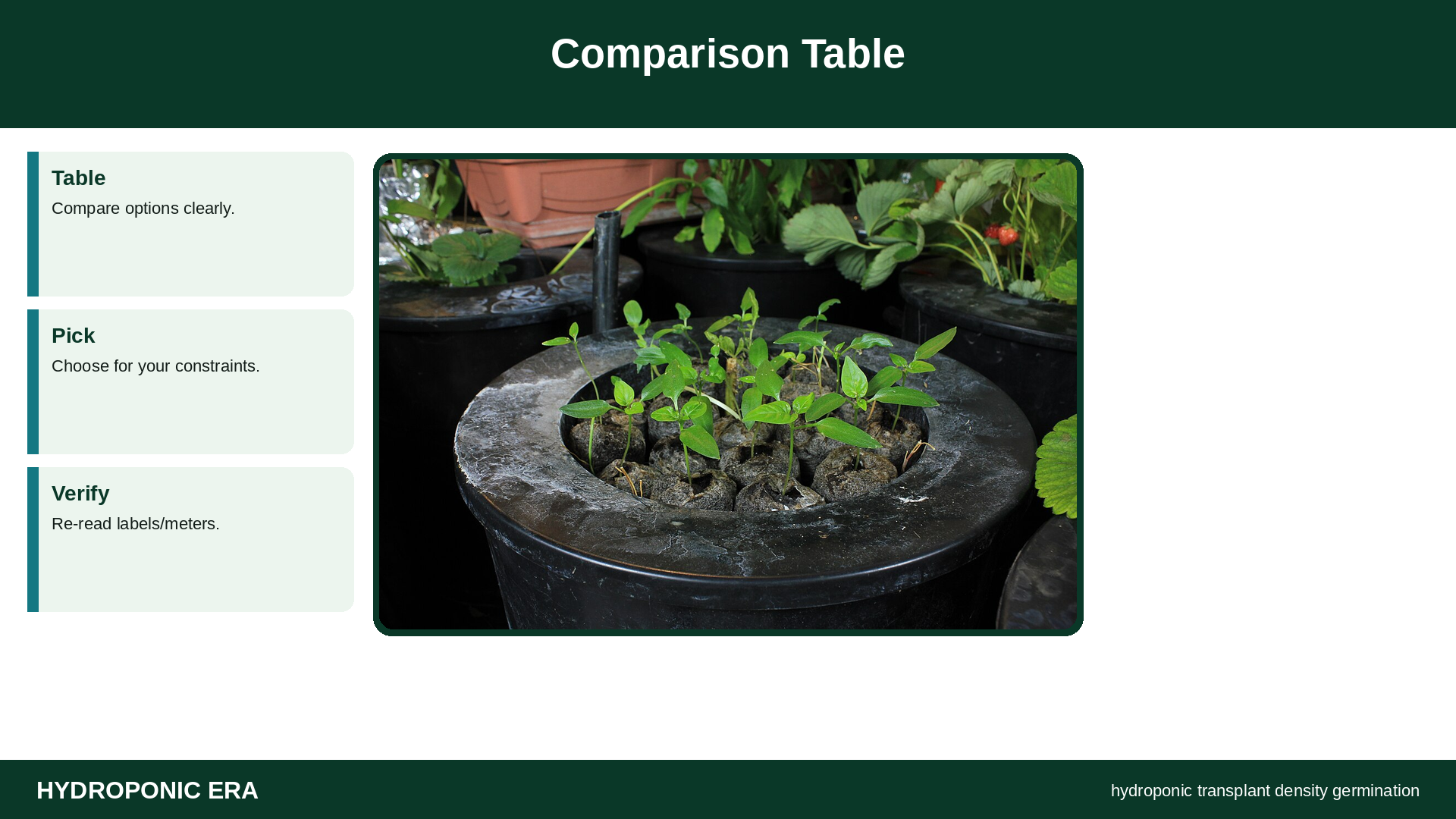
| Option | When | Watch-out |
|---|---|---|
| Leave hole empty + redirect light | Few losses; harvest plan OK | Wasted PPFD if many empties |
| Backfill from insurance tray | You sowed extras | Match size to neighbors |
| Widen spacing intentionally | Fruiting crops / large cultivars | Do not randomly cluster leftovers |
| Double plant temporarily | Only as short insurance | Thin to one ASAP |
Step-by-Step Replan
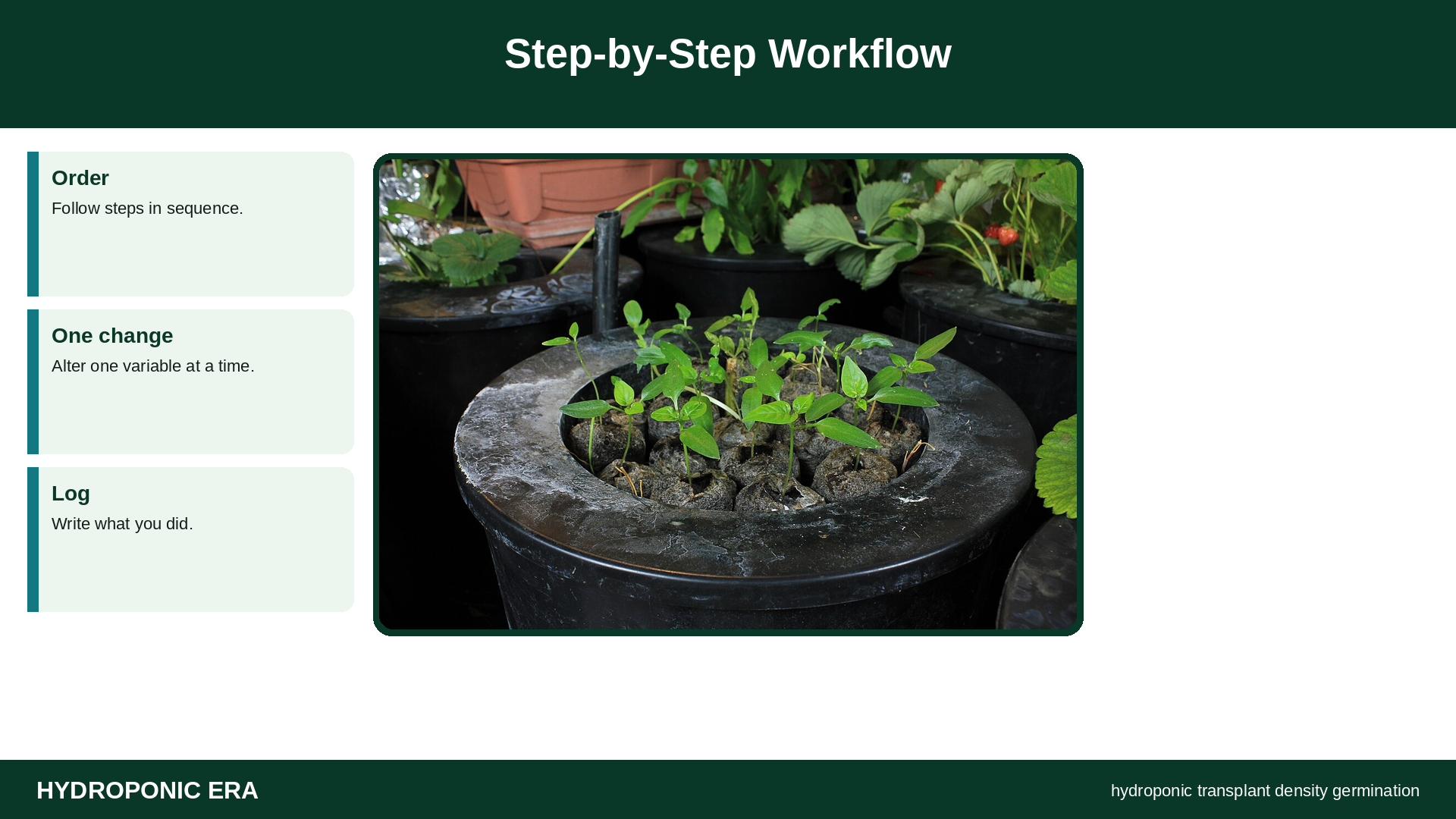
- Count target sites and live keepers the morning of transplant.
- Cull leggy or diseased starts rather than “hoping.”
- Place keepers using crop spacing rules (spacing).
- Backfill from labeled insurance trays of similar age.
- If short, leave strategic empties rather than crowding.
- Update pot codes/dates for mixed sow batches.
- Ease light for any late backfills to reduce shock.
- Clean unused net pots so they do not harbor gnats.
- Note germination % to adjust next sow count.
- Photograph the tray map after planting.
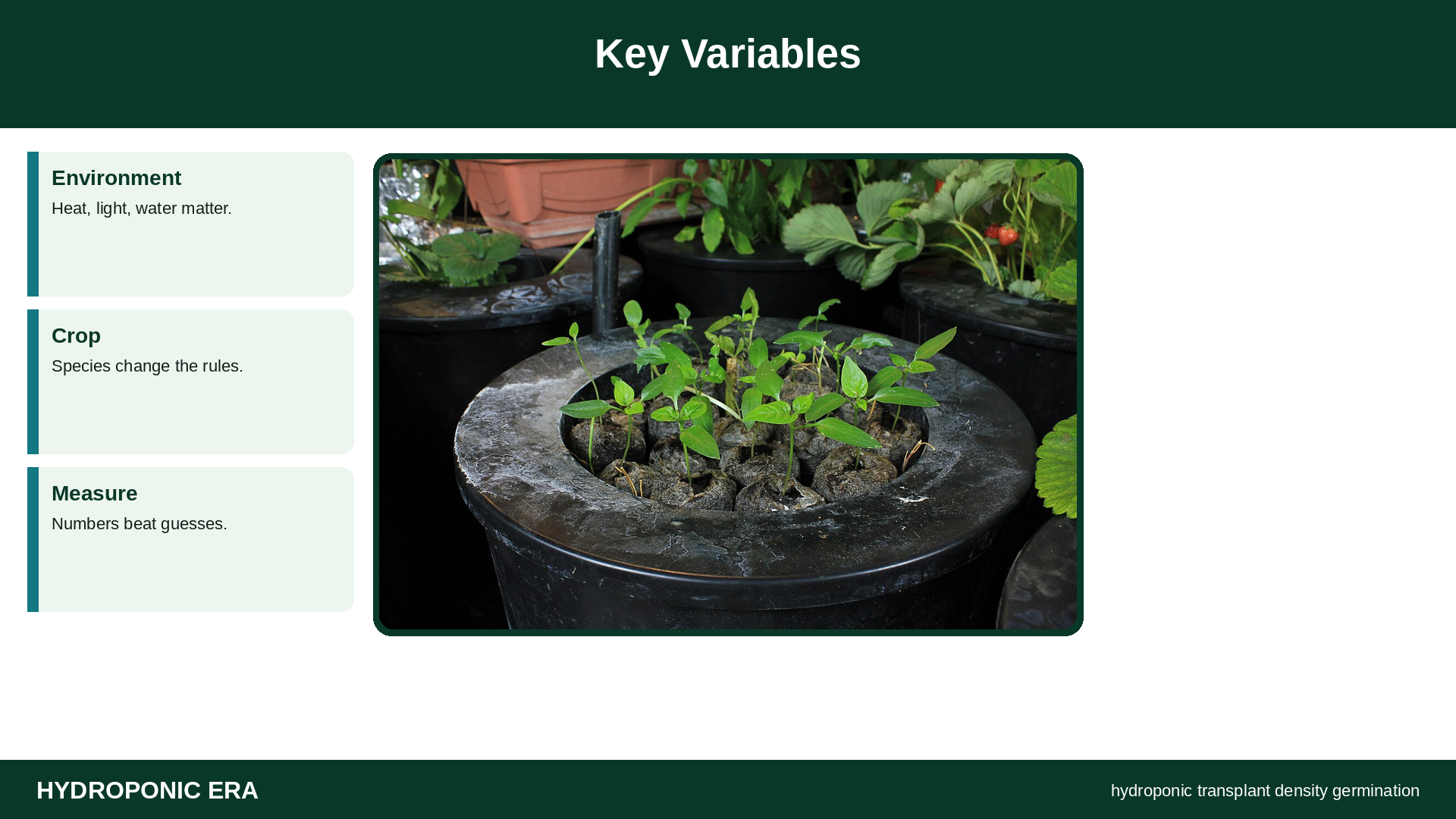
Variables
| Variable | Effect | Link |
|---|---|---|
| Crop class | Lettuce vs peppers spacing differs | lettuce, peppers |
| System type | NFT channels punish gaps differently than rafts | NFT, DWC |
| Light uniformity | Empties on edges waste less than empties in hot centers sometimes | PPFD |
| Succession plan | May prefer staged holes | harvest |
Common mistakes with transplant density after germination
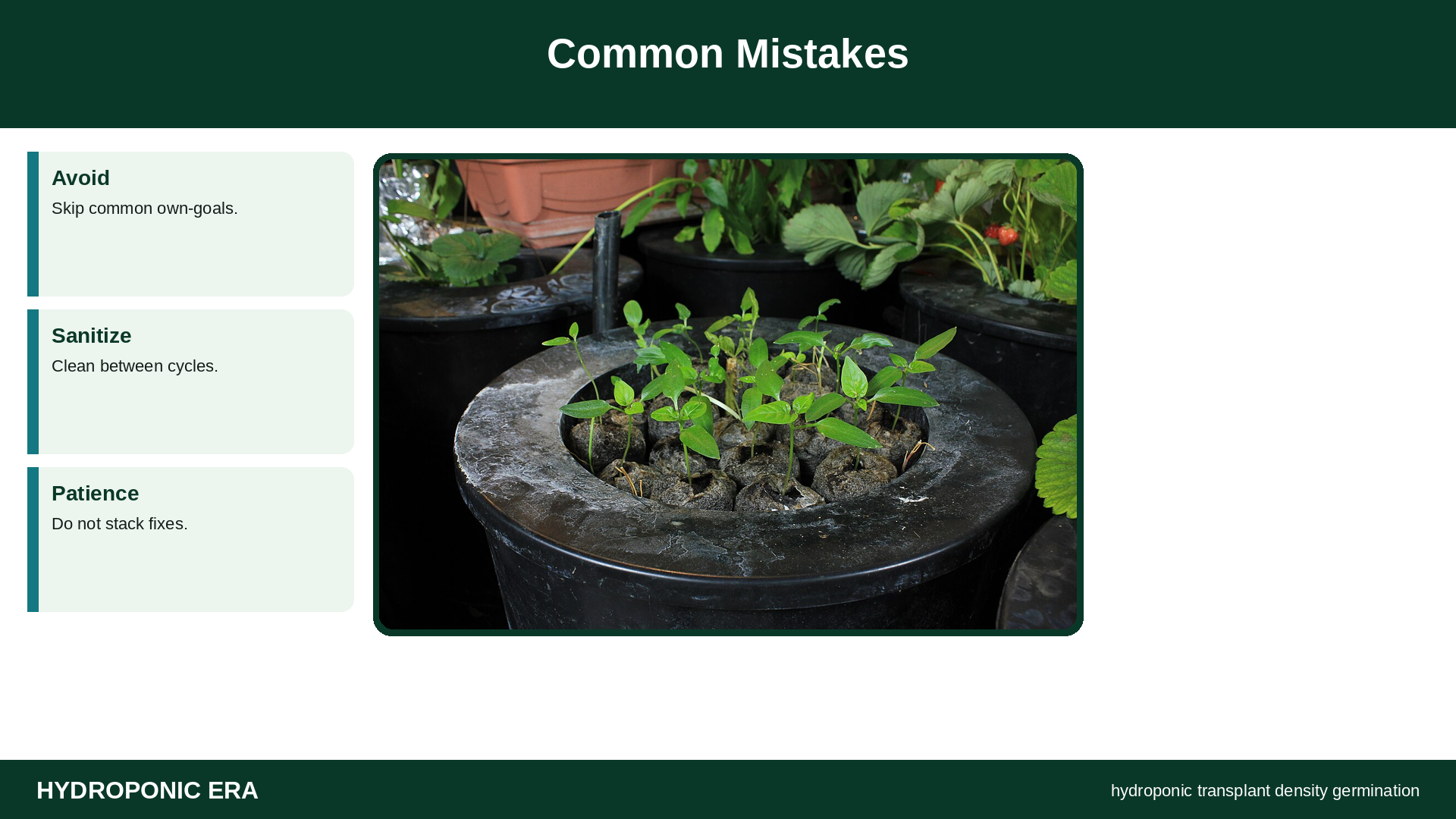
- Transplanting every weak sprout to avoid empty holes
- Forgetting to label backfill dates
- Crowding peppers because lettuce spacing was on the brain
- Leaving dead plugs in place
- Sowing zero extras “to save seeds”
- Thinning too late after double-planting
Troubleshooting

| Signal | Fix |
|---|---|
| Patchwork canopy heights | Group similar ages; ease light on short ones |
| Empty center under strong light | Move a keeper inward; do not waste the hot zone |
| Repeat low germ % | Revisit temp/moisture; seed age; germination |
| Shock after backfill | shock recovery |
Original Framework: Insurance Sow Card

Write: Target sites | Sow extras % | Actual keepers | Backfill plan. Adjust the extras % next cycle from real data.
Closing practice for hydroponic transplant density germination: empty clean holes beat crowded weak plants.
What to Check Before Transplant Day After Losses
- Keeper count done?
- Insurance tray ready?
- Spacing rule chosen for crop?
- Labels updated?
- Cull criteria honest?
- Empty pots cleaned?
Backfill Without Crowding Forever
Hydroponic transplant density germination losses are normal; empty holes are not moral failures. Keep a small nursery of replacements at similar age. Backfill promptly so light and airflow stay even, then thin double-plants once winners are obvious. Label dates so you do not mix ages in one EC regime blindly (germination, seedlings, spacing).
If losses repeat in one tray corner, fix environment there—heat mat gaps, dome condensation, or weak light—before buying more seed.
Planning Germ Extra Without Waste
Sow a calculated surplus based on your real germination rate, not optimism. Compost extras ethically or share them. Hydroponic transplant density after losses should leave a full, even canopy—not a permanent jungle of competing twins.
Hydroponic Transplant Density Germination: Succession Angle
Empty holes can be intentional if you staggered sow dates. Fill with the next cohort at the right size rather than forcing mismatched giants beside babies. Keep EC appropriate for the youngest sensitive roots when mixed ages share a reservoir—or separate nursery trays.
Track germination percent by seed lot. Lots that repeatedly fail deserve replacement, not denser sowing into the same bad corner. Tie habits to leggy seedlings and transplant shock guides.
FAQs about transplant density after germination
How many extras should I sow?
Many home growers sow 20–50% extras for finicky seeds—tune from your logs.
Can I mix varieties in gaps?
Yes if EC/climate compatible and labeled.
Is it OK to run a tray half empty?
Yes—better than crowding; consider succession timing.
Double plant forever?
No—thin to one strong plant.
What about bought seedlings?
Quarantine mindset still applies; match sizes carefully.
Does germination % matter for clones?
Different workflow—this page is seed/transplant density.
Extended Home-Grower Walkthrough
Use this extended walkthrough as a second pass after the Quick Answer. Walk the system with a notebook: write the date, crop, EC, pH, reservoir temperature, and one observation about roots or leaves. Change only one control at a time when a problem appears. If last week’s fix did not show in new growth, revert and try the next smallest lever. Keep university and extension principles in mind—oxygen, sanitation, and measured nutrition beat product stacking.
Photograph the canopy and the reservoir surface weekly. Dated photos settle arguments about algae, tip burn, or stretch faster than memory. When a helper waters for you, leave a one-page card with do-not-touch items and the exact top-off rule. Store calibration sachets next to the meters so “I will calibrate later” stops being the default. Review timers after any power event. Confirm air stones still roar. Confirm drains still drain.
At the end of the week, score the cycle 1–5 for ease and plant quality. Low scores should trigger a sanitation or climate review before you buy new hardware. Link neighboring HydroponicEra guides when the symptom matches a cluster page. Prefer labeled procedures over improvisation under stress. Healthy boring routines are the real upgrade path for home hydroponics.
Keep transplant density after germination on your ops card so helpers follow one standard.
Keep transplant density after germination on your ops card so helpers follow one standard.
Keep transplant density after germination on your ops card so helpers follow one standard.
Keep transplant density after germination on your ops card so helpers follow one standard.
Keep transplant density after germination on your ops card so helpers follow one standard.
Keep transplant density after germination on your ops card so helpers follow one standard.
Review transplant density after germination whenever you change crop, climate, or water source.
Review transplant density after germination whenever you change crop, climate, or water source.
Review transplant density after germination whenever you change crop, climate, or water source.
Review transplant density after germination whenever you change crop, climate, or water source.
Sources
- University of Minnesota Extension — Starting seeds indoors
- NC State Extension — Propagation (Extension Gardener Handbook Ch. 13)
- University of Florida IFAS — HS1421: Growing Herbs in Small Hydroponic Systems
- Oklahoma State University Extension — Hydroponics
- University of Florida IFAS — HS184: Building a Floating Hydroponic Garden
- Michigan State University Extension — Hydroponics as an agricultural production system