
What is Phytophthora root rot? Phytophthora root rot is a water-mold disease that kills roots and crowns when the root zone stays wet. UC IPM says leaves wilt and yellow, and unlike drought-stressed plants, infected plants do not recover after watering. Cornell and UMass note it spreads by swimming spores, so drainage, sanitation and clean water are the main defenses.
Key takeaway: Phytophthora root rot thrives in wet roots; prevent it with drainage, sanitation and clean, filtered water.
| Clue | What you see | What it means | Source |
|---|---|---|---|
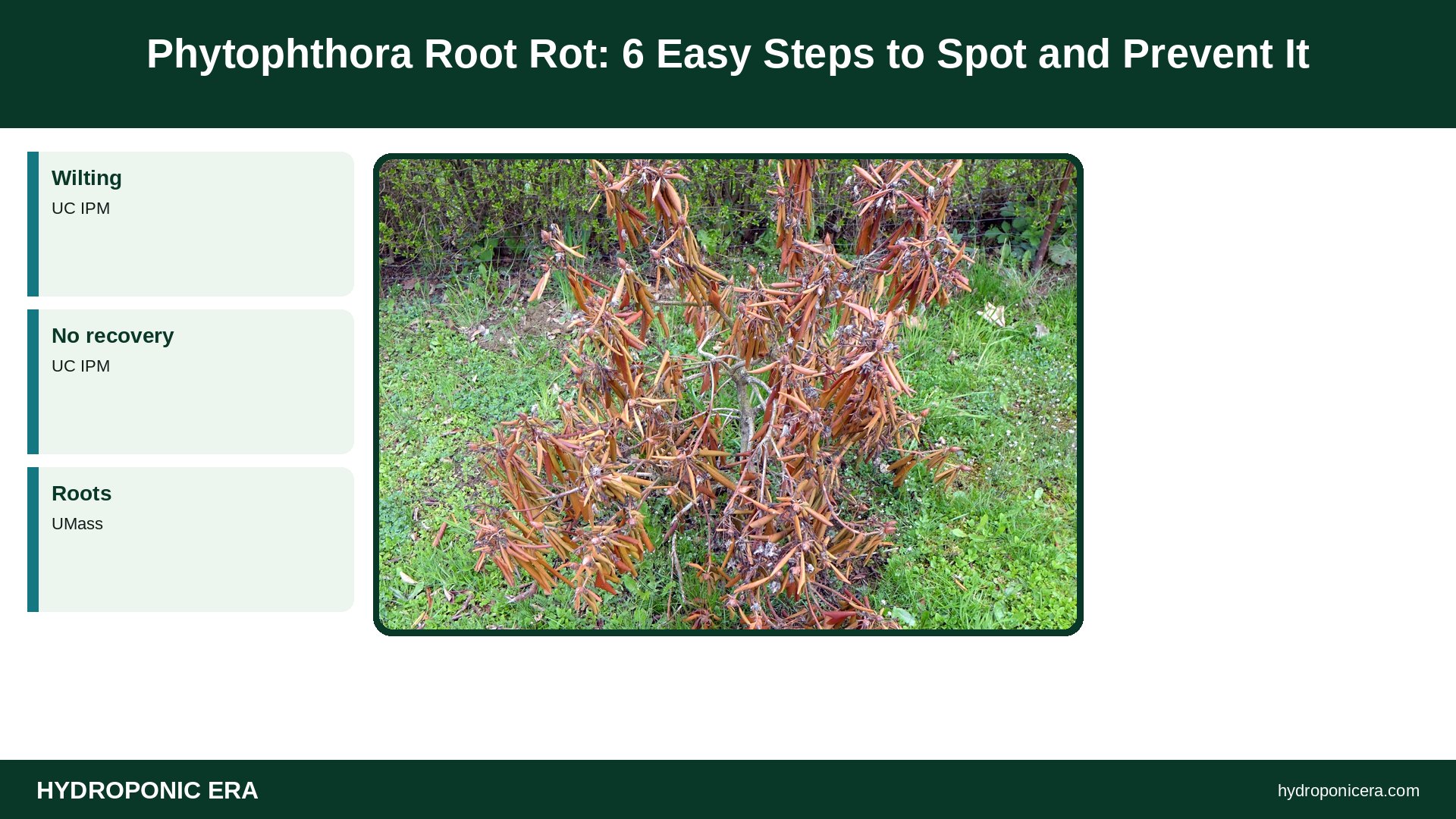
| Wilting | Leaves wilt and turn dull green, yellow, red or purplish | Roots can no longer supply water | UC IPM |
| No recovery | Plant stays wilted after watering | Points to root disease, not drought | UC IPM |
| Roots | Blackened, decaying roots; few feeder roots | Fine roots die first | UMass |
| Crown | Tan to cinnamon-brown tissue | Rot has reached the crown | UMass |
What Causes Phytophthora Root Rot?
Soil-borne water molds. UC IPM explains that several Phytophthora species cause root and crown rot when soil around the plant stays wet for prolonged periods or when it is planted too deeply. Cornell notes these pathogens are oomycetes, commonly called water molds, the same group as Pythium, which is why they respond to similar fungicides.
What Are the Symptoms of Phytophthora Root Rot?
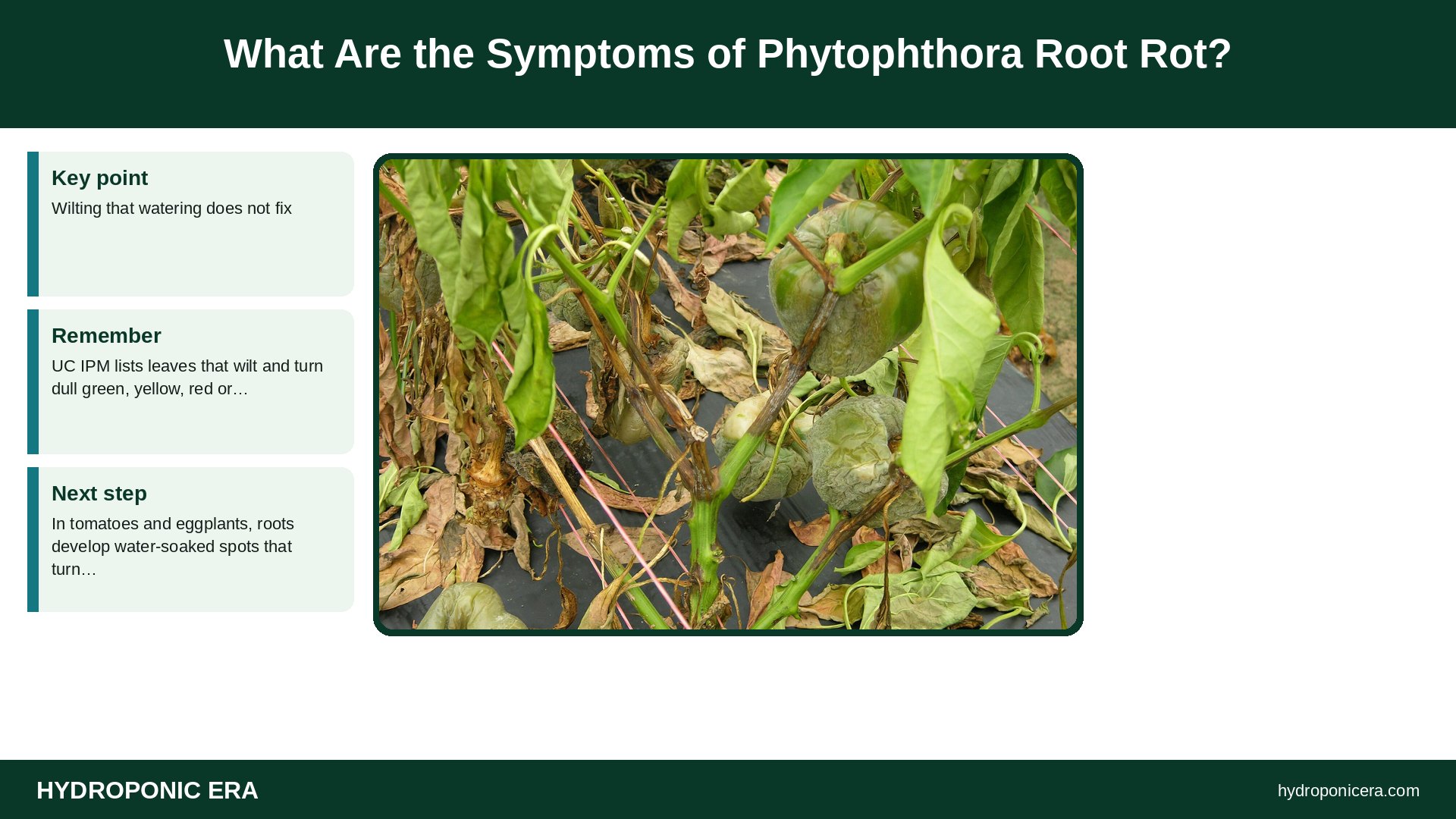
Wilting that watering does not fix. UC IPM lists leaves that wilt and turn dull green, yellow, red or purplish, usually in the most poorly drained areas. In tomatoes and eggplants, roots develop water-soaked spots that turn brown and may rot off. UMass adds blackened, decaying roots with no fibrous feeder roots.
Compare symptoms in our why hydroponic roots turn brown guide.
How Does Phytophthora Root Rot Spread?
Through water. UMass says Phytophthora thrives in flooded, wet, low-oxygen soils and produces an asexual swimming spore that travels through ponds, streams and rivers to find a host. Cornell says these pathogens also move in infested soil on flats, tools, pots and hose ends, and in infected plant tissue.
Is Phytophthora Root Rot a Risk in Hydroponics?
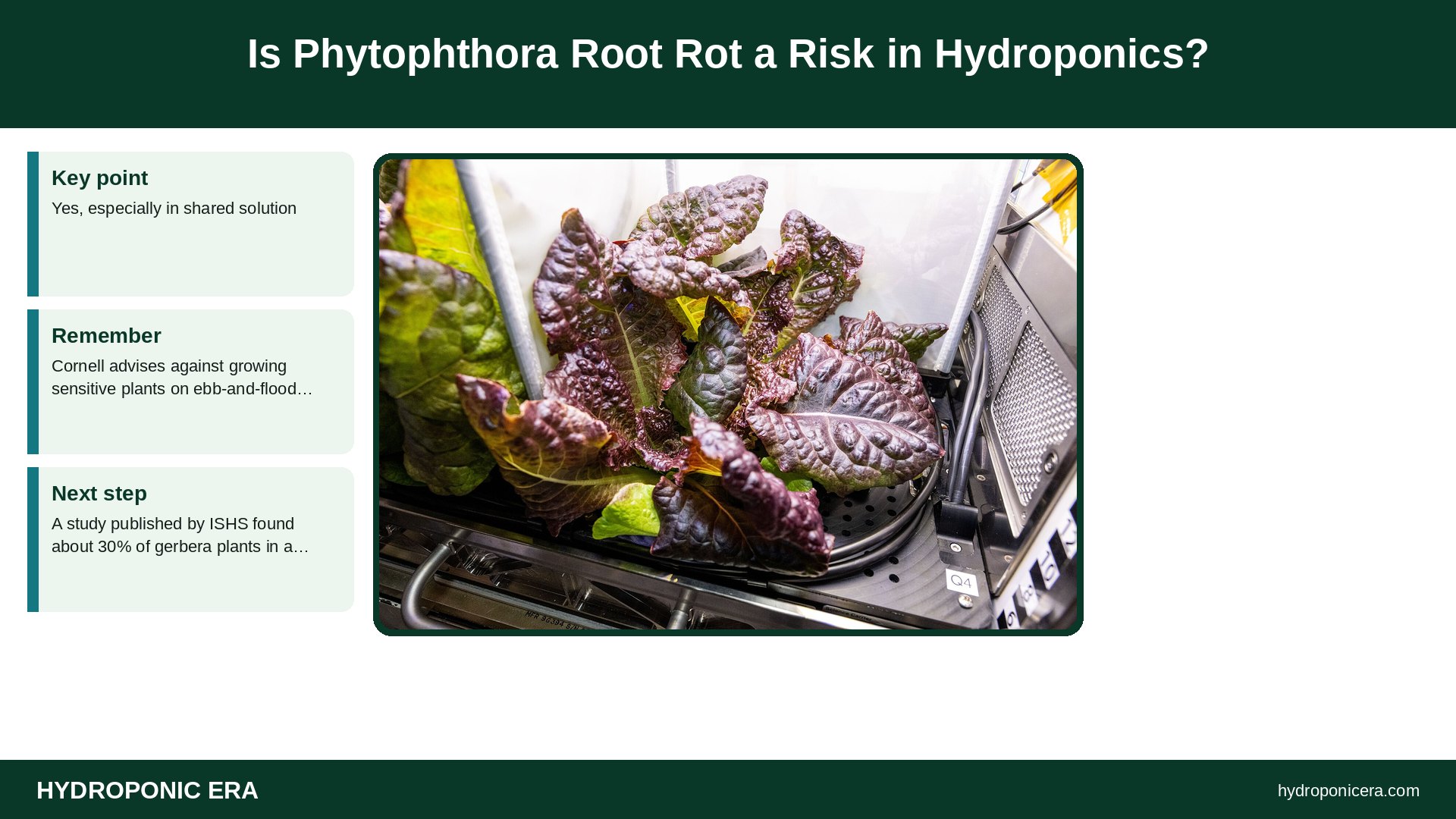
Yes, especially in shared solution. Cornell advises against growing sensitive plants on ebb-and-flood benches because zoospores spread easily from pot to pot. A study published by ISHS found about 30% of gerbera plants in a closed soilless system severely infected by crop end without disinfection, while UV and slow sand filtration completely prevented spread.
Learn more in our UV sterilizers for hydroponic reservoirs guide.
Does Temperature Affect Phytophthora Root Rot?
Yes, but it varies by species. UC IPM says most soil-borne Phytophthora species are active in warm, moist soils, while some prefer cool conditions and develop mostly in winter. It adds that losses are minimized by good drainage, appropriate irrigation, managing plant stress and soil salinity, and choosing resistant plants or varieties.
Which Plants Get Phytophthora Root Rot?
A very wide range. UC IPM says almost all fruit and nut trees and most ornamental trees and shrubs can develop it, and tomatoes, peppers and eggplant can also be affected. Cornell lists greenhouse cases on fuchsia, calibrachoa, verbena and poinsettia. UMass names rhododendron, holly, yew, dogwood, maple, apple and cherry.
How Do You Prevent Phytophthora Root Rot?
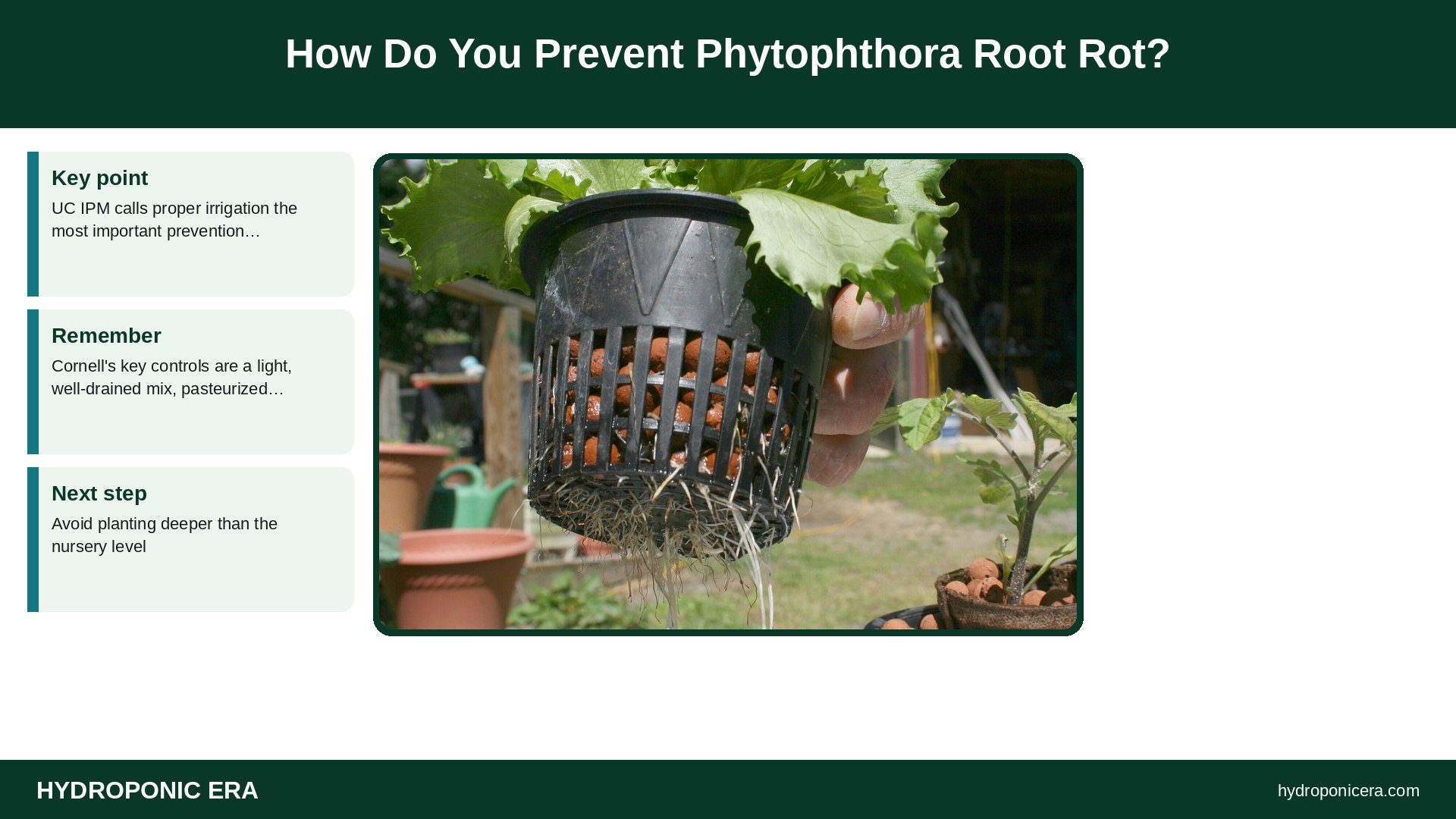
Manage water first. UC IPM calls proper irrigation the most important prevention, avoiding prolonged saturation and letting the top few inches dry between waterings. Cornell’s key controls are a light, well-drained mix, pasteurized media, disinfected containers, tools and benches, clean plants and sound sanitation. Avoid planting deeper than the nursery level.
- Use a light, well-drained medium.
- Disinfect pots, trays, tools and benches.
- Start with clean, certified plants.
- Avoid deep planting and standing water.
- Remove symptomatic plants promptly.
- Disinfect recirculated solution with UV or filtration.
For cleaning steps, see our cleaning and sterilizing a hydroponic system guide.
Can Phytophthora Root Rot Be Cured?
Rarely once advanced. UMass calls it very difficult to control, saying soil drench fungicides can slow it if diagnosed early but are not always effective. UC IPM says trees can sometimes be saved if caught early by cutting away affected bark and letting the crown dry. Young infected trees may die rapidly.
Which Fungicides Work on Phytophthora Root Rot?
Labeled oomycete products, used in rotation. UMass lists registered options including mefenoxam or metalaxyl, phosphorous acid, etridiazole and fosetyl-aluminum. Cornell warns resistance to mefenoxam and metalaxyl has been seen in greenhouse Phytophthora, so rotate materials and never rely on one. Always follow the label for food crops.
How Is Phytophthora Different From Pythium?
They are close cousins. Cornell groups both as water molds that cause root rot, with the same fungicides working on each. Phytophthora often attacks the stem base too, girdling the vascular system, while Pythium causes a dark brown to black wet rot that softens roots. See our pythium root rot guide.
FAQ About Phytophthora Root Rot
Does it leave visible mold?
No. UMass says there are no visible field signs; UC IPM says mushrooms point to other fungi.
How long does it last in soil?
UMass says resting spores can persist for many years.
Should I rotate tomato crops?
UC IPM suggests a nonsusceptible crop, such as sweet corn, for a year or two.
Does it survive in dead plants?
UMass says it does not persist long in dead plant material, but Cornell still advises removing symptomatic plants promptly.
Sources
- UC Statewide IPM Program — Phytophthora Root and Crown Rot
- Cornell Greenhouse Horticulture — Root Rot Diseases
- UMass Extension — Phytophthora Root and Crown Rot
- ISHS Acta Horticulturae — Disinfection of Recirculated Nutrient Solutions
- Photo credits (Wikimedia Commons, edited with titles): Rhododendron-Phytophthora Root Rot (3) by Jerzy Opioła (CC BY-SA 4.0); 5411484-PPT-Phytophthora blight (Phytophthora capsici) by Don Ferrin, Louisiana State University Agricultural Center, Bugwood.org (CC BY 3.0); Iss072e404275 (12-27-2024) — The Spaceflight Microbiome of a Food Crop Grown Using Different Substrate Moisture Levels (Plant Habitat-07) investigation grows ‘Outredgeous’ red romaine lettuce aboard the Internati by NASA Johnson Space Center (Public domain); 2009-03-30 Lettuce roots by Ildar Sagdejev (Specious) (CC BY-SA 4.0)