
Can you grow mitsuba hydroponically? Yes. Mitsuba hydroponics suits indoor growers because this Japanese parsley prefers shade, cool conditions and steady moisture, which a hydroponic system supplies well. NC State Extension notes that full sun yellows the leaves and makes them bitter, so modest light and a cool root zone give the best stems. Baker Creek lists leaf harvests from about 50 days after sowing.
Key takeaway: Mitsuba (Cryptotaenia japonica) is a shade-loving herb grown for its long, tender leaf stems and celery-parsley flavor. Chill the seed, start it at 65–70°F (18–21°C), grow it under moderate light, feed it gently, and cut stems at about 5 inches (13 cm).
| Factor | Target | Source |
|---|---|---|
| Seed treatment | Chill seed for several weeks before sowing | Baker Creek |
| Germination temperature | 65–70°F (18–21°C) | Baker Creek |
| Light | Part to deep shade outdoors; moderate light indoors | NC State Extension |
| Days to first harvest | About 50 days | Baker Creek |
| Solution EC (start low) | Below 1.2 mS/cm, then up to leafy-green levels | UF/IFAS lettuce range as ceiling |
| Hardiness | USDA zones 4–8 (perennial outdoors) | NC State Extension |
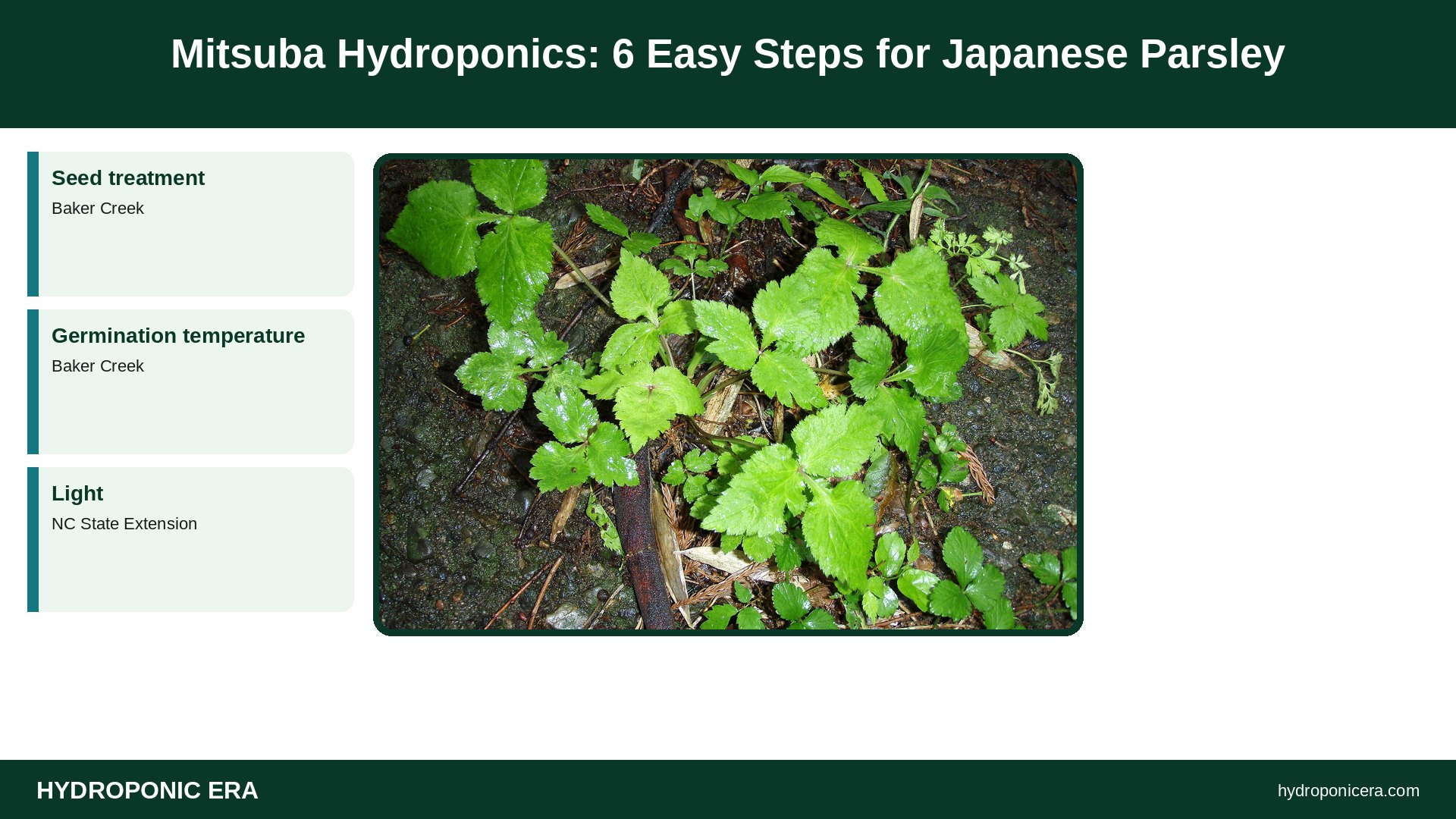
What Is Mitsuba?
Mitsuba is a perennial herb in the carrot family, also called Japanese parsley, Japanese honewort or Japanese wild chervil. NC State Extension describes leaves of three toothed leaflets on long stalks and small white flowers in umbels. The name means “three leaves.” Cooks use the stems and leaves in soups, egg dishes and salads.
The flavor, a big reason people try mitsuba hydroponics, is often compared to a mix of celery, parsley and angelica. It is a woodland plant, which explains its preference for shade and moist conditions. Outdoors NC State lists it for USDA zones 4 to 8, but indoors it grows year round. For other parsley-family herbs, see our parsley hydroponics guide.
Why Does Mitsuba Hydroponics Work So Well?
Mitsuba hydroponics works because the plant wants exactly what a simple water culture system offers: constant moisture, cool roots and no competition. NC State Extension lists moist soil and shade conditions, and warns that full sun yellows and embitters the leaves. A raft or Kratky jar under modest LEDs can meet those needs indoors.
- Moisture: roots never dry out in deep water culture.
- Shade tolerance: it does not need the strong light that tomatoes or basil need.
- Perennial habit: cut stems regrow from the crown for several harvests.
- Small size: NC State lists leaves of 3–6 inches (8–15 cm), so it fits tight shelves.
How Do You Germinate Seeds for Mitsuba Hydroponics?
Mitsuba seed germinates best after a cold, moist period. Baker Creek suggests sowing in fall or very early spring outdoors, or refrigerating seed for several weeks before sowing indoors, then germinating at 65–70°F (18–21°C). Sow about 1/4 inch (6 mm) deep. Germination is listed as 5–10 days but can take longer.
- Mix seed with a little damp paper towel or sand and seal it in a bag.
- Refrigerate for several weeks.
- Sow two or three seeds per rockwool cube or coco plug, about 1/4 inch (6 mm) deep.
- Keep plugs moist at 65–70°F (18–21°C) under a dome.
- Thin to the best seedling and transplant when roots emerge.
Patience matters in mitsuba hydroponics. Mitsuba is slower to start than lettuce, so keep the plugs evenly moist and avoid heat mats set too warm.
What Nutrient Strength Does Mitsuba Need?
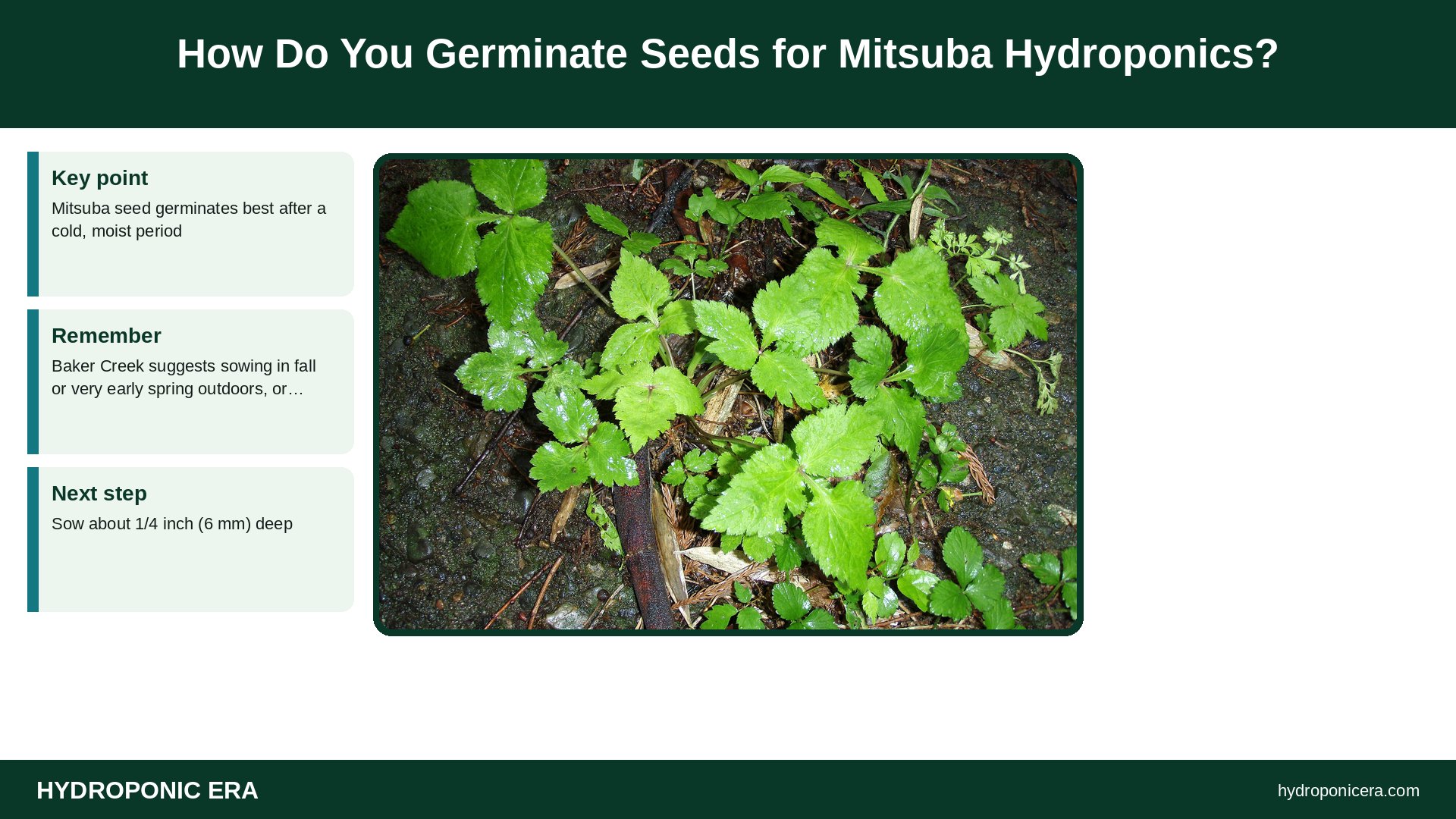
For mitsuba hydroponics, start on a weak nutrient solution and raise it slowly. A good working plan is to keep seedlings below 1.0 mS/cm, then move toward the 1.2–1.8 mS/cm range UF/IFAS Extension gives for hydroponic lettuce only if leaves look pale. Mitsuba is a tender herb, and overly strong solutions can stunt it.
Keep pH around 5.8–6.5, the usual range for leafy herbs in soilless systems, and hold the solution in the cooler part of the 65–80°F (18–27°C) range UF/IFAS gives for lettuce. Our nutrients for hydroponic herbs guide explains how to scale a general formula for herbs.
How Much Light Does Mitsuba Hydroponics Need?
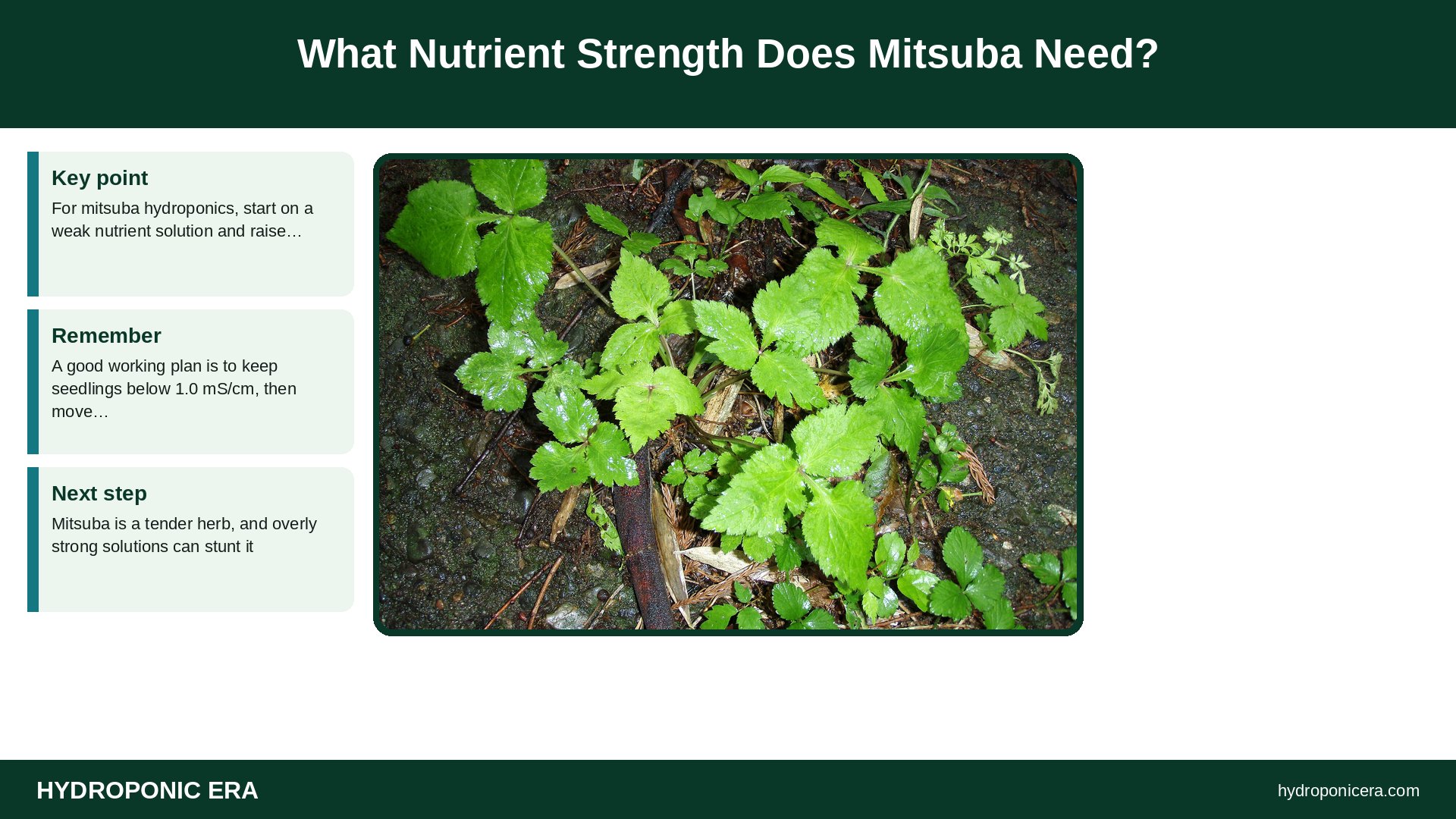
Mitsuba hydroponics needs moderate light, not full-sun intensity. NC State Extension lists dappled sun, deep shade and partial shade for the plant, and Baker Creek suggests 4–6 hours of sun outdoors. Indoors, run grow lights farther from the plants than you would for basil, and watch new leaves for yellowing as a sign of too much light.
- Too much light: yellow, bitter leaves, as NC State warns.
- Too little light: long, weak stems that flop over.
- Good balance: green leaves on firm stalks of even length.
For general light planning, see how much light herbs need.
How Do You Harvest Mitsuba?
Harvest mitsuba by cutting stems once plants have several full leaves, usually around 50 days from sowing according to Baker Creek. Cut the outer stems near the base and leave the center to regrow. Because it is a perennial, a healthy crown keeps sending up new stems for repeated harvests.
NC State notes leaf stems around 6 inches (15 cm) tall, while flower stems can pass 3 feet (90 cm). Pinch off flower stalks as they appear if you want leaves, since leaf production slows once the plant flowers. Use mitsuba fresh; the delicate leaves wilt quickly after cutting.
| Stage | What to do |
|---|---|
| Seedling | Weak solution, moderate light |
| Established | Gradually raise nutrients if leaves pale |
| First harvest | Cut outer stems near the base |
| Regrowth | Leave center leaves, remove flower stalks |
What Problems Affect Mitsuba Hydroponics?
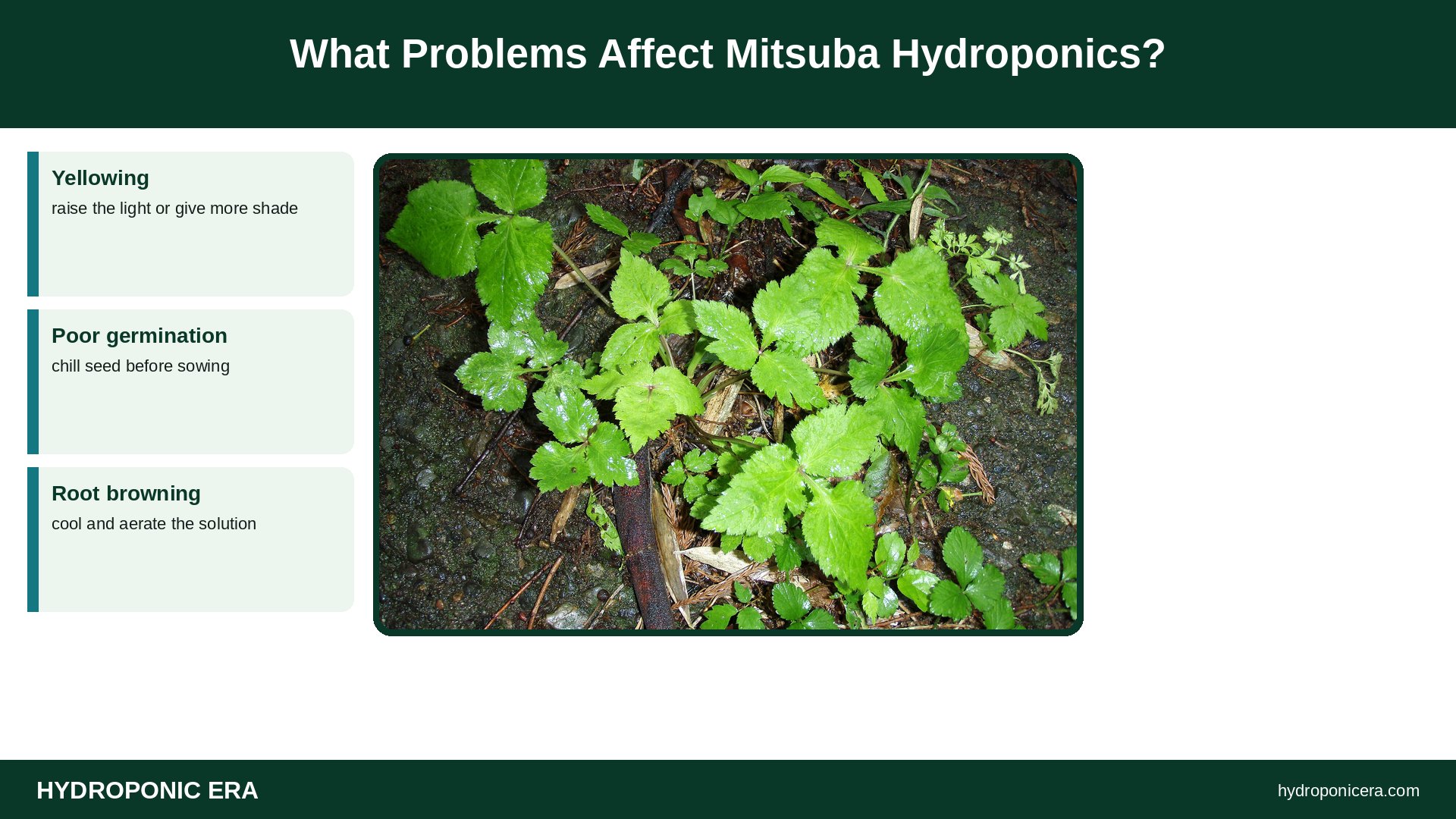
The usual problems in mitsuba hydroponics are bitter or yellow leaves from too much light, slow germination from skipping the chilling step, and root rot in warm, stagnant water. Indoors, aphids can also appear. Keep light moderate, chill the seed, aerate the reservoir and check leaves weekly to stay ahead of these issues.
- Yellowing: raise the light or give more shade.
- Poor germination: chill seed before sowing.
- Root browning: cool and aerate the solution.
- Skin irritation: NC State notes repeated handling can irritate sensitive skin, so wear gloves if you react.
FAQ About Mitsuba Hydroponics
Is mitsuba the same as parsley?
No. It is a different plant in the same family, with a celery-like flavor.
Can you eat mitsuba raw?
Yes, young leaves and stems are used raw or briefly cooked.
Is mitsuba hydroponics a long-term crop?
Yes, mitsuba is a perennial. It regrows from the crown and is hardy outdoors in USDA zones 4–8 per NC State.
Does mitsuba hydroponics need full sun?
No. NC State says full sun yellows the leaves and makes them bitter.
Is mitsuba toxic?
NC State lists low toxicity only if very large quantities are eaten, and possible skin irritation.
Sources
- NC State Extension Gardener Plant Toolbox — Cryptotaenia japonica
- Baker Creek Heirloom Seeds — Mitsuba Japanese Parsley
- UF/IFAS Extension — Hydroponic Lettuce Production (HS1422)
- Photo credits (Wikimedia Commons, edited with titles): Cryptotaenia japonica mitsuba by apple2000 (CC BY-SA 3.0)