
Can you grow shungiku hydroponically? Yes. Shungiku hydroponics is a simple way to grow edible chrysanthemum greens indoors. UF/IFAS Extension says shungiku (Glebionis coronaria, also called tong hao or garland chrysanthemum) is harvested 40–45 days after sowing at about 8 inches (20 cm) tall, and that summer heat makes it taste bitter. Keep it cool, feed it like lettuce, and cut it young.
Key takeaway: Shungiku is a fast, aromatic leafy green in the daisy family, related to lettuce. Grow broadleaf types for repeat cutting, keep temperatures mild to avoid bitterness, and harvest at about 8 inches (20 cm) before the plants flower.
| Factor | Target | Source |
|---|---|---|
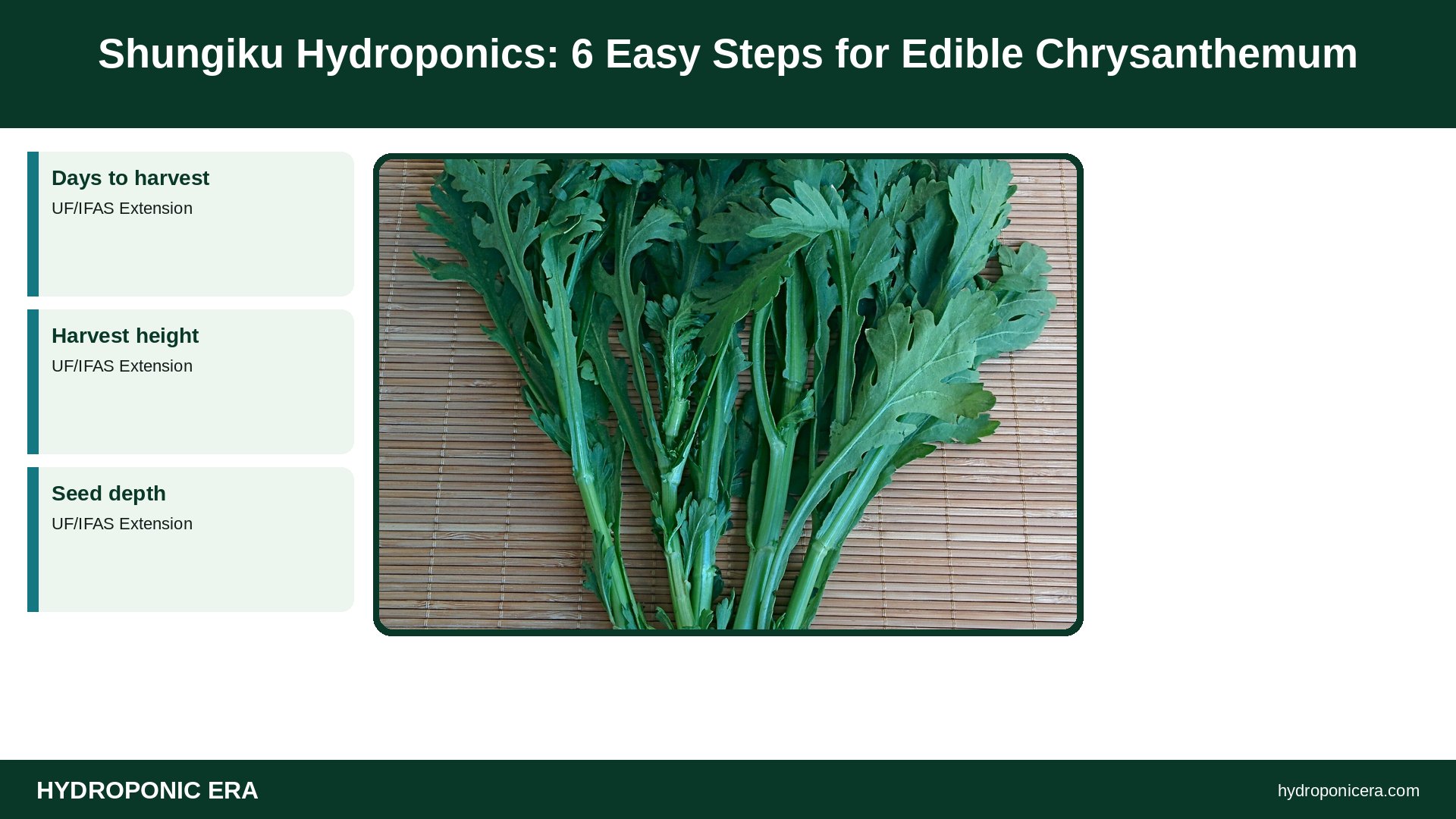
| Days to harvest | 40–45 days from sowing | UF/IFAS Extension |
| Harvest height | About 8 in (20 cm) | UF/IFAS Extension |
| Seed depth | 1/4–1/2 in (6–13 mm) | UF/IFAS Extension |
| Flowering | About 60 days after seeding | UF/IFAS Extension |
| Repeat harvests | Leave 4–5 basal leaves | UF/IFAS Extension |
| Solution EC (leafy-green start) | 1.2–1.8 mS/cm | UF/IFAS lettuce guidance |
What Is Shungiku?
Shungiku is the Japanese name for Glebionis coronaria, an annual leafy herb in the daisy family grown for its aromatic young leaves. UF/IFAS Extension lists many other names, including tong hao, crown daisy, garland daisy, chrysanthemum greens and ssukgat in Korea. The RHS lists it as crown daisy. It has been grown in China for more than 900 years.
The crop you grow in shungiku hydroponics is the leaf. The leaves are lobed, thick and slightly aromatic, with a flavor many cooks describe as herbal and a little bitter. It is used in hot pots, soups, stir-fries and quick blanched dishes. Because it shares the daisy family with lettuce, it handles similar hydroponic conditions.
Broadleaf or Narrow Leaf: Which Shungiku Is Best for Hydroponics?
Broadleaf shungiku is usually the better choice for shungiku hydroponics because it tolerates warmer conditions and allows multiple harvests. UF/IFAS Extension says broadleaf types have large, thick leaves and more heat tolerance, while narrow-leaf types have deeply toothed leaves, prefer cool weather and are usually cut once at the base.
| Type | Leaves | Best use |
|---|---|---|
| Broadleaf | Large, thick, rounded lobes | Repeat cutting, warmer rooms |
| Narrow leaf | Small, deeply toothed | One-time harvest in cool rooms |
For shungiku hydroponics in a cool basement or winter grow room, narrow-leaf types are fine. For a living-room setup that runs warm, pick broadleaf seed.
What Conditions Does Shungiku Hydroponics Need?
Shungiku hydroponics needs mild temperatures, bright light, an oxygenated root zone and a complete leafy-green nutrient. UF/IFAS warns that summer heat makes the leaves bitter, so aim for a cool room. A lettuce-style recipe at an EC of 1.2–1.8 mS/cm and pH near 5.8–6.2 is a sound starting point.
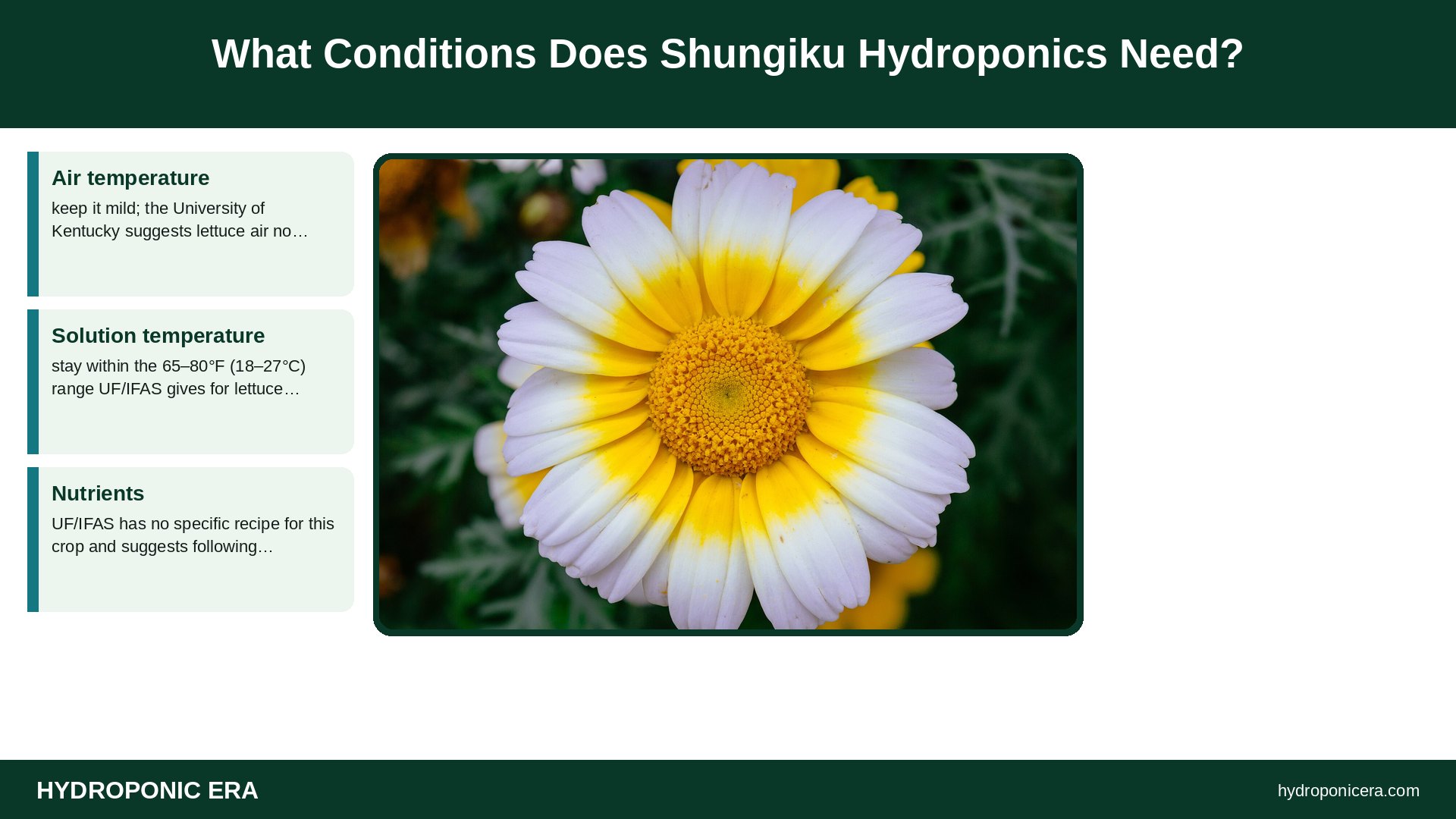
- Air temperature: keep it mild; the University of Kentucky suggests lettuce air no warmer than 75°F (24°C) by day, a useful ceiling here too.
- Solution temperature: stay within the 65–80°F (18–27°C) range UF/IFAS gives for lettuce, ideally at the cool end.
- Nutrients: UF/IFAS has no specific recipe for this crop and suggests following lettuce guidance.
- Oxygen: use an air stone in deep water culture.
For strength adjustments, use our hydroponic lettuce EC guide.
How Do You Start Seeds for Shungiku Hydroponics?
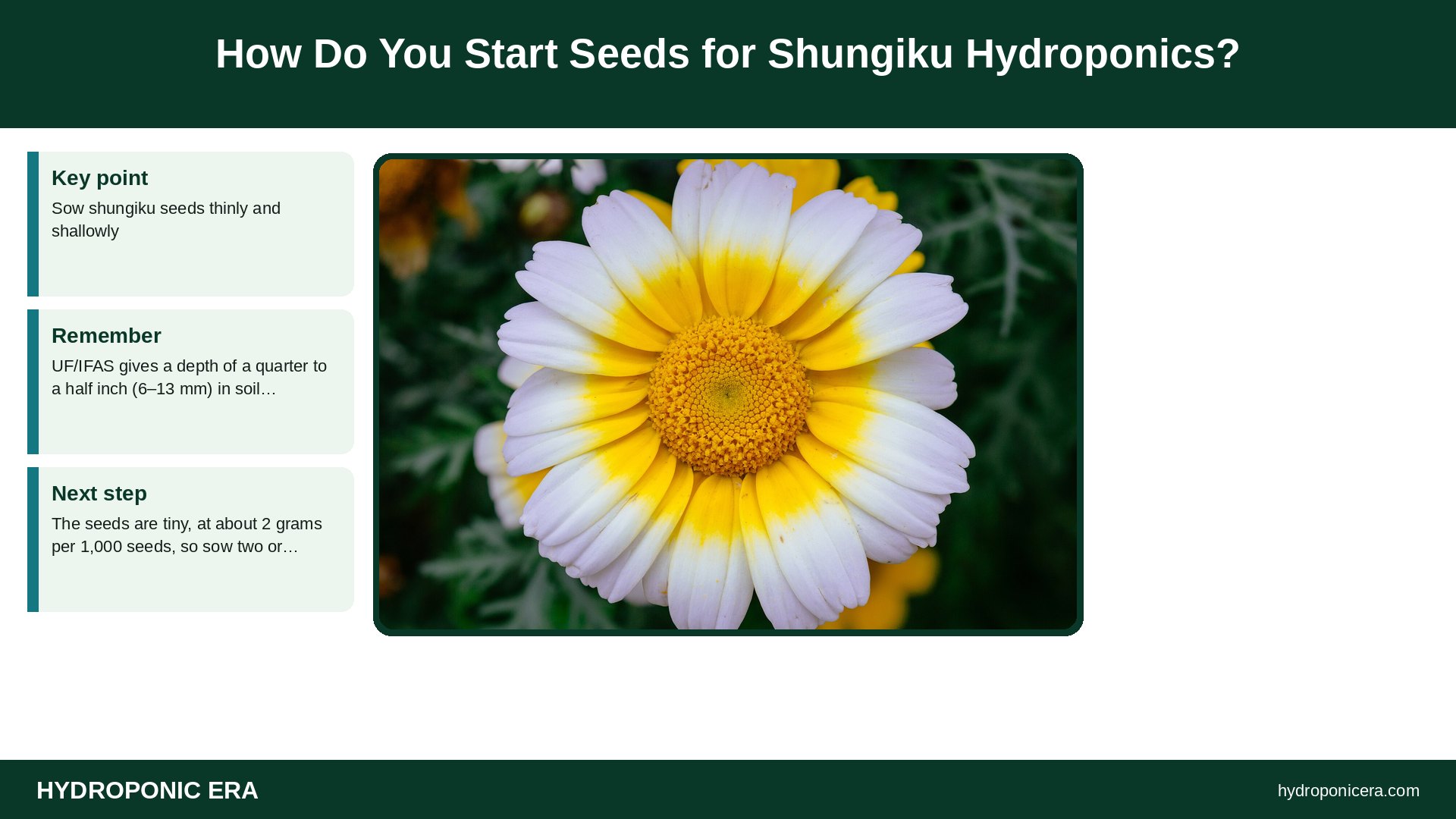
Sow shungiku seeds thinly and shallowly. UF/IFAS gives a depth of a quarter to a half inch (6–13 mm) in soil; in rockwool, press seeds just below the surface. The seeds are tiny, at about 2 grams per 1,000 seeds, so sow two or three per plug and thin to the strongest seedling.
- Pre-soak rockwool or coco plugs in pH-adjusted water.
- Sow two or three seeds per plug and cover lightly.
- Keep plugs moist and bright once seedlings emerge.
- Thin to one seedling per plug.
- Transplant into net cups when roots appear.
For a no-pump option, the Kratky method works well for a short crop like this one.
When Do You Harvest Shungiku Hydroponics Crops?
Harvest shungiku about 40–45 days after sowing, when plants are roughly 8 inches (20 cm) tall, as UF/IFAS Extension advises. For narrow-leaf types, cut once at the base. For broadleaf types, cut the tops of the shoots and leave 1 to 2 branches or 4 to 5 basal leaves so the plant regrows for more harvests.
UF/IFAS notes that broadleaf plantings in Florida fields can be cut about once a week through the season. In indoor shungiku hydroponics, cut whenever new shoots reach a useful length. Harvest before flowering: UF/IFAS says plants bloom about 60 days after seeding, and leaves become tougher and stronger once the plant turns to flower.
Why Is My Shungiku Bitter?
Bitterness in shungiku hydroponics usually comes from heat or from harvesting too late. UF/IFAS Extension says the crop tastes slightly bitter when grown in summer because of high temperatures. Older leaves and plants that are starting to flower are also stronger in flavor. Keep the grow area cool and cut young shoots often.
- Lower the temperature: add airflow and raise lights that heat the canopy.
- Harvest younger: cut at about 8 inches (20 cm) or less.
- Pinch flower buds: remove buds to keep leaf growth going.
- Blanch before eating: a quick blanch softens strong flavors.
Bitterness from heat is common in other leafy crops too. Our lettuce bitterness and bolting guide explains the same pattern in lettuce.
Can Shungiku Be Grown for Flowers?
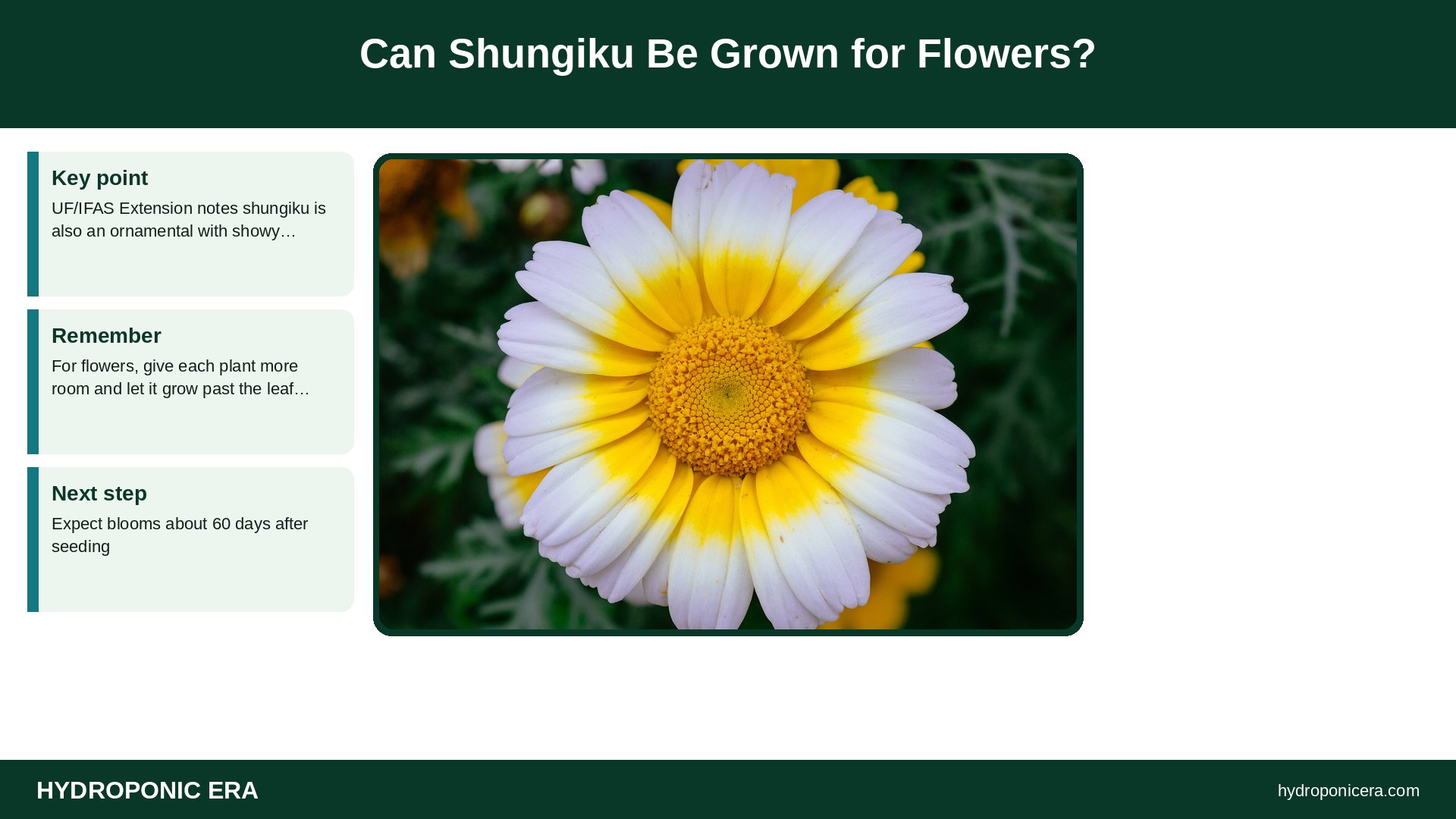
Yes. UF/IFAS Extension notes shungiku is also an ornamental with showy white or yellow flower heads about 1–1.5 inches (2.5–4 cm) across. For flowers, give each plant more room and let it grow past the leaf stage. Expect blooms about 60 days after seeding. Leaves from flowering plants are less tender.
FAQ About Shungiku Hydroponics
Is shungiku the same as chrysanthemum greens?
Yes. Chrysanthemum greens, garland chrysanthemum and tong hao are common names for the same plant.
Can you eat shungiku raw?
Young leaves are used raw in salads; older leaves are usually cooked.
How tall does shungiku grow?
UF/IFAS says plants can reach 1–3 feet (30–90 cm) if left uncut.
How many harvests does shungiku hydroponics give?
Broadleaf types allow multiple cuttings; narrow-leaf types are usually cut once.
Is shungiku invasive?
UF/IFAS notes unmanaged garden stands can crowd out native plants, so do not let it seed outdoors.
Sources
- UF/IFAS Extension — Tong Hao: An Asian Vegetable Expanding in Florida (HS1276)
- Royal Horticultural Society — Glebionis coronaria, crown daisy
- UF/IFAS Extension — Hydroponic Lettuce Production (HS1422)
- University of Kentucky — Hydroponic Lettuce (CCD-CP-63)
- Photo credits (Wikimedia Commons, edited with titles): Edible chrysanthemum leaves by Susan Slater (CC BY-SA 4.0); Glebionis coronaria,or Crown Daisy in the gardens of Darjeeling Tourist Lodge, a property maintained by WBTDC 2 of 2 by Subhrajyoti07 (CC BY-SA 4.0)