
Can you grow gerbera daisy hydroponically? Yes. Gerbera daisy hydroponics works if you protect the crown. Clemson Extension says excessive moisture leads to crown disease and root rot, and both Clemson and UF/IFAS say the crown should dry out between waterings. Use a well-drained substrate such as coco or rockwool in drip or Dutch bucket systems, set the crown above the media, and give bright light.
Key takeaway: Gerbera jamesonii is a South African perennial in the aster family with 3–4 inch (7.6–10 cm) flowers on leafless stems. Its deep roots and rot-prone crown make drain-to-waste or recirculating drip in coarse media a better fit than deep water culture. Clemson notes gerberas can suffer iron and manganese deficiencies, so use a complete nutrient with micronutrients.
| Factor | What sources report | Source |
|---|---|---|
| Botanical name | Gerbera jamesonii (Asteraceae) | NC State; Clemson |
| Flower size | 3–4 inches (7.6–10 cm) across | Clemson; UF/IFAS |
| Plant height | 6–18 inches (15–46 cm) | Clemson Extension |
| Light | Morning sun, afternoon shade in hot climates | Clemson; UF/IFAS |
| Crown | At or slightly above soil level; let it dry | Clemson; UF/IFAS |
| Deficiencies | Iron and manganese | Clemson Extension |
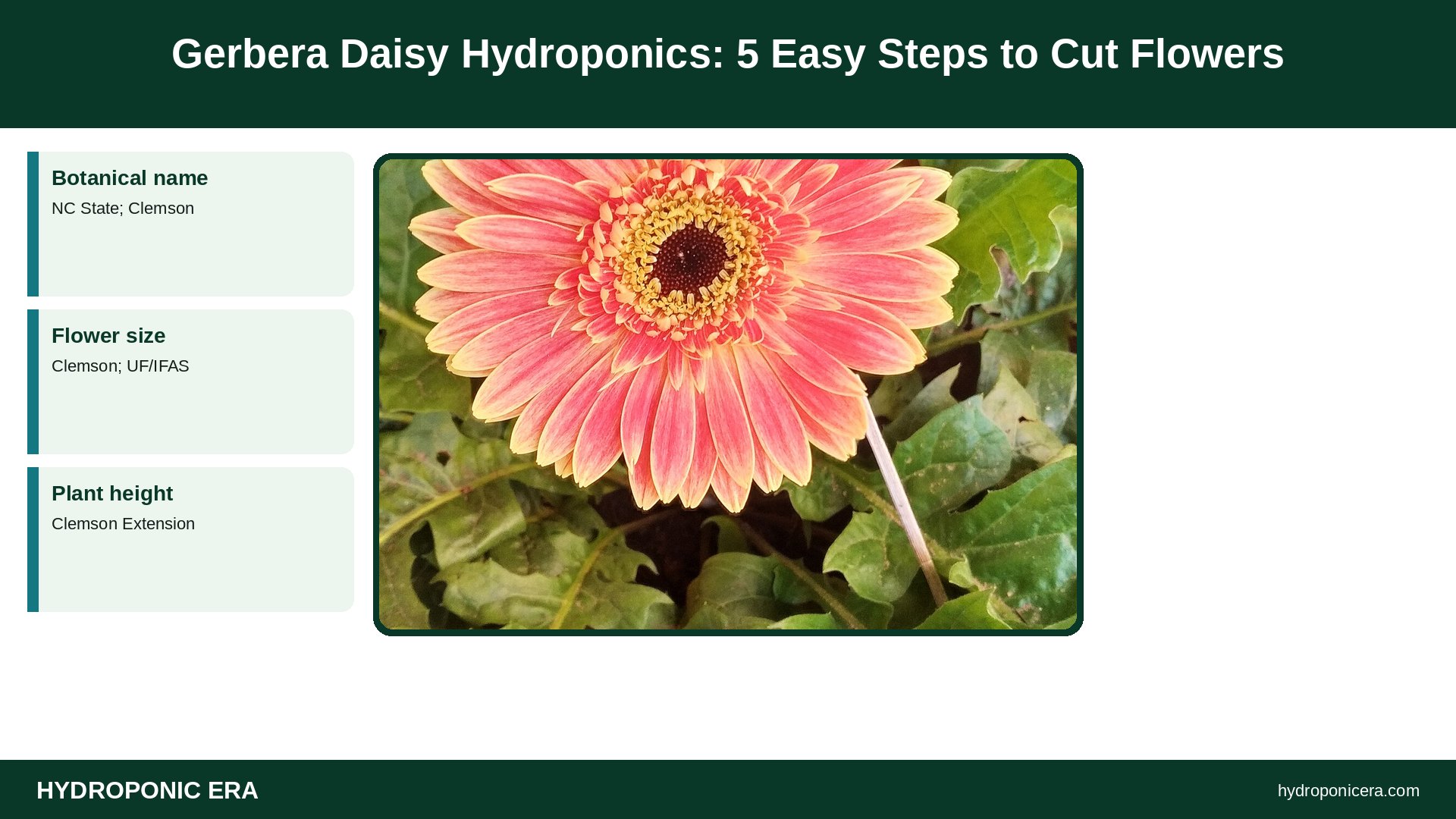
What Is a Gerbera Daisy?
The gerbera daisy is Gerbera jamesonii, a herbaceous perennial in the aster family native to South Africa. NC State Extension says it is the parent of many hybrid gerberas. Flowers sit on leafless stems about 6 inches (15 cm) above a clump of long, slightly fuzzy leaves, and UF/IFAS notes the blooms make long-lasting cut flowers.
Clemson Extension lists colors from yellow, white and pink to red, orange, lavender, salmon and bicolors. NC State adds that most blooms come in spring and fall, though plants can flower at any time. For more flowering crops, see our overview of hydroponic flowers.
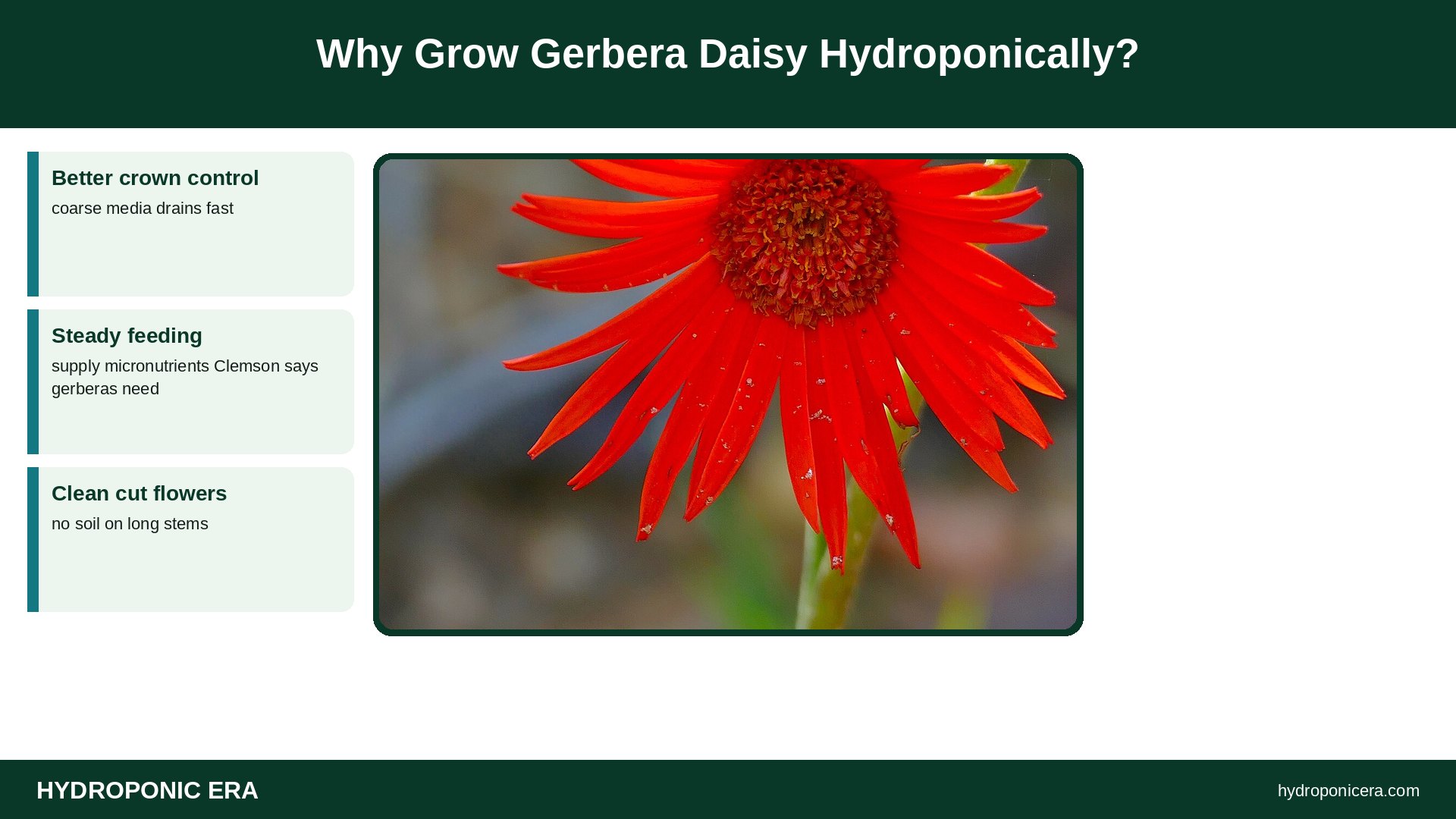
Why Grow Gerbera Daisy Hydroponically?
Gerbera daisy hydroponics gives tight control over watering, which matters for a plant that hates a wet crown. Cut-flower greenhouses commonly grow gerberas in soilless substrate for this reason. At home, a drip or bucket system lets you feed often while the media drains freely.
- Better crown control: coarse media drains fast.
- Steady feeding: supply micronutrients Clemson says gerberas need.
- Clean cut flowers: no soil on long stems.
- Longer season indoors: UF/IFAS notes they can be over-wintered indoors where freezes occur.
How Do You Start Gerbera Daisy Hydroponics?
Start gerbera daisy hydroponics with a young nursery plant or a division, because seed-grown gerberas are slower. UF/IFAS says plants with multiple crowns can be divided with a clean knife, removing dead roots and half the lower leaves. Wash the roots gently and set the plant into coco, perlite or rockwool with the crown sitting above the media.
- Choose a healthy plant with firm, white roots.
- Rinse off potting soil over a bucket.
- Set it in a Dutch bucket or pot of coco–perlite mix.
- Keep the crown at or slightly above the media surface.
- Water in with a mild nutrient solution and keep humidity moderate.
Our guide to Dutch bucket hydroponics for beginners explains a system that suits gerberas well.
What Light and Nutrients Do Gerberas Need?
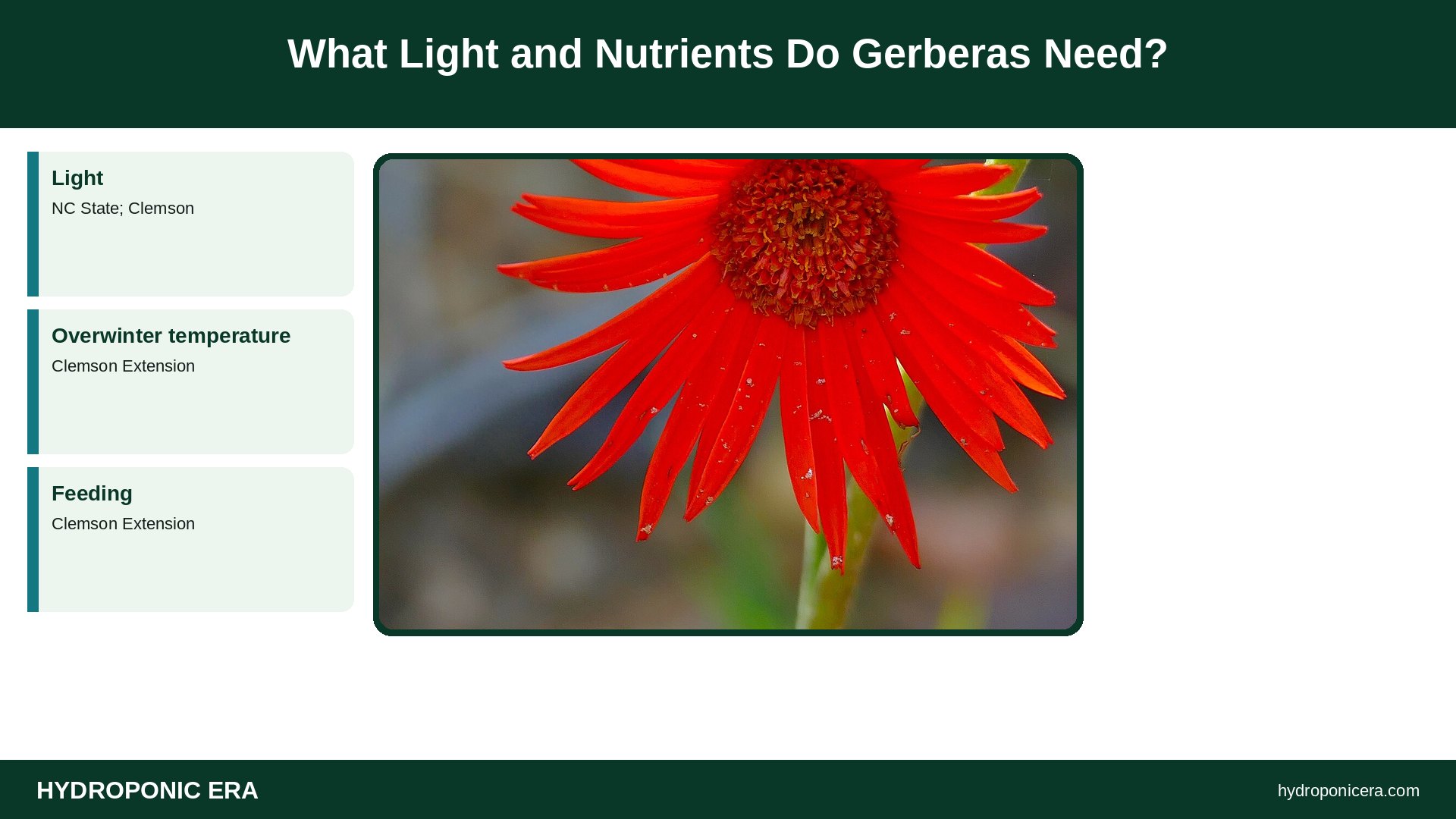
Gerberas need bright light. Clemson and UF/IFAS recommend morning sun with afternoon shade in hot climates, while NC State lists full sun with some protection from hot afternoon sun. Indoors, a strong flowering LED works. Feed a complete solution including iron and manganese, since Clemson notes gerberas often show those deficiencies.
| Setting | Starting point | Basis |
|---|---|---|
| Light | Bright, full-sun equivalent | NC State; Clemson |
| Overwinter temperature | 45–50°F (7–10°C), barely moist | Clemson Extension |
| Feeding | Liquid feed with micronutrients | Clemson Extension |
| Crown moisture | Dry between irrigations | Clemson; UF/IFAS |
Monitor solution strength with our guide to EC and TDS in hydroponics.
What Is the Best System for Gerbera Daisy Hydroponics?
The best system for gerbera daisy hydroponics is drip irrigation into a coarse, fast-draining substrate, such as a Dutch bucket or slab. NC State notes these plants have deep root systems, so give each one a deep container. Deep water culture keeps the crown too wet and is the riskiest choice.
| System | Fit for gerberas | Note |
|---|---|---|
| Dutch bucket drip | Excellent | Deep media, free drainage |
| Coco slab drip | Excellent | Common commercial approach |
| Ebb and flow | Good | Let media drain fully |
| Deep water culture | Poor | Crown and root rot risk |
How Do You Harvest Gerbera Flowers?
Harvest gerbera flowers by pulling or cutting the whole stem at the base once the flower is fully open. Remove spent blooms, as NC State recommends deadheading, so the plant keeps producing. Clemson says gerberas flower from late spring through autumn outdoors, and indoor plants can bloom over a longer period with good light.
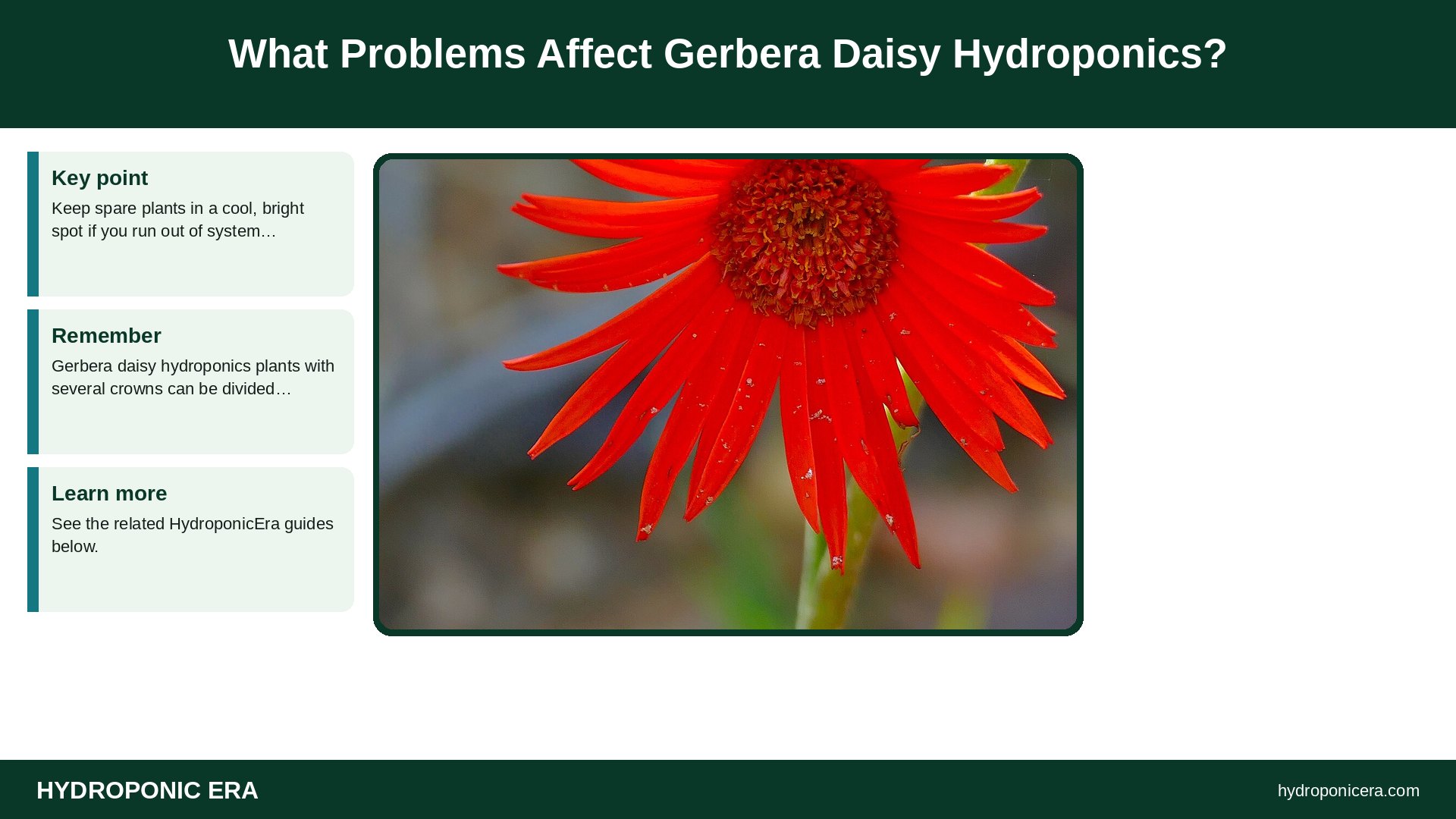
What Problems Affect Gerbera Daisy Hydroponics?
The main problems in gerbera daisy hydroponics are crown rot, root rot and foliar disease. NC State warns soggy conditions cause root rot and lists gray mold and powdery mildew. Clemson lists whiteflies, aphids, thrips and spider mites as common pests, and recommends avoiding overhead watering.
- Collapsed crown: media too wet or crown set too low.
- Yellow new leaves: check iron and manganese supply.
- White powder on leaves: improve airflow for powdery mildew.
- Speckled leaves: inspect for spider mites and thrips.
- Few flowers: raise light intensity and keep feeding regularly.
Keep spare plants in a cool, bright spot if you run out of system space. Gerbera daisy hydroponics plants with several crowns can be divided again later, following the UF/IFAS method, which keeps your system stocked with young, vigorous plants.
Can You Grow Gerbera Daisy Hydroponics From Seed?
Yes. UF/IFAS notes gerbera daisies can be propagated from seed. Sow on the surface of moist plugs, keep them warm and bright, and transplant once true leaves form. Seed-grown plants take longer to flower than nursery plants or divisions, so seed suits patient growers who want many plants.
FAQ About Gerbera Daisy Hydroponics
Can gerbera daisies grow in water only?
Not long term. The crown rots easily, so use a draining substrate.
How deep should the crown be in gerbera daisy hydroponics?
At or slightly above the media surface, as Clemson and UF/IFAS advise.
Why are my hydroponic gerbera leaves yellow?
Iron or manganese deficiency is common, according to Clemson.
Do gerberas need full sun?
Bright light helps, but in hot climates afternoon shade is recommended.
Is gerbera daisy hydroponics good for cut flowers?
Yes. UF/IFAS notes gerbera blooms make long-lasting cut flowers.
Sources
- NC State Extension — Gerbera jamesonii
- Clemson Cooperative Extension — Gerbera daisy
- UF/IFAS Gardening Solutions — Gerbera daisy
- Photo credits (Wikimedia Commons, edited with titles): Gerbera daisy orange001 by Prabhupuducherry (CC BY-SA 4.0); Barberton Daisy (Gerbera jamesonii) (32372962303) by Bernard DUPONT from FRANCE (CC BY-SA 2.0)