
Why are my hydroponic tomato seedlings turning purple? Purple tomato seedlings are usually a stress response, most often to cold roots that slow phosphorus uptake. UMass Extension says cold is the most common cause of phosphorus deficiency in tomatoes, and University of Maryland Extension notes purpling under grow lights is common. Warm the root zone first, then check nutrients and roots.
Key takeaway: Purple tomato seedlings show purple undersides, veins and stems because they build up anthocyanin pigments under stress. Cold temperatures, true phosphorus shortage, root damage, transplant shock and strong light changes can all trigger it. Keep seedlings at 65°F (18°C) or warmer, check roots and only adjust feeding after ruling out cold.
| Cause | What to check | Source |
|---|---|---|
| Cold roots or air | Below 65°F (18°C) daytime | UMass Extension |
| Phosphorus shortage | Tissue or solution test | UConn; UMass |
| Root disease | Brown, rotting roots | UMass Extension |
| Transplant shock | Big temperature change | UConn Extension |
| Light, crowding, airflow | Recent changes in setup | University of Maryland Extension |
| pH problems | P less available below pH 6 in soil | UMass Extension |

What Causes Purple Tomato Seedlings?
Purple tomato seedlings are caused by anthocyanin pigments that build up when the plant is stressed. UConn Extension explains that the purple-red color on lower leaves, stems and leaf undersides signals increased anthocyanins. The most common trigger is cold, which slows root activity and phosphorus uptake even when phosphorus is present.
University of Maryland Extension, answering a grower through Ask Extension, says some purpling of stems and leaf undersides is very common in tomato transplants under supplemental lighting. It lists several possible factors: nutrient levels, temperature, light and humidity changes, crowding and poor airflow.
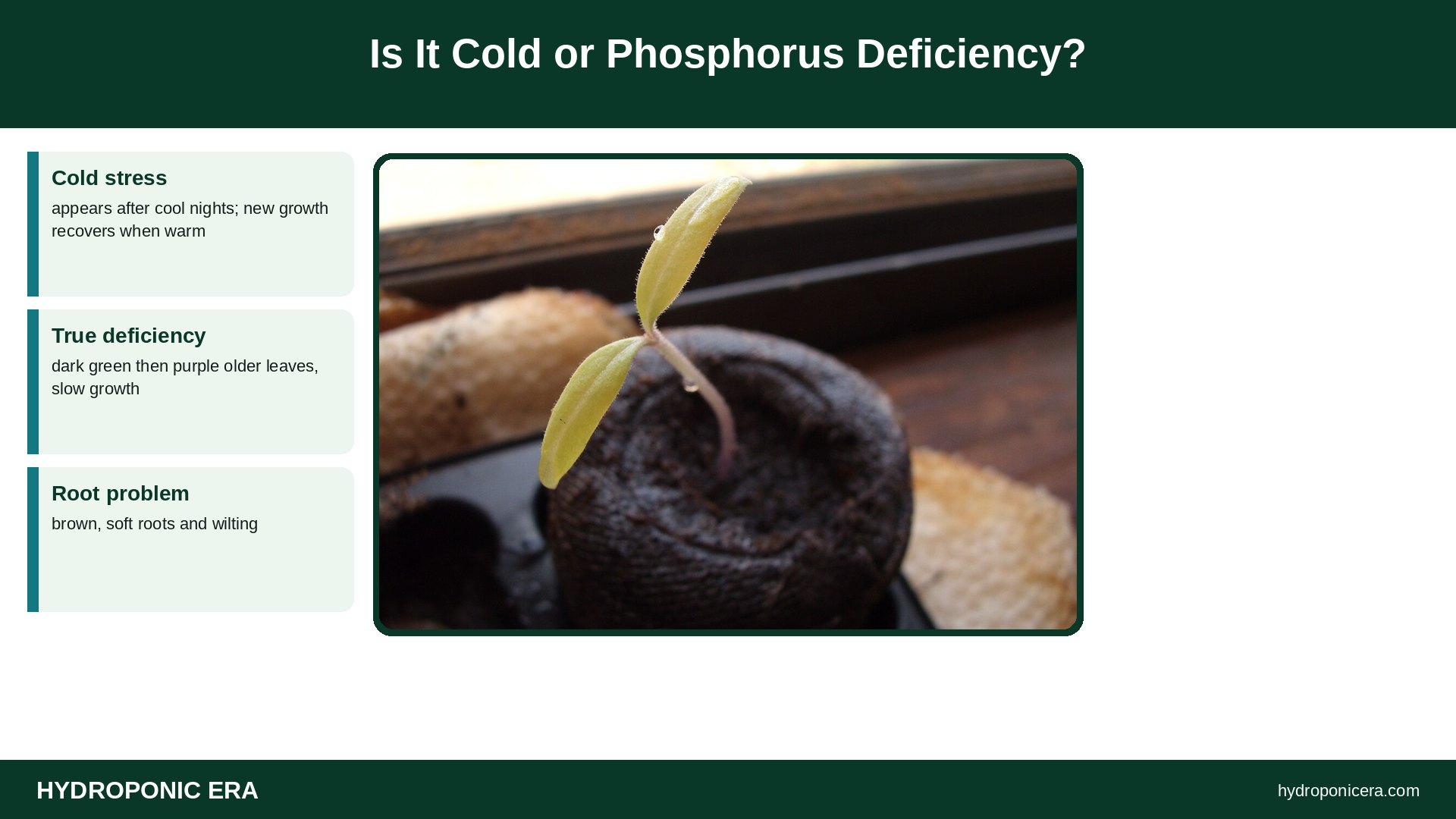
Is It Cold or Phosphorus Deficiency?
Usually cold. UConn Extension calls cold root temperature the most common look-alike of phosphorus deficiency, and UMass says cold is the most common cause of phosphorus deficiency in tomatoes. If purpling appears after cool nights or near a cold window, warm the plants first. A tissue test confirms a true phosphorus shortage.
- Cold stress: appears after cool nights; new growth recovers when warm.
- True deficiency: dark green then purple older leaves, slow growth.
- Root problem: brown, soft roots and wilting.
- Transplant shock: shows right after moving or repotting.
For nutrient-side detail, read our guide to phosphorus deficiency in hydroponics.
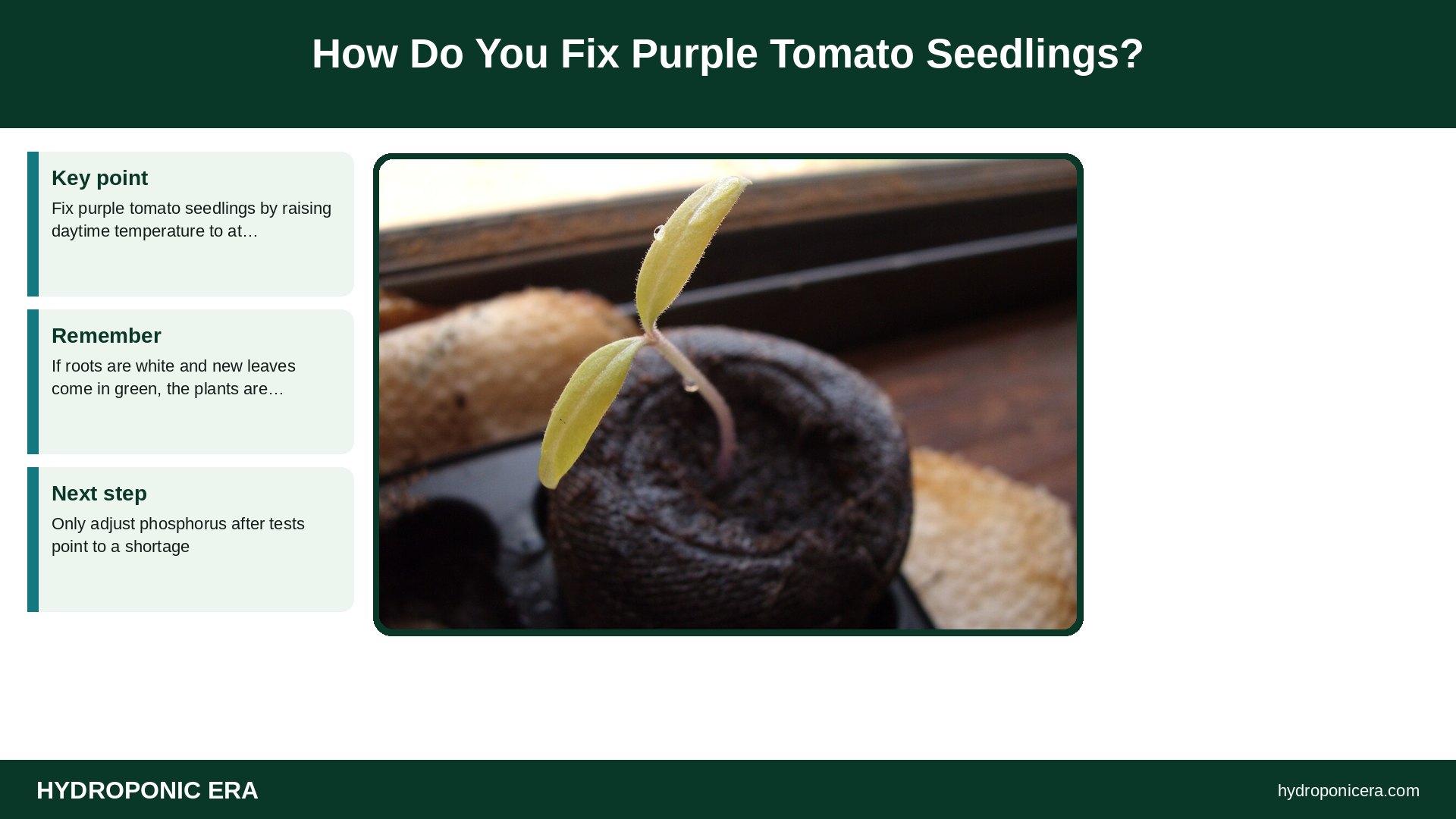
How Do You Fix Purple Tomato Seedlings?
Fix purple tomato seedlings by raising daytime temperature to at least 65°F (18°C), as UMass recommends, keeping the root zone and nutrient solution from running cold, and checking roots. If roots are white and new leaves come in green, the plants are recovering. Only adjust phosphorus after tests point to a shortage.
- Move trays away from cold windows and drafts.
- Use a seedling heat mat to warm cold root zones.
- Check that solution pH is in your crop’s target range.
- Inspect roots for browning or rot.
- Avoid overfeeding seedlings that are simply cold.
- Watch new leaves for normal green color.
Our guide to seedling heat mats and humidity domes covers safe root-zone warming.
Should You Fertilize Purple Tomato Seedlings?
Not right away. University of Maryland Extension advises against fertilizing purple transplants unless they are also yellowing and have grown in the same mix for at least 8 weeks, because extra growth cannot be supported in poor conditions. In hydroponics, seedlings get nutrients constantly, so cold or root problems are more likely causes.
| Situation | Action | Source |
|---|---|---|
| Purple after cool nights | Warm plants; wait for new growth | UMass; Maryland Extension |
| Purple with brown roots | Send roots to a diagnostic lab | UMass Extension |
| Purple with confirmed low P | Adjust nutrient solution | UConn; UMass |
| Purple after moving outside | Harden off gradually | Maryland Extension |
Use a seedling-strength solution rather than a full fruiting formula; see hydroponic nutrients for seedlings.
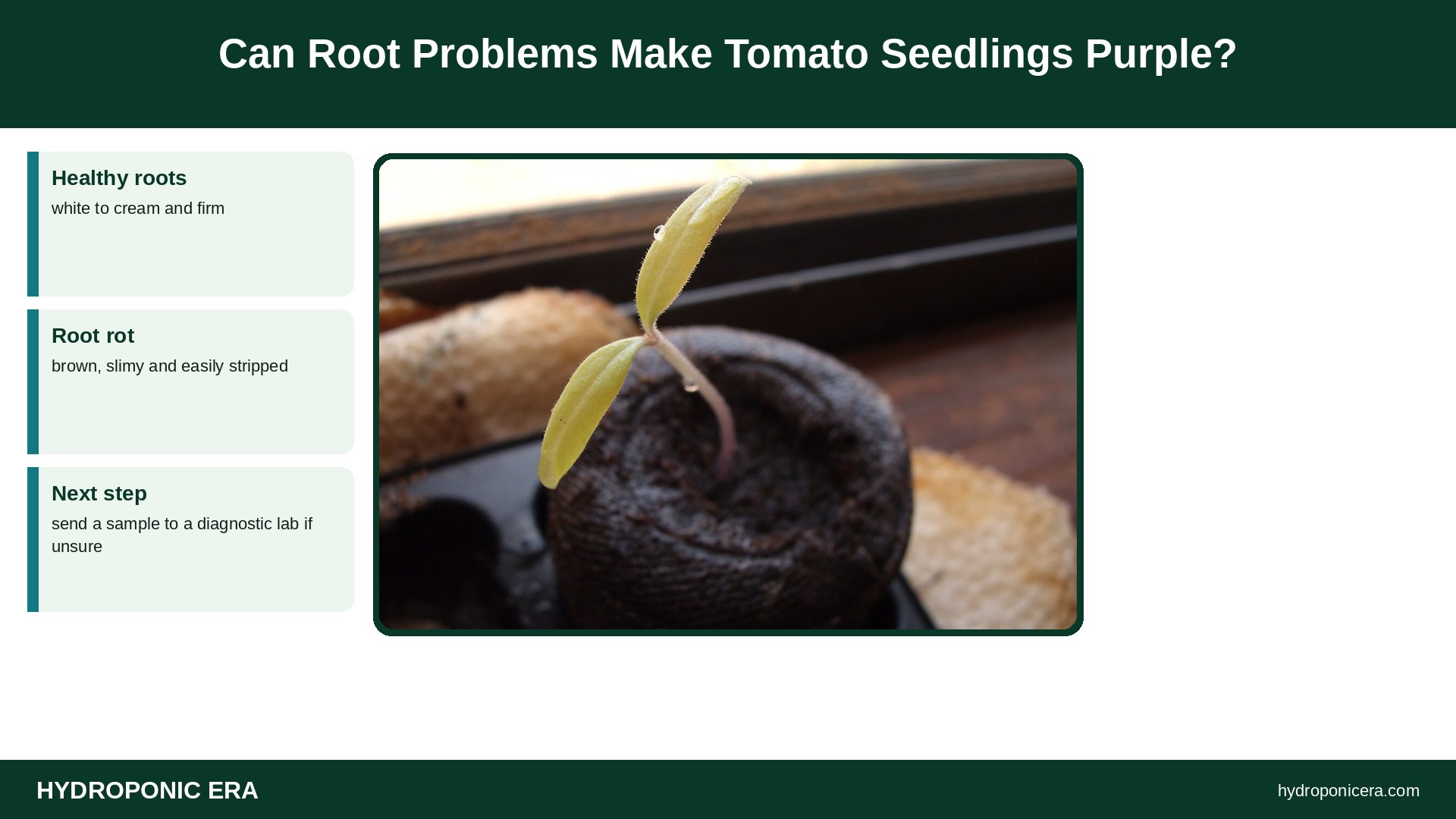
Can Root Problems Make Tomato Seedlings Purple?
Yes. UMass Extension says phosphorus deficiency symptoms can come from root diseases such as Pythium, because damaged roots cannot absorb enough phosphorus. In a hydroponic tray, check that roots are white and firm. Brown, slimy roots point to root rot, which needs a different fix than warming or feeding.
- Healthy roots: white to cream and firm.
- Root rot: brown, slimy and easily stripped.
- Next step: send a sample to a diagnostic lab if unsure.
Will Purple Tomato Seedlings Recover?
Usually. University of Maryland Extension says plants typically grow out of these symptoms once conditions improve. Purple leaves that are already colored may stay that way, but new growth should come in green once temperature, roots and nutrition are right. Seedlings that stay stunted and purple need a closer look at roots.
Purpling can also appear when seedlings move into much brighter light. Maryland Extension recommends introducing indoor-grown plants to outdoor sun gradually over a couple of weeks to avoid damage.
How Do You Confirm What Causes Purple Tomato Seedlings?
Start with a visual check, then look at temperature, and confirm phosphorus deficiency with a test. UConn Extension says visual inspection usually comes first, but growers should also consider temperature and recent environmental changes. A true phosphorus deficiency is confirmed with a soil or tissue test; in hydroponics, a nutrient solution test helps too.
UMass Extension notes that phosphorus deficiency appears first on the oldest leaves, often as purple veins or purple tissue between the veins. UConn lists cold root-zone temperature as the most common look-alike and transplant shock as another, because a big temperature change can trigger the same purple color from anthocyanins.
- Oldest leaves purple first: fits phosphorus shortage.
- Whole tray purple after a cold night: points to cold stress.
- Purple right after moving plants: suggests transplant shock.
- Brown, soft roots: check for root disease.
Does pH Affect Purple Tomato Seedlings?
It can. UMass Extension says improper pH is more often the cause of phosphorus deficiency than a true lack of phosphorus. In hydroponics, keep the nutrient solution in the normal range for tomatoes and check pH whenever you check EC. A drifting pH can lock up phosphorus even when the nutrient mix contains plenty.
FAQ About Purple Tomato Seedlings
Is purple on tomato seedlings always phosphorus deficiency?
No. Cold, transplant shock, light changes and root damage cause similar purpling.
What temperature stops purple tomato seedlings?
UMass recommends a minimum daytime temperature of 65°F (18°C).
Do purple tomato seedlings need more phosphorus?
Only if a test confirms a shortage; cold is the most common cause.
Can you transplant purple tomato seedlings?
Yes. Maryland Extension says plants typically grow out of purpling after planting.
How long until purple tomato seedlings turn green?
New leaves usually come in green after conditions improve; old leaves may stay purple.
Sources
- UMass Extension — Phosphorus deficiency in tomatoes
- UConn Extension — Tomato phosphorus deficiency
- University of Maryland Extension via Ask Extension — Purple leaves and stems on tomato seedlings
- Photo credits (Wikimedia Commons, edited with titles): Tomato Seedling Full Resolution by Jake7401 (talk) (Public domain)