
Can pepper bacterial leaf spot infect hydroponic peppers? Yes. Pepper bacterial leaf spot is caused by Xanthomonas bacteria that arrive on seed, transplants or contaminated tools, not from the soil. UConn Extension says it is found mainly on greenhouse pepper transplants, and NC State reports it spreads quickly through overhead watering and handling of wet plants, which can happen in any grow room.
Key takeaway: Pepper bacterial leaf spot starts as small, water-soaked spots on leaves that turn dark brown and greasy, then leaves yellow and drop. It travels on seed, transplants, splashing water and wet hands. Clean seed, resistant varieties, dry leaves and quick removal of infected plants are the main defenses in hydroponics.
| Factor | What sources report | Source |
|---|---|---|
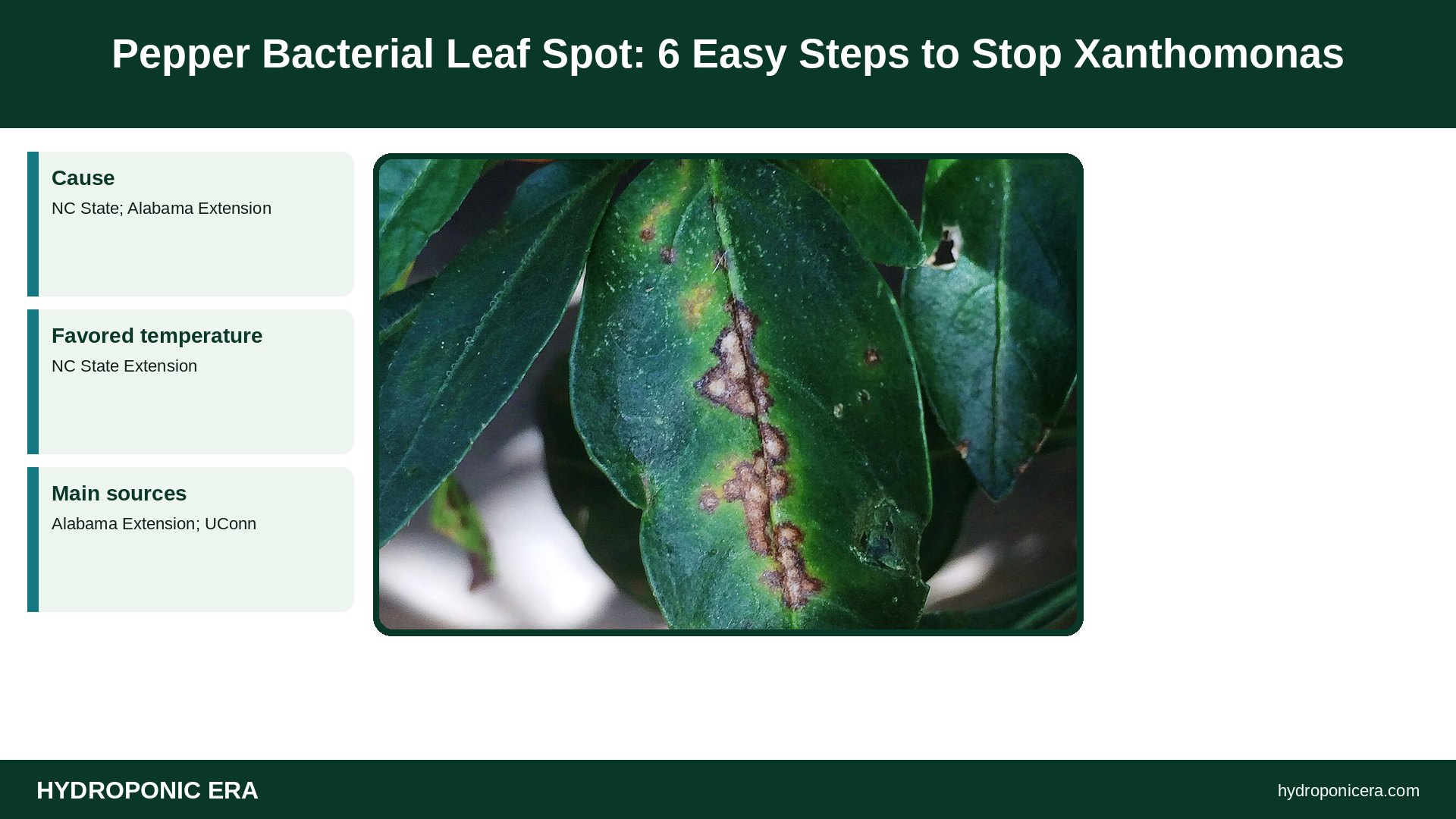
| Cause | Xanthomonas species (four) | NC State; Alabama Extension |
| Favored temperature | 75–86°F (24–30°C) | NC State Extension |
| Main sources | Seed, transplants, debris, tools | Alabama Extension; UConn |
| Spread | Water splash, handling wet plants | NC State; UConn |
| Leaf spots | Under 1/4 inch (6 mm) at first | UConn Extension |
| Soil survival | Cannot survive alone in soil | Alabama Extension |
What Is Pepper Bacterial Leaf Spot?
Pepper bacterial leaf spot, also called bacterial spot, is caused by four Xanthomonas species. NC State Extension says X. euvesicatoria is the main species on pepper in North Carolina, and the disease also hits tomatoes. Alabama Extension calls it the most common disease of peppers in Alabama, reducing both yield and fruit quality.
UConn Extension notes it is found primarily on pepper transplants grown in greenhouses. The bacteria can live inside or on the seed, and cotyledons become infected as they push against the infected seed coat during germination.
How Do You Identify Pepper Bacterial Leaf Spot?
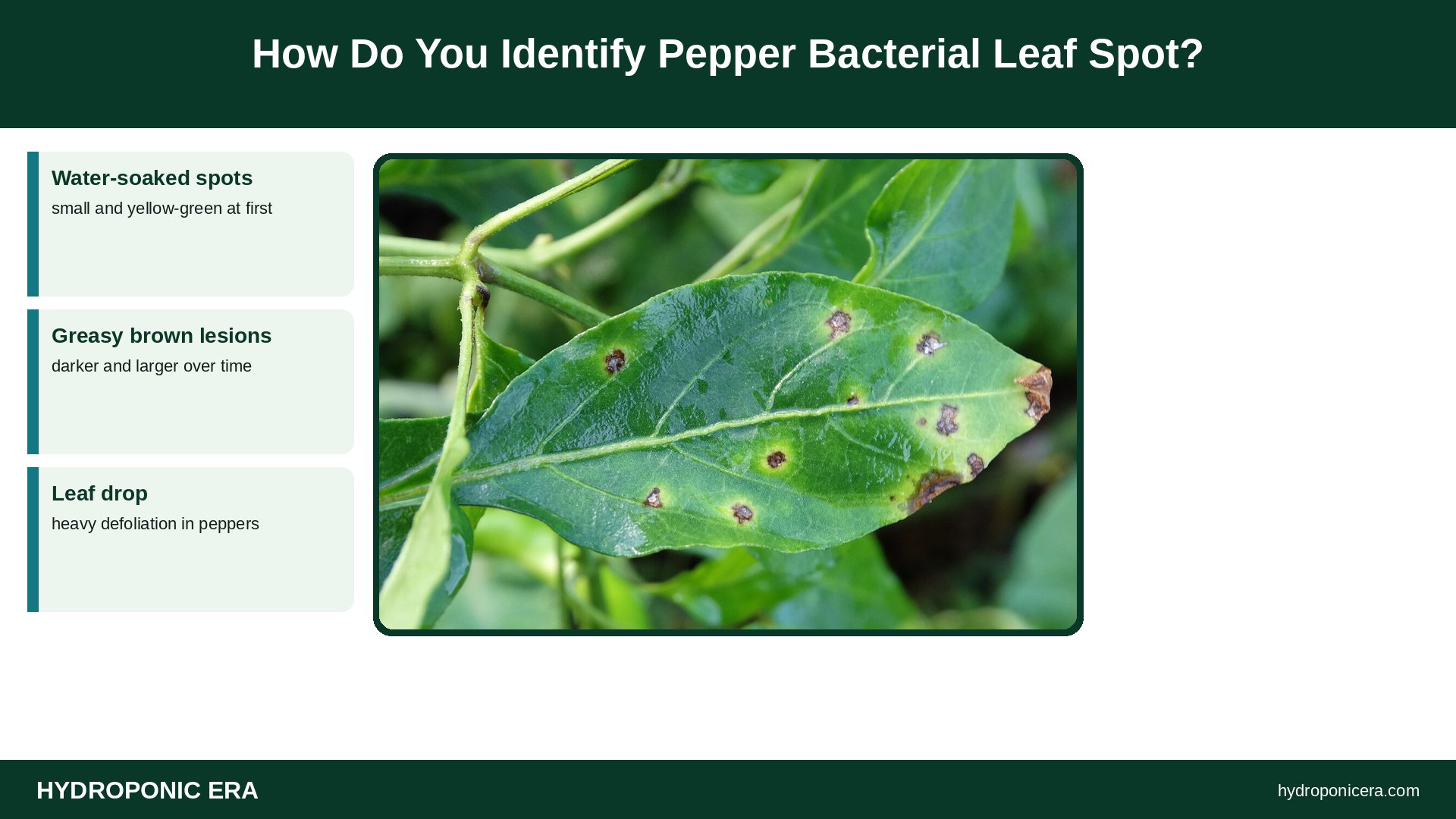
Identify pepper bacterial leaf spot by small, yellow-green, water-soaked spots on young leaves that become dark, chocolate-brown and greasy, especially at leaf tips and edges. UConn says spots start under 1/4 inch (6 mm) and merge, making leaves look scorched. Unlike fungal spots, they have no rings or powdery spores.
- Water-soaked spots: small and yellow-green at first.
- Greasy brown lesions: darker and larger over time.
- Leaf drop: heavy defoliation in peppers.
- Raised fruit spots: scabby, cracked bumps on green fruit.
Alabama Extension says the defoliation often leads to blossom drop and sunscald on exposed fruit. See our guide to pepper sunscald if fruit develop pale, papery patches.
How Does Pepper Bacterial Leaf Spot Spread in Hydroponics?
It spreads from infected seed or transplants, then moves between plants in water droplets, on hands and on tools. NC State says bacteria swim in water films and enter through leaf pores and wounds. In greenhouses, overhead irrigation spread it about 2 meters (6.5 feet (2 m)) to neighboring plants within three weeks.
UConn lists overhead watering, high humidity, warm temperatures and close spacing as conditions that favor spread, and adds that bacteria may survive in debris in reused plug trays. Alabama Extension notes high nitrogen levels also favor the disease, because lush growth is easier to infect.
How Do You Prevent Pepper Bacterial Leaf Spot in Hydroponics?
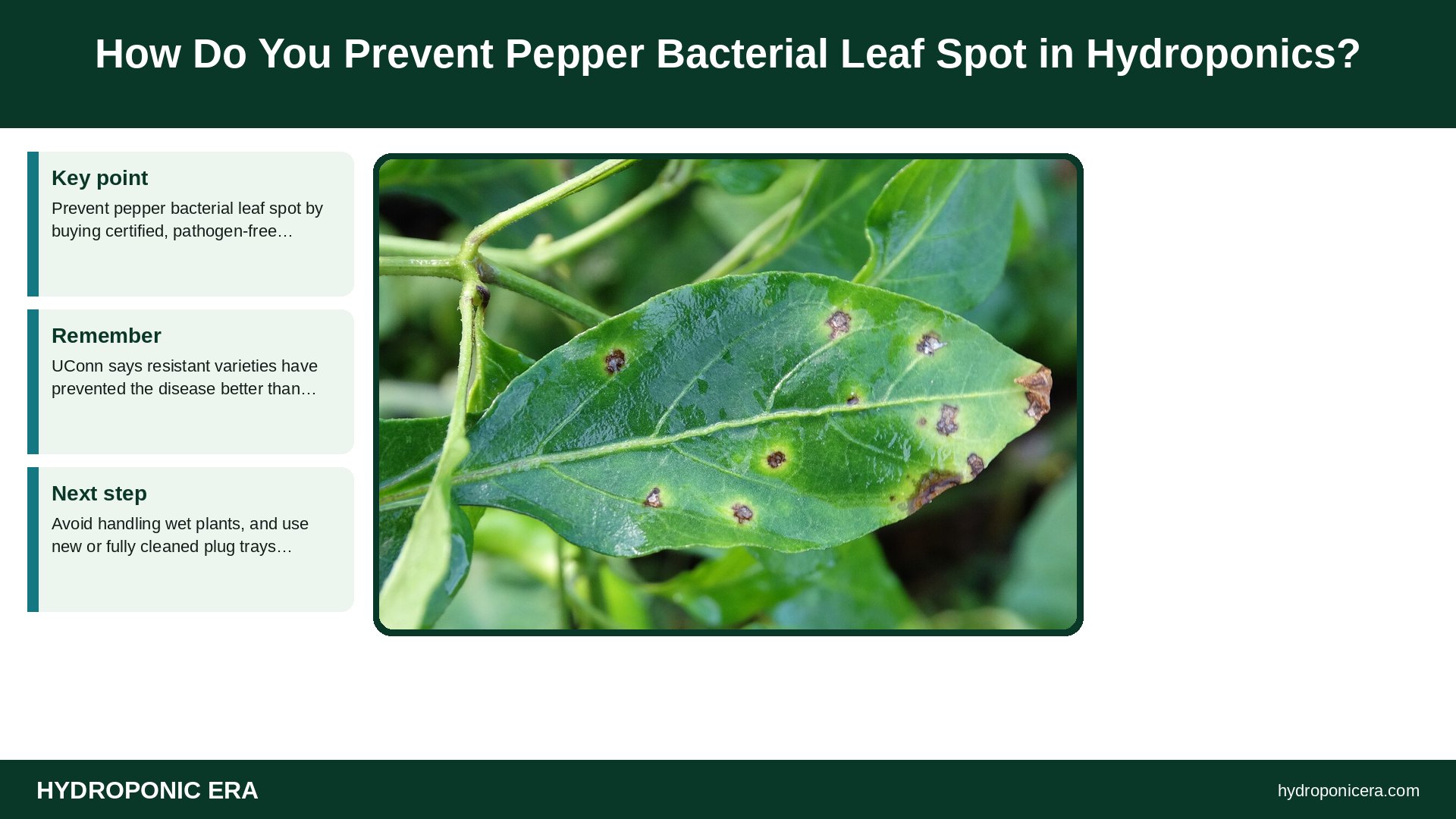
Prevent pepper bacterial leaf spot by buying certified, pathogen-free or hot-water-treated seed, inspecting transplants, growing resistant varieties and keeping leaves dry. UConn says resistant varieties have prevented the disease better than a weekly spray program. Avoid handling wet plants, and use new or fully cleaned plug trays for every crop.
- Buy certified or hot-water-treated seed.
- Inspect and quarantine all transplants.
- Choose bell peppers with bacterial spot resistance.
- Water at the roots and keep foliage dry.
- Avoid excess nitrogen that makes soft growth.
- Do not prune or tie plants while leaves are wet.
Our list of best pepper varieties for hydroponics and our guide to quarantining new plants and clones can help you start clean.
How Do You Treat Pepper Bacterial Leaf Spot?
There is no cure once plants are infected, so remove and destroy infected plants and the plants next to them, then keep the rest dry. NC State says no curative products exist and labeled copper products work only as protectants. UConn notes chemical control has mixed results, and spraying can splash bacteria further.
| Action | Purpose | Source |
|---|---|---|
| Remove infected and adjacent plants | Stop spread | UConn; NC State |
| Stop overhead watering | Less splash | NC State Extension |
| Labeled copper (protectant) | Shield healthy leaves | NC State Extension |
| Clean trays, benches, tools | Remove bacteria | NC State; UConn |
Read and follow every product label. After the crop, follow a full clean-out of trays, channels and tools before replanting peppers or tomatoes.
Are Some Peppers Resistant to Bacterial Leaf Spot?
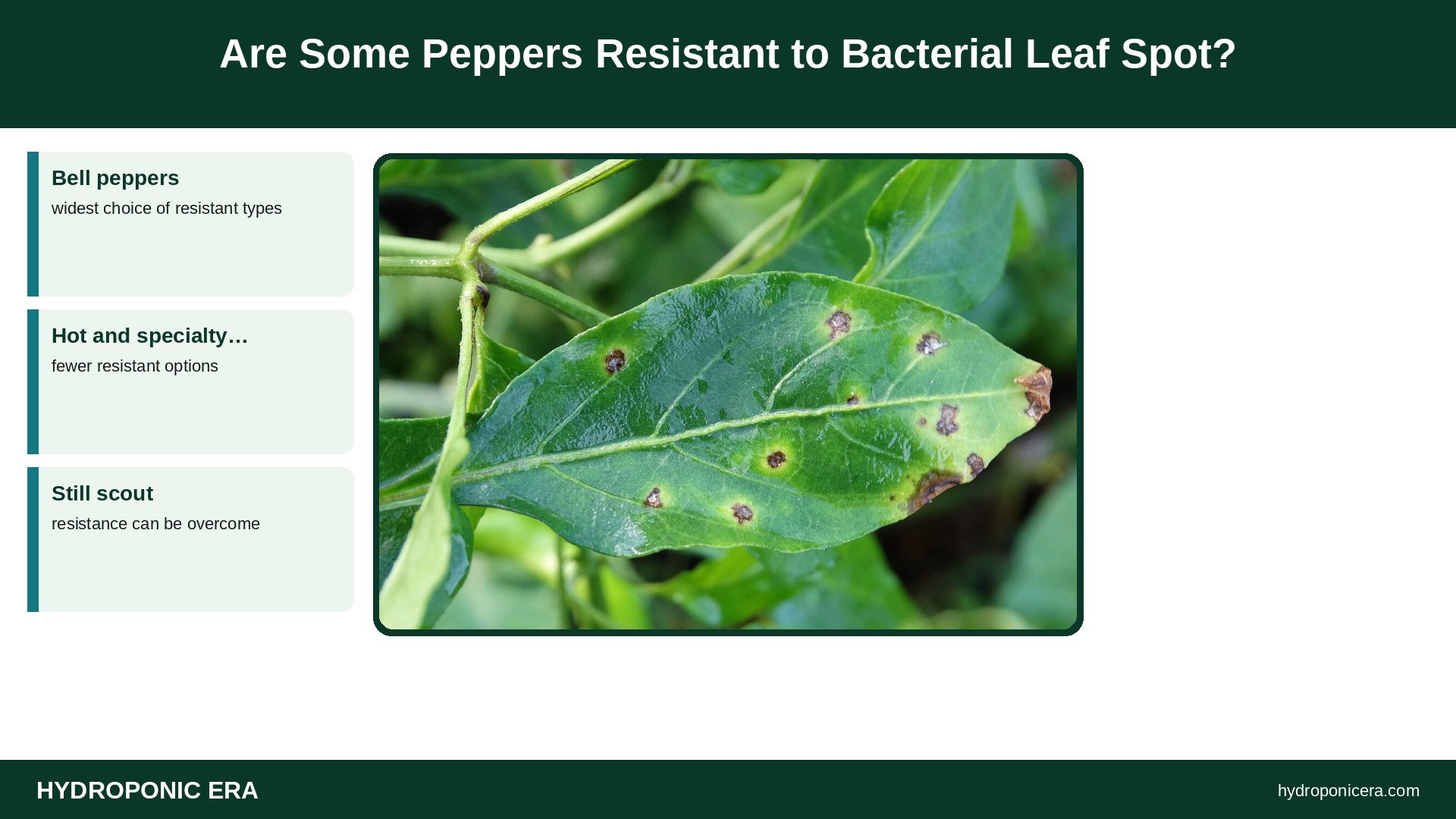
Yes. UConn Extension says many resistant bell pepper varieties are available, with fewer choices among specialty peppers. Some bacterial strains can still overcome known resistance genes, so resistant varieties work best combined with clean seed and dry leaves. Check seed catalogs for bacterial leaf spot or “BLS” resistance codes.
- Bell peppers: widest choice of resistant types.
- Hot and specialty peppers: fewer resistant options.
- Still scout: resistance can be overcome.
How Is Pepper Bacterial Leaf Spot Different From Fungal Spots?
Bacterial spots look greasy and lack rings or powdery growth. UConn says that unlike fungal spots, they show no concentric rings and leave no spore residue when wiped with a damp tissue. NC State adds that labs confirm bacteria by seeing them stream from cut tissue under a microscope.
Nutrient problems can also brown pepper leaves, but they usually show even patterns across leaves rather than scattered greasy spots. When in doubt, send a sample to an extension plant clinic. Pruning infected plants spreads bacteria, so wait for the diagnosis before you follow our hydroponic pepper pruning routine.
What Conditions Favor Pepper Bacterial Leaf Spot Indoors?
Warm, humid, wet-leaf conditions favor pepper bacterial leaf spot. Alabama Extension says night temperatures of 75–82°F (24–28°C) favor the disease, while temperatures below 61°F (16°C) suppress its progress. Long periods of high humidity and leaf wetness add risk, so ventilation and fast leaf drying matter in a grow room or greenhouse.
- Ventilate: manage humidity with good air exchange.
- Water early: give foliage time to dry, per Alabama Extension.
- Separate crops: keep tomato and pepper seedlings apart.
- Handle less: avoid touching or moving wet plants.
FAQ About Pepper Bacterial Leaf Spot
Can pepper bacterial leaf spot spread through nutrient solution?
Main spread is splashing water, wet hands, tools, seed and transplants.
Are peppers with bacterial spots safe to eat?
Spots are a quality problem; they stay shallow but lower market value.
Does pepper bacterial leaf spot affect tomatoes?
Yes. NC State says the same Xanthomonas group causes bacterial spot on tomato.
How long does pepper bacterial leaf spot survive?
Alabama Extension says up to a year on crop debris.
Can I save seed from infected peppers?
No. Seed can carry the bacteria, according to UConn.
Sources
- UConn Extension — Preventing bacterial leaf spot on pepper transplants
- NC State Extension — Bacterial spot of pepper and tomato
- Alabama Cooperative Extension System — Bacterial spot of tomato and pepper
- Photo credits (Wikimedia Commons, edited with titles): Bacterial leaf spot of pepper (14954536360) by Scot Nelson (CC0); Bacterial leaf spot of pepper (Capsicum sp.) (43614805831) by Scot Nelson (CC0)