
Is a basement grow room a good idea? Yes, if you control moisture and electricity. Washington State University Extension lists a heated basement as a suitable spot for an indoor grow stand with good artificial lighting. The EPA advises keeping indoor humidity below 60 percent, and ESFI notes basement outlets require GFCI protection. Fix leaks before adding water-filled systems.
Key takeaway: A basement grow room works when you add lights, ventilation, humidity control and GFCI-protected outlets.
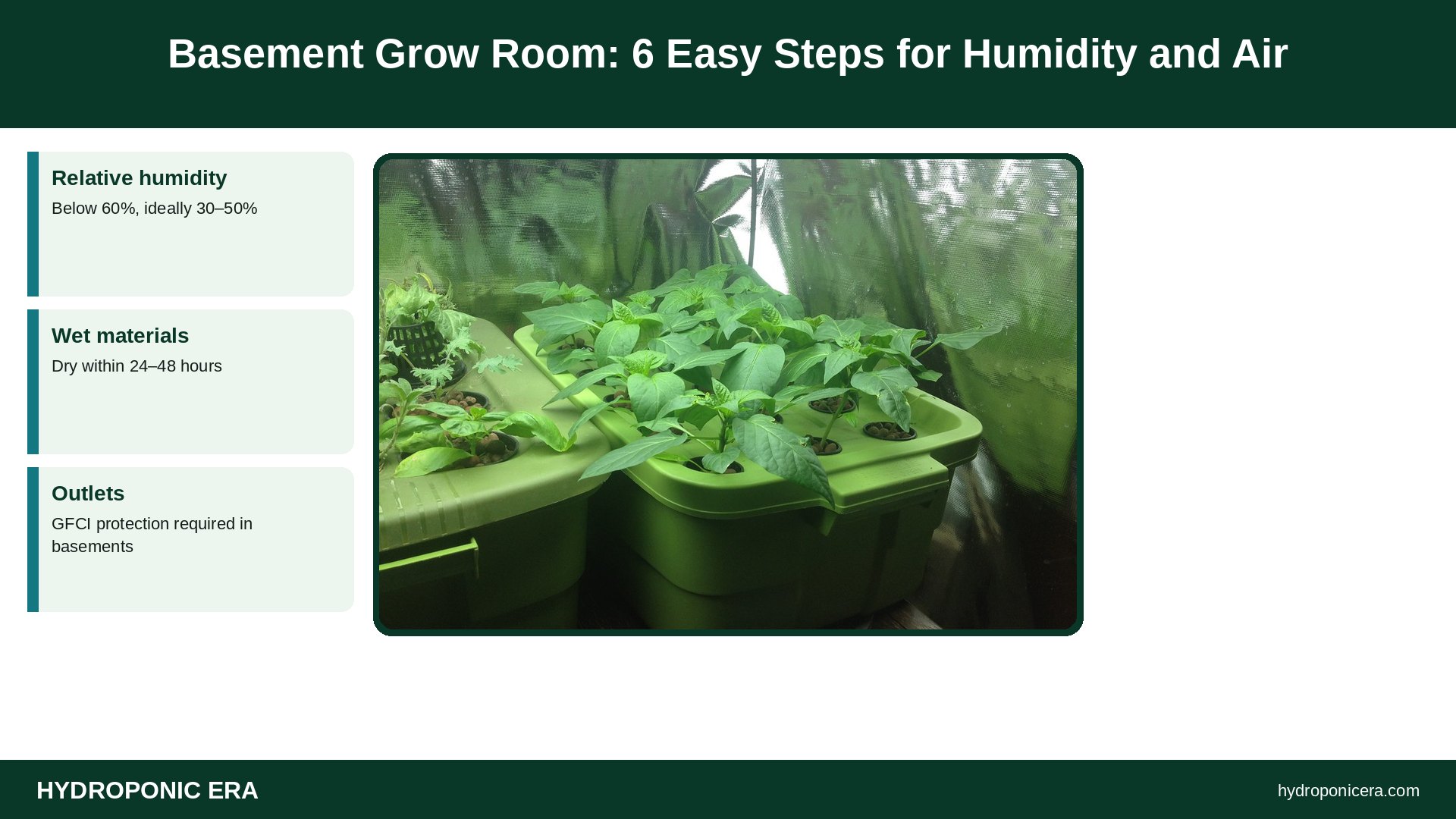
| Basement grow room factor | Target or rule | Source |
|---|---|---|
| Relative humidity | Below 60%, ideally 30–50% | US EPA |
| Wet materials | Dry within 24–48 hours | US EPA |
| Outlets | GFCI protection required in basements | ESFI |
| LED height | 10–30 inches (25–76 cm), per maker | WSU Extension |
| Fluorescent height | 1–3 inches (2.5–7.6 cm) | WSU Extension |
Can You Turn a Basement Into a Grow Room?
Yes. Washington State University Extension says that with good artificial lighting you can use a dark corner, unused room or heated basement for a grow stand. It adds that you are working with dirt and water, so keep stands away from carpets and wood floors, and locate them near a power source for lights and heat pads.
Plan the space with our grow tent hydroponics setup guide.
How Do You Control Humidity in a Basement Grow Room?
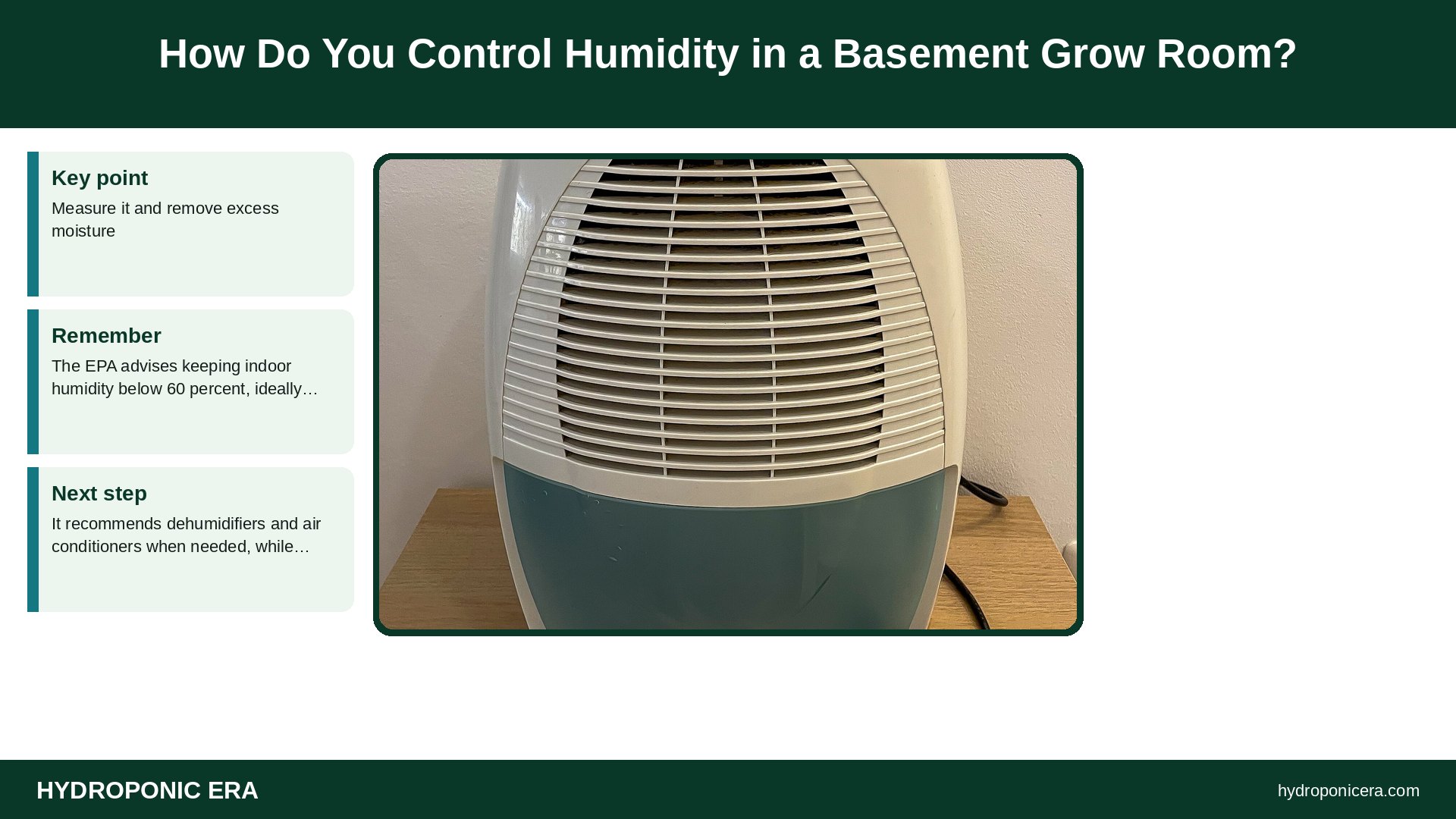
Measure it and remove excess moisture. The EPA advises keeping indoor humidity below 60 percent, ideally between 30 and 50 percent, measured with an inexpensive humidity meter. It recommends dehumidifiers and air conditioners when needed, while making sure the appliances themselves do not become sources of biological pollutants through poor cleaning.
Size equipment with our dehumidifiers and humidifiers for indoor hydroponics guide.
Why Does a Basement Grow Room Need Ventilation?
Plants add moisture to the air. WSU Extension says to make sure you have good ventilation to keep you and the plants healthy. The EPA lists condensation on windows, walls or pipes as a sign of high humidity, and notes water can seep through basement floors, so fix leaks and seepage before you start.
Pick airflow gear with our hydroponic airflow and fans guide.
What Electrical Safety Rules Apply to a Basement Grow Room?
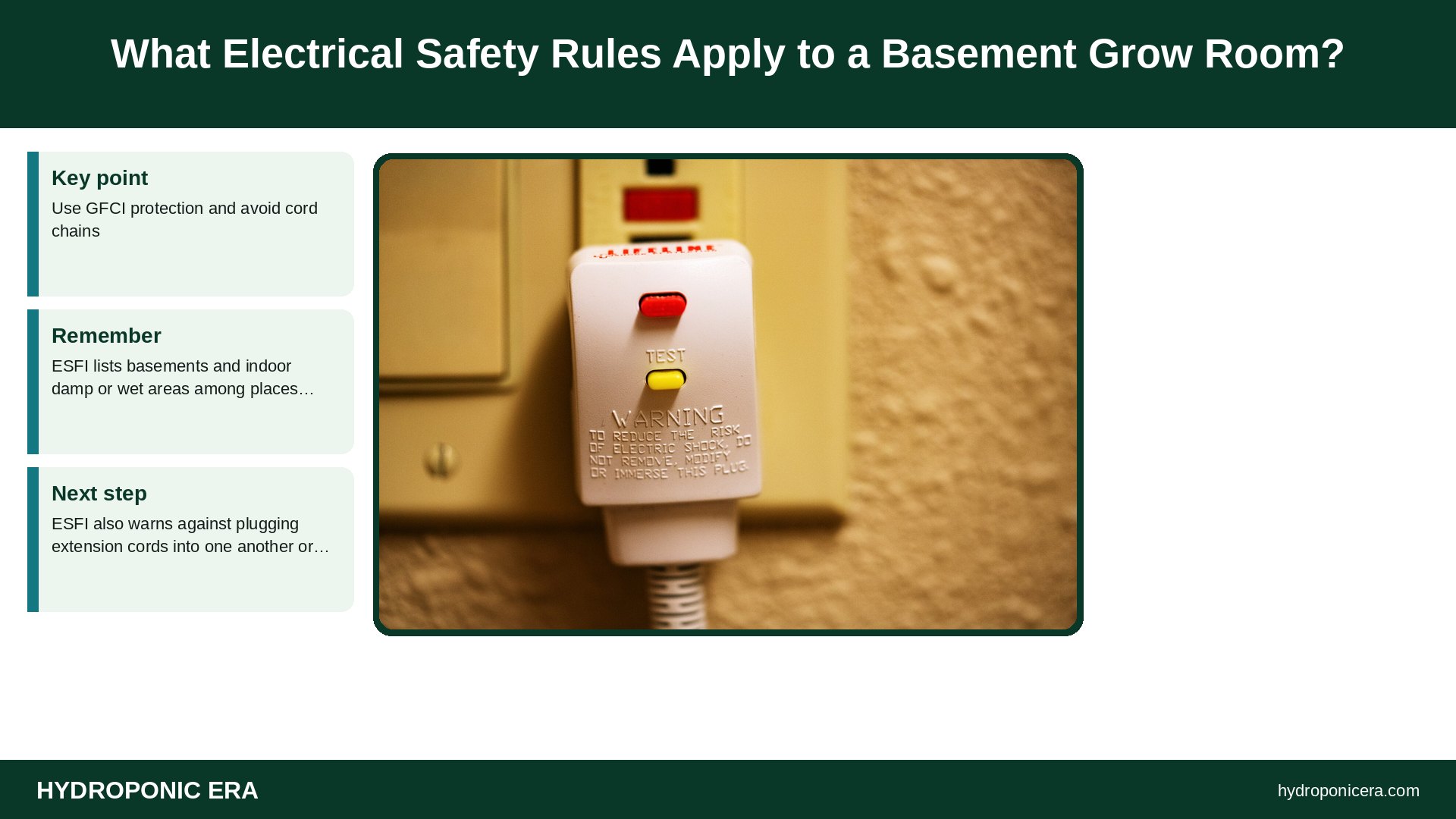
Use GFCI protection and avoid cord chains. ESFI lists basements and indoor damp or wet areas among places requiring GFCIs, which shut off power when a ground fault occurs, such as when equipment gets wet. ESFI also warns against plugging extension cords into one another or using them as a substitute for permanent wiring.
- Press RESET on the GFCI outlet.
- Plug in a nightlight; it should turn on.
- Press TEST; the light should turn off.
- Press RESET again; the light should turn back on.
- Replace the GFCI if test or reset fails.
How High Should Grow Lights Hang in a Basement Grow Room?
It depends on the lamp. WSU Extension says fluorescent lights should hang 1 to 3 inches (2.5 to 7.6 cm) above plants, with tubes fully covering the trays. LED grow lights go 10 to 30 inches (25 to 76 cm) above plants, following the maker’s directions, and you should watch that plants do not grow into the lights.
How Many Hours of Light Does a Basement Grow Room Need?
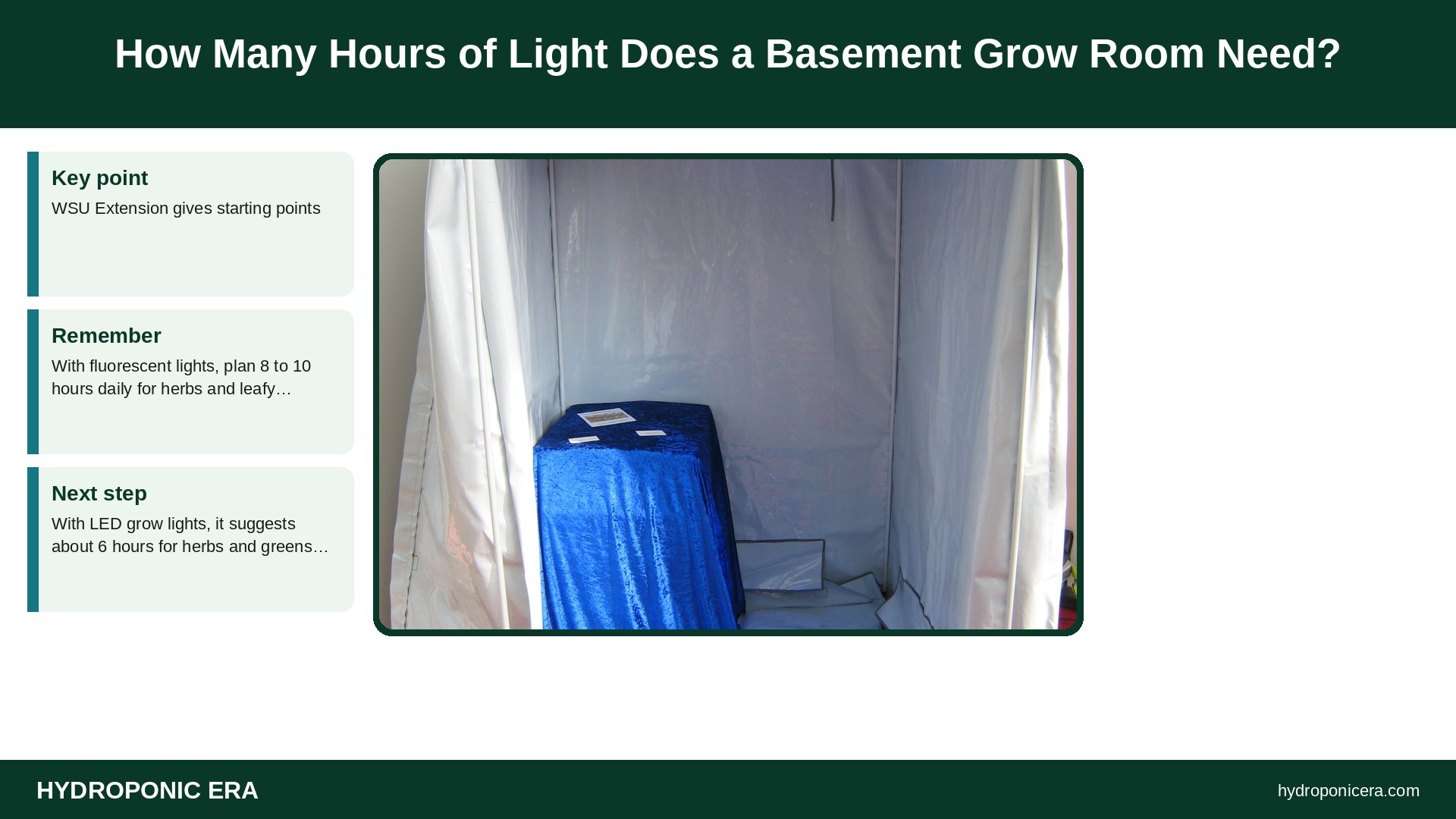
WSU Extension gives starting points. With fluorescent lights, plan 8 to 10 hours daily for herbs and leafy greens and 12 to 14 hours for vegetable starts. With LED grow lights, it suggests about 6 hours for herbs and greens and 8 to 10 hours for starts, then adjusting height and duration to your setup.
What Crops Fit a Small Indoor Setup?
Match crops to tray count. WSU Extension says one 10 by 20 inch (25 by 51 cm) tray suits herbs, while two trays fit lettuce, spinach, fennel and microgreens. With four trays, it suggests one dedicated seed-starting tray and three staggered trays, which can produce enough salad to feed two people.
Track moisture targets with our humidity and VPD indoor hydroponics guide.
Which Lights Should You Avoid Indoors?
Skip incandescent bulbs. WSU Extension says they use much more energy and generate a lot of heat, which can dry out leaves. It notes fluorescent tubes are an inexpensive option, though glass bulbs break easily, while LED grow lights give the highest intensity, are energy efficient and are rated for long life.
What Should You Do If Water Spills in a Basement Grow Room?
Dry it quickly. The EPA says that if wet or damp materials are dried within 24 to 48 hours after a leak or spill, in most cases mold will not grow. WSU suggests protecting floors with office chair mats, a white shower curtain on the wall, and keeping heat pads out of direct contact with water.
FAQ About a Basement Grow Room
Can I use a space heater on an extension cord?
No. ESFI says not to use extension cords or power strips with heaters or fans.
Is a basement too cold to grow?
WSU specifically names a heated basement as suitable.
Do I need a dehumidifier?
Use one if humidity stays above the EPA’s 60 percent limit.
Can cords run through walls?
No. ESFI warns covered cords can overheat.
Sources
- Washington State University Extension (Skagit County Master Gardeners) — Indoor Grow Stand
- US Environmental Protection Agency — A Brief Guide to Mold, Moisture and Your Home
- Electrical Safety Foundation International — How to Use GFCIs
- Electrical Safety Foundation International — Use Extension Cords Properly
- Photo credits (Wikimedia Commons and Flickr, edited with titles): Sadly legal grow room by dollen via Flickr (CC BY 2.0); Air dehumidifier with a European plug by Photograph by Mike Peel (www.mikepeel.net). (CC BY-SA 4.0); Hair Dryer Electric Plug with GFCI (33349600028) by Tony Webster from Minneapolis, Minnesota, United States (CC BY 2.0); Led digital visuals-leds in grow box PNr°0082 by D-Kuru (CC BY-SA 3.0 at)