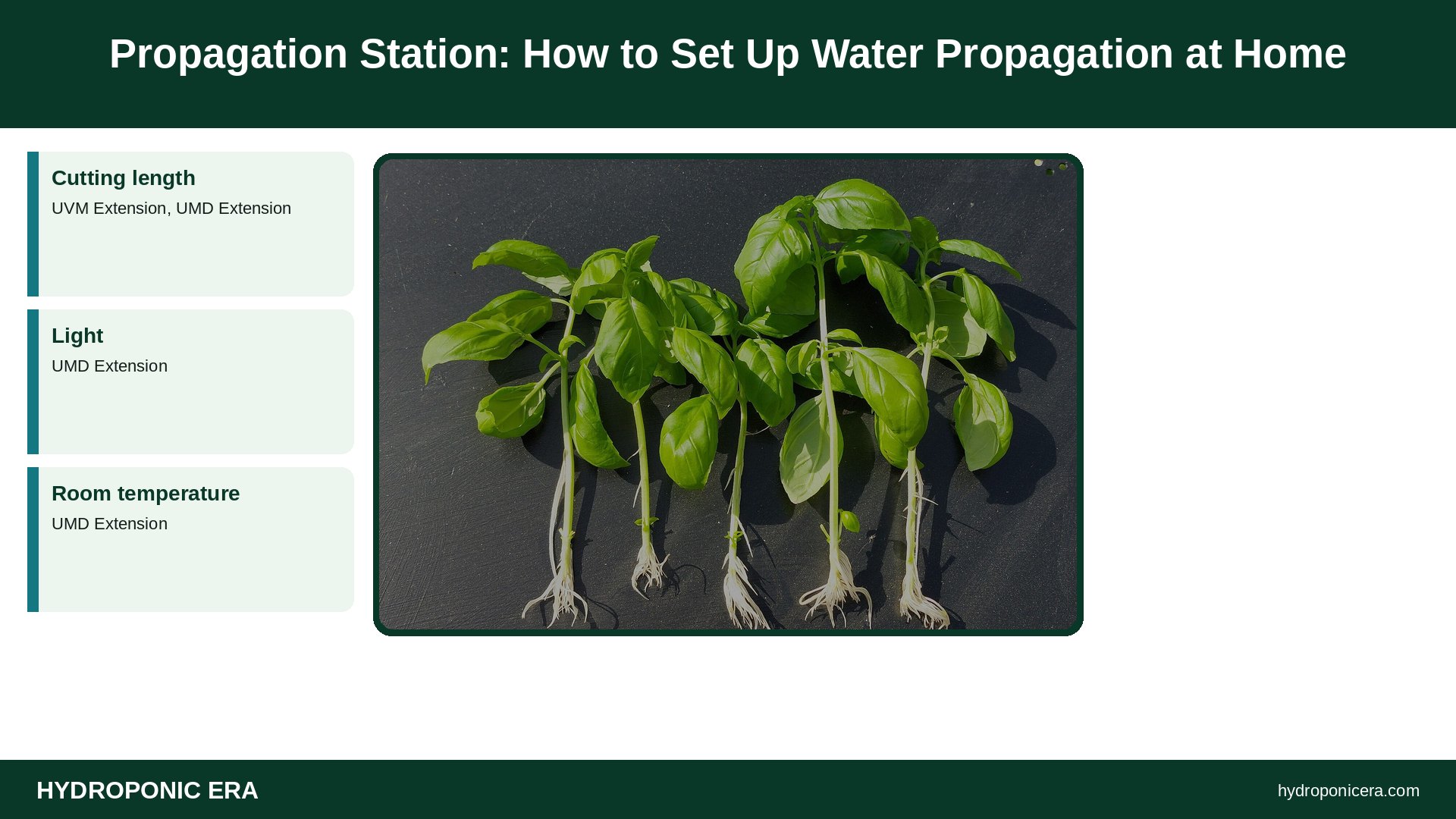
propagation station — Propagation Station: How to Set Up Water Propagation at Home

What is a propagation station? A propagation station is a stand or rack that holds clear glass vessels of water so you can root plant cuttings and watch the roots grow. It works best for easy rooters like pothos, philodendron and coleus. Use 3–6 inch (8–15 cm) cuttings with at least one node underwater, bright indirect light, and fresh water at least twice a week.

money tree in water — Money Tree in Water: Pachira Cuttings and Limits

A money tree in water works for rooting cuttings, but not as a permanent home for the plant. To root one, cut a 4–6 inch (10–15 cm) green, softwood stem just below a node, remove the lower leaves, and stand it in room-temperature water with one node submerged. Keep it warm, at about 65–75°F (18–24°C), in bright indirect light, and change the water weekly. Money tree cuttings root less reliably than pothos, so take several. Despite its swampy origins and the name Pachira aquatica , N.C. State Extension warns that potted money trees don’t tolerate standing water, which can cause root rot.

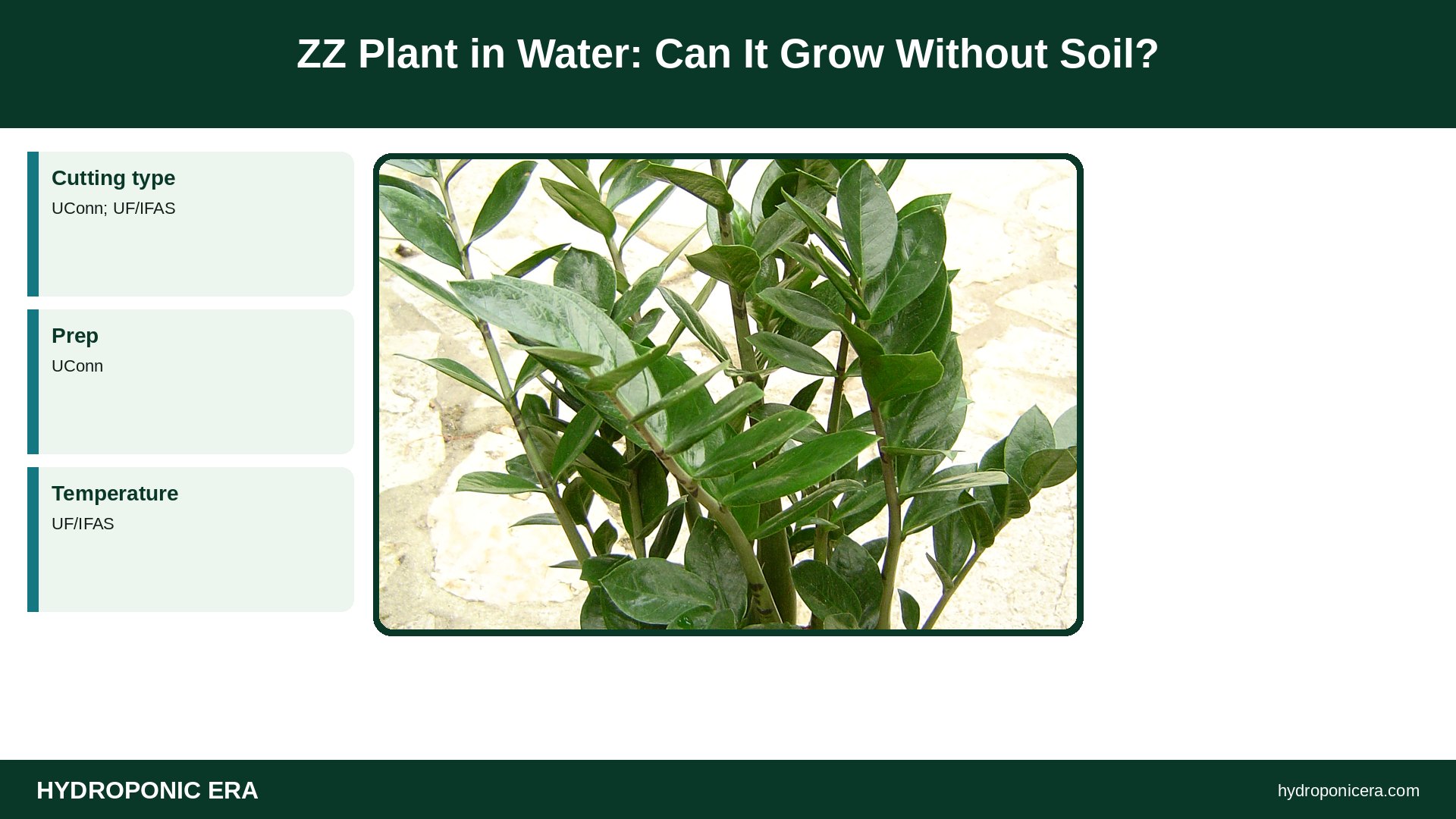
zz plant in water — ZZ Plant in Water: Can It Grow Without Soil?

You can root a ZZ plant in water , but be ready to wait. A ZZ “stem” is really one large compound leaf, and cuttings first grow a small potato-like rhizome before they make much root. Let a cut leaf or single leaflet dry for a few hours, then stand the cut end about 1 inch (2.5 cm) deep in room-temperature water with the leaflets above it. Keep it warm, ideally 75–85°F (24–29°C), in bright indirect light, and change the water weekly.

arrowhead plant in water — Arrowhead Plant in Water: Syngonium Care

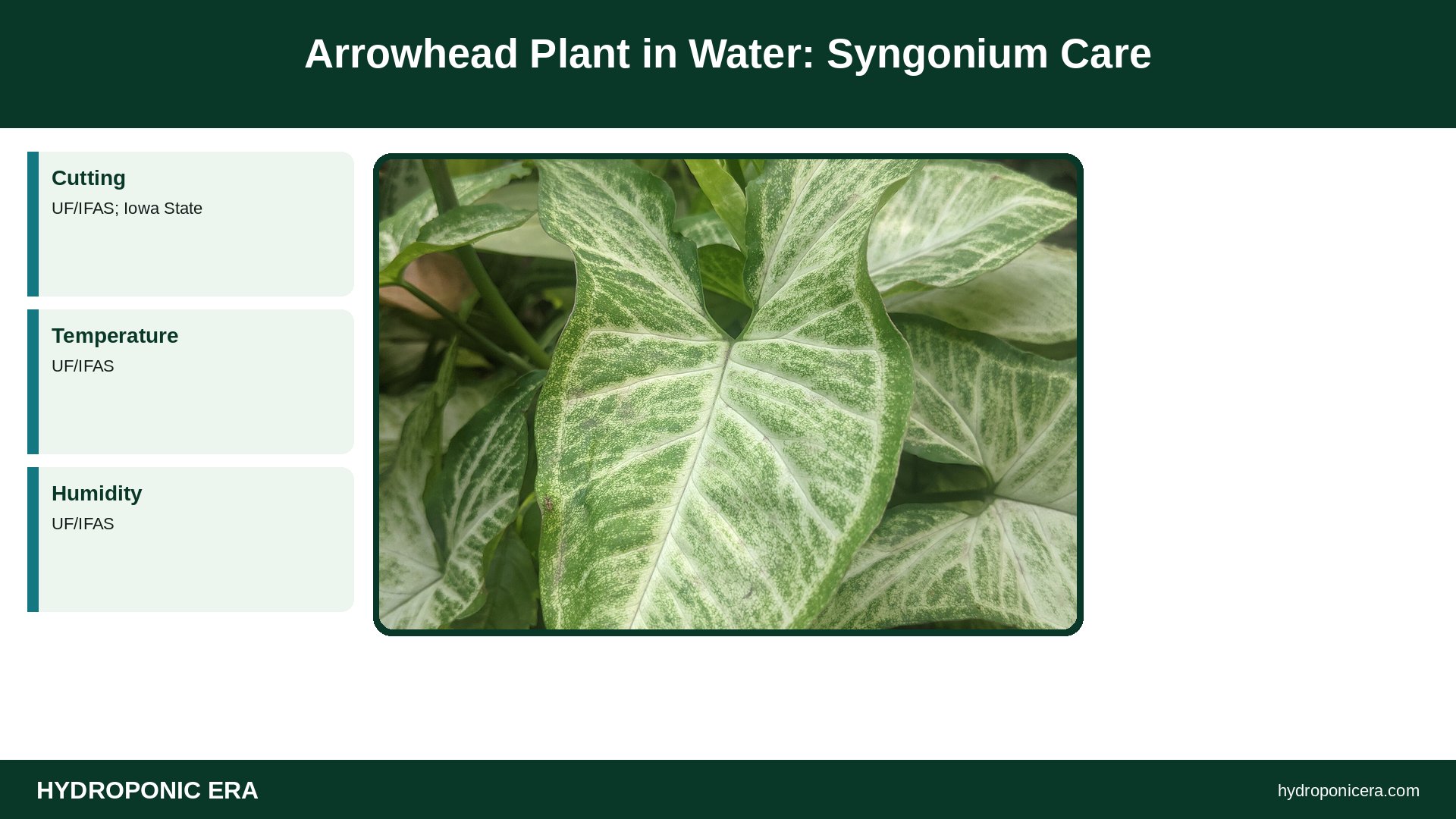
Yes, an arrowhead plant in water roots readily and can live in a jar for a long time. Cut a 3–6 inch (8–15 cm) stem with at least one or two nodes, remove the leaves from the lowest node, and set it in room-temperature water with the node submerged and the leaves dry. Give it bright, indirect light at 65–80°F (18–27°C) and change the water once or twice a week. Roots usually form in about 3–6 weeks. Arrowhead plant ( Syngonium podophyllum ) forms aerial roots at almost every node, which is why it takes to water so well.

begonia in water — Begonia in Water: Propagating Cuttings

Yes, begonia in water roots easily from stem cuttings. Take a 3–4 inch (8–10 cm) tip cutting with two to four nodes, cut just below a node, strip the lower leaves, and stand it in a small jar of room-temperature water so at least one bare node is underwater. Keep it in bright, indirect light at 60–80°F (16–27°C) and top up or change the water as needed. Roots usually appear in about 3–4 weeks. Pot the cutting into a well-drained mix once roots are about ½–2 inches (1–5 cm) long, because begonia roots rot quickly if soil stays soggy.

hoya in water — Hoya in Water: Rooting Cuttings and Long-Term Care

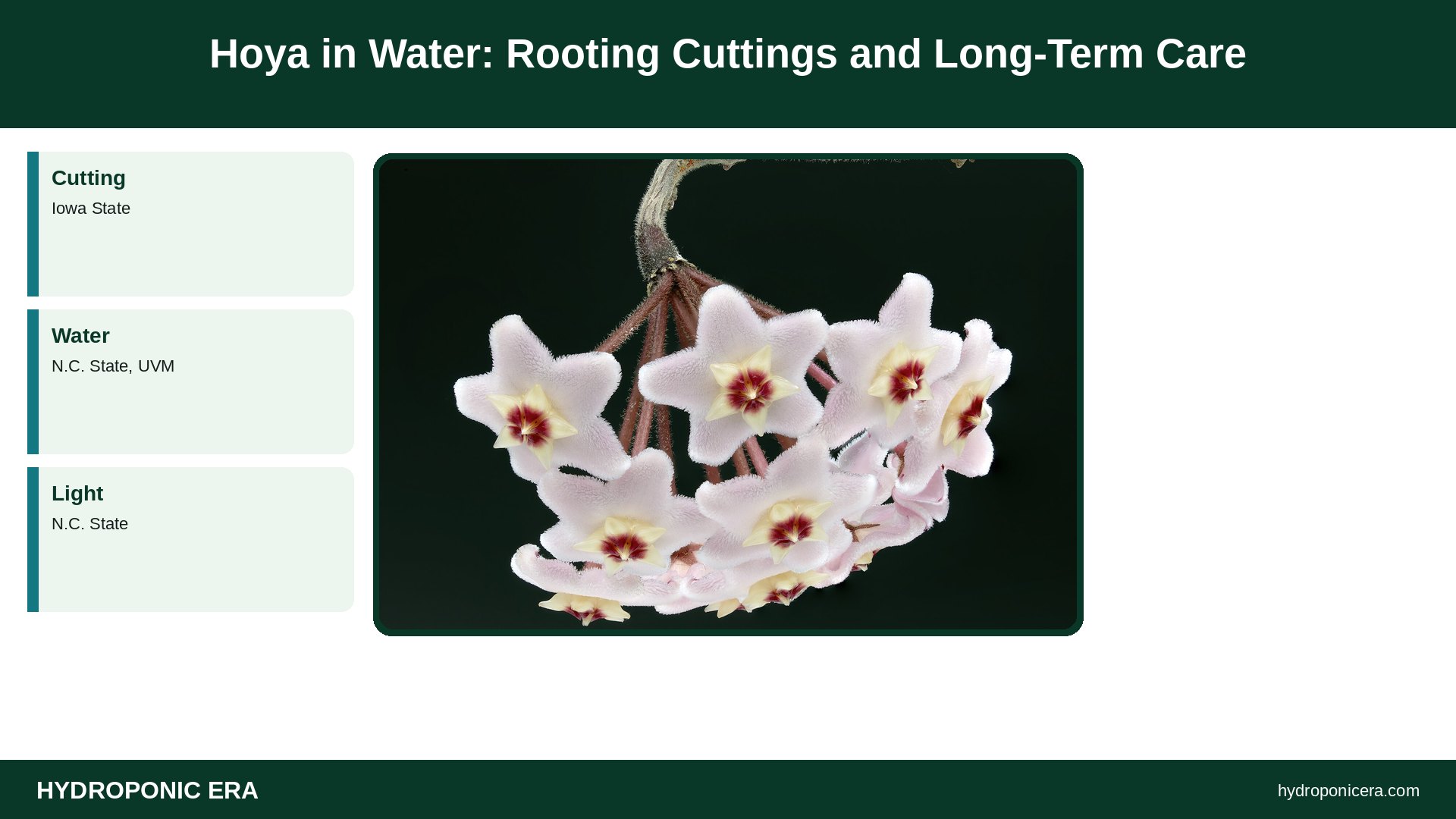
Yes, hoya in water roots well. Cut a 3–6 inch (8–15 cm) stem with at least two nodes, remove the leaves from the bottom node, and stand it in room-temperature water so the bare node is submerged and the leaves stay dry. Keep it in bright, indirect light at 65–75°F (18–24°C), and change the water weekly or whenever it clouds. Hoya is slower than pothos, so expect several weeks before roots form. Pot it into a fast-draining mix once roots are about 1–2 inches (2.5–5 cm) long, because hoyas prefer to dry out between waterings.

chinese evergreen in water — Chinese Evergreen in Water: Can Aglaonema Live in Water?

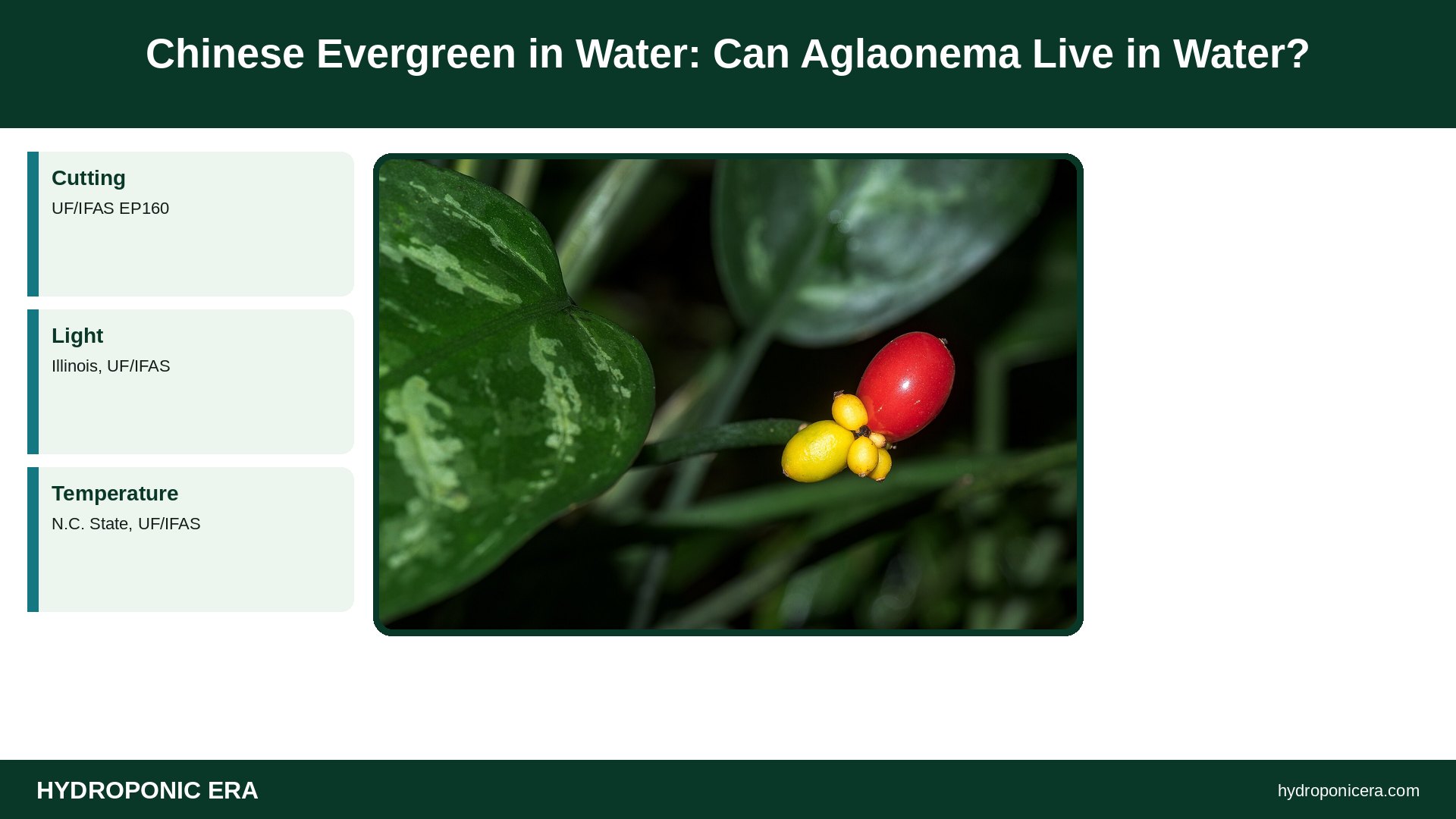
Yes, Chinese evergreen in water works: University of Illinois Extension says Aglaonema can be grown in water or in humus-rich potting soil. To root one, take a healthy stem tip with four or five leaves, cut just below a node, remove any leaves that would sit underwater, and stand it in a jar of room-temperature water in bright, indirect light. Keep it above 65°F (18°C), never below 55°F (13°C), and change the water weekly. Roots typically take several weeks. You can leave it in water long term with dilute fertilizer, or pot it once roots are a few inches long.

tradescantia in water — Tradescantia in Water: Propagation and Care

Tradescantia in water is one of the easiest houseplant projects: the succulent stems naturally root at their nodes. Snip a 3–6 inch (8–15 cm) stem tip with several nodes, remove the leaves from the bottom 1–2 nodes, and set it in room-temperature water with no leaves submerged. Keep it in bright, indirect light at 65–75°F (18–24°C) and replace the water whenever it turns cloudy. Roots usually start within days to a few weeks. Pot the cutting once roots reach about 1–3 inches (2.5–8 cm), or keep several in a jar as a living display.

coleus in water — Coleus in Water: Rooting and Growing Cuttings

Yes, coleus in water roots easily, often within a few weeks. Cut a 3–5 inch (8–13 cm) stem tip just below a node, strip the lower leaves and any flower spikes, and stand it in clean tap water with no leaves underwater. Keep it at about 70°F (21°C) in bright, indirect light, change the water at least twice a week, and pot it up once roots are about 1 inch (2.5 cm) long, or after they’ve grown another week or two. N.C. State Extension notes that coleus cuttings root easily in water or clean potting soil.

vegetables you can regrow in water — Vegetables You Can Regrow in Water From Scraps

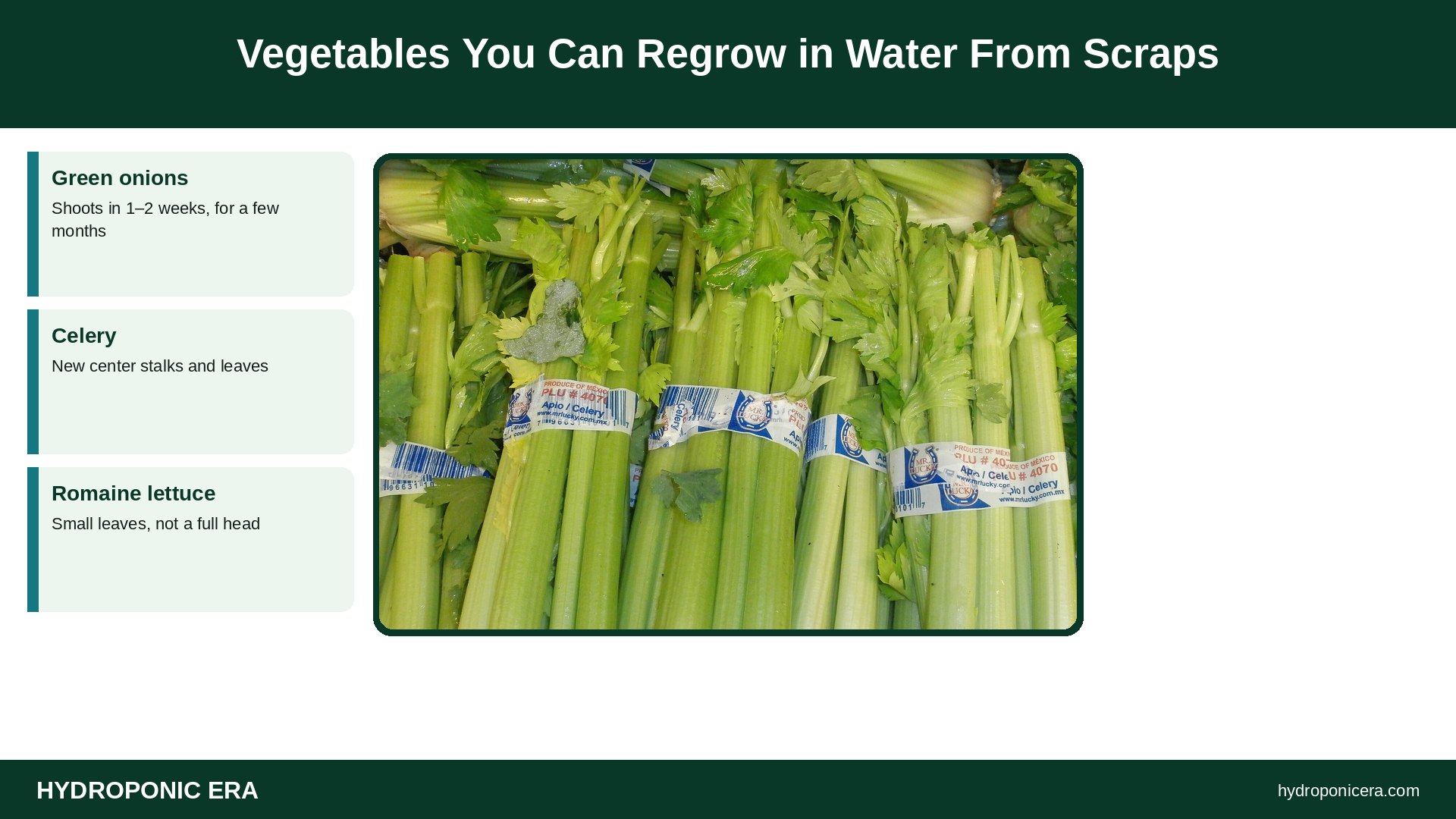
The vegetables you can regrow in water from kitchen scraps are mainly green onions (scallions), celery, romaine lettuce, bok choy and Napa cabbage, plus the leafy tops of beets, turnips and carrots and cuttings of herbs like basil and mint. Set the root end or base in a shallow dish of water, give it a sunny window, and change the water every 2–3 days. Expect a bonus harvest of leaves or shoots, not a full new vegetable. Garlic, ginger and pineapple tops regrow too, but they need soil or a rooting medium rather than water.