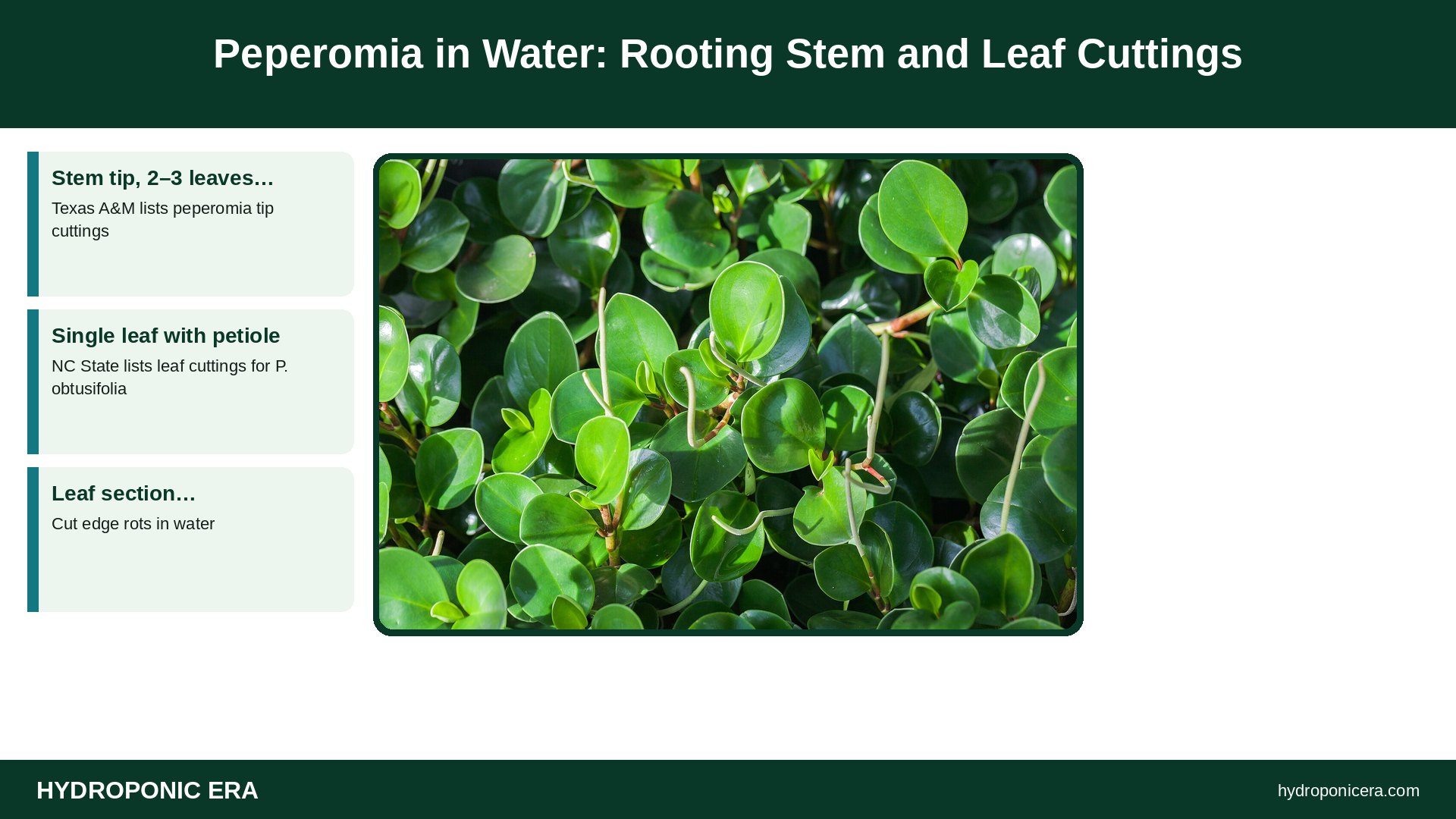
Can you propagate peperomia in water? Yes. Peperomia in water roots from a stem tip cutting with two or three leaves and a bare node underwater. Leaf cuttings can root too, but they grow faster in moist mix. Keep the jar warm in bright, indirect light, change the water weekly and pot when roots reach about 1 inch (2.5 cm), because peperomia hates staying wet.
Can you propagate a prayer plant in water? Yes. A prayer plant in water roots from a tip cutting with at least one node below the leaves. Cut just under a node, remove leaves that would sit underwater, and keep the jar warm in bright, indirect light. Change the water weekly and pot the cutting when roots reach about 1–2 inches (2.5–5 cm). Division also works.
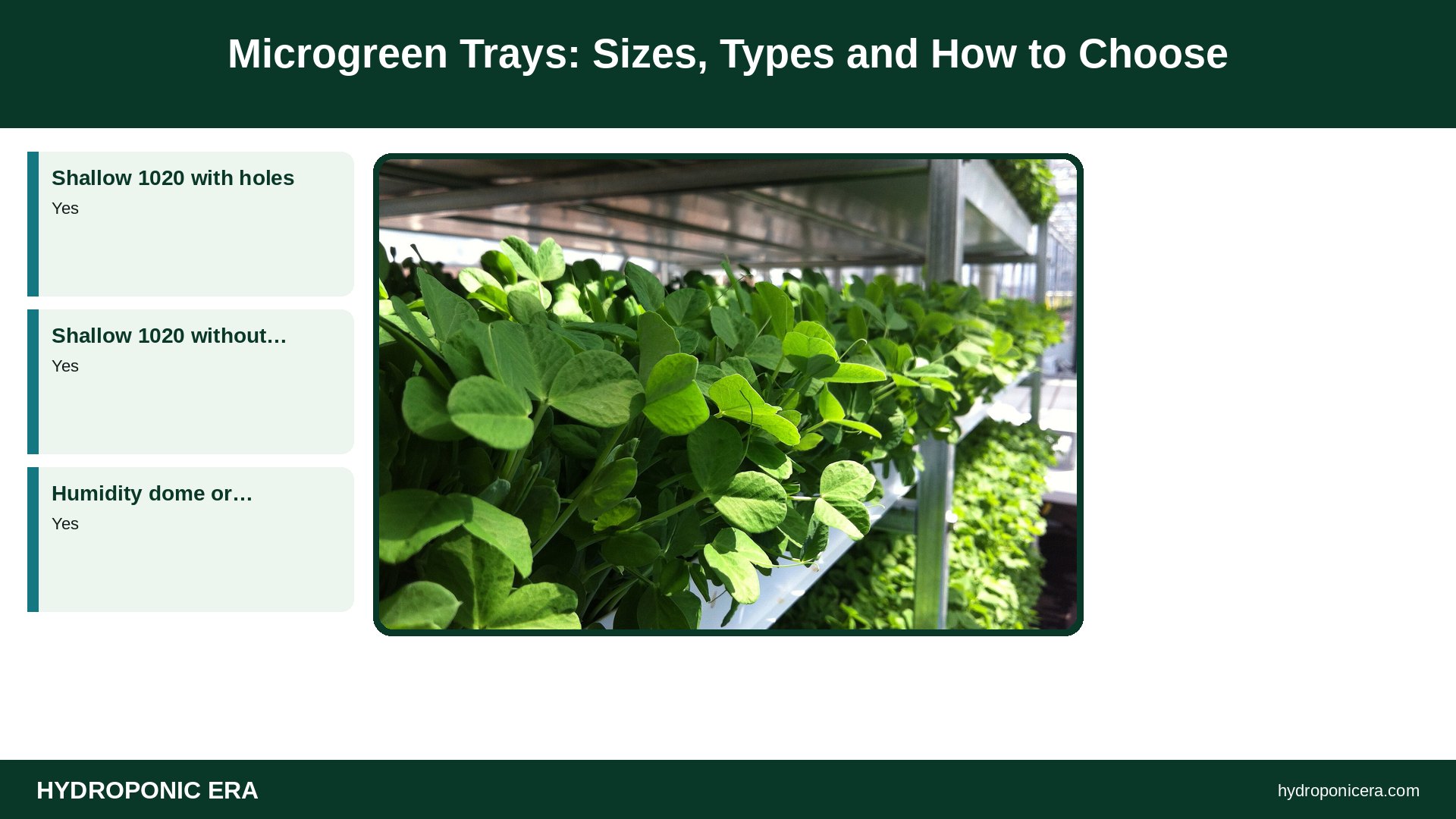
What are the best microgreen trays for home growing? The best microgreen trays are shallow 10 × 20 inch (25 × 51 cm) “1020” flats about 1–1.5 inches (2.5–4 cm) deep, used as a pair: one with drainage holes for the growing mix and one without holes underneath as a water reservoir. Add a lid or a third tray for germination and blackout, and choose thick, reusable, food-grade plastic.
Can you root a fiddle leaf fig in water? Yes. A fiddle leaf fig in water roots from a stem cutting with one or two leaves and at least one node underwater. Wear gloves, keep the cutting warm at 75–80°F (24–27°C) in bright, indirect light, and change the water twice a week. Roots take several weeks; pot the cutting when they reach 1–2 inches (2.5–5 cm).
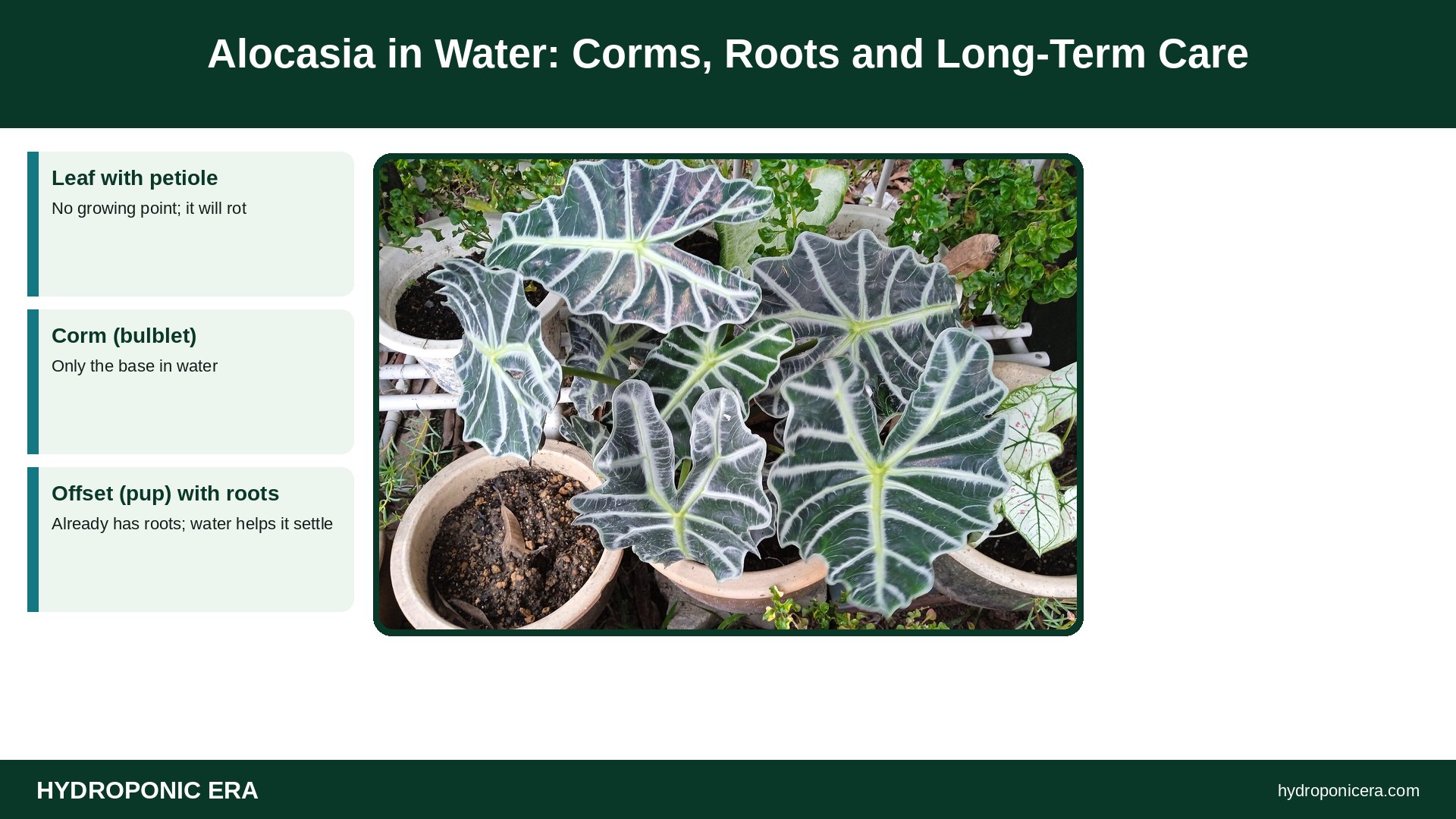
Can alocasia grow in water? Partly. Alocasia leaves and stems won’t root as cuttings, but alocasia in water works for sprouting the small corms (bulbs) that form around the roots, and for rooting divided offsets. Set a corm so only its base touches water, keep it warm at 68–77°F (20–25°C) in bright, indirect light, and move sprouted corms to airy, well-drained mix.
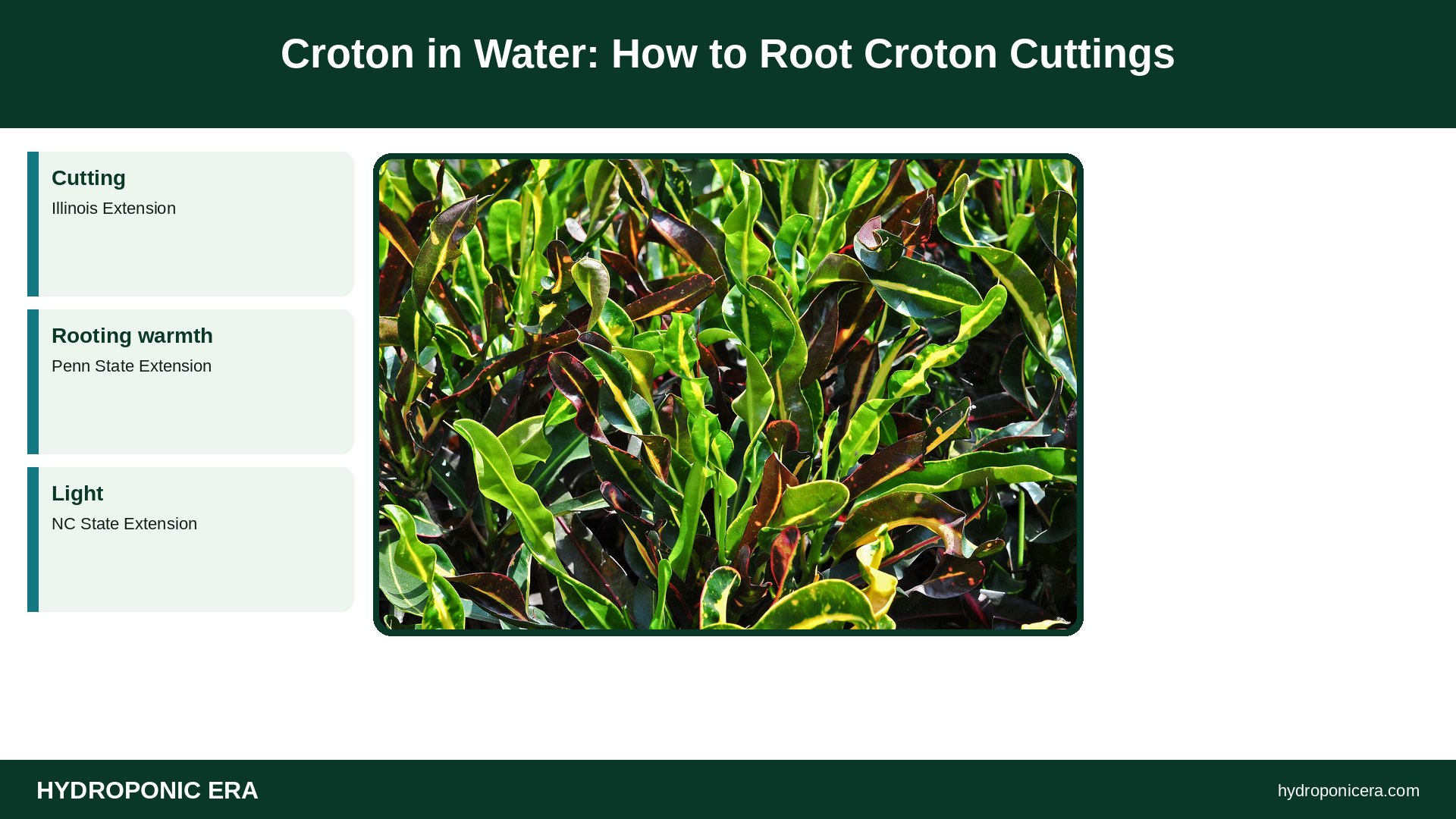
Can you root a croton in water? Yes. A croton in water roots from a 3–6 inch (8–15 cm) stem tip with two or more nodes. Wear gloves, rinse off the sap, remove lower leaves and set a node underwater in bright light at 75–80°F (24–27°C). Croton is woody and slow, so expect several weeks before roots appear, then pot it in well-drained mix.
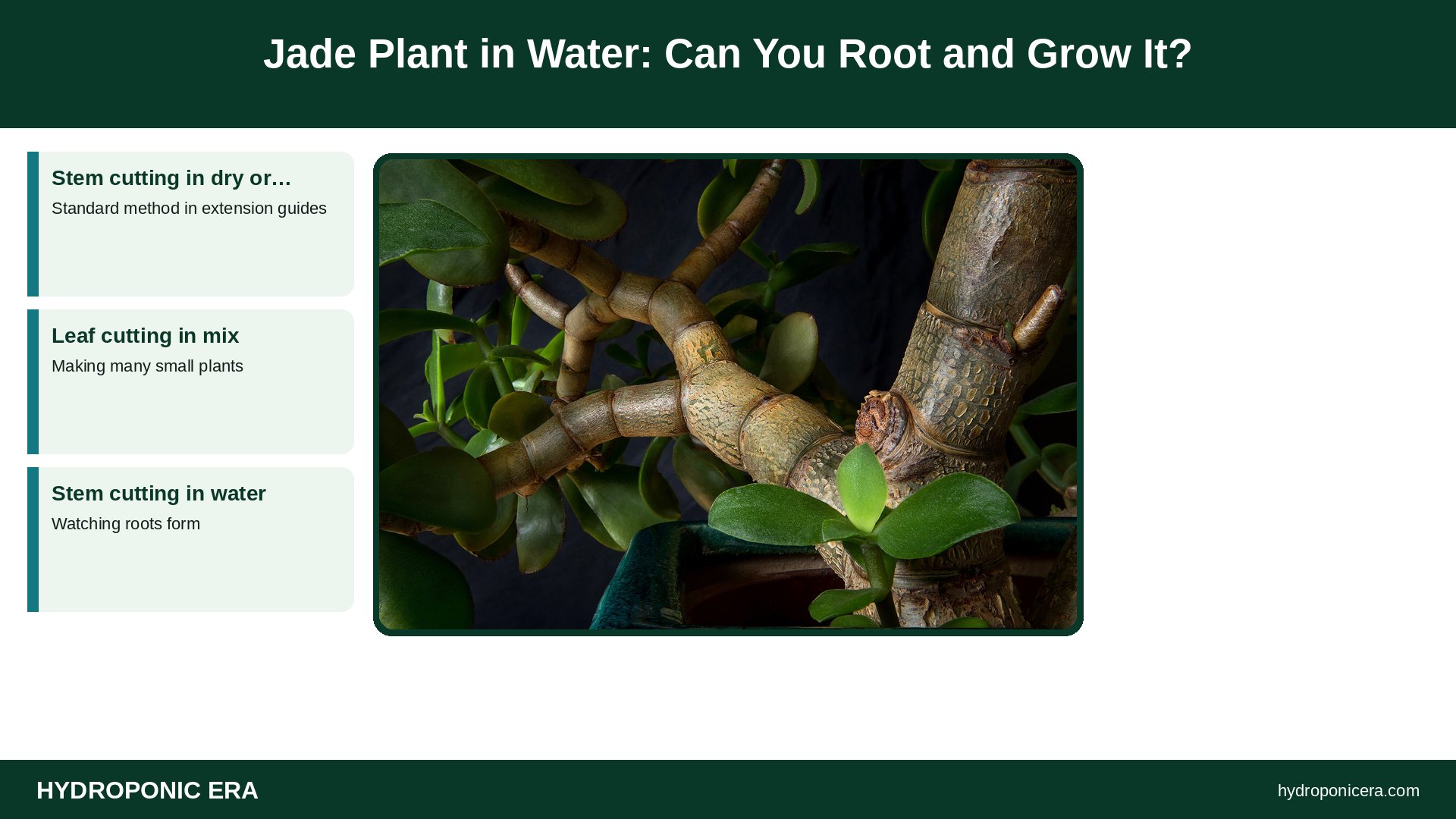
Can you grow a jade plant in water? You can root a jade plant in water, but it’s riskier than soil. Let a 3–4 inch (8–10 cm) stem cutting callus for several days, then hold it so only the bottom 1/4 inch (6 mm) touches water. Change the water every few days, and pot the cutting into gritty succulent mix as soon as roots appear.
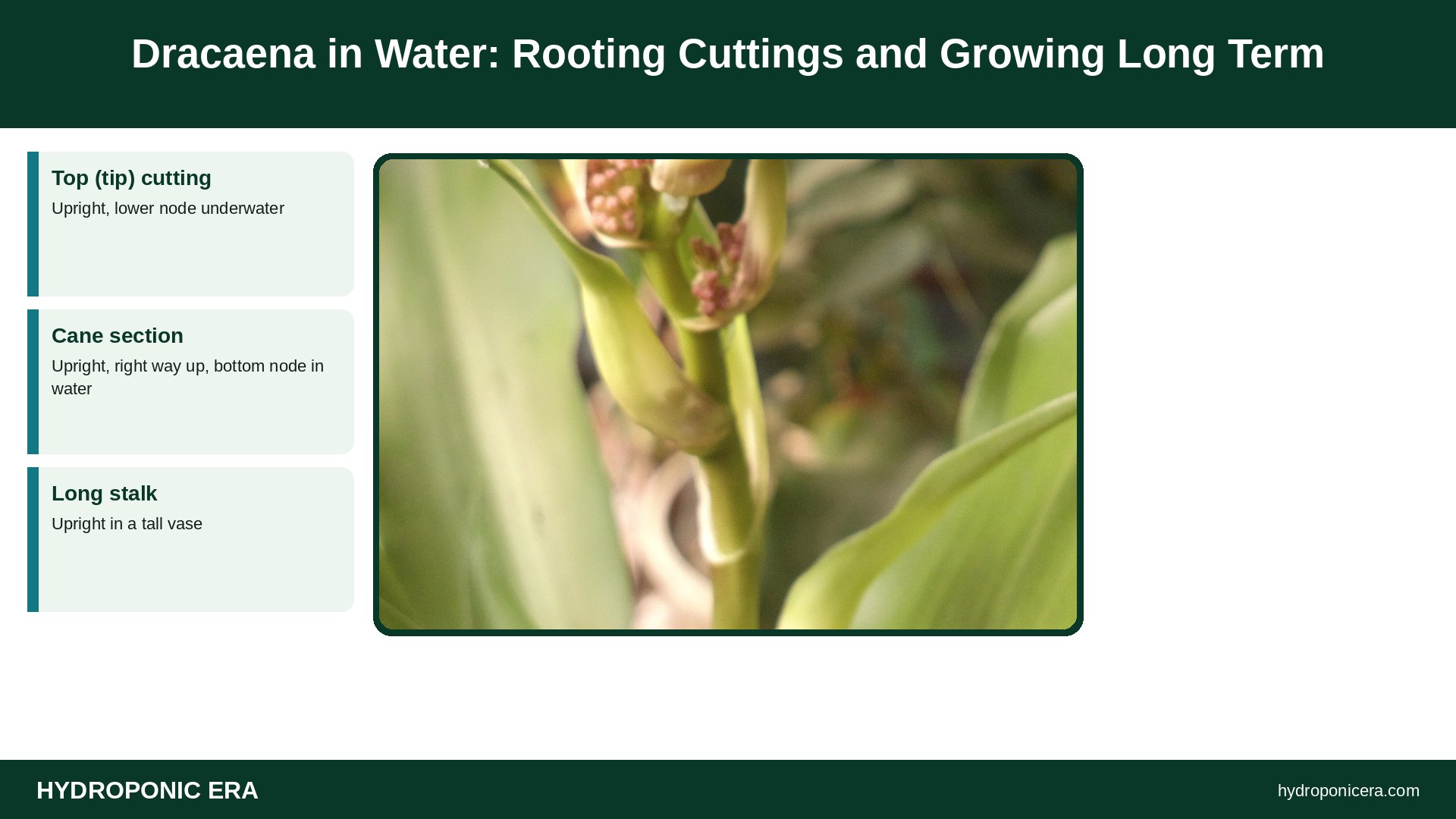
Can dracaena grow in water? Yes. Dracaena in water roots well from a stem tip or a 2–3 inch (5–8 cm) cane section with at least two nodes. Keep one or two nodes underwater, use fluoride-free water if you can, and change it at least twice a week. Roots take several weeks; then pot it or keep it in water with a weak feed.
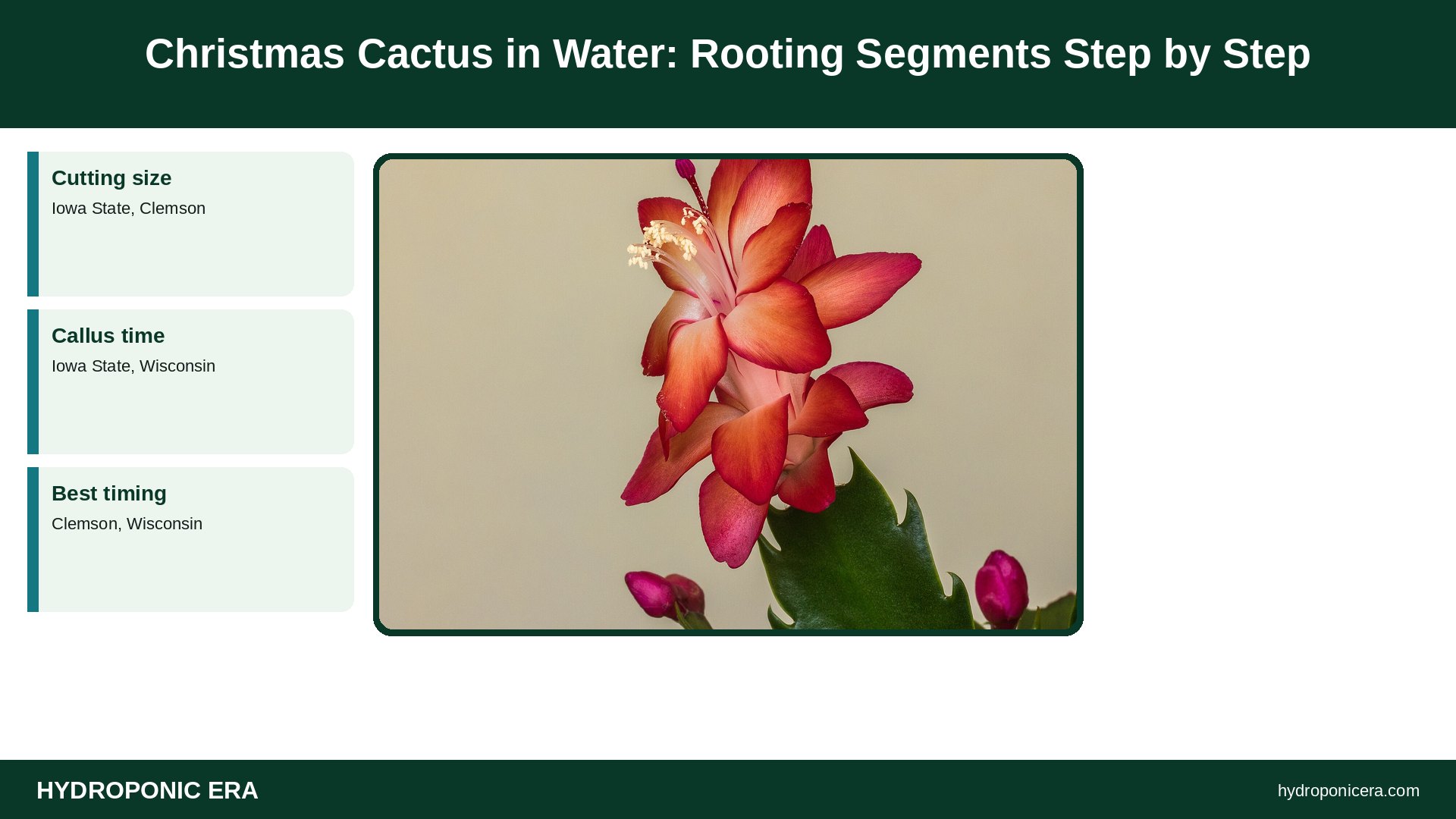
Can you root a Christmas cactus in water? Yes. Twist off a piece with 2–5 stem segments, let the end callus for a day or two, then stand it so only the bottom segment touches water. A Christmas cactus in water usually roots within a few weeks. Pot it in well-draining mix once roots are about 1 inch (2.5 cm) long, because the plant rots if left soggy.
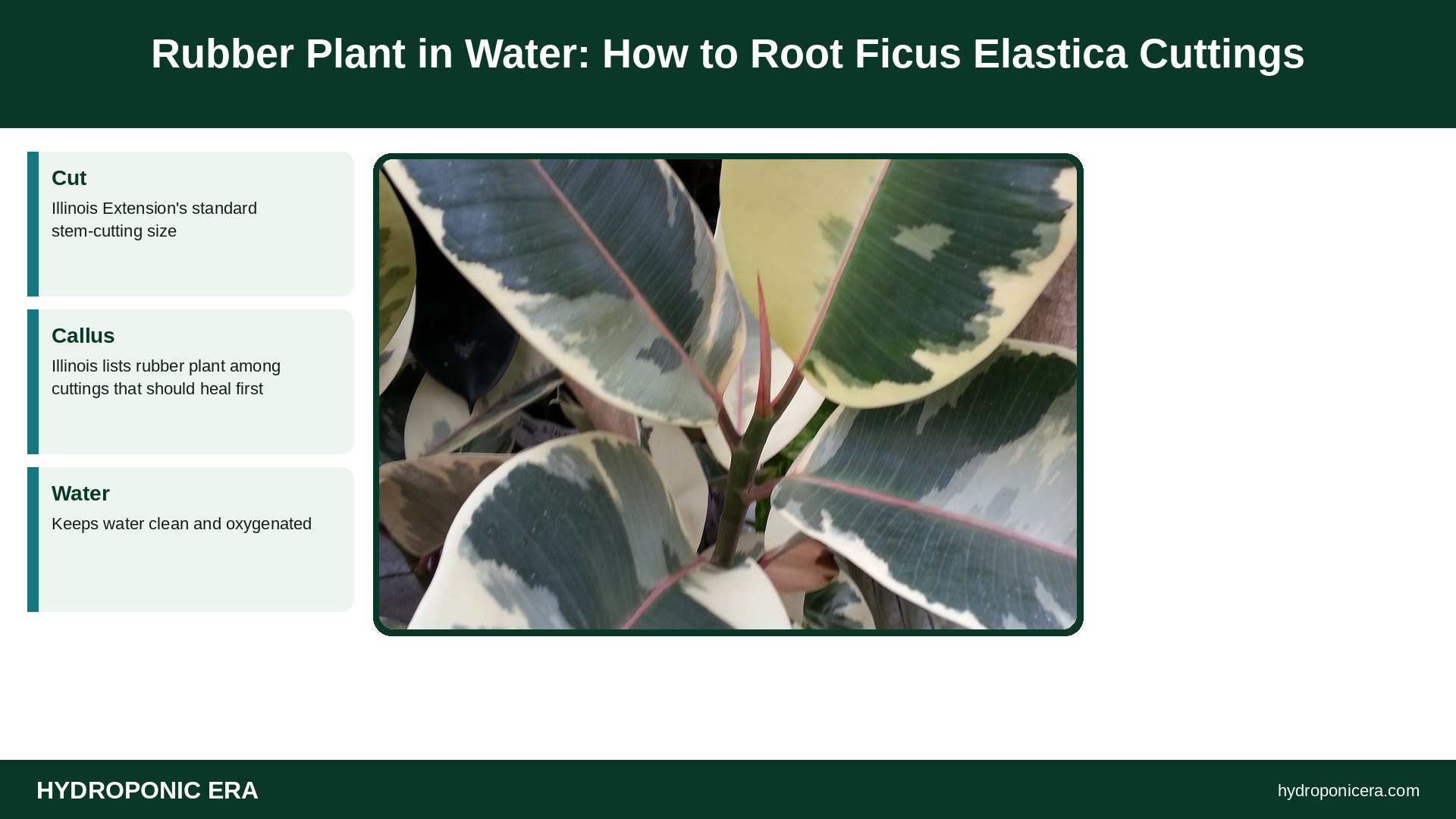
Can you root a rubber plant in water? Yes. A rubber plant in water can root from a 3–6 inch (8–15 cm) stem tip with two or more nodes. Let the sap stop and the cut dry, then set a node underwater in bright, indirect light at 75–80°F (24–27°C). Roots take several weeks; pot the cutting once they reach 1–2 inches (2.5–5 cm).