
What are the best microgreen trays for home growing? The best microgreen trays are shallow 10 × 20 inch (25 × 51 cm) “1020” flats about 1–1.5 inches (2.5–4 cm) deep, used as a pair: one with drainage holes for the growing mix and one without holes underneath as a water reservoir. Add a lid or a third tray for germination and blackout, and choose thick, reusable, food-grade plastic.
Key takeaway: Buy microgreen trays in sets of three per crop: a holed tray, a solid tray and a cover. The depth matters more than the brand.
| Tray type | Job | Need it? |
|---|---|---|
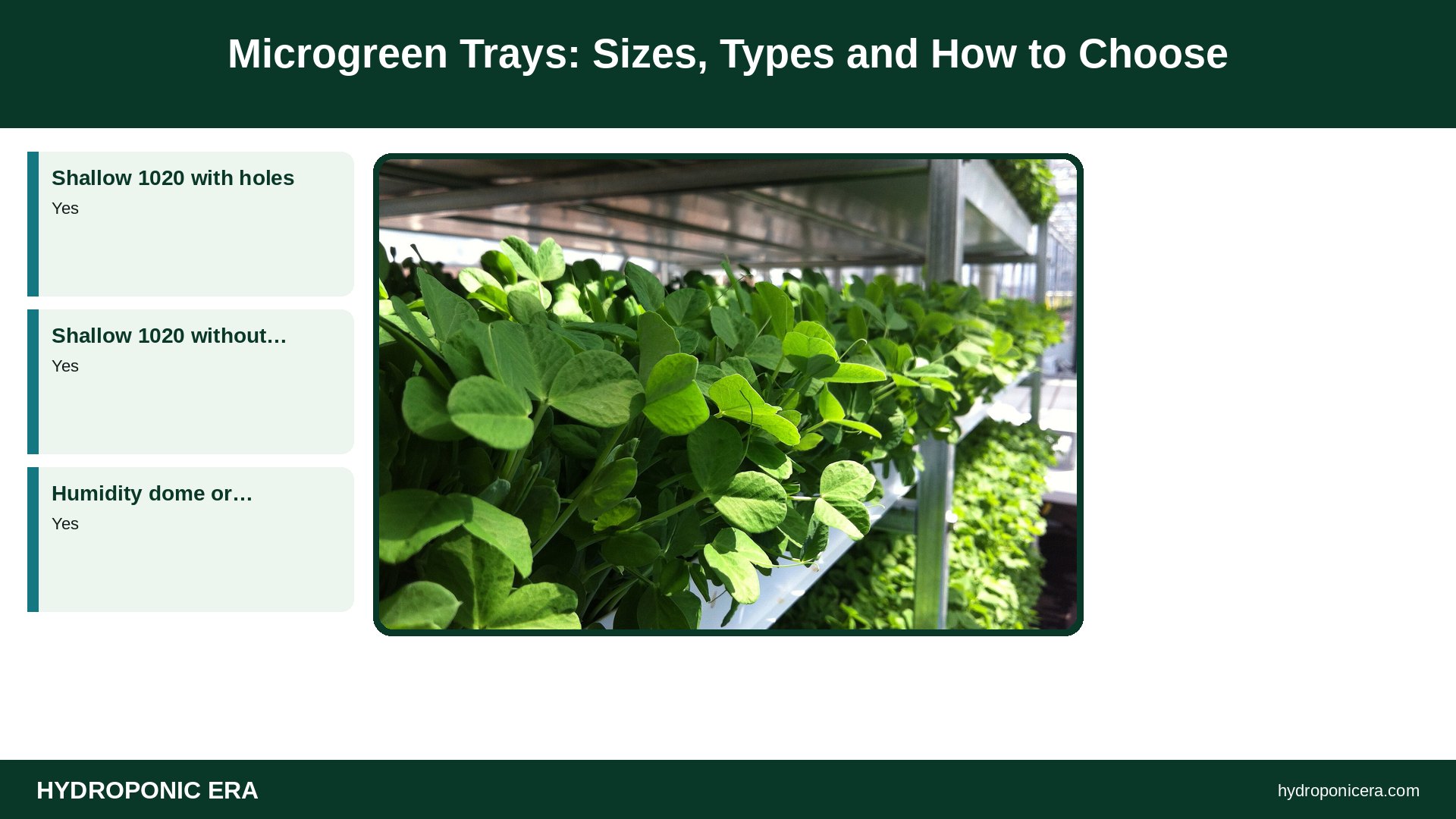
| Shallow 1020 with holes | Holds mix or a grow mat and seeds | Yes |
| Shallow 1020 without holes | Bottom-watering reservoir; catches drips | Yes |
| Humidity dome or inverted tray | Germination cover and blackout | Yes |
| 1010 (10 × 10 in / 25 × 25 cm) or 5 × 5 in (13 × 13 cm) trays | Small batches, test crops | Optional |
| Standard-depth 1020 (about 2.5 in / 6 cm) | Seedlings and plugs | Not ideal for microgreens |
What Size Are Standard Microgreen Trays?
Standard microgreen trays are called 1020 flats because they are nominally 10 × 20 inches (25 × 51 cm). University of Maryland Extension describes standard greenhouse flats as 10 inches wide by 20 inches long (25 × 51 cm). Real trays run slightly larger: Bootstrap Farmer lists its shallow 1020 as 21 × 10.75 × 1.25 inches (53 × 27 × 3.2 cm) outside, with an inner bottom of about 19.75 × 9.5 inches (50 × 24 cm). Check that lids and nesting trays come from the same system, since sizes vary between brands.
How Deep Should Microgreen Trays Be?
About 1–2 inches (2.5–5 cm). University of Illinois Extension says a 1–2 inch (2.5–5 cm) depth is ideal and saves potting mix. Maryland Extension recommends filling trays with moist soilless media 1 to 1½ inches (2.5–4 cm) deep. Deeper seedling flats work, but they waste mix and make harvesting awkward because you cut below the rim.
Do Microgreen Trays Need Drainage Holes?
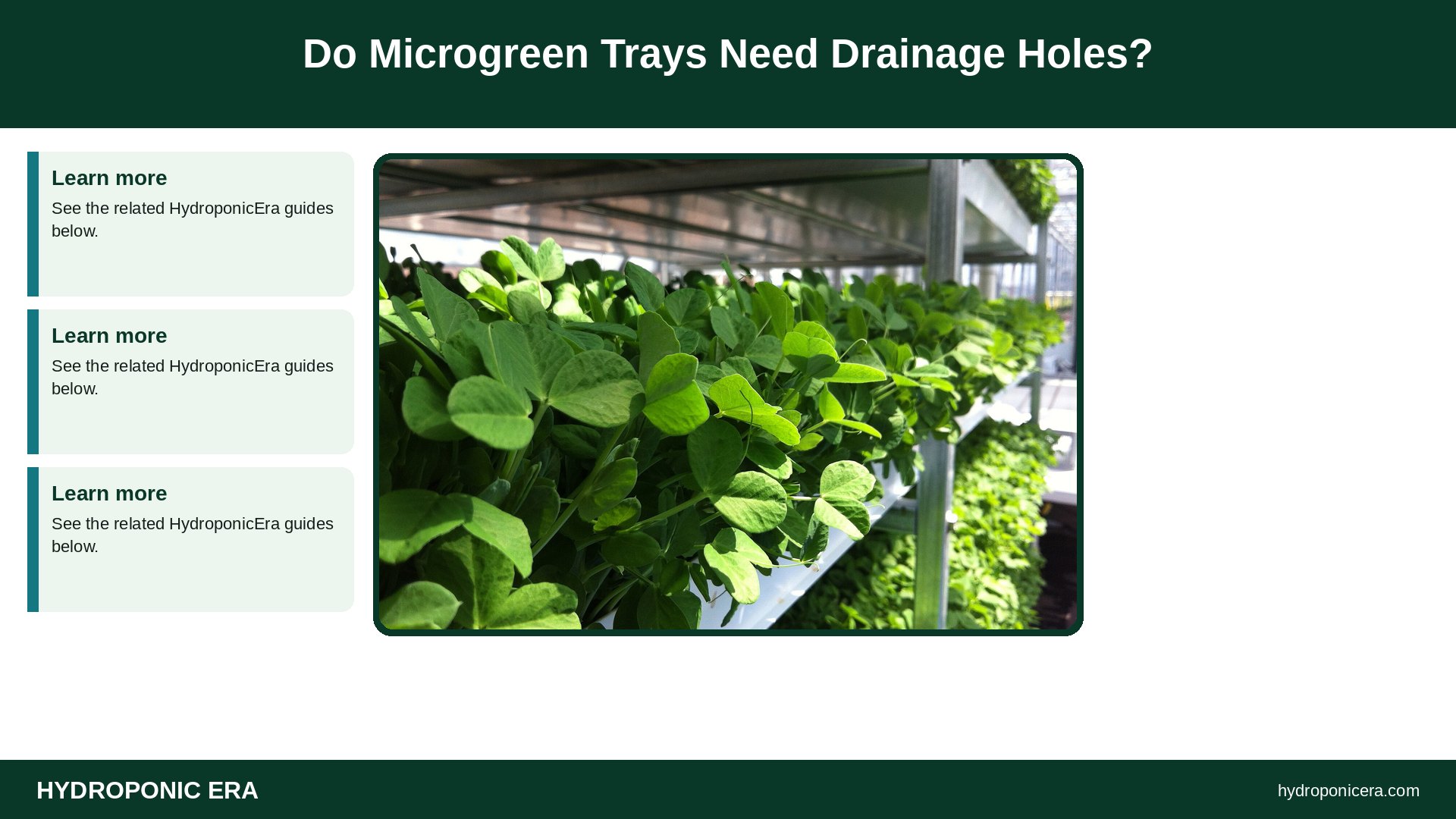
The growing tray does; the tray under it doesn’t. Illinois Extension describes a top container with drain holes nested inside a second container that catches water. Maryland Extension describes commercial microgreen trays the same way: a drained tray, often with channels, set into an undrained reservoir tray. This setup lets you water from below, which Illinois Extension calls the best way to keep leaves dry and less prone to disease.
How Do You Set Up Microgreen Trays Step by Step?
- Wash the trays. Scrub with hot soapy water; see the cleaning section below.
- Fill the holed tray with moist soilless mix 1–1.5 inches (2.5–4 cm) deep, or lay in a grow mat. Illinois Extension suggests leaving about ½ inch (1.3 cm) below the rim.
- Level and firm the surface lightly with a flat object.
- Sow thickly. Maryland Extension suggests about 1 tablespoon (10–15 g) of seed per 10 × 20 tray; Illinois suggests 2–2.5 tablespoons for large seeds like radish.
- Mist and cover with a dome or another tray to hold humidity.
- Keep warm. Illinois Extension cites about 75°F (24°C) soil for germination; Maryland says 70–75°F (21–24°C) for growing.
- Uncover after germination, set the tray into the solid tray and water from below.
- Light it. Maryland Extension suggests about 16 hours of light a day with fixtures typically 6–12 inches (15–30 cm) above the foliage.
What Are the Best Microgreen Trays Made Of?
Most home microgreen trays are polypropylene plastic. Thin, cheap flats crack after a few uses and flex when you lift a wet tray, spilling mix. Heavy-duty trays cost more but last for years. Look for:
- Food-grade or BPA-free plastic from a seller that states it.
- Rigid walls that don’t bow when full.
- Consistent sizing so trays nest without gaps.
- Smooth surfaces that clean easily.
Stainless steel and aluminum trays exist but cost more. Food containers with holes punched in the bottom work for small batches, as Maryland Extension notes.
Can You Grow Microgreens in Trays Without Soil?
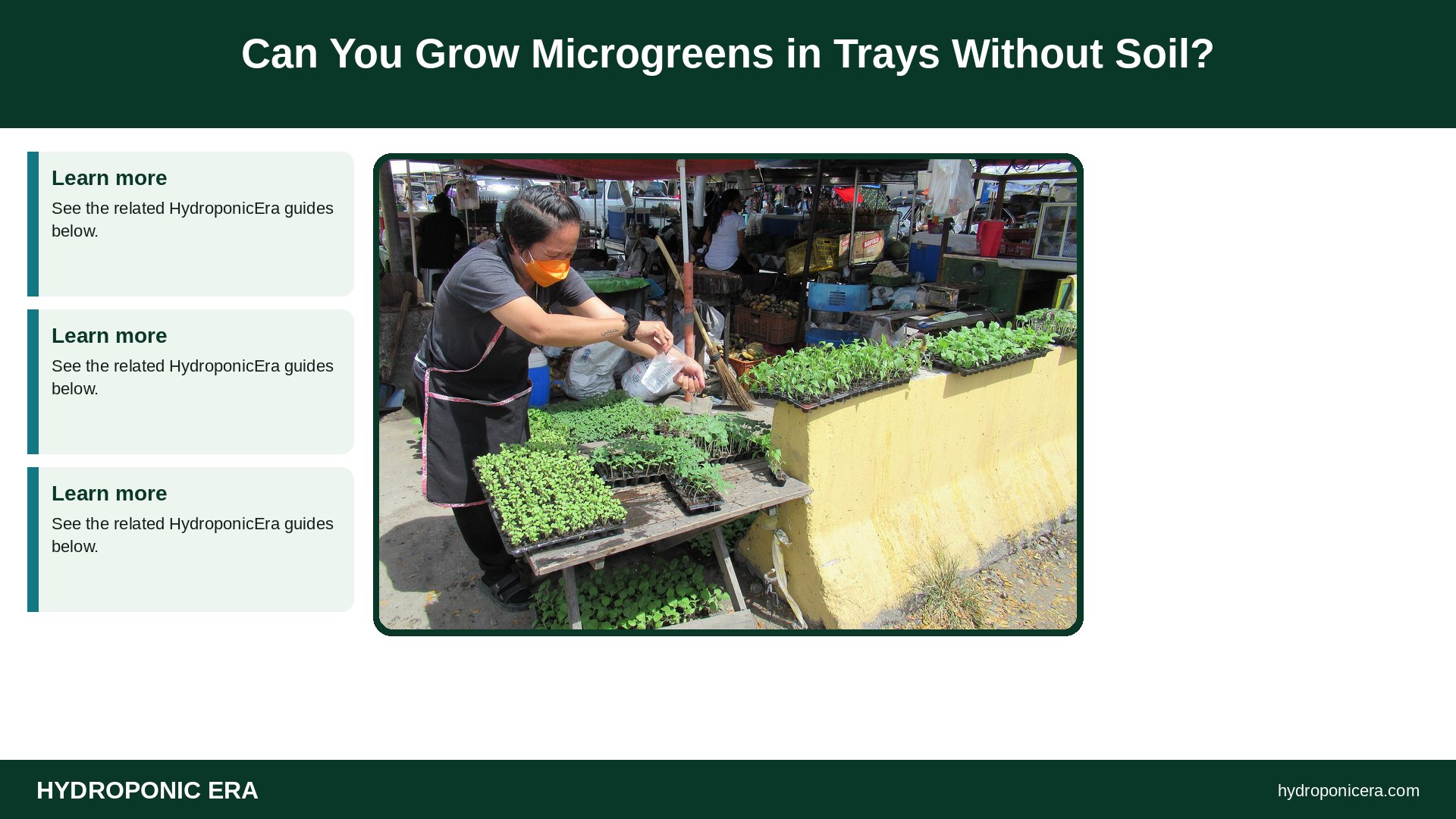
Yes. Maryland Extension notes you can grow microgreens hydroponically on single-use mats made of hemp, wood fiber, coconut coir, bamboo or jute, cut to fit a standard flat, and that reusable silicone mats are available. Mats work best in microgreen trays without channels so the mat sits flat. Our hydroponic microgreens guide covers mat choice and watering.
How Do You Use Microgreen Trays for Blackout?
Stack a second tray on top. Illinois Extension says you can use humidity domes or another tray stacked on the seeds instead of paper towels. Maryland Extension notes that a few days of darkness after germination lengthens stems, which makes harvesting easier. Some growers set a light weight on the top tray so seedlings root firmly; remove it as soon as shoots push up.
How Do You Clean and Reuse Microgreen Trays?
Clean them between every crop. Old roots and organic matter shelter mold and the fungi behind damping-off.
- Knock out spent mix and compost it; Illinois Extension suggests composting stems and mix after harvest.
- Scrub with hot soapy water and a brush, getting into corners and channels.
- Rinse well.
- Sanitize with a product labeled for food-contact surfaces, following the label.
- Dry completely before stacking.
Our guides to damping-off in seedlings and hydroponic food safety at home explain why clean microgreen trays matter.
How Many Trays Do You Need?
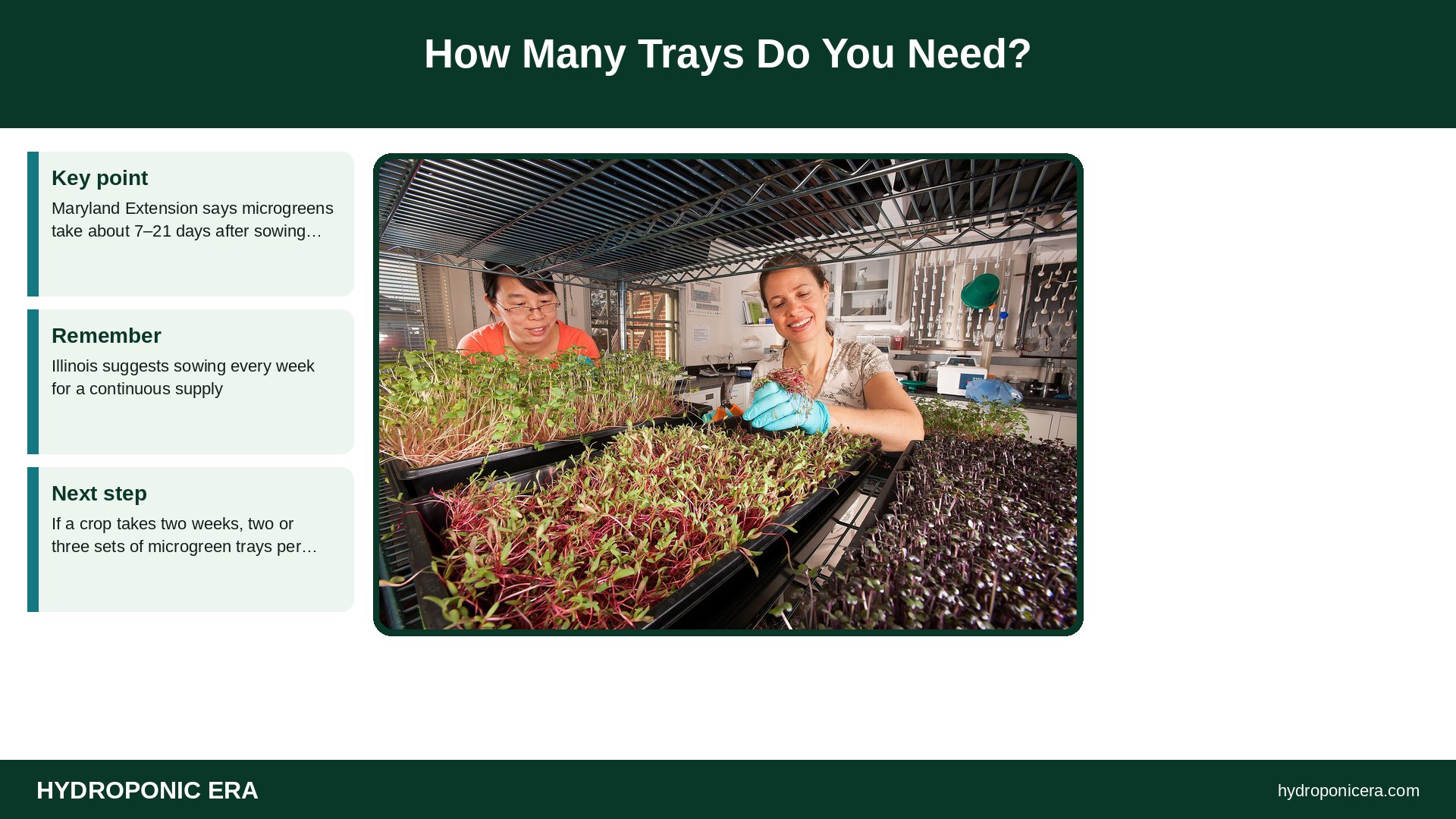
Plan by harvest rhythm. Maryland Extension says microgreens take about 7–21 days after sowing and reach 2–3 inches (5–8 cm). Illinois suggests sowing every week for a continuous supply. If a crop takes two weeks, two or three sets of microgreen trays per variety keep one tray ready each week. Start with three or four sets in total, then add more once you know what you eat.
Are 1010 or Small Trays Worth It?
For households, often yes. A 10 × 10 inch (25 × 25 cm) tray holds half the seed and mix of a 1020, and small trays let you test several crops at once on a single shelf. Maryland Extension advises not mixing species in one tray because germination and growth rates differ, which makes smaller microgreen trays useful for variety. Scale seed rates by area; Illinois Extension suggests multiplying the standard rate by your tray’s square inches divided by 200.
FAQs
Can I use aluminum baking pans as microgreen trays?
Yes. Illinois Extension lists foil containers as suitable. Punch drain holes and set them in a solid pan.
Do microgreen trays need channels?
No. Channels help drain and air-prune roots in soil, but flat bottoms suit mats.
Should I water from the top?
Mist from the top until germination, then water from below.
What light goes over microgreen trays?
Any fluorescent or LED grow light; Maryland Extension suggests about 16 hours a day.
Do I need fertilizer in the trays?
No. Maryland Extension says seeds hold the nutrients needed before harvest.
Sources
- University of Maryland Extension — Growing Microgreens and Baby Greens Indoors
- University of Illinois Extension — Growing Microgreens (PDF)
- Bootstrap Farmer — Heavy-Duty Shallow 1020 Microgreen Trays (product specifications)
- Photo credits (Wikimedia Commons, edited with titles): Lufa Farms Microgreens in Trays by Lufa Farms (CC BY-SA 2.0); Lufa Farms Microgreens in Trays by Lufa Farms (CC BY-SA 2.0); Bulakeña vegetable market vendor watering vegetable seedling for sale 07 by FBenjr123 (CC BY-SA 4.0); Liping Kou observes microgreens by Peggy Greb (Public domain); 20160617-AMS-LSC-9000 (61-sec.) (27334710733) by U.S. Department of Agriculture (Public domain)