
Can you root lavender cuttings in water? Yes, but it’s less reliable than a gritty mix. Lavender cuttings in water root best from 3–4 inch (8–10 cm) non-flowering tips with the lower leaves stripped and only the bottom inch (2.5 cm) submerged. Change the water every two days, keep it bright and warm, and pot at the first short roots, because lavender rots easily when wet.
Key takeaway: Lavender cuttings in water need fresh water, a short soak and a quick move to fast-draining mix. University sources favor sand, perlite or vermiculite for higher success.
| Method | Typical result | Source |
|---|---|---|
| Soilless medium (sand, perlite, vermiculite) under humidity | Roots in 4–6 weeks | UC ANR |
| Sterile potting soil or vermiculite, no hormone | Works well after bloom | Colorado State (via Ask Extension) |
| Lavender cuttings in water | Possible; higher rot risk | Home-grower method |
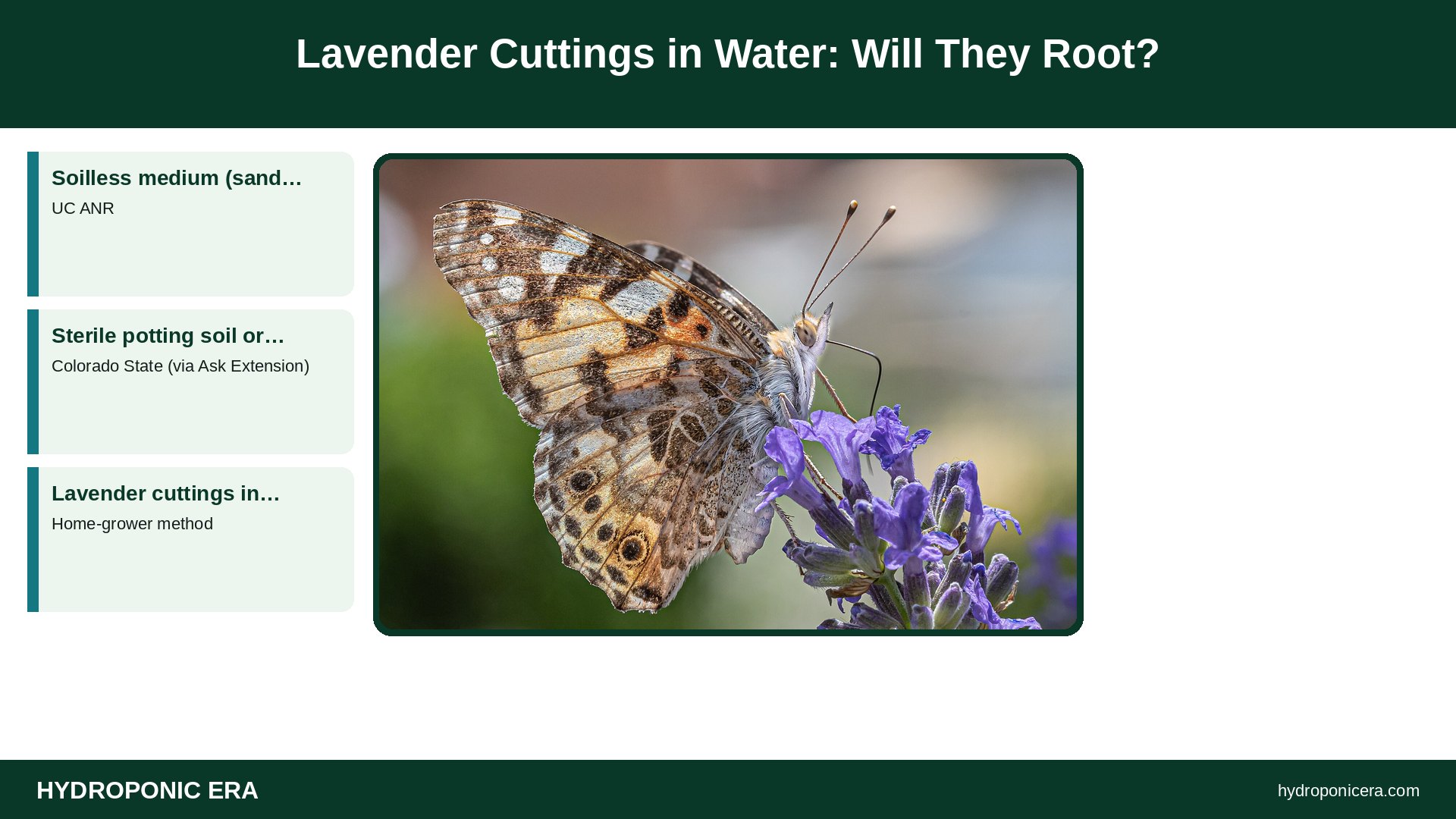
Do Lavender Cuttings in Water Actually Root?
They can. Lavender is a woody Mediterranean shrub in the mint family, and NC State Extension lists seed, division and stem cuttings as propagation methods. Its relatives like mint root quickly in water, but lavender’s stems are firmer and its roots dislike constant moisture. NC State notes English lavender doesn’t like wet feet and is susceptible to root rot from overwatering. Water rooting works for many home growers, but expect some cuttings to fail. Take extras.
When Should You Take Lavender Cuttings?
The University of California recommends softwood cuttings in early spring or semi-hardwood cuttings in late summer to autumn before the first frost. Colorado State University Extension, quoted by Ask Extension, says the best time is right after the plant blooms, using stems with no flower buds. Both point to healthy, non-flowering shoots. NC State’s New Crops program notes many lavenders are clones, so cuttings keep the parent’s traits while seed-grown plants vary.
How Do You Root Lavender Cuttings in Water Step by Step?
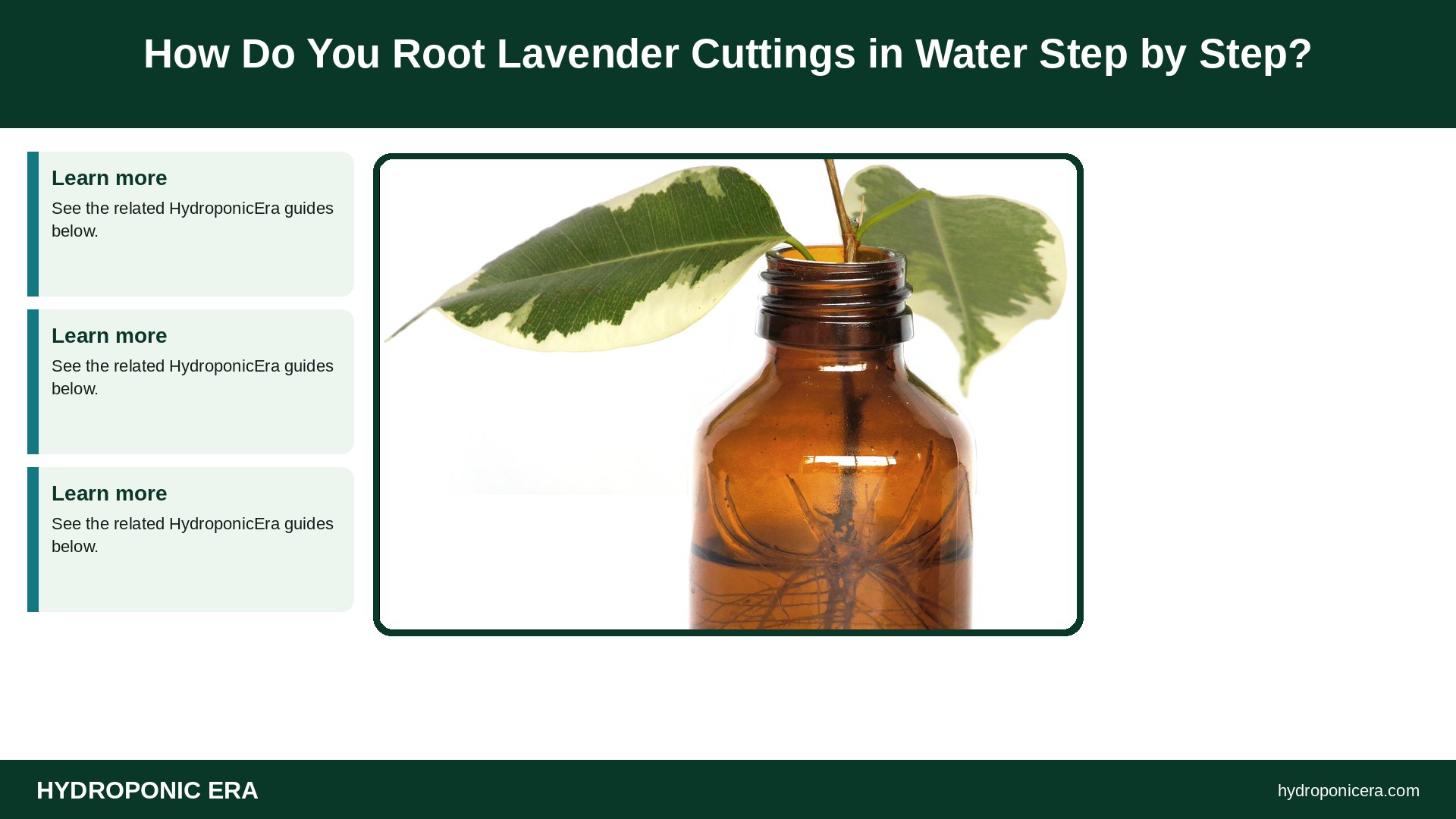
- Choose non-flowering shoots. Flowering stems put energy into blooms, not roots.
- Cut 3–4 inches (8–10 cm). UC suggests using the past season’s growth with a small “heel” of older wood attached.
- Strip the bottom half of the leaves, as Colorado State advises, so no leaves sit in water.
- Use a narrow glass with just 1 inch (2.5 cm) of water covering the base.
- Place in bright, indirect light at room temperature.
- Change the water every one to two days. Lavender stems rot quickly in stale water.
- Watch for white bumps at the base, then short roots.
- Pot immediately once roots are about ½–1 inch (1–2.5 cm) long.
What Supplies Do Lavender Cuttings in Water Need?
- Clean, sharp pruners or a knife wiped with alcohol.
- Small narrow glasses or bottles, one per few cuttings.
- Clean water at room temperature; dechlorinated tap water is fine.
- A bright windowsill or grow light without harsh afternoon sun through glass.
- Small pots and gritty mix ready for potting day.
- Labels with cultivar and date, which Colorado State recommends.
How Long Do Lavender Cuttings in Water Take to Root?
Plan on several weeks. UC ANR says cuttings in soilless media under mist or high humidity should root in 4–6 weeks, and that some cultivars root more successfully than others. Water rooting is often slower and less even. Penn State Extension notes that warm rooting media around 75–80°F (24–27°C) speed rooting of cuttings, so a cold windowsill holds things back.
Do Lavender Cuttings in Water Need Rooting Hormone?
Sources differ. UC suggests dipping the heel in rooting hormone, while Colorado State says hormones aren’t necessary. For lavender cuttings in water, hormone mostly washes off, so it matters more if you root in mix. Penn State notes hormone speeds rooting but too much can slow it.
Why Do Lavender Cuttings in Water Rot?
- Too much stem underwater: Keep water shallow.
- Stale water: Bacteria multiply fast; change it often.
- Leaves in water: Submerged leaves decay and foul the water.
- Soft, green tips only: Very tender growth wilts and rots; a little woody heel helps.
- Heat and darkness: Warm, dim spots encourage rot more than rooting.
Our guide to pythium root rot explains why warm, stagnant water favors rot organisms.
What Is a Better Alternative to Water?
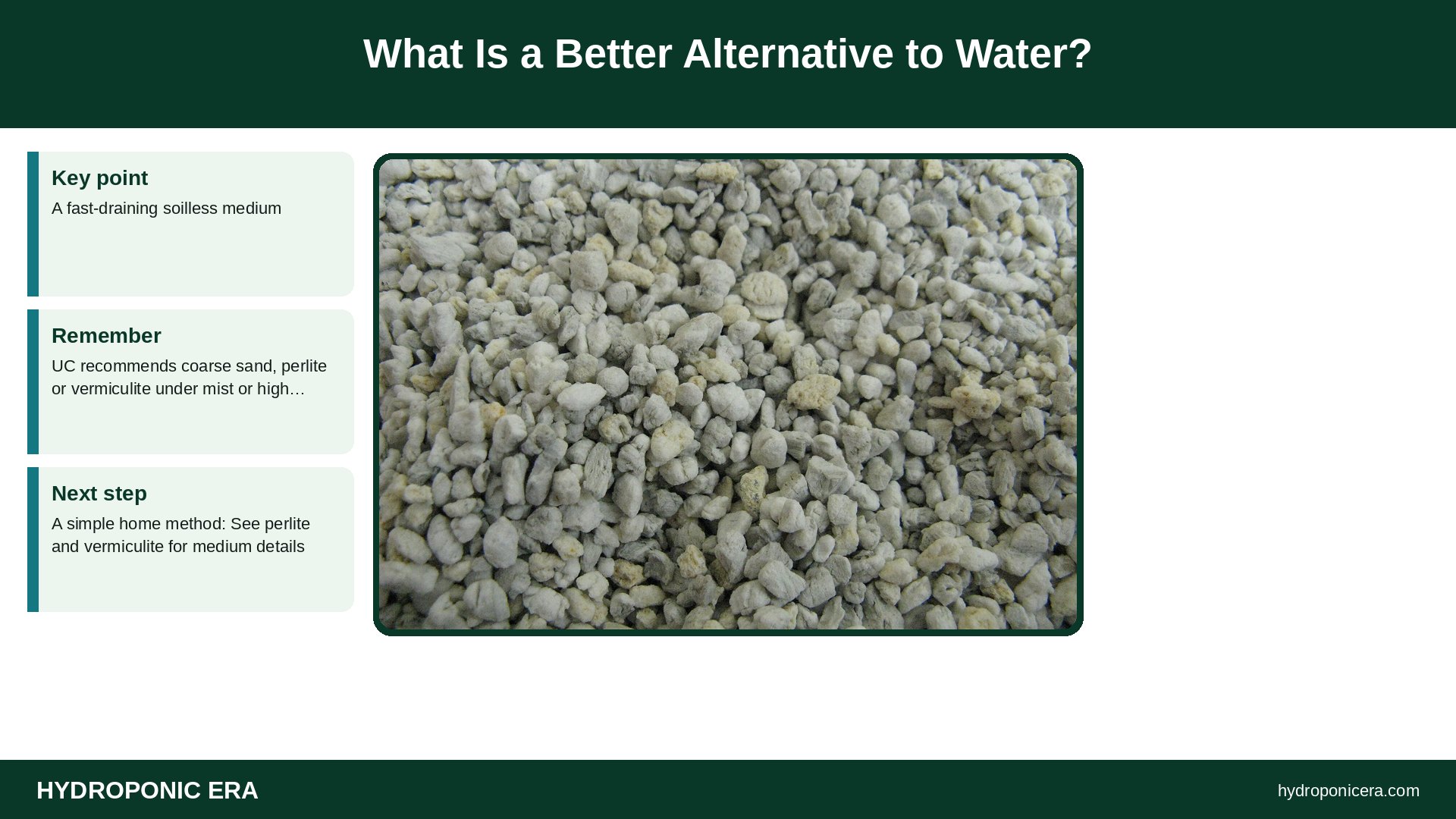
A fast-draining soilless medium. UC recommends coarse sand, perlite or vermiculite under mist or high humidity, and Colorado State suggests well-draining sterile potting soil or horticultural vermiculite. A simple home method:
- Fill a small pot with a 50:50 mix of perlite and seed-starting mix.
- Insert the stripped stem about 1–1.5 inches (2.5–4 cm) deep.
- Water once, then cover with a clear bag or humidity dome vented daily.
- Keep bright and warm; a heat mat helps.
- Tug gently after four weeks; resistance means roots.
See perlite and vermiculite for medium details.
How Do You Pot Lavender Cuttings in Water Once Rooted?
Move them early, into a gritty mix in a small pot with drainage. NC State says lavender needs perfectly drained soil on the dry side, full sun, and prefers neutral to alkaline soil. Water lightly after potting, then let the top inch (2.5 cm) dry before watering again. Keep new plants in bright light and harden them off gradually before planting outdoors.
How Do You Care for Young Lavender Plants?
Give them maximum light and minimal water. NC State says lavender needs full sun and soil on the dry side, and that providing good air circulation helps prevent leaf spot. Indoors, use a south window or a grow light for 12–16 hours a day. Pinch the tips once new growth appears to encourage branching. Hold off fertilizer until the plant is actively growing, then feed lightly. Plant outdoors after the last frost, once the root ball holds together when you tip it from the pot.
Which Lavender Types Root Most Easily?
UC notes some cultivars root more successfully than others, and NC State’s New Crops program warns that some varieties root poorly, so choose cultivars carefully. English lavender (Lavandula angustifolia) cultivars like ‘Hidcote’ and ‘Munstead’ are common choices. If one variety fails in water, try it in mix before giving up.
Can You Keep Lavender in Water Long Term?
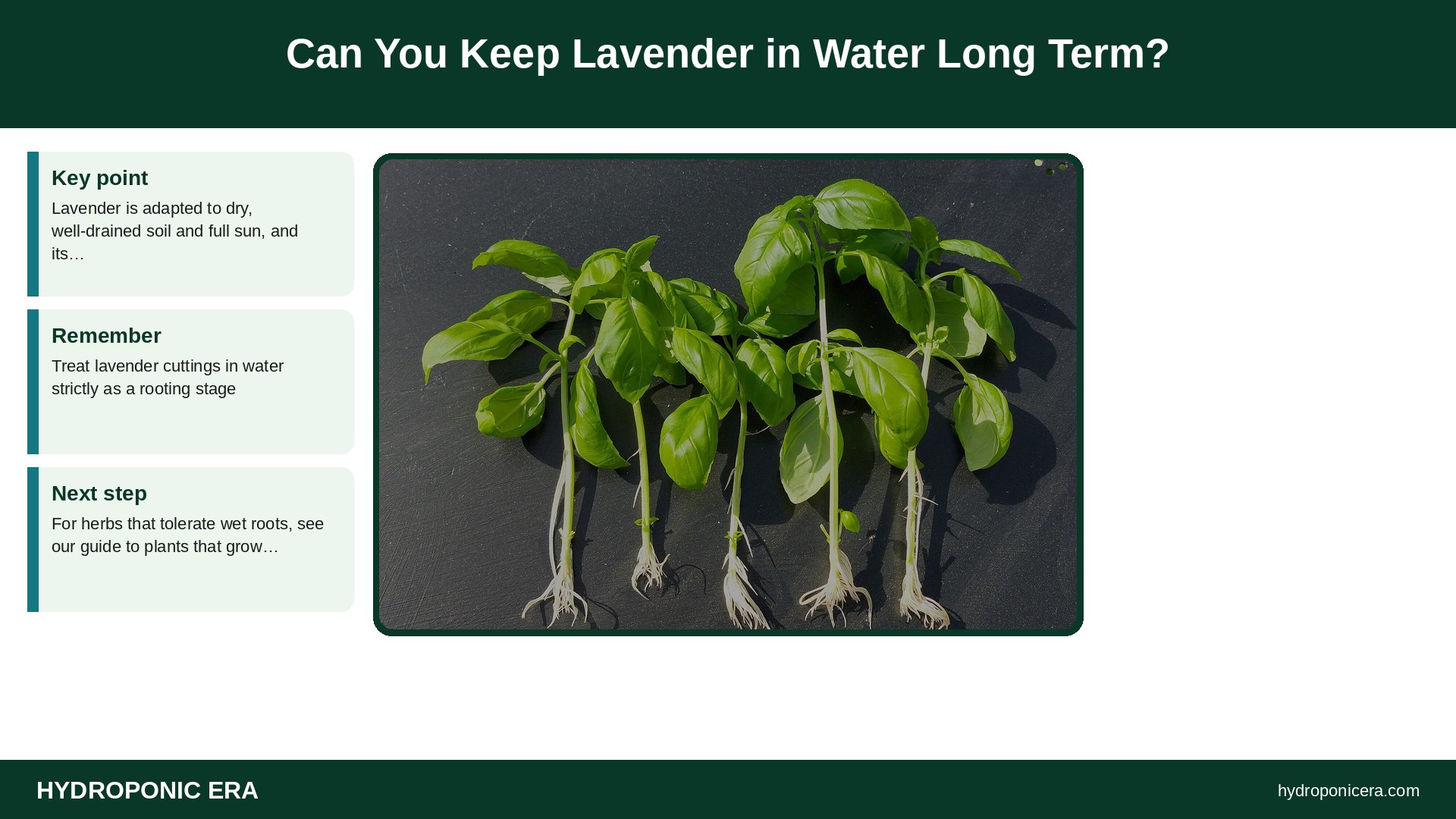
No. Lavender is adapted to dry, well-drained soil and full sun, and its roots rot in constant water. Treat lavender cuttings in water strictly as a rooting stage. For herbs that tolerate wet roots, see our guide to plants that grow in water.
FAQs
Can I root lavender from store-bought bunches?
Rarely. Cut flower stems are usually flowering and too old.
Should I cover lavender cuttings in water?
A loose clear bag helps humidity; vent it daily.
How many lavender cuttings should I take?
Take several more than you need, since some won’t root.
Can I root lavender in winter?
NC State’s New Crops program suggests taking fall cuttings to grow indoors over winter where plants may freeze.
Does tap water work?
Usually; change it often.
Sources
- University of California ANR — Lavenders for California Gardens, Publication 8135 (PDF)
- Ask Extension (Colorado State University Extension response) — Propagating lavender
- North Carolina State Extension — Lavandula angustifolia (English Lavender)
- NC State Extension New Crops & Organics — Lavender: History, Taxonomy, and Production
- Penn State Extension — Propagating Houseplants
- Photo credits (Wikimedia Commons, edited with titles): Vanessa cardui on Lavandula angustifolia-2459 by Isiwal (CC BY-SA 4.0); Ficus cuttings with roots in a bottle, White background by Biusch (CC BY-SA 3.0); Perlite1 by KENPEI (CC BY-SA 3.0); Basilikum (Ocimum basilicum) Stecklinge — Josef Schlaghecken by Schlaghecken Josef (CC BY-SA 4.0); 2008-09-20 Thermometer reading by Ildar Sagdejev (Specious) (CC BY-SA 4.0)