
What is living lettuce and does it last longer? Living lettuce is lettuce harvested with its roots still attached, usually from a hydroponic or vertical farm, and sold in a closed plastic clamshell. Research shows the closed clamshell does most of the work: in an Auburn University study, closed clamshells cut weight loss to 5.5% versus 18.1% for open storage, and lettuce with roots in closed clamshells stayed salable for 18 days.
Key takeaway: Living lettuce is often marketed as lasting longer, but researchers note that scientific data on its shelf life are limited. A 2025 Acta Horticulturae study found lettuce kept with roots held 36% more fresh weight than lettuce without roots after cold storage. For home growers, that means harvesting with roots can help, if the lettuce stays cold and covered.
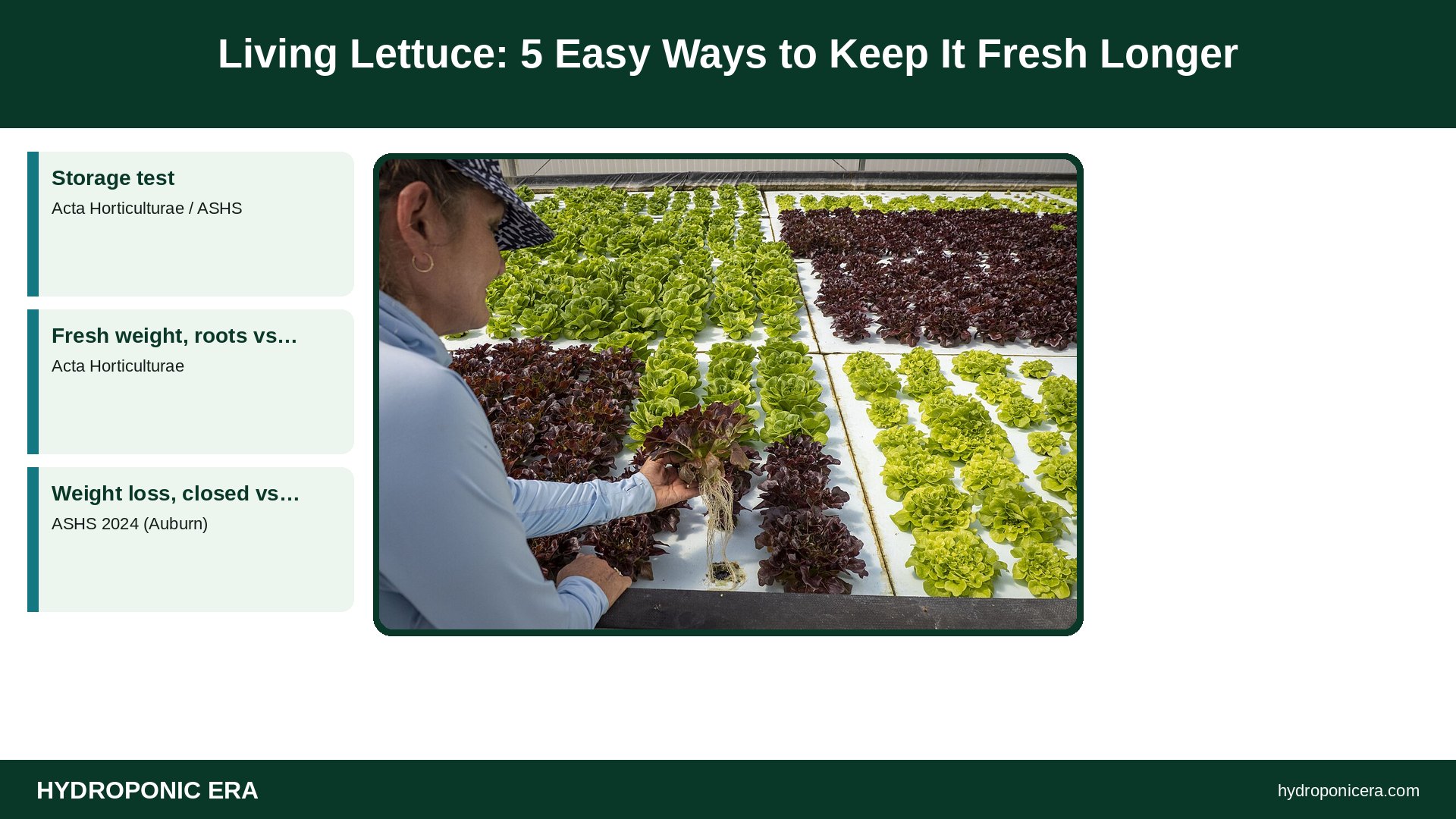
| Fact | What research reports | Source |
|---|---|---|
| Storage test | 28 days at 39°F (4°C), 85% RH | Acta Horticulturae / ASHS |
| Fresh weight, roots vs no roots | 36% higher with roots | Acta Horticulturae |
| Weight loss, closed vs open clamshell | 5.5% vs 18.1% | ASHS 2024 (Auburn) |
| Salable life | 18 days closed with roots; 7 days open | ASHS 2024 (Auburn) |
| Best lettuce storage | 32–34°F (0–1°C), 95–100% RH | Global Cold Chain Alliance |
What Is Living Lettuce?
Living lettuce is whole lettuce harvested with intact roots. The Acta Horticulturae study describes it as a common practice for lettuce grown in greenhouses and vertical, controlled environment systems, promoted as a way to extend shelf life. Any hydroponic lettuce grown in plugs or net cups can be harvested this way.
The roots usually stay in a small plug of growing media or are trimmed short. Our guide to harvesting hydroponic lettuce covers when and how to cut or pull plants.
Does Living Lettuce Really Last Longer?
Partly. In the Acta Horticulturae study, lettuce was stored for 28 days at 39°F (4°C) and 85% relative humidity. Fresh weight was 36% higher in plants with roots than in plants without roots. In the related ASHS 2024 abstract from Auburn University, few differences were seen between root treatments, while the clamshell made a bigger difference to weight loss and salability.
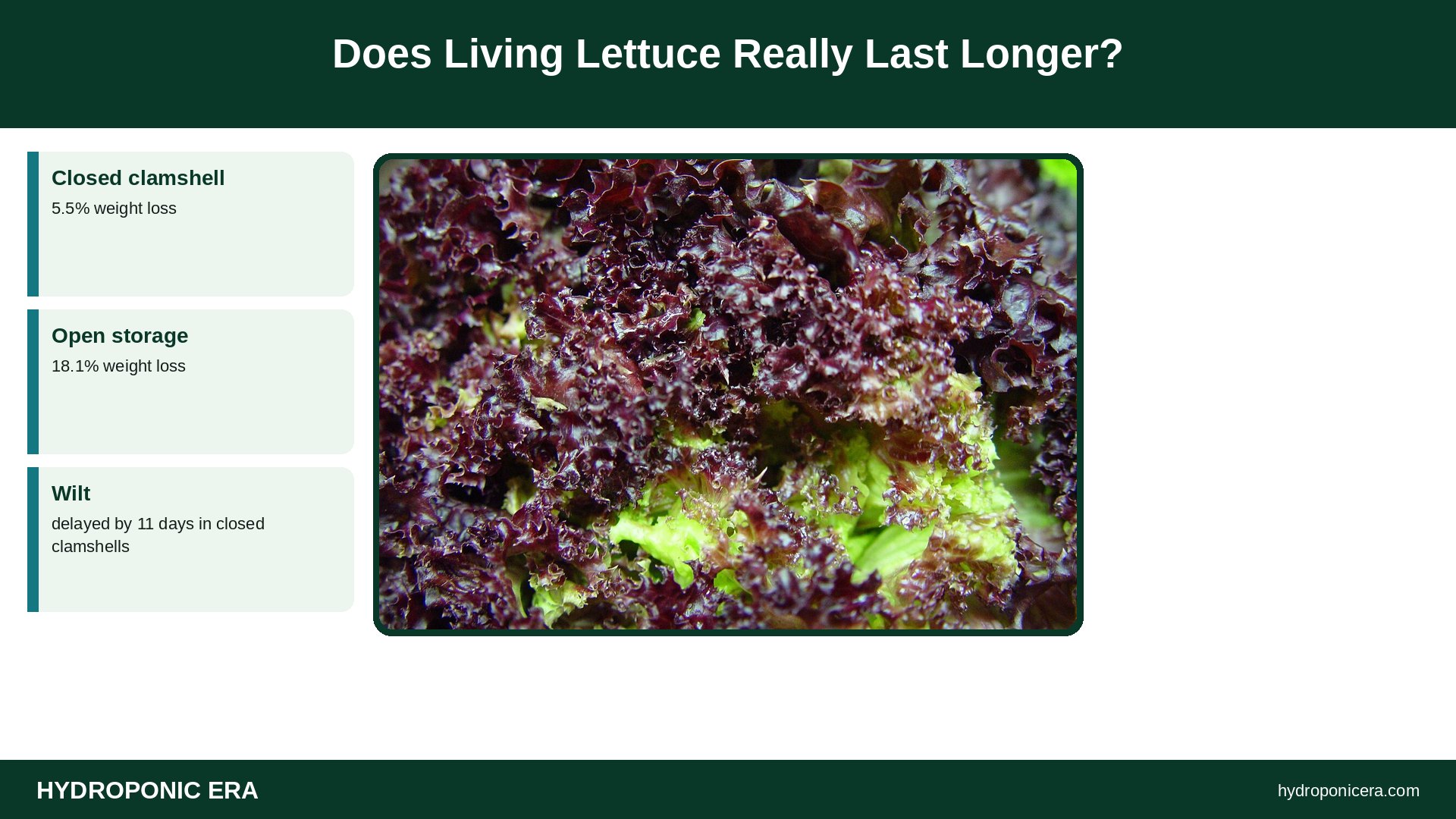
- Closed clamshell: 5.5% weight loss.
- Open storage: 18.1% weight loss.
- Wilt: delayed by 11 days in closed clamshells.
- Salable life: 18 days closed with roots, 7 days open.
So the container matters at least as much as the roots. If you grow your own living lettuce, a lidded box in the fridge copies the closed clamshell used in the study, and it costs almost nothing.
Why Did Roots Matter Less Than Expected?
Root length may explain it. The Auburn abstract notes that the roots in that study were short, about 4 cm (1.6 inches (4.1 cm)). It says previous research suggested harvesting living lettuce with 9 cm (3.5 inch (8.9 cm)) roots increased storage life and quality. If you sell or store living lettuce, longer intact roots may give more benefit than a short stub.
Does Living Lettuce Keep Its Nutrients?
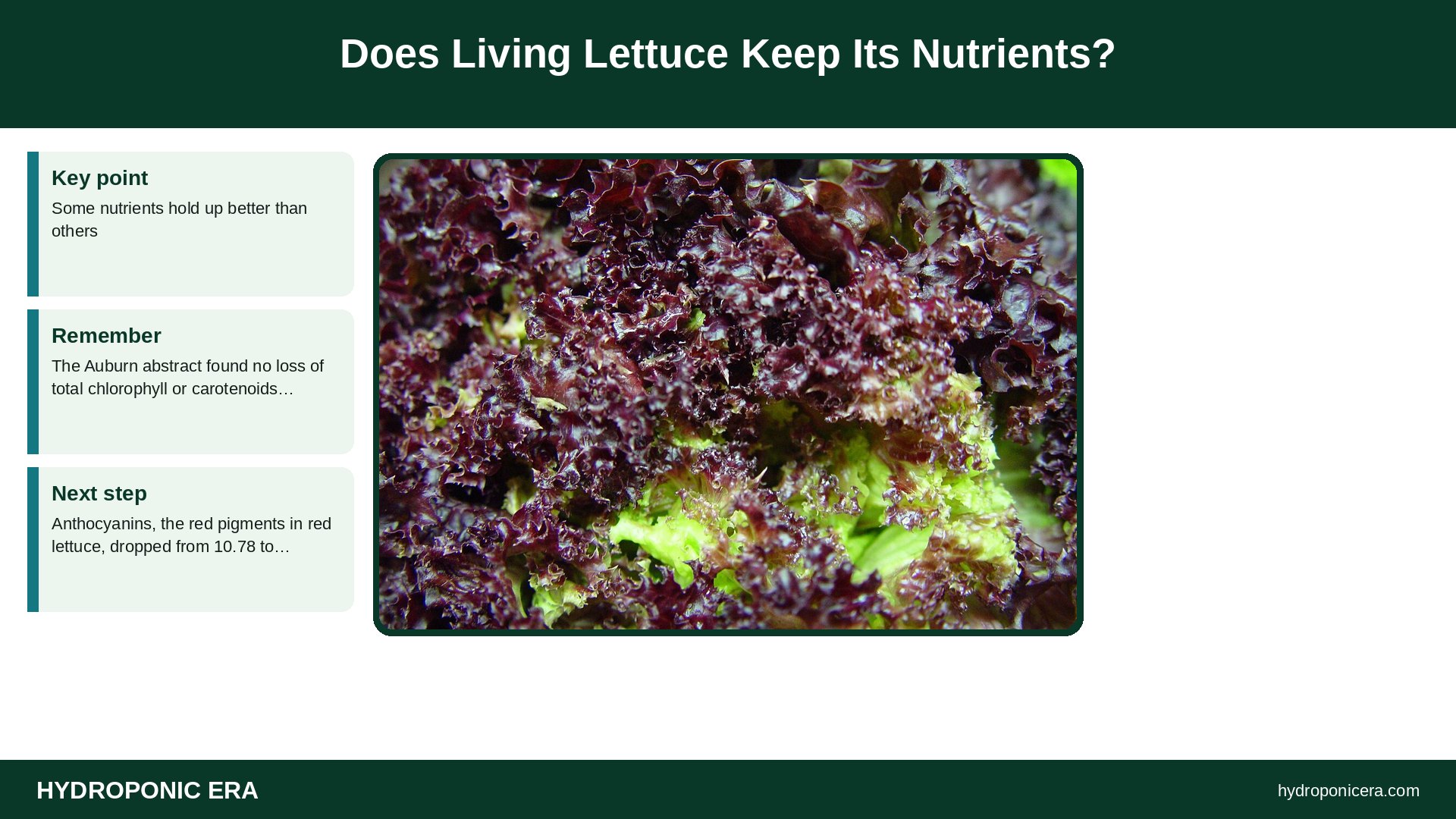
Some nutrients hold up better than others. The Auburn abstract found no loss of total chlorophyll or carotenoids over storage. Anthocyanins, the red pigments in red lettuce, dropped from 10.78 to 3.22 mg/L between day 0 and day 14. The authors concluded that consumers should eat lettuce within 7 to 10 days of harvest for the best nutritional and postharvest quality.
Red varieties lose color faster than green ones, so harvest them closer to use. See our list of the best lettuce varieties for hydroponics.
How Should You Store Living Lettuce?
Keep it cold, humid and covered. The Global Cold Chain Alliance lettuce guide recommends 32 to 34°F (0 to 1°C) and 95 to 100% relative humidity. It lists a storage life of about 10 days for leaf types and 2 to 3 weeks for crisphead. Lettuce freezes at about 31.7°F (-0.2°C), so avoid the coldest spot in the fridge.
- Leave the roots on and wrap them in a damp paper towel.
- Place the head in a closed clamshell or lidded box.
- Store in the crisper drawer near 32–34°F (0–1°C).
- Keep it away from apples, pears and melons.
For full home storage tips, read how to store hydroponic lettuce.
Why Keep Living Lettuce Away From Fruit?
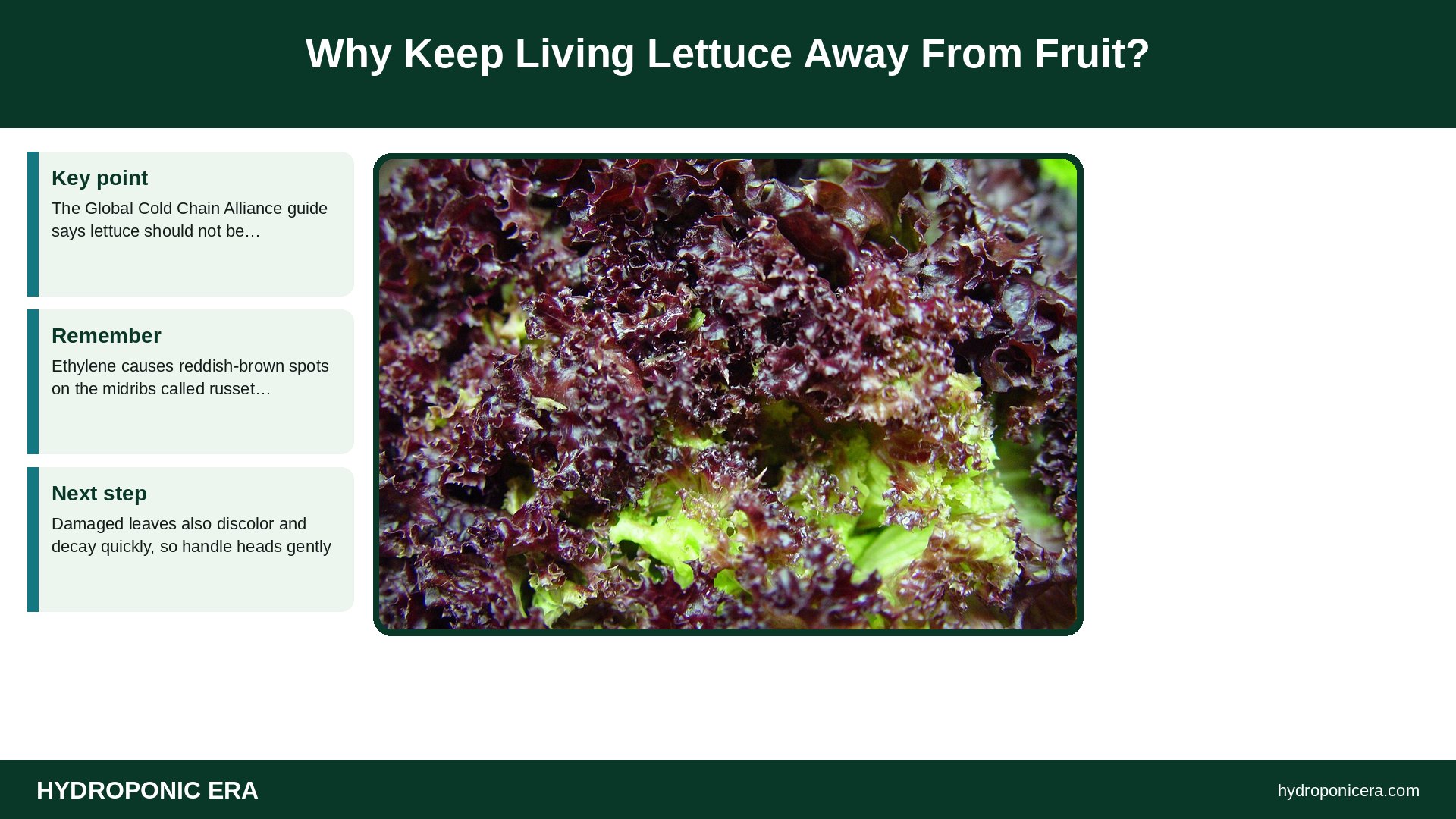
Ethylene. The Global Cold Chain Alliance guide says lettuce should not be stored with ethylene-producing fruit such as apples, pears, cantaloupes, peaches and honeydew melons. Ethylene causes reddish-brown spots on the midribs called russet spotting. Damaged leaves also discolor and decay quickly, so handle heads gently.
How Do You Harvest Living Lettuce at Home?
Pull the whole plant instead of cutting it. In a hydroponic system, lift the net cup or plug and keep as much root as you can. The Auburn abstract suggests longer roots, around 9 cm (3.5 inches (8.9 cm)), may help more than short ones. Handle heads gently, because the Global Cold Chain Alliance guide notes that crushed or broken leaves discolor and decay quickly.
- Have a clean clamshell or lidded box ready.
- Lift the plant with roots and plug attached.
- Trim only damaged outer leaves.
- Chill and cover the head right away.
Can You Regrow Living Lettuce?
Sometimes. Because the base and roots are intact, some growers set living lettuce in water to push a few more leaves. Results vary and regrowth is smaller than the first harvest. Our guide to regrowing lettuce in water explains what to expect.
FAQ About Living Lettuce
Does living lettuce stop losing quality?
No; studies show it still loses weight and color over storage.
How long does living lettuce last?
About 18 days in a closed clamshell with roots in one study.
Should I cut the roots off living lettuce?
No; leave them on until you use the leaves.
Should living lettuce sit in water in the fridge?
A damp towel around the roots is enough.
Is living lettuce more nutritious?
Not proven; eat it within 7 to 10 days for best quality.
Why is living lettuce sold in plastic clamshells?
Closed clamshells cut weight loss and delay wilting.
Sources
- Acta Horticulturae (ISHS) — Postharvest strategies to improve shelf-life of indoor-grown lettuce
- ASHS 2024 Conference — Nutritional Quality and Shelf-Life of “Living Lettuce” Through 28 Days of Cold Storage
- Global Cold Chain Alliance — Lettuce Storage Guide
- Photo credits (Wikimedia Commons, edited with titles): Hydroponic farming, USA (9386) by Preston Keres/USDA/FPAC (Public domain); Hydroponic lettuce leaves dark red by Leon Brooks (Public domain)