
How does perlite propagation work? Perlite propagation means rooting stem cuttings in moist perlite instead of soil or water. Fill a pot with damp perlite, insert cuttings so at least one node is buried, cover them for humidity and keep them warm in bright, indirect light. Many houseplant cuttings root in 2–6 weeks.
Key takeaway: Perlite holds air and some water, drains fast and is sterile out of the bag, which is exactly what a new cutting needs. Keep it evenly moist, never soggy, and move rooted cuttings into potting mix or a hydroponic system once roots reach about 1 in (2.5 cm).
| Factor | Perlite propagation | Water propagation |
|---|---|---|
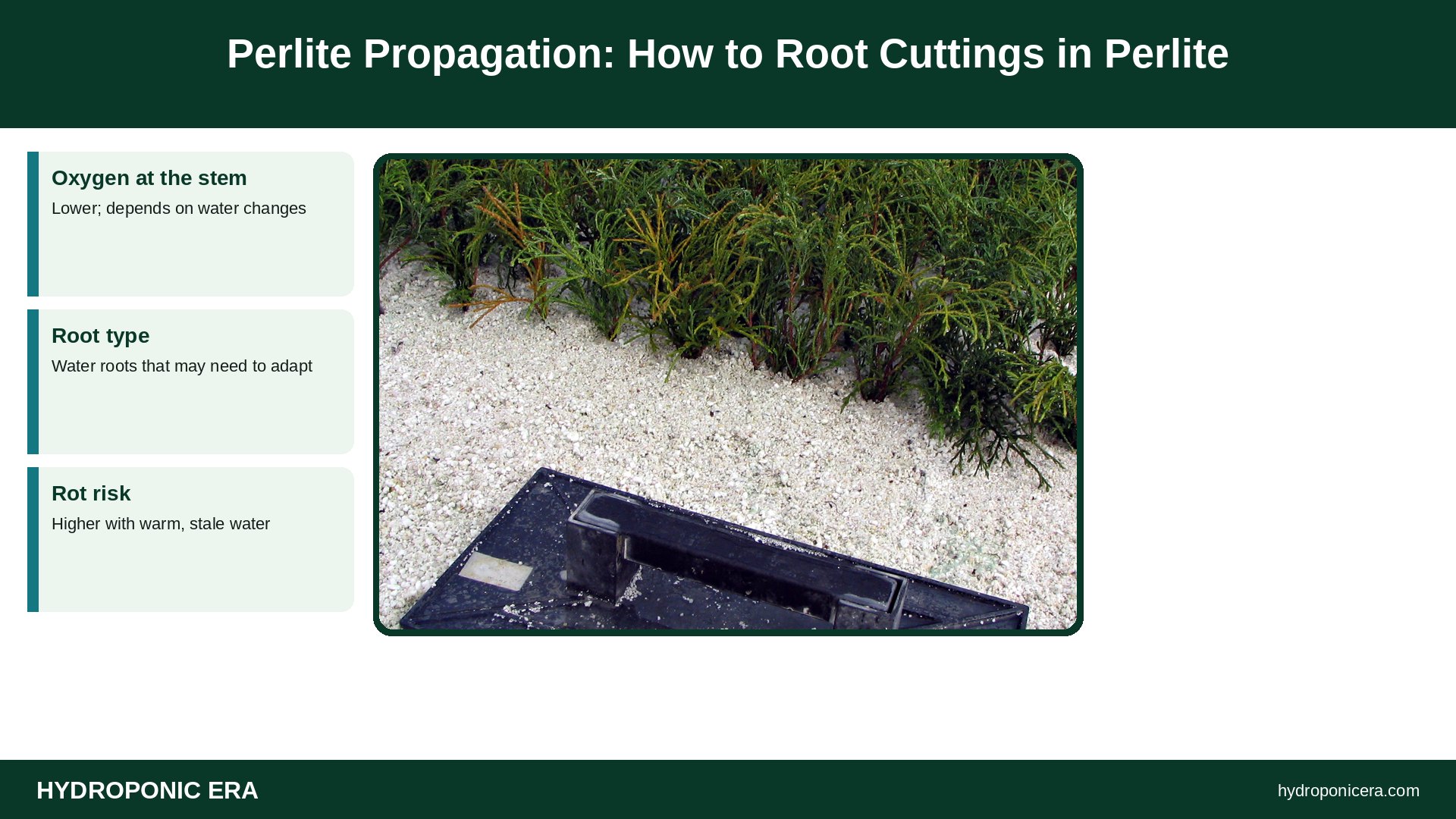
| Oxygen at the stem | High; air spaces around the cut | Lower; depends on water changes |
| Root type | Firmer roots used to a medium | Water roots that may need to adapt |
| Rot risk | Lower if not waterlogged | Higher with warm, stale water |
| Seeing roots | Clear cups help | Easy to see |
| Best for | Woody and semi-woody stems, succulent-prone rotters | Pothos, philodendron, tradescantia |
What Is Perlite and Why Use It for Cuttings?
Perlite is volcanic glass that is heated until it pops into light, white, porous granules. NC State Extension says a good rooting medium is sterile, low in fertility, well drained to give oxygen, and moist enough to stop wilting. Perlite fits that description, which is why perlite propagation is common in nurseries and homes.
- Air: the rough grains leave open pores around the stem.
- Drainage: extra water runs out instead of pooling.
- Clean start: new perlite carries no soil pests or disease.
- Neutral: it adds no nutrients, which cuttings don’t need yet.
Learn how perlite compares with vermiculite in our perlite vs vermiculite guide.
What Do You Need for Perlite Propagation?
You need coarse or medium horticultural perlite, a small pot or clear cup with drainage holes, a clean sharp blade, optional rooting hormone, and a clear bag, dome or tote lid to hold humidity. A tray underneath catches drips. A dust mask is wise when pouring dry perlite.
- Perlite grade: coarse or medium drains best; fine grades stay wetter.
- Container: 3–4 in (8–10 cm) pots or 9–16 oz (266–473 mL) clear cups with holes.
- Cover: a humidity dome or clear bag supported off the leaves.
- Rooting hormone: helpful for woody cuttings, optional for easy houseplants.
How Do You Root Cuttings in Perlite Step by Step?
For perlite propagation, wet the perlite first, take a healthy cutting with at least two nodes, remove the lower leaves, then insert the stem so one or two nodes sit below the surface. Firm the perlite, cover for humidity and keep it in bright, indirect light at about 70–75°F (21–24°C).
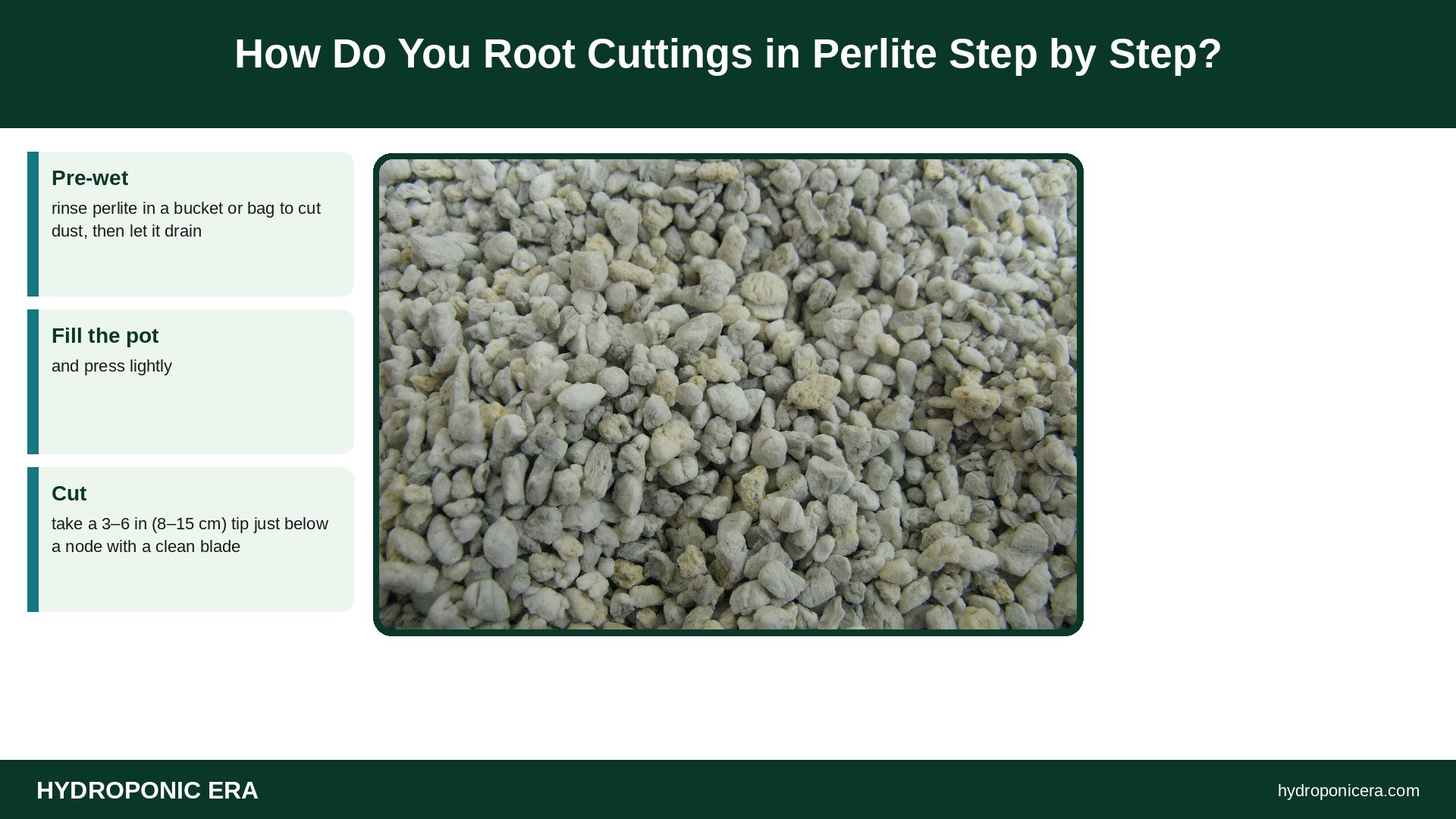
- Pre-wet: rinse perlite in a bucket or bag to cut dust, then let it drain.
- Fill the pot and press lightly.
- Cut: take a 3–6 in (8–15 cm) tip just below a node with a clean blade.
- Strip leaves from the lower half; trim big leaves by half to slow water loss.
- Dip in rooting hormone if you use it, tapping off extra powder.
- Insert: make a hole with a pencil, set the cutting and firm the grains around it.
- Cover with a clear dome or bag, keeping plastic off the leaves.
- Place in bright, indirect light; avoid direct sun under a cover.
- Check moisture every few days and mist or bottom-water as needed.
- Test for roots after 2–3 weeks with a gentle tug or by looking through a clear cup.
How Wet Should Perlite Be for Propagation?
Perlite for propagation should feel damp, like a wrung-out sponge, with no water pooling in the bottom of the pot. Bottom-watering works well: set the pot in a saucer of water for a few minutes, then let it drain. If grains on top dry out fast, that is normal; check moisture an inch down.
For a hands-off version of perlite propagation, some growers keep 1/2–1 in (1–2.5 cm) of water in a sealed container under the perlite as a reservoir, a method often called semi-hydro propagation. If you try that, keep the stem base above the water line so it gets air.
Which Plants Are Best for Perlite Propagation?
Perlite propagation suits most houseplants and many herbs. It is especially handy for plants that rot easily in water, such as succulents, hoya and some begonias, and for semi-woody cuttings like rosemary, lavender and many shrubs. NC State lists semi-hardwood cuttings for plants such as jasmine and gardenia.
| Plant group | Examples | Typical rooting time |
|---|---|---|
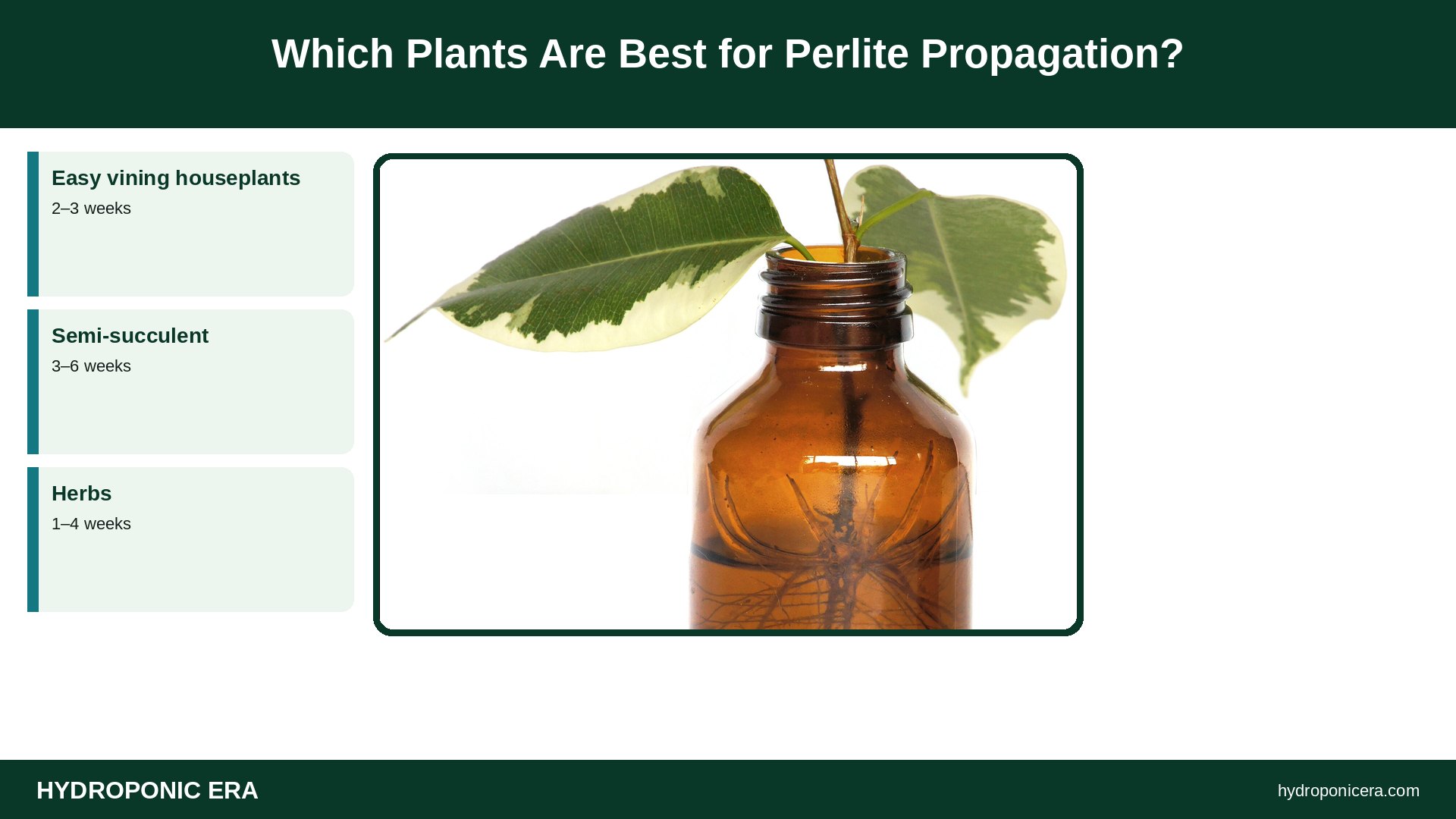
| Easy vining houseplants | Pothos, philodendron, tradescantia | 2–3 weeks |
| Semi-succulent | Hoya, peperomia, jade | 3–6 weeks |
| Herbs | Basil, mint, rosemary | 1–4 weeks |
| Woody shrubs | Jasmine, gardenia, hibiscus | 4–8 weeks or more |
Perlite propagation times vary with warmth and season, so treat these as rough ranges.
Why Are My Perlite Cuttings Rotting or Wilting?
Rot in perlite propagation usually means the medium stays too wet, the room is cold, or the cutting was soft or diseased. Wilting means the cutting is losing water faster than it can take it in, so raise humidity, shade it and trim leaf area. Remove any black, mushy stems quickly.
- Black stem base: let perlite drain more; recut above the rot and restart.
- Wilting: add a cover or mist; move out of direct sun.
- Yellow lower leaves: often normal as the cutting uses stored energy.
- Mold on the surface: vent the cover daily and lower humidity a bit.
- No roots after 6 weeks: try warmth from a seedling mat and fresh cuttings.
Our humidity dome guide and hydroponic cloning guide go deeper.
When Do You Transplant Cuttings From Perlite?
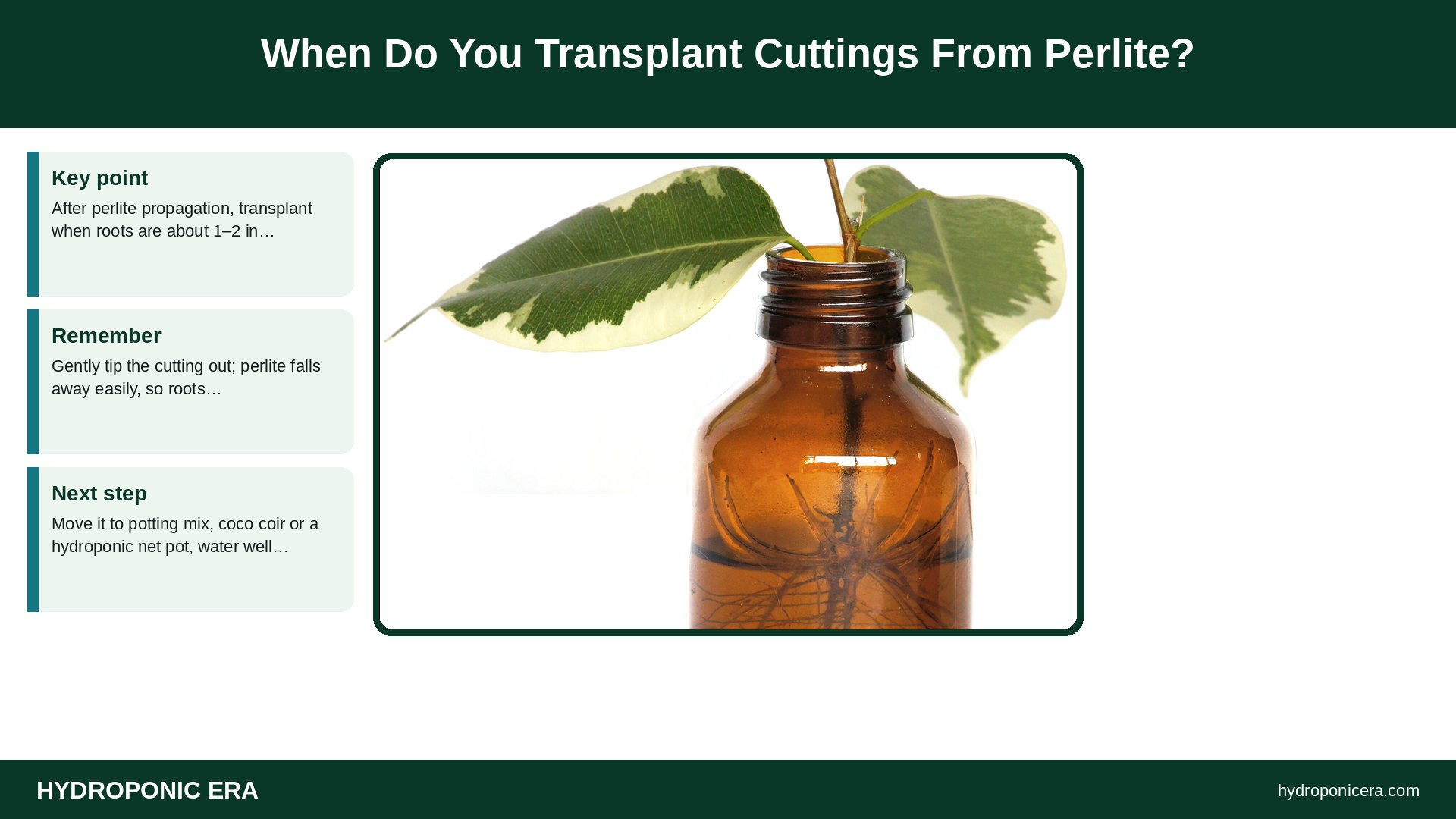
After perlite propagation, transplant when roots are about 1–2 in (2.5–5 cm) long and you see several of them. Gently tip the cutting out; perlite falls away easily, so roots rarely tear. Move it to potting mix, coco coir or a hydroponic net pot, water well and keep it out of strong sun for a few days.
A little perlite clinging to roots is fine. For soil-free next steps, see our hydroponic growing media guide.
FAQ About Perlite Propagation
Is perlite propagation better than water?
Often, for rot-prone or woody cuttings. Water is fine for easy vining plants.
Can you reuse perlite?
Yes. Rinse out roots and debris, then soak in a mild bleach solution and rinse well.
Do cuttings in perlite need fertilizer?
Not until they root. Then use a weak feed or move them to potting mix.
Should I mix perlite with peat or coir?
A 50:50 mix holds more water and suits cuttings that dry out fast.
Is perlite dust harmful?
Dry perlite dust can irritate lungs and eyes, so wet it first and consider a mask.
Sources
- N.C. State Extension — Plant Propagation by Stem Cuttings: Instructions for the Home Gardener
- Penn State Extension — Propagating Houseplants
- Iowa State University Extension and Outreach — How to Propagate Houseplants by Stem Tip Cuttings
- University of Illinois Extension — Houseplant Propagation
- Photo credits (Wikimedia Commons, edited with titles): Perlite as a medium for rooting of cuttings by Gmihail at Serbian Wikipedia (CC BY-SA 3.0 rs); Perlite1 by KENPEI (CC BY-SA 3.0); Ficus cuttings with roots in a bottle, White background by Biusch (CC BY-SA 3.0); Ficus cuttings with roots in a bottle, White background by Biusch (CC BY-SA 3.0)