
What is willow water and does it work? Willow water is a rooting soak made by steeping chopped young willow stems in water for about 24 hours. Research shows it can modestly improve rooting, especially combined with rooting hormone, but a 2024 petunia trial found synthetic IBA worked better than willow water alone. It is a cheap, gentle helper, not a guarantee.
Key takeaway: Use willow water for easy-to-root cuttings or when you want a natural option. For hard-to-root woody plants, rooting hormone remains more reliable, and the two can be combined.
| Study | What was tested | Result |
|---|---|---|
| HortScience (1997) | Willow diffusate on fringetree and mung bean cuttings | Willow plus IBA gave the most roots |
| Scientia Horticulturae (2020) | Willow bark extract on chrysanthemum and lavender | Improved rooting efficiency |
| Arctic Salix study (2022) | Salix water extract on willow cuttings | More secondary roots |
| Petunia trial (2024) | Willow water extract vs IBA | Helped, but 500 ppm IBA performed best |

What Is Willow Water?
Willow water is a homemade plant soak made from willow (Salix) stems steeped in water. Gardeners use it to help cuttings form roots. It contains salicylic acid and other natural compounds released from the cut stems. You soak cuttings in it before planting, or use it as the water in a rooting jar or tray.
It is an old folk method, and recent studies have tested it. A 2022 study of arctic Salix species notes that Salix water extract contains salicylic acid and other compounds with antifungal and root-promoting properties, and has long been used by home gardeners as an alternative rooting treatment.
Does Willow Water Really Help Cuttings Root?
It can help, but the effect is modest and depends on the plant. A 1997 HortScience report found that willow diffusate followed by IBA gave fringetree cuttings the most roots. In mung bean tests, willow diffusate plus 80 ppm IBA beat either one alone, and rooting rose as willow concentration increased.
A 2020 study in Scientia Horticulturae found willow bark extract improved rooting of chrysanthemum and lavender cuttings, though the authors said the exact mechanism is still unclear. A 2024 petunia trial reported that willow water extract increased rooting compared with plain water, but 500 ppm IBA gave the best survival and root growth. So willow water helps, but it is not as strong as commercial hormone.
Why Does Willow Water Work?
It likely works because of salicylic acid and related compounds released from willow tissue. The 2020 study explains that salicylic acid is a major component of willow bark extracts and may boost the effect of natural auxins, the hormones that start roots, while calming wound-response signals. Some studies also report auxin-like compounds in willow extracts.
Researchers have not pinned down a single active ingredient, and the strength of homemade willow water varies with willow species, season and stem age. A study on blackberry cuttings found extracts from willow shoots collected at different times gave different results, which is why results at home can be inconsistent.
How Do You Make Willow Water Step by Step?
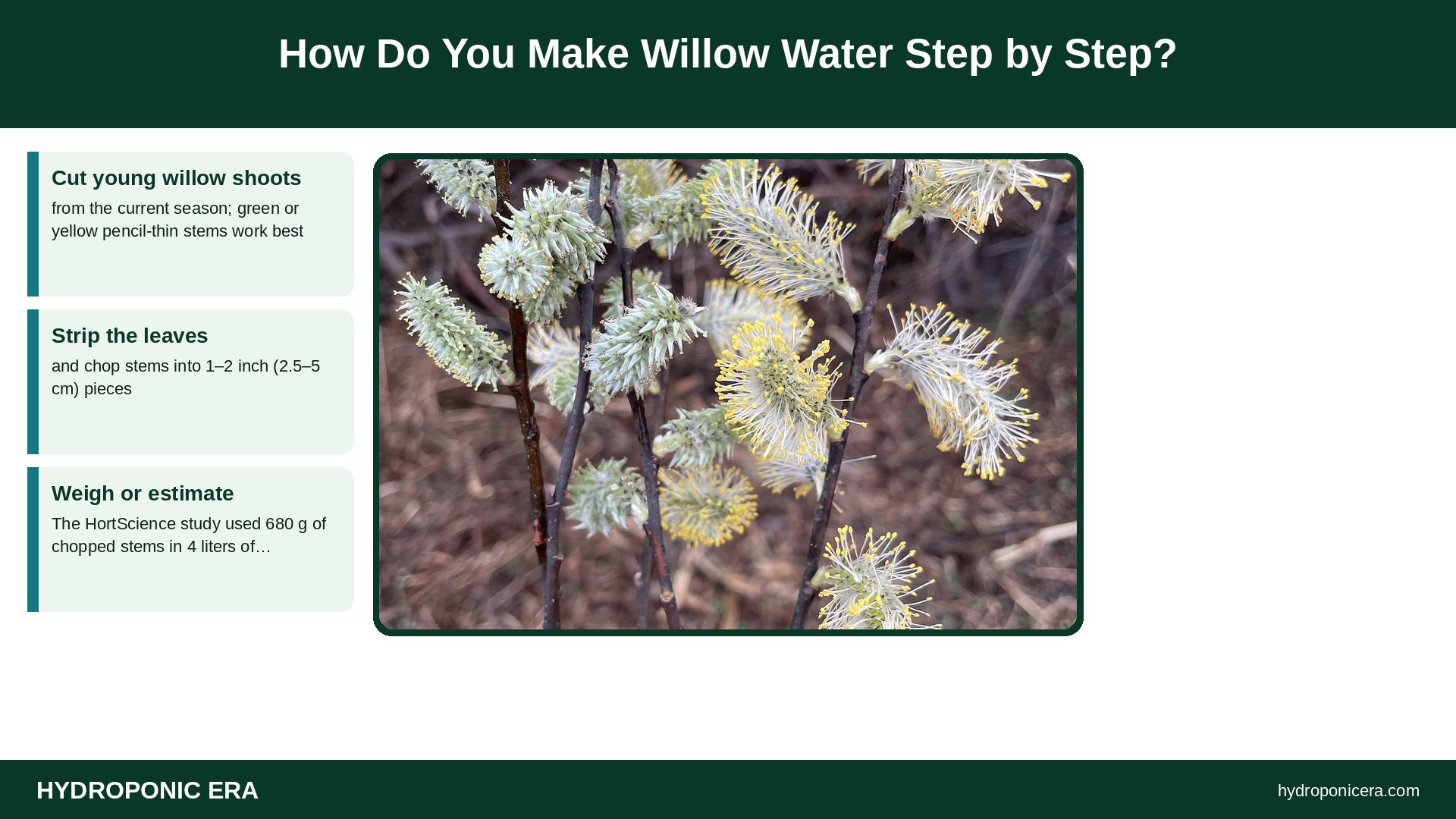
- Cut young willow shoots from the current season; green or yellow pencil-thin stems work best.
- Strip the leaves and chop stems into 1–2 inch (2.5–5 cm) pieces.
- Weigh or estimate. The HortScience study used 680 g of chopped stems in 4 liters of water, about 1.5 lb per 1 gallon (3.8 L).
- Cover with water in a clean jar or bucket.
- Steep for 24 hours at room temperature, out of direct sun.
- Strain out the stems through a sieve.
- Use within a few days, or refrigerate in a labeled, sealed bottle.
Some gardeners pour boiling water over the stems to speed extraction. The 1997 study found willow diffusate kept its root-promoting activity after 20 minutes at 212°F (100°C), so a hot-water version is reasonable.
How Do You Use Willow Water on Cuttings?
Use it by soaking the base of fresh cuttings in it for several hours to overnight before sticking them in media, or by using it as the water in a rooting jar. The HortScience study steeped cuttings in diffusate for 24 hours before applying IBA powder. Change jar water regularly so it does not turn cloudy.
- Soak method: Stand cutting bases in the soak for 4–24 hours, then plant.
- Water rooting: Fill the rooting jar with the strained liquid and refresh it weekly.
- Watering method: Water newly planted cuttings with it for the first week or two.
- Combo method: Soak first, then dip in rooting hormone.
For rooting setups, see our guides to hydroponic cuttings and cloning and a humidity dome for cuttings.
Which Plants Respond Best to Willow Water?
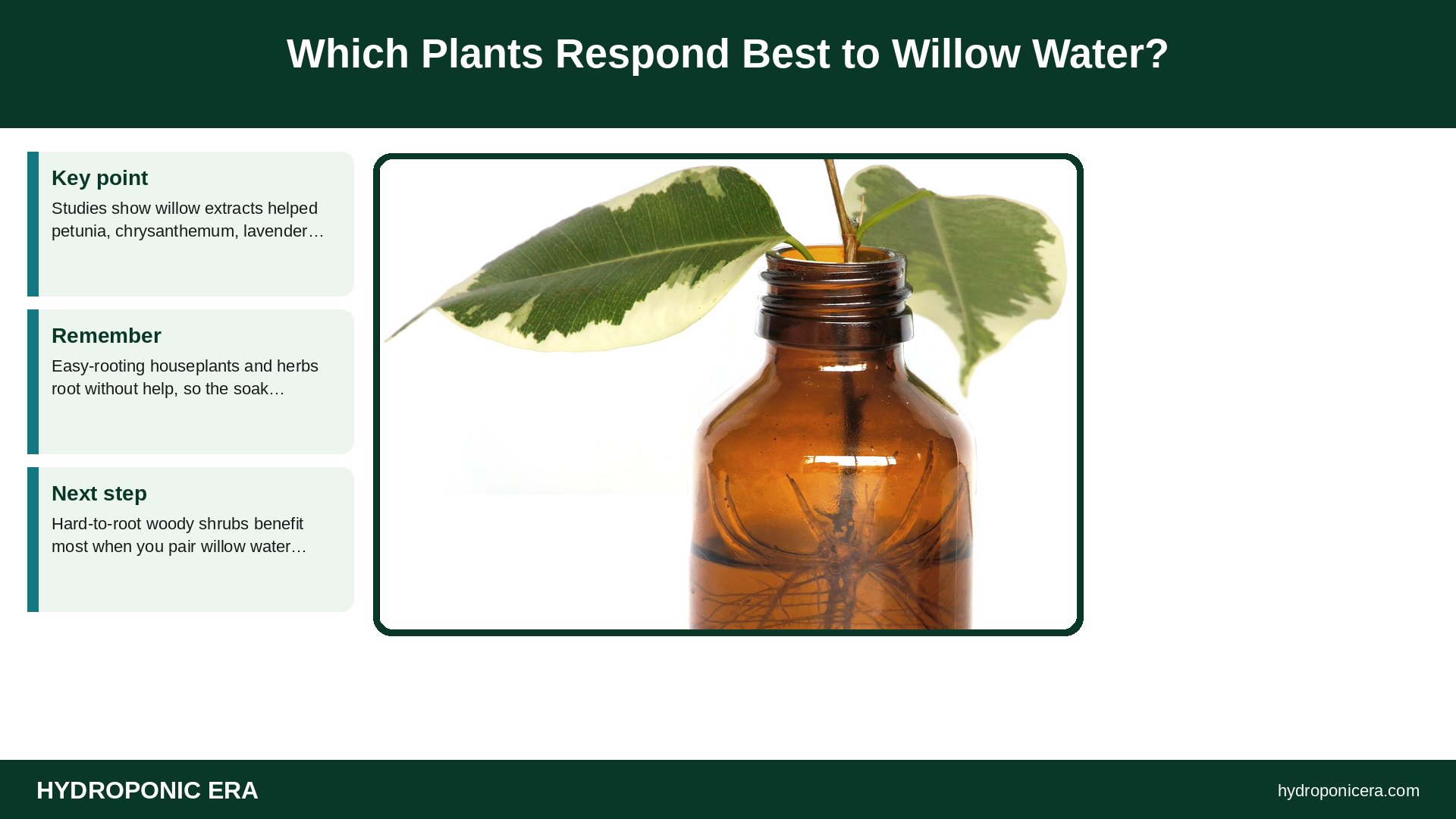
Studies show willow extracts helped petunia, chrysanthemum, lavender, coleus, olive and fringetree cuttings, plus willow cuttings themselves. Easy-rooting houseplants and herbs root without help, so the soak mainly adds a small boost. Hard-to-root woody shrubs benefit most when you pair willow water with commercial rooting hormone.
Is Willow Water Better Than Rooting Hormone?
It is not better than rooting hormone in the studies available. Commercial products contain measured amounts of IBA, a synthetic form of a natural auxin, while willow water strength varies. In the petunia trial, 500 ppm IBA beat 100% willow water. The homemade soak is still useful because it is free, gentle and easy to make.
| Factor | Willow water | IBA rooting hormone |
|---|---|---|
| Cost | Free if you have willow | Low, but you buy it |
| Strength | Variable | Measured, labeled |
| Hard-to-root plants | Weak alone | More reliable |
| Shelf life | Days, best fresh | Months to years |
What Mistakes Should You Avoid With Willow Water?
- Using old, woody stems: Young shoots release more compounds.
- Letting it sit for weeks: It can grow bacteria and smell. Make fresh batches.
- Skipping clean tools: Dirty jars spread rot to cuttings.
- Expecting miracles: Light, warmth and humidity still decide success.
Penn State Extension says cuttings root best in bright, indirect light with a rooting media temperature of 75–80°F (24–27°C). Brown, mushy stems usually mean rot, explained in our pythium root rot guide.
Can You Make a Rooting Soak Like Willow Water From Other Plants?
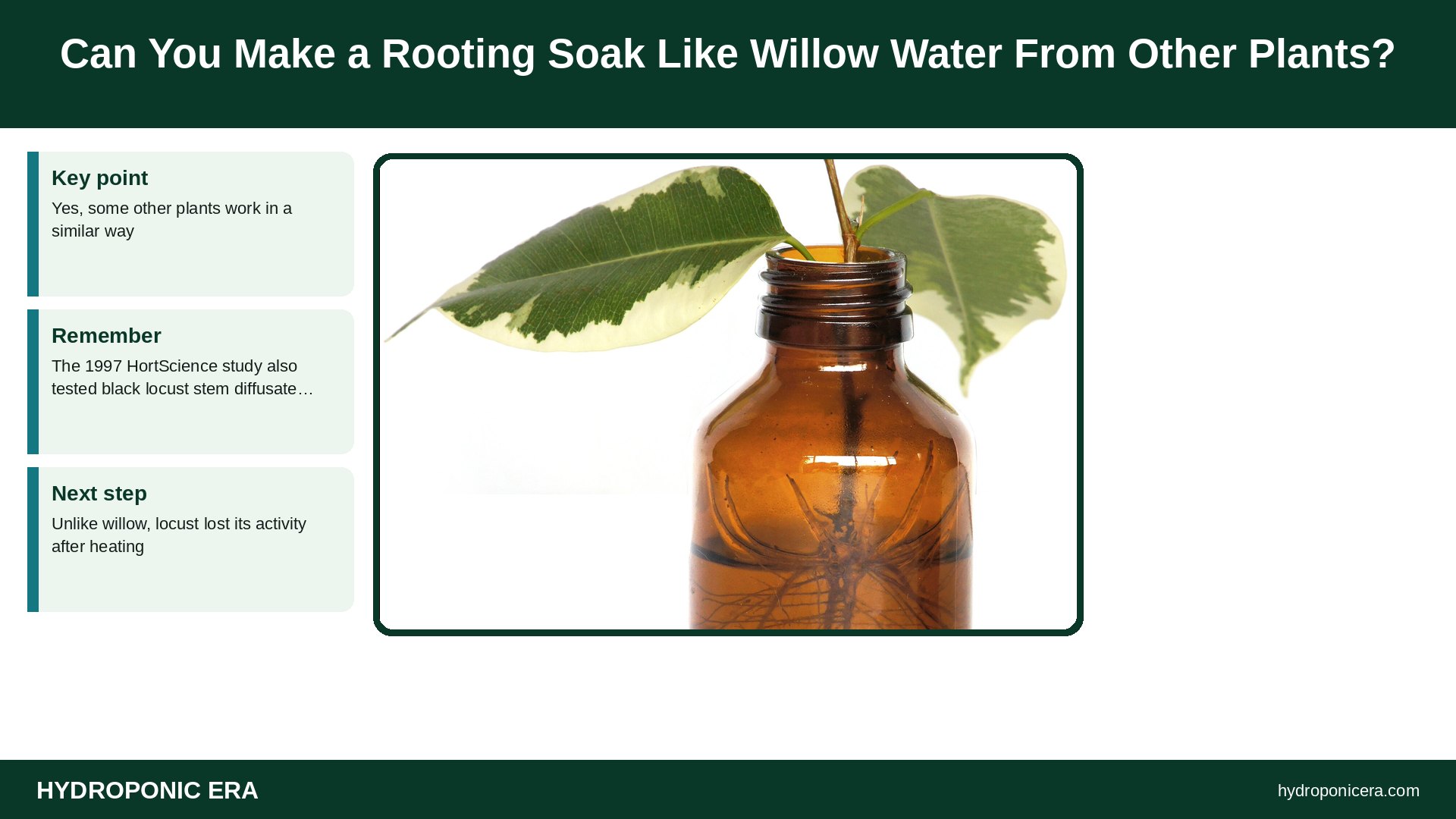
Yes, some other plants work in a similar way. The 1997 HortScience study also tested black locust stem diffusate, which improved rooting when paired with IBA, though less than willow water. Unlike willow, locust lost its activity after heating. Willow remains the best-studied choice, so start there if you have access to a tree.
FAQs
Which willow species should I use?
Any Salix species works; weeping, pussy and contorted willows are common.
How long does willow water last?
Use it within a few days, or refrigerate for a little longer.
Can I use willow water in hydroponics?
Use it only for rooting, not as a nutrient solution.
Can willow water replace fertilizer?
No. It contains no meaningful nutrients.
Does willow water work on seeds?
There is little good evidence for seeds; it is mainly used on cuttings.
Sources
- HortScience (1997) — Experiments with Locust and Willow Diffusates on Rooting Cuttings
- Wise, Gill and Selby-Pham (2020), Scientia Horticulturae — Willow bark extract and the biostimulant complex Root Nectar increase propagation efficiency in chrysanthemum and lavender cuttings
- Arctic, Antarctic, and Alpine Research (2022) — Influence of treatment on rooting of arctic Salix species cuttings for revegetation
- Horticulture Research Journal (2024) — Willow water extract, IBA and micronutrients on propagation of Petunia x hybrida
- Penn State Extension — Propagating Houseplants
- Photo credits (Wikimedia Commons, edited with titles): Salix babylonica Tehran User Alborzagos by Alborzagros (CC BY-SA 3.0); Salix discolor – male and female flowers 0728 by Francis Groeters (CC BY 4.0); Ficus cuttings with roots in a bottle, White background by Biusch (CC BY-SA 3.0); Ficus cuttings with roots in a bottle, White background by Biusch (CC BY-SA 3.0); Basilikum (Ocimum basilicum) Stecklinge — Josef Schlaghecken by Schlaghecken Josef (CC BY-SA 4.0)