
Should you quarantine new aquarium plants? Yes, unless they are lab-grown tissue culture. Aquarium plant quarantine stops snails, eggs and other hitchhikers. A 2025 review cites a study where 90% of sampled aquarium plants carried live hitchhiking invertebrates. Tropica says its sealed 1-2-Grow cups need no quarantine. Potted or bunched plants should be rinsed, inspected, dipped and watched.
Key takeaway: New plants are the most common way pest snails, hydra and algae enter a tank. The fix is simple: buy clean stock when you can, and run an aquarium plant quarantine for everything else. This guide uses Tropica’s grower advice, a 2025 scientific review on plant hitchhikers, and a published hobby test of plant dips.
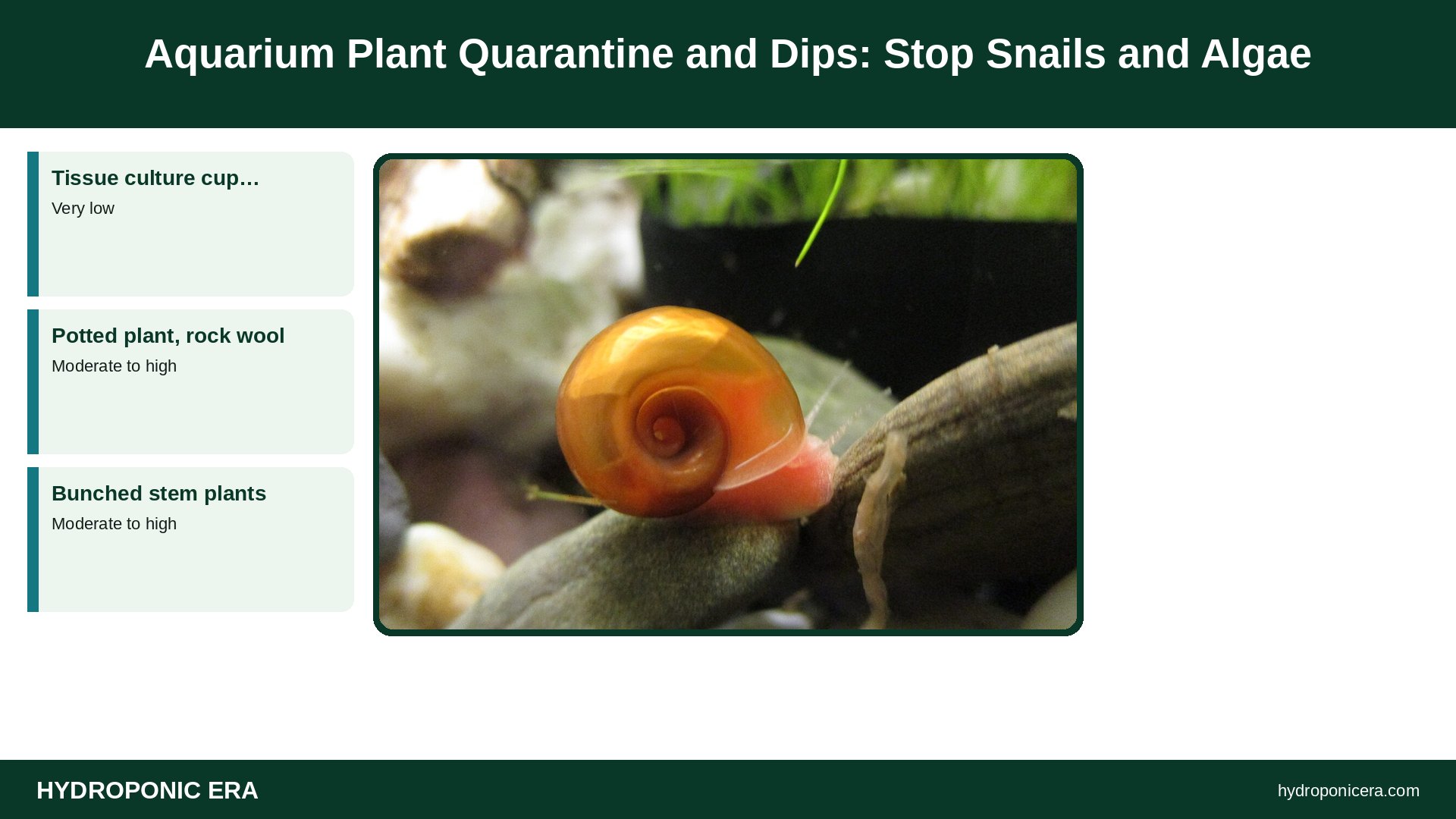
| Plant Type | Hitchhiker Risk | Suggested Step |
|---|---|---|
| Tissue culture cup (1-2-Grow) | Very low | Rinse gel, plant (Tropica) |
| Potted plant, rock wool | Moderate to high | Rinse, inspect, dip, watch |
| Bunched stem plants | Moderate to high | Inspect, dip, watch |
| Floating small-leaved plants | Highest in one study | Inspect closely (MBI review) |
| Plants from another hobby tank | High | Full quarantine (our guidance) |
| Best snail dip tested | Alum, 1 Tbsp per gal (4 mL per L), 2 days | Aquarium Science |
| Watch period | 2 to 4 weeks | Our guidance |
Should You Quarantine New Aquarium Plants?
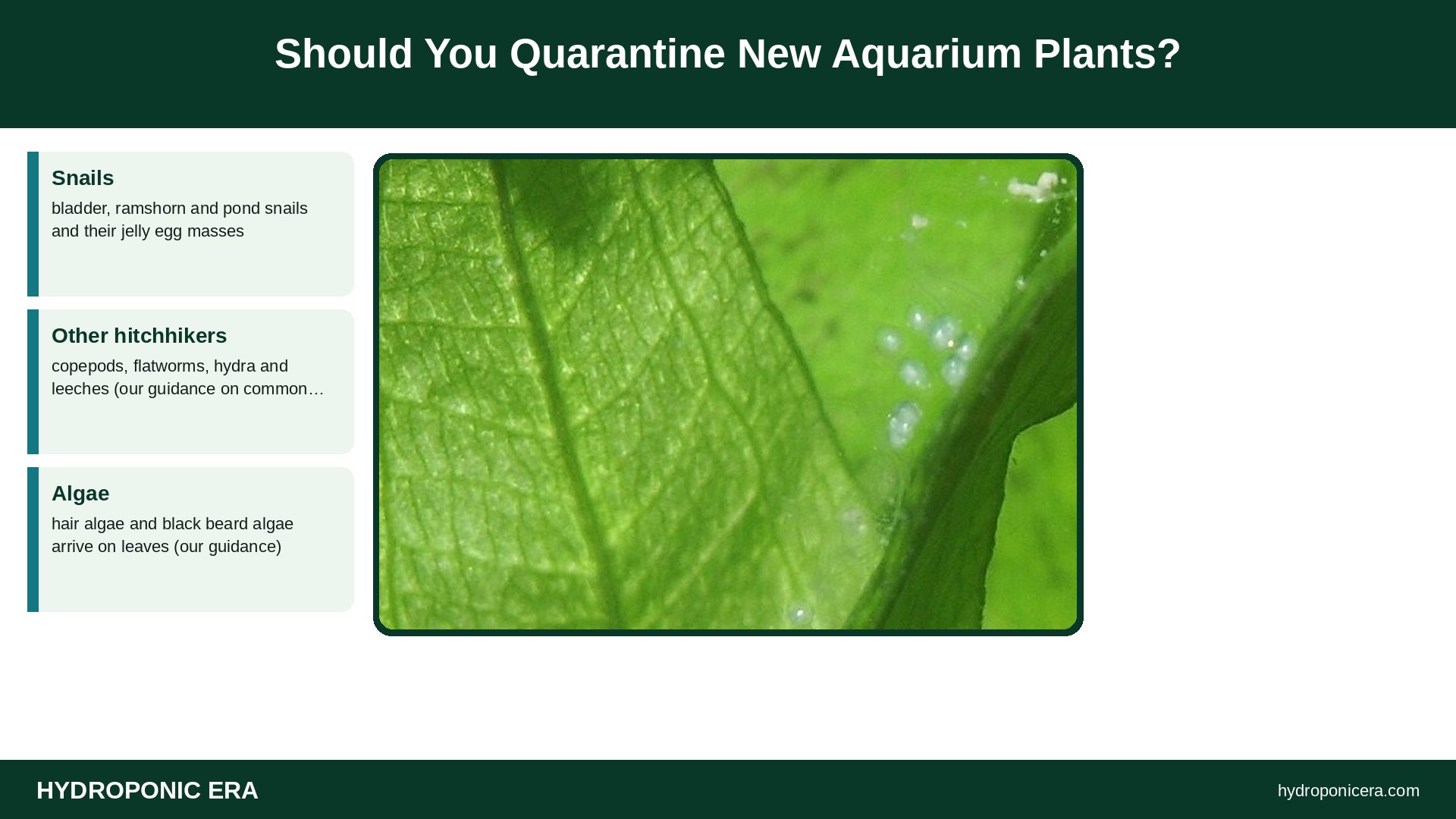
Yes, for any plant not grown in a sterile lab. A 2025 review in Management of Biological Invasions describes a study by Keller and Lodge in which 90% of aquarium plants supported live hitchhiking invertebrates. Floating small-leaved plants carried the most kinds. The review also notes that the U.S. Geological Survey has tracked 34 non-native species that may have hitchhiked on aquarium and pond plants. That is the case for aquarium plant quarantine.
- Snails: bladder, ramshorn and pond snails and their jelly egg masses.
- Other hitchhikers: copepods, flatworms, hydra and leeches (our guidance on common examples).
- Algae: hair algae and black beard algae arrive on leaves (our guidance).
Tropica says its tissue-culture plants are guaranteed free from snails, algae, pests and pesticides, and that they do not need to be quarantined. Learn more in plant tissue culture at home.
Which Dips Are Safe for Plants?
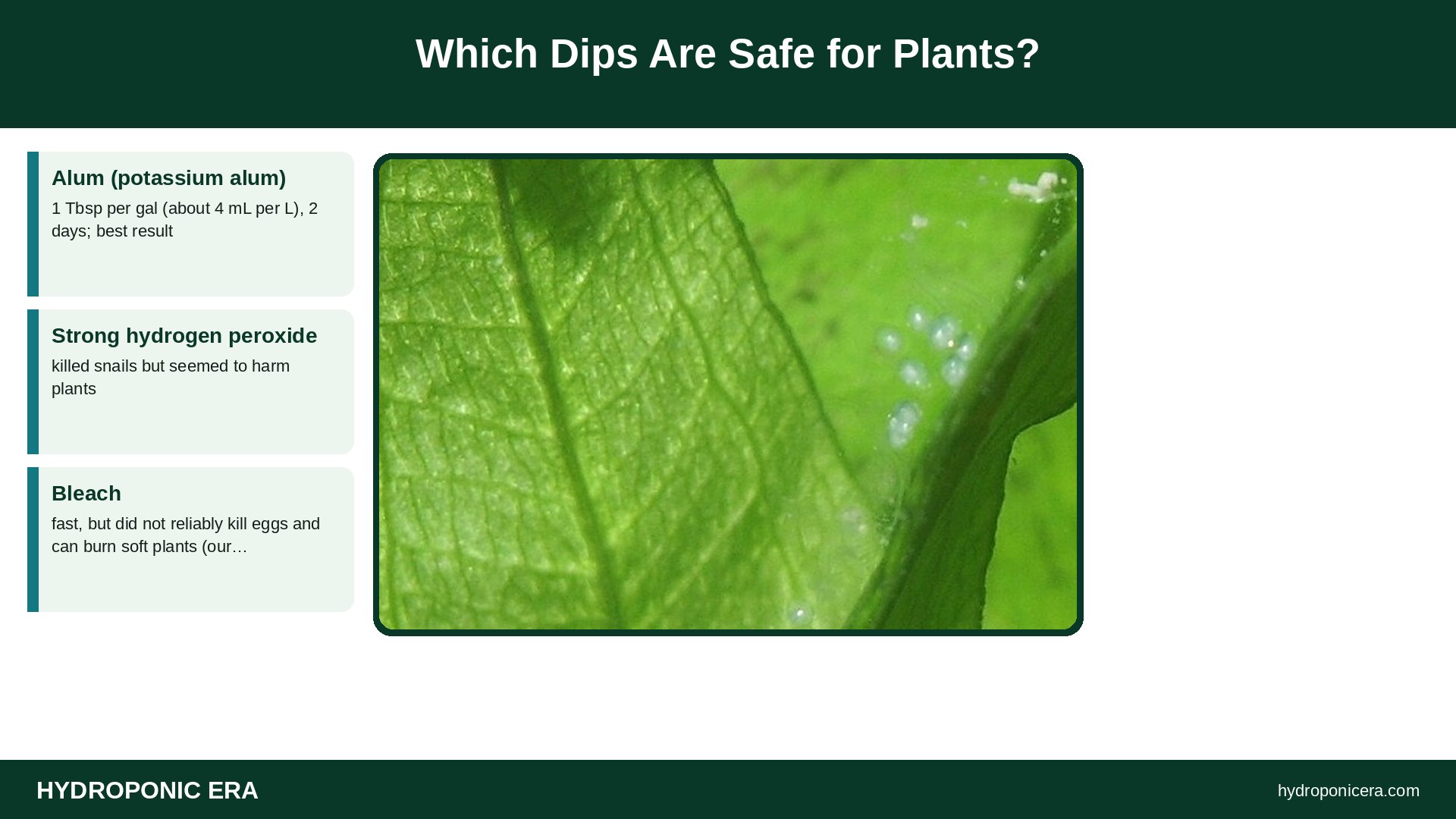
Alum is the best-tested option. Aquarium Science summarizes a hobby test by the Girl Talks Fish channel, done on snails only. A soak of 1 tablespoon of alum per gallon (about 4 mL per L) for two days killed all snails and snail eggs without killing the plants. Salt, bleach, potassium permanganate and copper did not kill all snails and eggs at the strengths and times tried.
- Alum (potassium alum): 1 Tbsp per gal (about 4 mL per L), 2 days; best result.
- Strong hydrogen peroxide: killed snails but seemed to harm plants.
- Bleach: fast, but did not reliably kill eggs and can burn soft plants (our guidance).
- Carbonated water: three 12-hour soaks; large snails may survive.
Aquarium Science notes alum probably does not kill algae or bacteria. Rinse dipped plants well in dechlorinated water before planting (our guidance). Moss and very fine plants may need a shorter soak (our guidance). A dip is step one of aquarium plant quarantine, not a replacement for it, because no single treatment is proven against every pest.
How Long Should Quarantine Last?
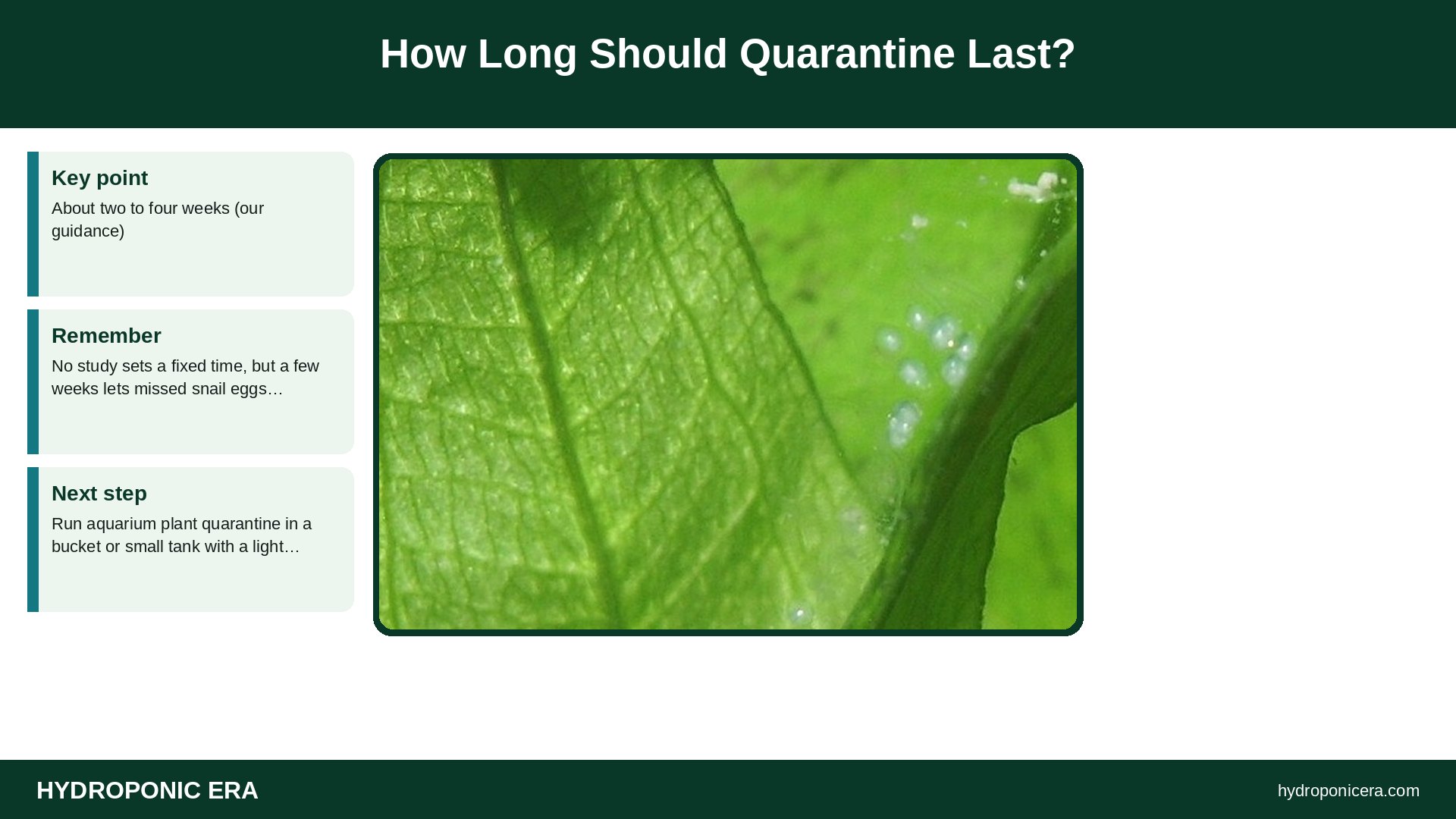
About two to four weeks (our guidance). No study sets a fixed time, but a few weeks lets missed snail eggs hatch and lets algae or melting show up before the plant joins your main tank. Run aquarium plant quarantine in a bucket or small tank with a light, a heater and dechlorinated water.
- Day 1: unpack, rinse off rock wool or gel, and pick off snails and egg masses.
- Day 1 to 3: alum dip for two days, then rinse.
- Weeks 1 to 4: keep plants in a lit tub; check leaf undersides every few days.
- Move plants only when no snails or eggs appear for two weeks (our guidance).
A UK grower study (HNS 145) found pond snails left jelly egg masses on the undersides of leaves that had to be rubbed off by hand. Check there first, since missed eggs are why aquarium plant quarantine needs time. For planting tips, see how to plant aquarium plants.
How Do You Set Up Aquarium Plant Quarantine at Home?
Keep it simple and cheap. A 5 gal (19 L) bucket or spare tank, an LED clip light on a timer for 6 to 8 hours, and tank water or dechlorinated tap water at 72 to 78°F (22 to 26°C) are enough (our guidance). Add no fish or shrimp, because aquarium plant quarantine should not expose animals to hitchhikers or dip residue. Dose a little fertilizer if plants stay longer than two weeks; see aquarium plant fertilizer.
For hydroponic or terrestrial plants, our quarantine for new plants and clones guide covers the same idea for pests on land.
What Should You Never Do With Unwanted Plants or Snails?
Never dump them in a pond, stream or drain. The MBI review warns that aquatic hitchhikers can persist in aquaria and later be released into the wild, where they may become invasive. Bag unwanted plant scraps and put them in the trash (our guidance). Good aquarium plant quarantine protects your tank and local waters. If snails are already in, read about pond snails.
FAQ About Aquarium Plant Quarantine
Do tissue culture plants need quarantine?
Tropica says its 1-2-Grow plants do not.
What is the best dip for snail eggs?
Alum at 1 Tbsp per gal (4 mL per L) for two days did best in a hobby test.
Does bleach kill snail eggs on plants?
Not reliably in that test, and it can damage plants.
How long should aquarium plant quarantine last?
About two to four weeks (our guidance).
Can I quarantine plants in the dark?
Short dips yes, but plants need light for weeks-long quarantine.
Do I need aquarium plant quarantine for plants from a friend?
Yes; home tanks often carry snails and pests (our guidance).
Sources
- Management of Biological Invasions (2025), O’Shaughnessy et al. — Invasive Hitchhiking Organisms on Aquarium Plants (PDF)
- Tropica — FAQ: Do Tropica plants require quarantine?
- Tropica — The Right Aquarium Plants: 1-2-Grow!
- Aquarium Science — 15.15 Sterilizing Plants
- Horticultural Development Council (AHDB) — HNS 145: IPM for Ornamental Aquatic Plants (PDF)
- Photo credits (Wikimedia Commons, edited with titles): Planorbella duryi 04 by Dat doris (CC BY-SA 4.0); SnailEggsOnLeaf by ML5 (English Wikipedia) (Public domain)