
Are pond snails good for a pond? Pond snails are mostly helpful in small numbers. Virginia Cooperative Extension says snails primarily feed on algae, though some species eat pond plants. Kansas State University, however, advises against adding snails because they can host parasites that endanger fish. Never release store-bought snails into the wild.
Key takeaway: Pond snails graze algae and debris, but they will not fix green water or nutrient problems, and some types eat plants. Many arrive on new plants anyway. If you buy them, choose carefully, keep them contained, and control a population boom by cutting overfeeding and removing debris rather than using chemicals.
| Snail | Key traits | Source |
|---|---|---|
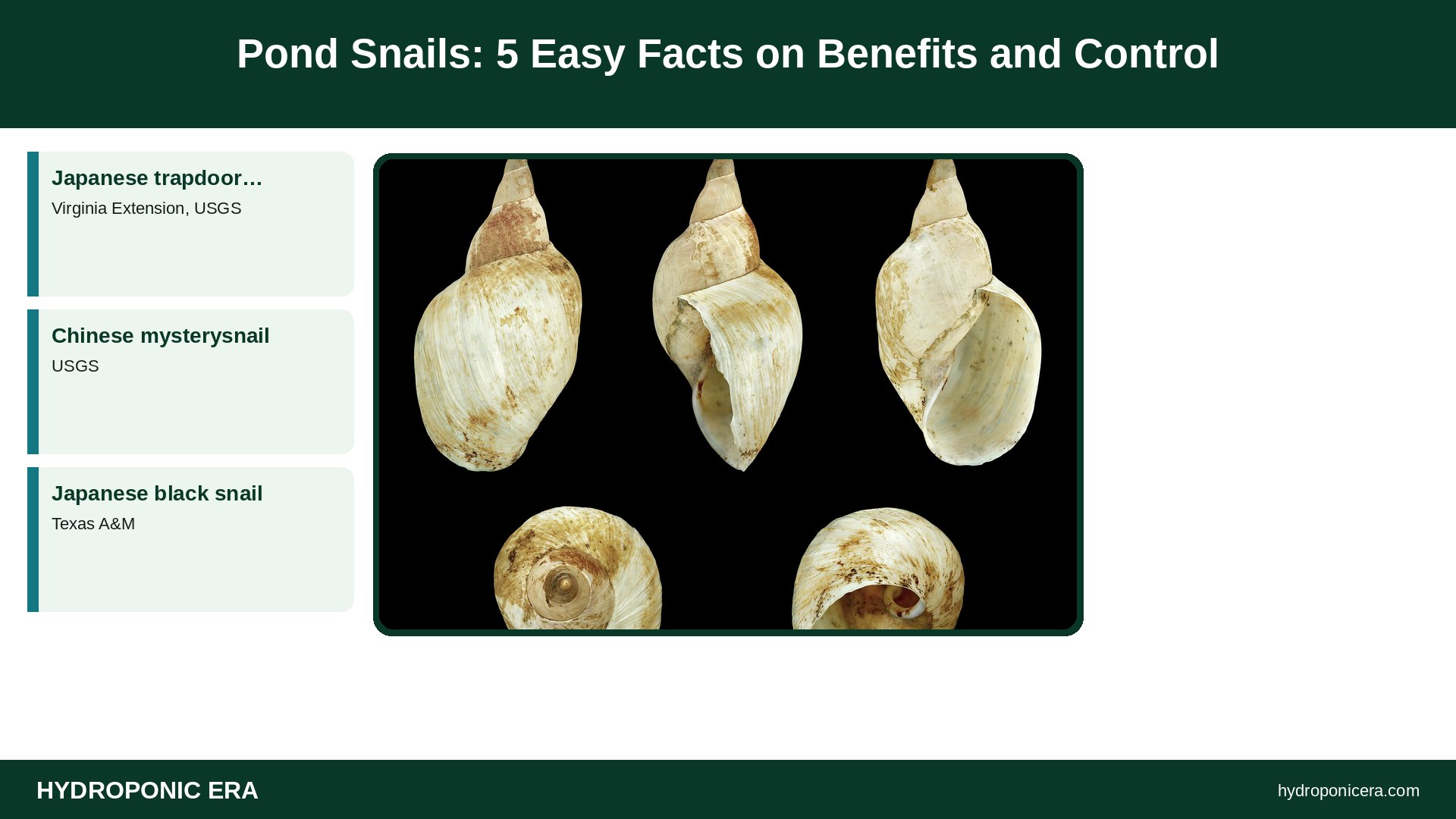
| Japanese trapdoor (Japanese mysterysnail) | Less likely to eat plants; nonnative in the US; hosts parasites | Virginia Extension, USGS |
| Chinese mysterysnail | Nonnative, established in Great Lakes drainages; hosts parasites | USGS |
| Japanese black snail | Slowly eats algae; stays in the pond | Texas A&M |
| Plant-eating species | Some devour pond plants | Virginia Extension |
What Do Pond Snails Eat?
Pond snails mostly eat algae, plus decaying plant material and leftover food. Virginia Cooperative Extension says snails primarily feed on algae, while some species devour pond plants. It notes Japanese black and trapdoor snails are less likely to feed on pond plants. Texas A&M’s Earth-Kind program adds that Japanese black snails slowly eat away at algae.
Texas A&M adds that Japanese black snails will not leave the pond to damage other garden plants. Because they graze surfaces, pond snails help most with soft films on rocks, liners and pots. They have little effect on the floating algae that turns water green, so pair them with good algae control basics.
Are Pond Snails Good or Bad?
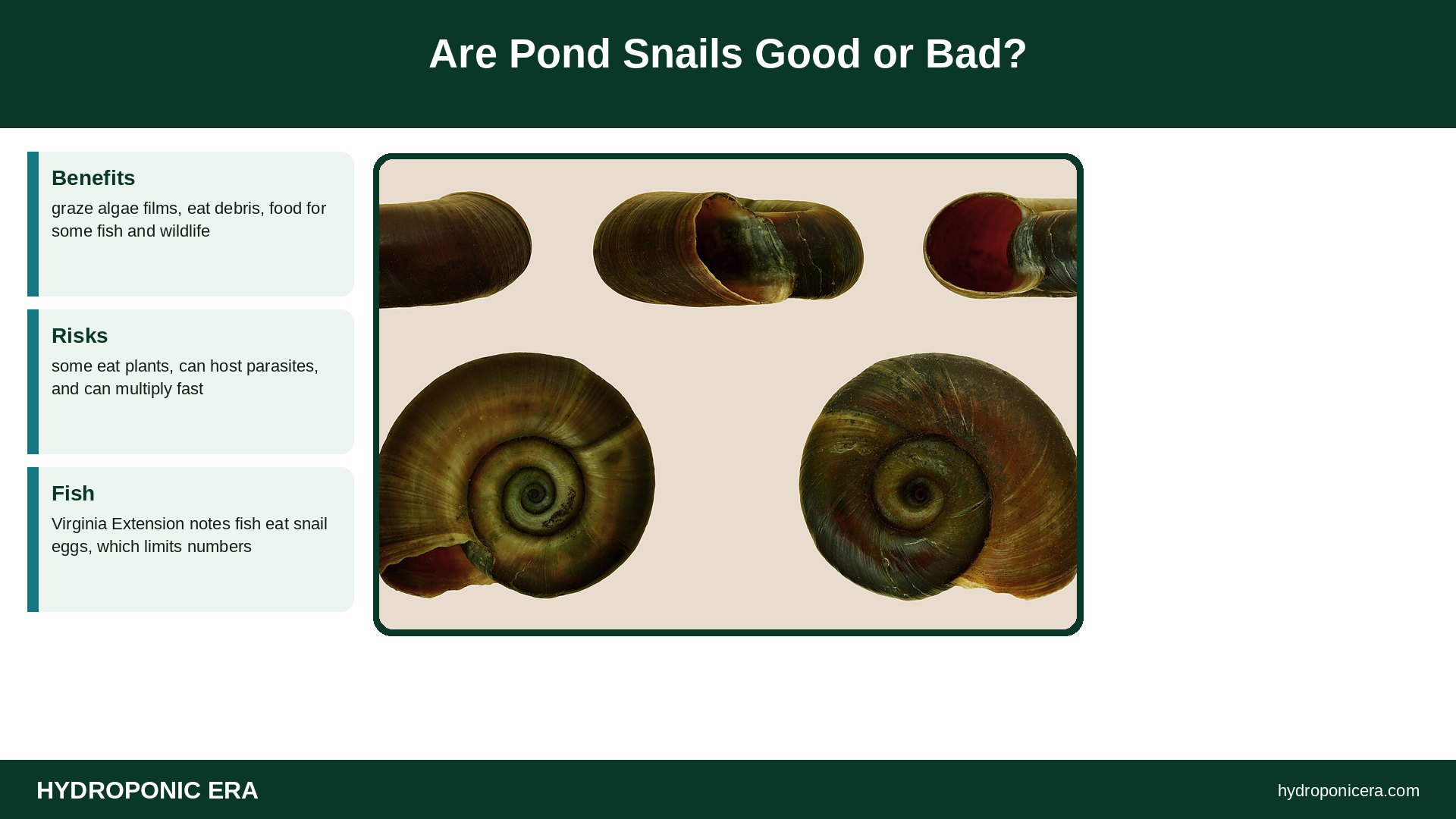
Pond snails are a mixed blessing. They graze algae and add life to a pond, but Kansas State University says it is not a good idea to add scavengers like snails or freshwater clams, because these bottom dwellers can host parasites that endanger fish health. Texas A&M also notes there is some controversy over including snails in ponds.
- Benefits: graze algae films, eat debris, food for some fish and wildlife.
- Risks: some eat plants, can host parasites, and can multiply fast.
- Fish: Virginia Extension notes fish eat snail eggs, which limits numbers.
Are Japanese Trapdoor Snails Invasive?
Japanese trapdoor snails are nonnative in the US and should never be released. USGS lists the Japanese mysterysnail, also called the Japanese black or trapdoor snail, as established in many areas across the eastern US. It reaches very high densities in some lakes and hosts many parasites, including some that affect human health. Keep them in contained ponds only.
USGS says the related Chinese mysterysnail was probably released from an aquarium into the Niagara River in the 1930s or 1940s and is now established in Great Lakes drainages. It also hosts many parasites, including rat lungworm. Wash your hands after handling any snails.
Why Does a Pond Suddenly Fill With Snails?
A pond fills with snails when there is plenty of food. Overfeeding fish, rotting leaves and heavy algae all feed them, and tiny snails or egg clusters often arrive on new plants. Kansas State notes beneficial bacteria must break down leaves, debris and waste, so the same cleanup that helps water quality also starves snails.
- Feed fish only what they eat in a few minutes.
- Net out fallen leaves and sludge.
- Rinse and inspect new plants before adding them.
- Keep fish such as goldfish, which eat snail eggs, if your pond suits them.
How Do You Control Pond Snails?
Control pond snails by removing food and picking them out by hand, not with chemicals. Lift snails and egg masses off pots and liners when you see them, and cut back feeding and debris so numbers fall naturally. Avoid snail-killing treatments, which can harm fish and other pond life and leave dead snails rotting in the water.
- Hand-pick: collect snails from pots, rocks and the liner.
- Egg masses: scrape jelly-like clusters off plant pots.
- Disposal: freeze or bin unwanted snails; never dump them in streams or lakes.
Do Pond Snails Harm Fish or Plants?
Pond snails rarely attack healthy fish, but they can carry parasites and some types eat plants. Kansas State warns that bottom dwellers can host parasites that endanger fish, and Virginia Extension says some species devour pond plants. If snails are stripping lilies or soft plants, reduce their numbers and protect young growth. See our koi pond plants guide for tougher choices.
Do pond snails clean the pond?
They graze algae and debris, but they do not remove nutrients or clear green water. Use filtration and plants too.
Which pond snails do not eat plants?
Virginia Extension says Japanese black and trapdoor snails are less likely to feed on pond plants.
Can pond snails survive winter outdoors?
Some can. USGS reports Japanese mysterysnails established in many areas of the eastern US, including the Great Lakes region.
Are pond snails dangerous to people?
USGS notes mysterysnails host parasites, some affecting human health, so wash your hands after handling them.
Should I add snails to my aquaponics pond?
Kansas State advises against adding scavenger snails because of parasite risk to fish. See our pond aquaponics guide.
Sources
- Virginia Cooperative Extension. Urban Water-Quality Management: Wildlife in the Home Pond Garden (HORT-126).
- Kansas State University. MF2911 Water Gardening: Biological Balance.
- U.S. Geological Survey. Japanese mysterysnail.
- U.S. Geological Survey. Chinese mysterysnail.
- Texas A&M AgriLife Extension. Wildlife for Water Gardens (Earth-Kind).
- Photo credits (Wikimedia Commons, edited with titles): Lymnaea stagnalis 01 by H. Zell (CC BY-SA 3.0); Planorbarius corneus 001 by H. Zell (CC BY-SA 3.0); Pond-edge plants at Achamore Garden – geograph.org.uk – 5446824 by M J Richardson (CC BY-SA 2.0); MareLambersart small pond Underwater03 by Lamiot (CC BY-SA 3.0)