
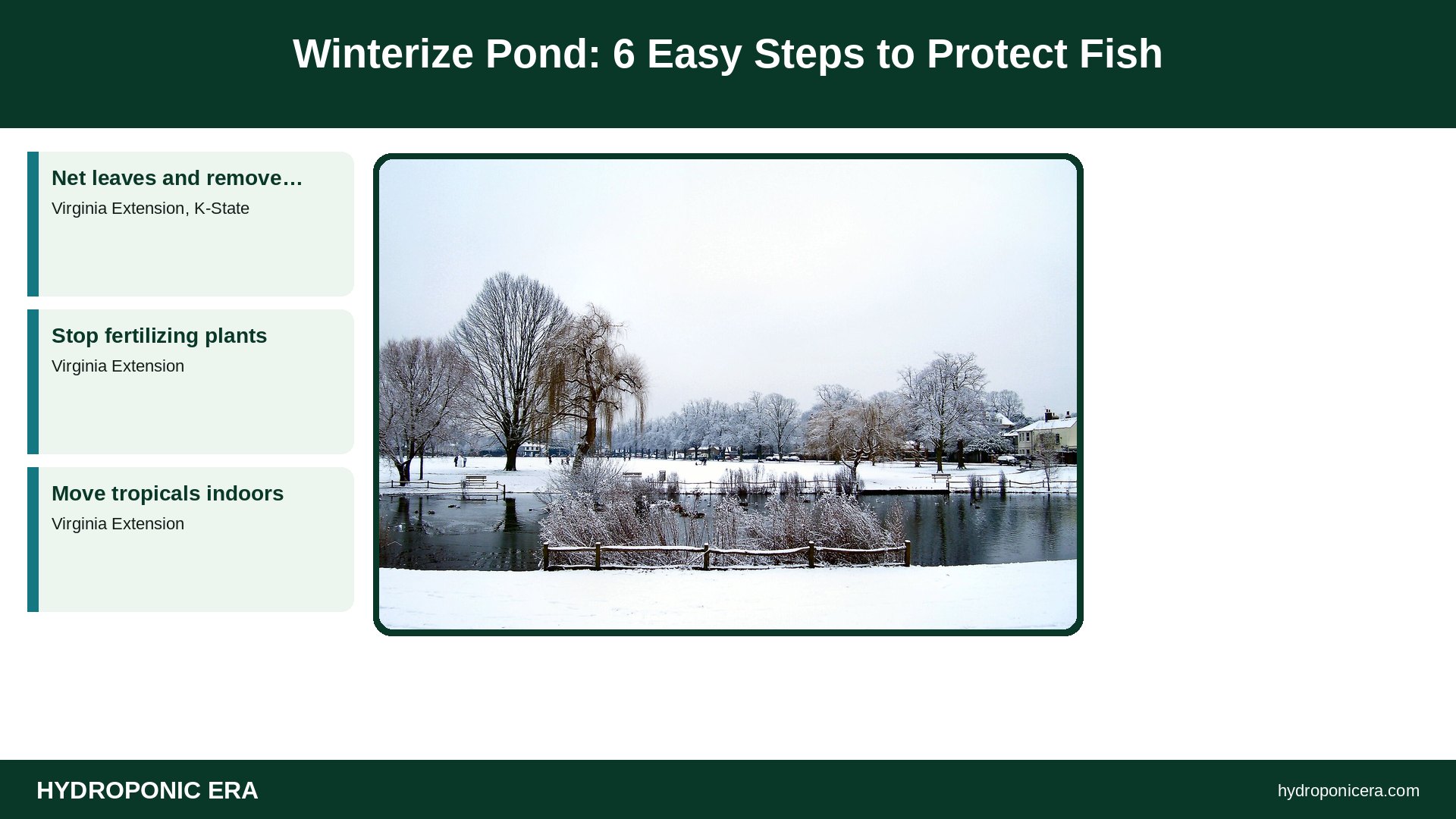
How do you winterize pond fish and plants? To winterize pond fish and plants, net out leaves, trim and sink hardy plants, move tropical plants indoors, stop feeding fish once water drops below 50°F (10°C), and keep part of the surface open with a deicer or bubbler. Kansas State warns never to hit the ice; the shockwave can kill fish.
Key takeaway: Winterize pond setups in fall: clean out debris, cut back plants, sort hardy from tender species, stop feeding below 50°F (10°C), switch off waterfalls and fountains, and install a deicer or air bubbler. Through winter, keep a hole open, top up the water and check equipment every few weeks.
| Step | When | Source |
|---|---|---|
| Net leaves and remove debris | Early fall | Virginia Extension, K-State |
| Stop fertilizing plants | As growth slows in fall | Virginia Extension |
| Move tropicals indoors | Before frost; keep above 50°F (10°C) | Virginia Extension |
| Sink hardy plants | 20 in (51 cm) or deeper | Virginia Extension |
| Stop feeding fish | Water below 50°F (10°C) | K-State MF2913 |
| Install deicer or bubbler | Winter (November–February) | K-State MF2913 |
When Should You Winterize Pond Fish and Plants?
Winterize pond fish and plants in fall, before leaves drop and frost arrives. Virginia Cooperative Extension says fall is the time to act, by managing plants, cleaning the pond and monitoring water conditions. Kansas State University’s fall checklist includes leaf netting, removing floaters and tropical plants when frost threatens, and stopping fish feeding once water falls below 50°F (10°C).
Kansas State then lists winter (November–February) tasks: turn off waterfalls, streams and fountains, winterize pumps and UV units, and install a bubbler or deicer.
How Do You Clean Before You Winterize Pond Water?
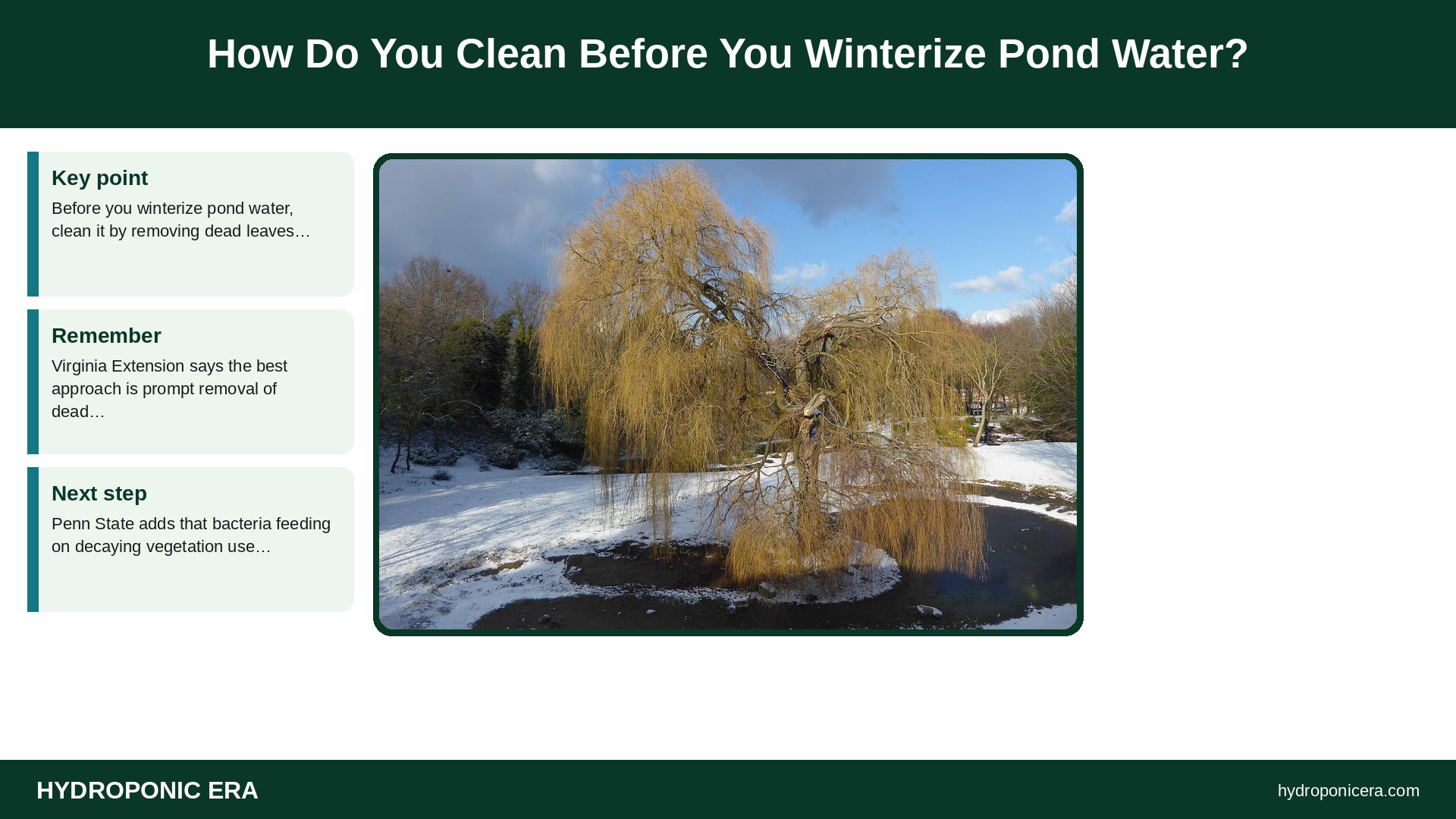
Before you winterize pond water, clean it by removing dead leaves, dying plants and sludge, especially if fish live there. Virginia Extension says the best approach is prompt removal of dead plant material plus netting over the pond each autumn. Penn State adds that bacteria feeding on decaying vegetation use oxygen, which matters most under ice.
- Stretch netting over the pond before leaf fall.
- Scoop out leaves and soft muck from the bottom.
- Cut yellow, brown or decaying foliage before it falls in.
- Rinse filters, but do not power-wash the liner; K-State says its film holds beneficial microorganisms.
How Do You Winterize Pond Plants?
Winterize pond plants by sorting them into hardy, tender and disposable. Virginia Extension advises stopping fertilizer as plants go dormant, then sinking hardy plants such as hardy water lilies, cattails, sedges and rushes to water 20 inches (51 cm) or deeper. Tropical plants such as taro and tropical water lilies must move to water that stays above 50°F (10°C).
- Hardy: trim to below ice level and lower into deep water, per K-State.
- Tropical: overwinter indoors in a tub of water.
- Oxygenators: anacharis and parrot feather can winter in an aquarium.
- Floaters: water hyacinth and water lettuce compost well, says Virginia Extension.
Never dump extra pond plants into lakes, ditches or streams.
When Should You Stop Feeding Fish to Winterize Pond Life?
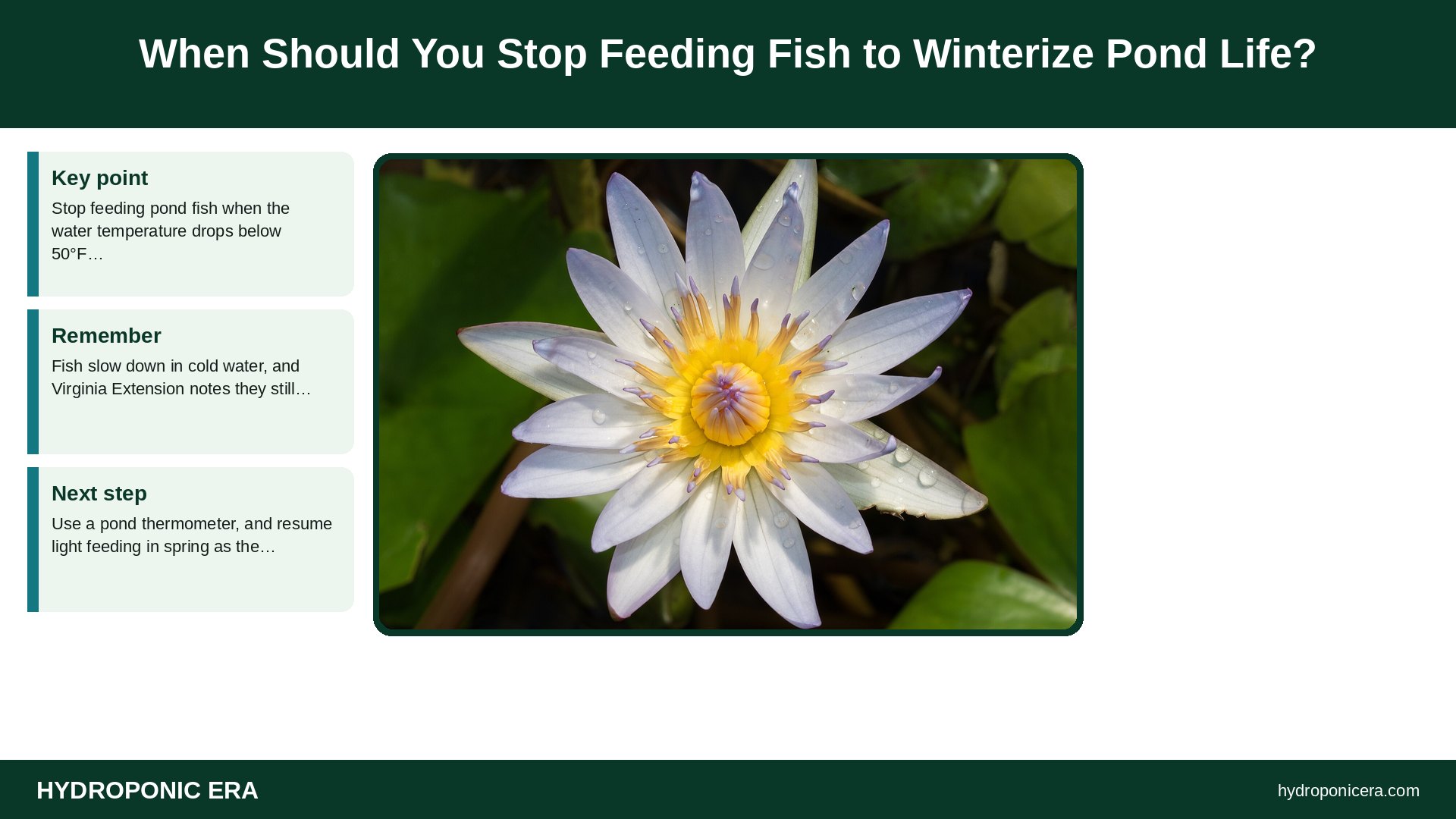
Stop feeding pond fish when the water temperature drops below 50°F (10°C), as Kansas State University advises in its fall checklist. Fish slow down in cold water, and Virginia Extension notes they still need oxygen from unfrozen parts of the pond. Use a pond thermometer, and resume light feeding in spring as the water warms.
Our goldfish aquaponics guide covers cold-water fish care.
How Do You Keep a Pond From Freezing Over?
Keep part of the pond open with a floating deicer, pond heater, air bubbler or a running pump. Virginia Extension says some ice is fine, but thick ice should not seal off the pond, because fish and dormant plants still need oxygen. The RHS warns that a pond sealed by ice can be fatal to fish.
- Bubbler: Kansas State lists installing a winter bubbler or deicer; clean its intake filter every two weeks to monthly.
- Never strike ice: Kansas State says the shockwave is deadly to fish and hard on the liner.
- Melt a hole: the RHS suggests holding a pan of hot water on the ice.
For aerator options, see our aquaponics air pump guide.
What Should You Check During Winter?
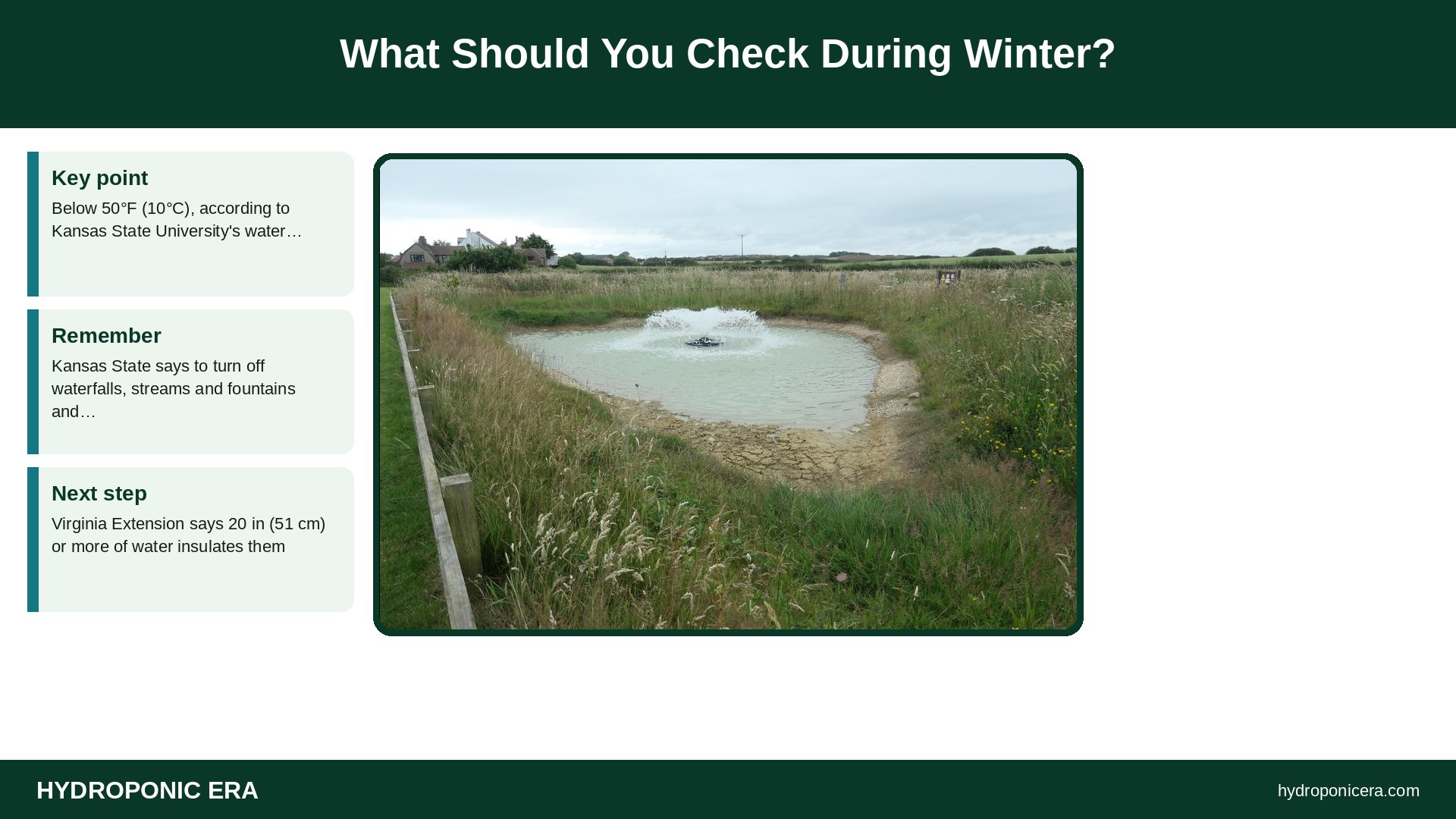
Check the pond every few weeks in winter. Virginia Extension says water levels should not drop significantly and regular monitoring keeps the pond healthy for spring. Make sure the open hole stays clear after snow, the deicer still works and the bubbler intake is clean. Penn State notes that ice and snow limit sunlight reaching plants, reducing oxygen production.
What temperature should I stop feeding pond fish?
Below 50°F (10°C), according to Kansas State University’s water garden maintenance guide.
Should I turn off my pond pump in winter?
Kansas State says to turn off waterfalls, streams and fountains and winterize pumps as needed; Virginia Extension lists a running pump as one way to keep ice open.
How deep should hardy plants go for winter?
Virginia Extension says 20 in (51 cm) or more of water insulates them.
Can I break the ice on my pond?
No. Kansas State warns the shockwave from hitting ice is deadly to fish.
Do I need to drain to winterize pond water?
No. Clean out debris instead, keep the level up and keep part of the surface open.
Sources
- Kansas State University. MF2913 Water Gardening: Maintenance.
- Virginia Cooperative Extension. Urban Water-Quality Management: Winterizing the Water Garden.
- Royal Horticultural Society. December: ponds monthly advice.
- Penn State Extension. Winterkill in Ponds.
- Photo credits (Wikimedia Commons, edited with titles): Ham Common, the pond in winter snow (2) by AndyScott (CC BY-SA 4.0); Frozen pond in Rockliffe Gardens – geograph.org.uk – 5698549 by Marathon (CC BY-SA 2.0); Daubeny’s water lily at BBG (50824) by Rhododendrites (CC BY-SA 4.0); Small pond with aerating fountain – geograph.org.uk – 6559394 by Christine Johnstone (CC BY-SA 2.0)