
Do cuttings need fertilizer for water propagation? Not at first. Extension guides say a rooting medium should have little or no nitrogen fertilizer. Skip fertilizer for water propagation until roots are about 1 to 2 in (2.5 to 5 cm) long. Then add a very weak dose, around one-tenth to one-quarter strength, and change the water weekly.
Key takeaway: Plain tap water roots most houseplant cuttings, but a cutting that sits in a jar for months will eventually run out of stored food. The question is when fertilizer for water propagation helps and when it only feeds algae. This guide uses Arizona Extension, Purdue’s e-GRO propagation notes, Clemson and Washington State guidance.
| Stage | Feeding | Source |
|---|---|---|
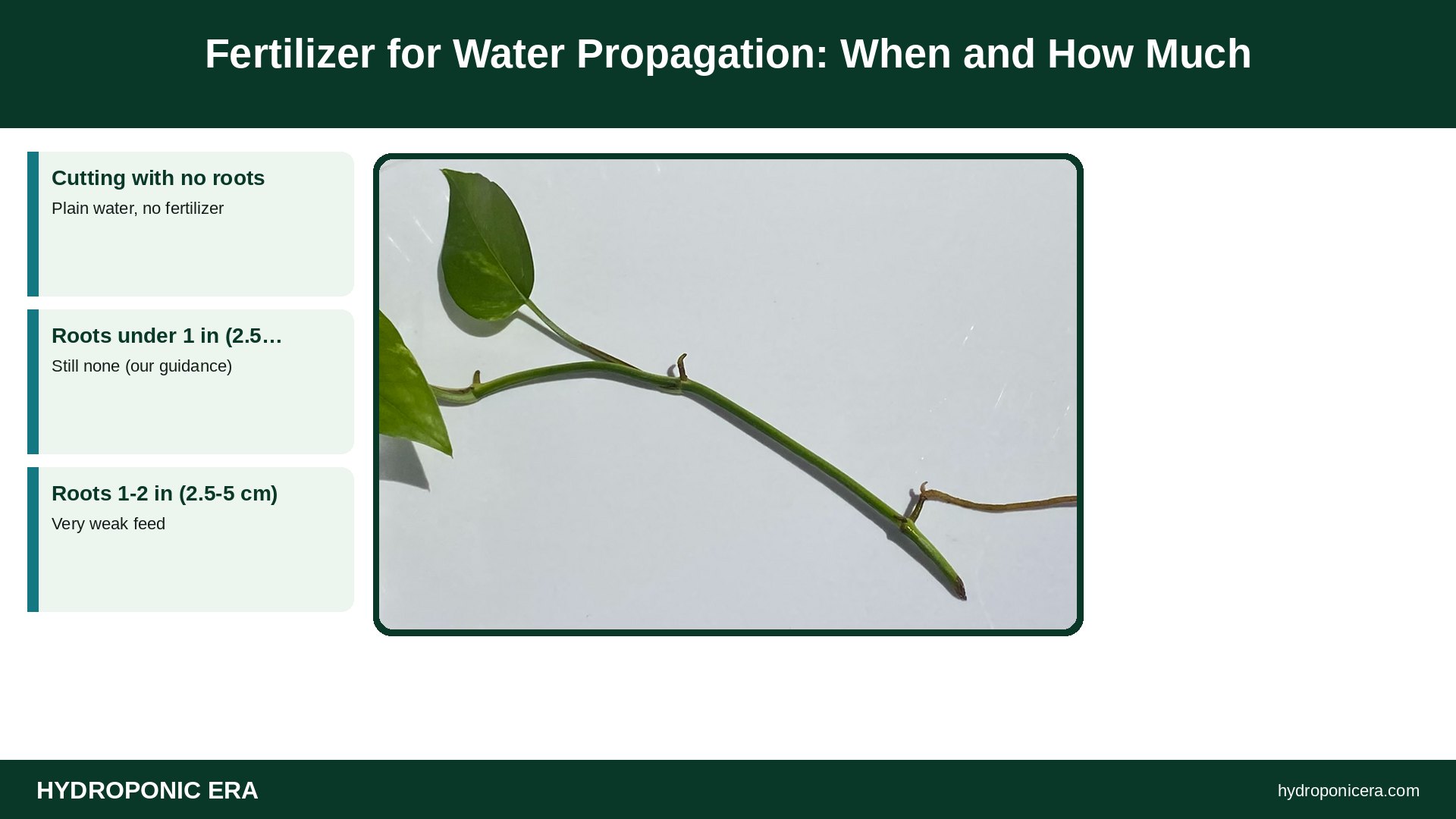
| Cutting with no roots | Plain water, no fertilizer | Arizona Extension |
| Roots under 1 in (2.5 cm) | Still none (our guidance) | Our guidance |
| Roots 1-2 in (2.5-5 cm) | Very weak feed | Our guidance |
| Commercial root development | 50-100 ppm N | e-GRO (Purdue) |
| Rooted commercial cuttings | 100-150 ppm N | e-GRO (Purdue) |
| Houseplants fed every watering | About 1/10 label rate | Clemson HGIC 1450 |
| Water change | Weekly | Our guidance |
Do Cuttings in Water Need Fertilizer?
No, not while they are making roots. The University of Arizona’s propagation guide says most indoor plants root easily in plain water, and that a rooting medium should have little or no nitrogen fertilizer. A fresh cutting lives on the sugars and hormones already in its stem and leaves, so fertilizer for water propagation adds little in the first weeks.
Washington State’s PNW 151 explains that the leaves left on a cutting help make substances that aid root formation. Keep healthy leaves above the waterline and remove any that would sit in water, as Arizona advises.
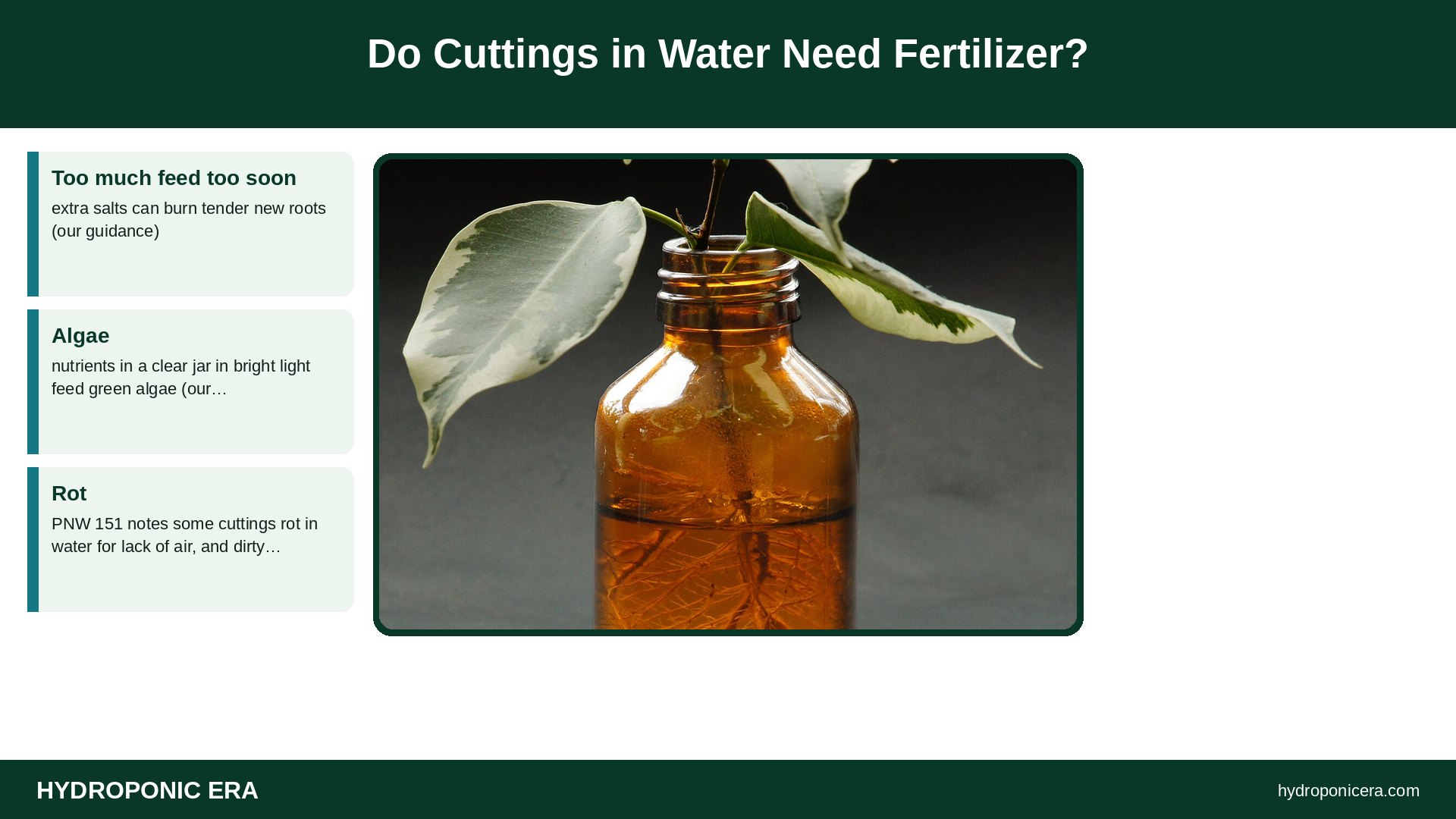
- Too much feed too soon: extra salts can burn tender new roots (our guidance).
- Algae: nutrients in a clear jar in bright light feed green algae (our guidance).
- Rot: PNW 151 notes some cuttings rot in water for lack of air, and dirty water makes that worse (our guidance).
So the first rule of fertilizer for water propagation is patience. Change the water and wait for roots.
When Should You Start Feeding Plants in Water?
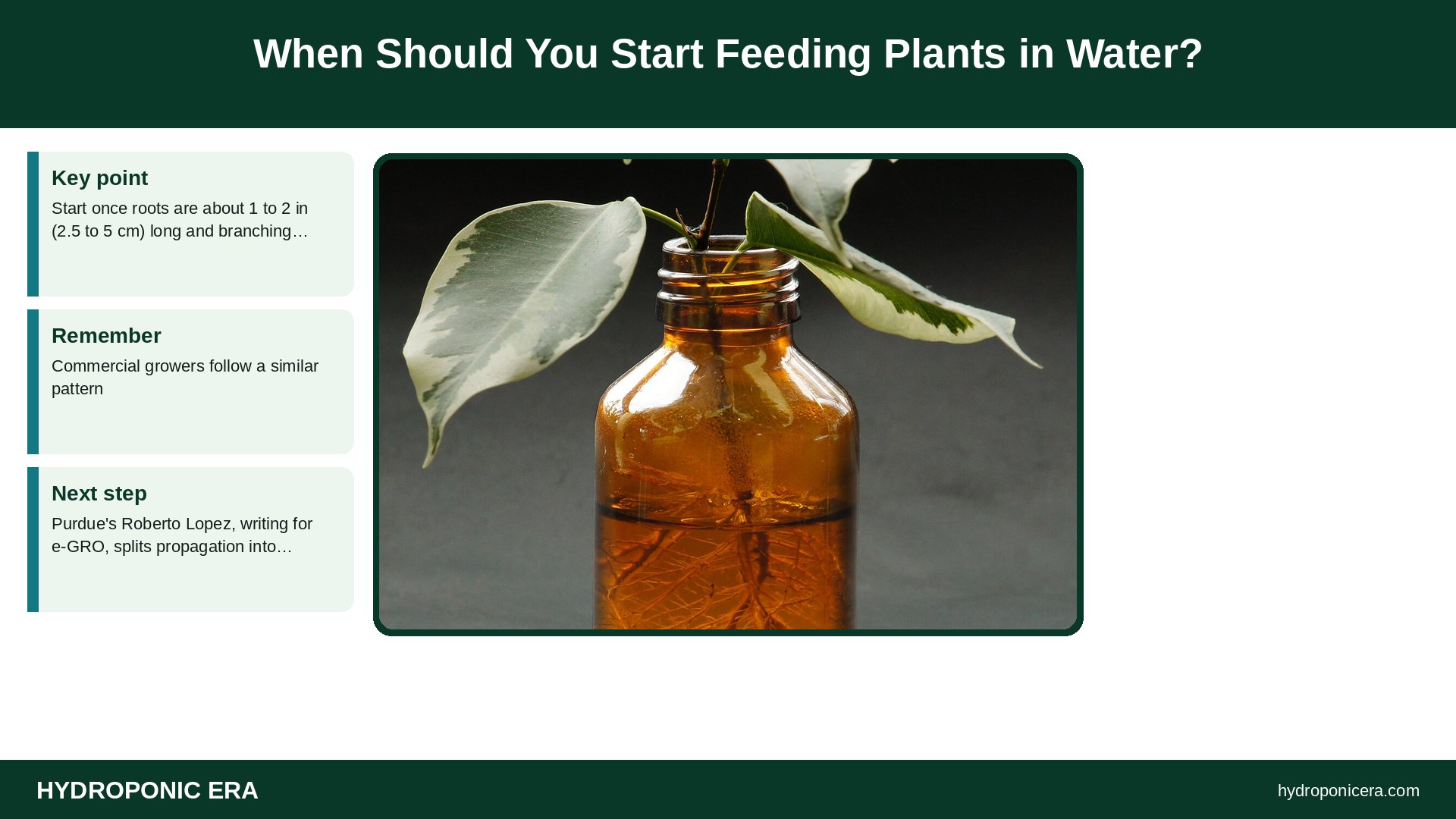
Start once roots are about 1 to 2 in (2.5 to 5 cm) long and branching (our guidance). Commercial growers follow a similar pattern. Purdue’s Roberto Lopez, writing for e-GRO, splits propagation into stages: sticking, callusing, root development and toning. Feeding becomes a key factor in the root development stage, after roots have started.
- Weeks 1 to 3: plain water, changed weekly.
- First roots appear: keep plain water until they reach 1 in (2.5 cm).
- Roots 1 to 2 in (2.5 to 5 cm): add a weak fertilizer for water propagation.
- Plant staying in water long term: feed lightly every few weeks (our guidance).
How fast you reach that point depends on the plant. Washington State’s table lists 1 to 2 weeks for coleus and geranium in a rooting medium, and 4 to 5 weeks for monstera. See how long water propagation takes for more timelines.
How Much Fertilizer Should You Add to Propagation Water?
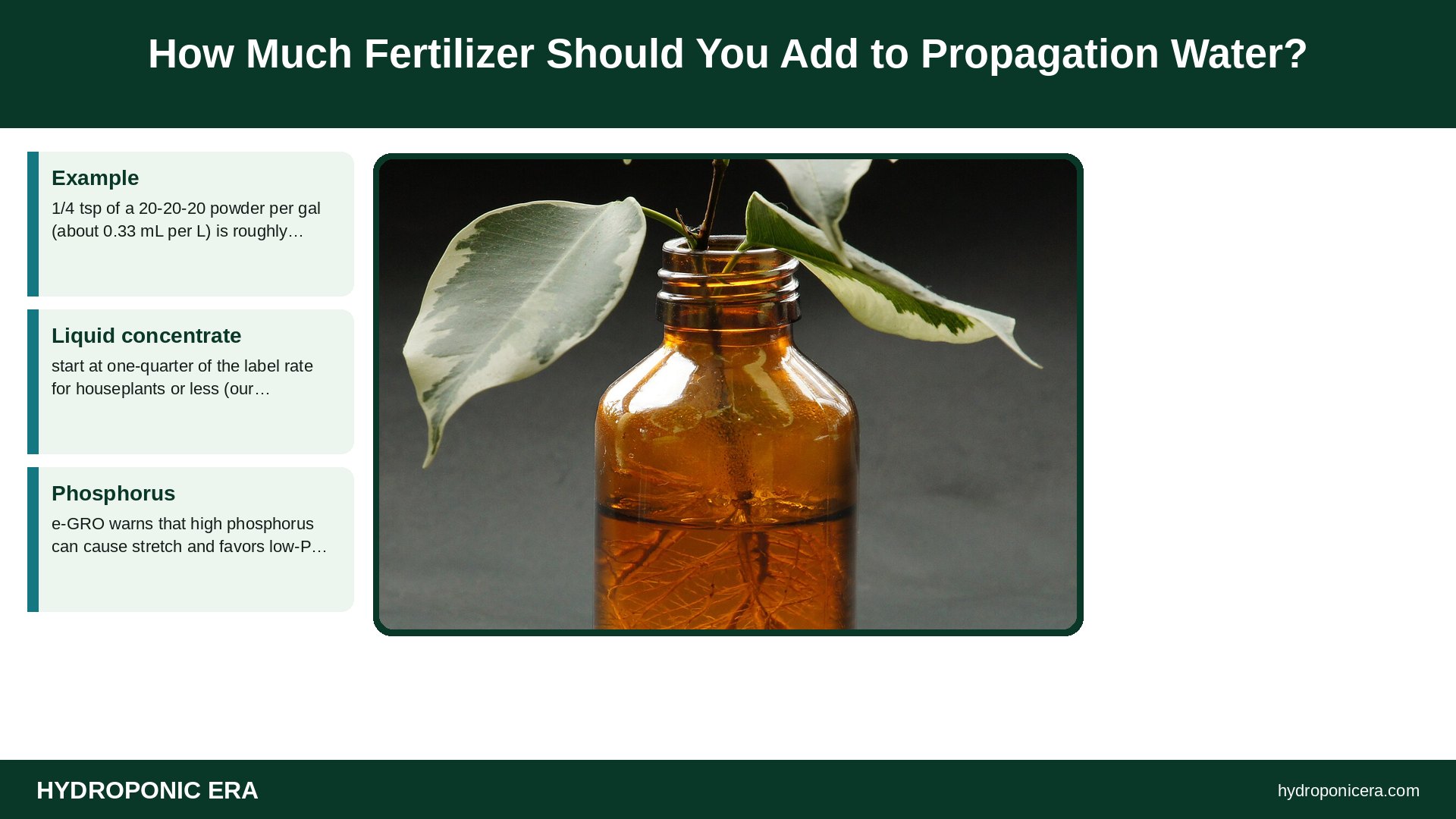
Very little. e-GRO gives commercial cuttings a constant feed of about 50 to 100 ppm nitrogen during rooting, rising to 100 to 150 ppm once rooted. Clemson suggests about one-tenth of the label rate when you feed houseplants at every watering. Either way, fertilizer for water propagation should be much weaker than a normal dose.
- Example: 1/4 tsp of a 20-20-20 powder per gal (about 0.33 mL per L) is roughly 65 ppm nitrogen (our math, assuming 5 g per teaspoon).
- Liquid concentrate: start at one-quarter of the label rate for houseplants or less (our guidance).
- Phosphorus: e-GRO warns that high phosphorus can cause stretch and favors low-P feeds such as 15-0-15.
- Top up with plain water: do not keep adding fertilizer to old water (our guidance).
Clemson warns that a white crust, brown leaf tips and dropping lower leaves can mean too much fertilizer. If you see them, pour out the jar, rinse the roots and restart with plain water. Our fertilizer for plants in water guide covers long-term feeding.
What Else Helps Cuttings Root in Water?
Light, warmth and clean water matter more than fertilizer for water propagation. Washington State says most plants root best at about 60 to 65°F (16 to 18°C), with bottom heat 5 to 10°F (3 to 6°C) warmer helping further. Bright, indirect light suits most leafy cuttings (our guidance).
- Rooting hormone: e-GRO lists IBA rooting hormone for many crops; see rooting hormone for water propagation.
- A node in the water: Arizona says roots form at the nodes.
- Opaque or tinted jars: less light on the water means less algae (our guidance).
A propagation station makes weekly water changes easier. Pothos is a forgiving plant for testing fertilizer for water propagation; see pothos in water.
Should You Move Rooted Cuttings to Soil?
Usually, yes. Washington State says to transplant cuttings to a permanent pot after roots form. Water roots can adapt to soil, but the move is a shock, so keep the soil evenly moist for the first couple of weeks (our guidance). Plants that stay in water long term, such as pothos, need fertilizer for water propagation at low strength every few weeks. Compare both paths in water propagation vs soil propagation.
FAQ About Fertilizer for Water Propagation
Can I add fertilizer to water with fresh cuttings?
It is not needed; Arizona Extension advises little or no nitrogen during rooting.
When should I start fertilizer for water propagation?
When roots are about 1 to 2 in (2.5 to 5 cm) long (our guidance).
How strong should fertilizer for water propagation be?
About one-tenth to one-quarter of the label rate.
Does fertilizer make cuttings root faster?
There is no good evidence for that in plain water; light and warmth matter more.
Why is my propagation water green?
Algae; nutrients and light feed it, so change the water and shade the jar.
What fertilizer is best for cuttings in water?
A water-soluble feed, used very dilute; low-phosphorus feeds reduce stretch.
Sources
- University of Arizona Cooperative Extension — Propagating Plants (PDF)
- e-GRO, Roberto Lopez (Purdue University) — Propagating Vegetative Cuttings (PDF)
- Clemson Cooperative Extension — HGIC 1450: Indoor Plants – Cleaning, Fertilizing, Containers & Light Requirements
- Washington State University Extension — PNW 151: Propagating Herbaceous Plants from Cuttings (PDF)
- Photo credits (Wikimedia Commons, edited with titles): Epipremnum Aureum (Devil’s Ivy) cutting by Ddra5202 (CC BY-SA 4.0); Ficus cuttings with roots in a bottle. by Biusch (CC BY-SA 3.0)