
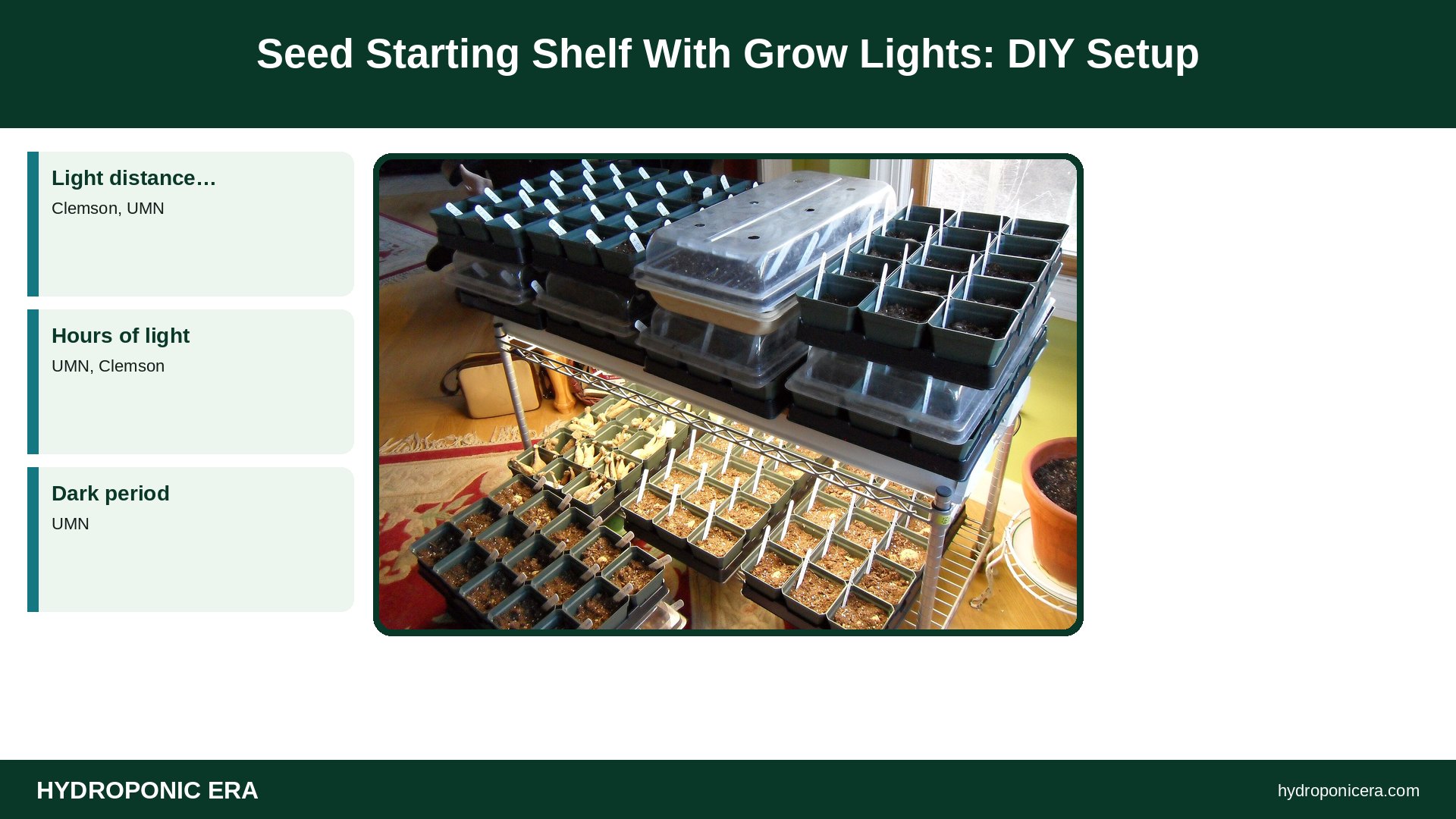
A seed starting shelf with grow lights is a sturdy wire or metal shelving unit with one LED or fluorescent fixture hung under each tier, adjustable so lights stay about 2 to 4 inches above seedlings. Extension guides from Clemson and the University of Minnesota agree on the basics: run lights on a timer for roughly 14 to 16 hours, give seedlings a dark period, and keep air above 60°F. Plan outlets and GFCI protection before you plug anything in.
| Setting | Target | Source |
|---|---|---|
| Light distance (fluorescent) | 2–4 inches above seedlings | Clemson, UMN |
| Hours of light | 12–16 (UMN); 16–18 including daylight (Clemson) | UMN, Clemson |
| Dark period | Yes; don’t run lights 24/7 | UMN |
| Air temperature | Above 60°F | UMN |
| Fan | Gentle airflow strengthens stems | Clemson |
| Electrical | GFCI outlet, power strip above water | Safety practice |
What You Need for a Seed Starting Shelf
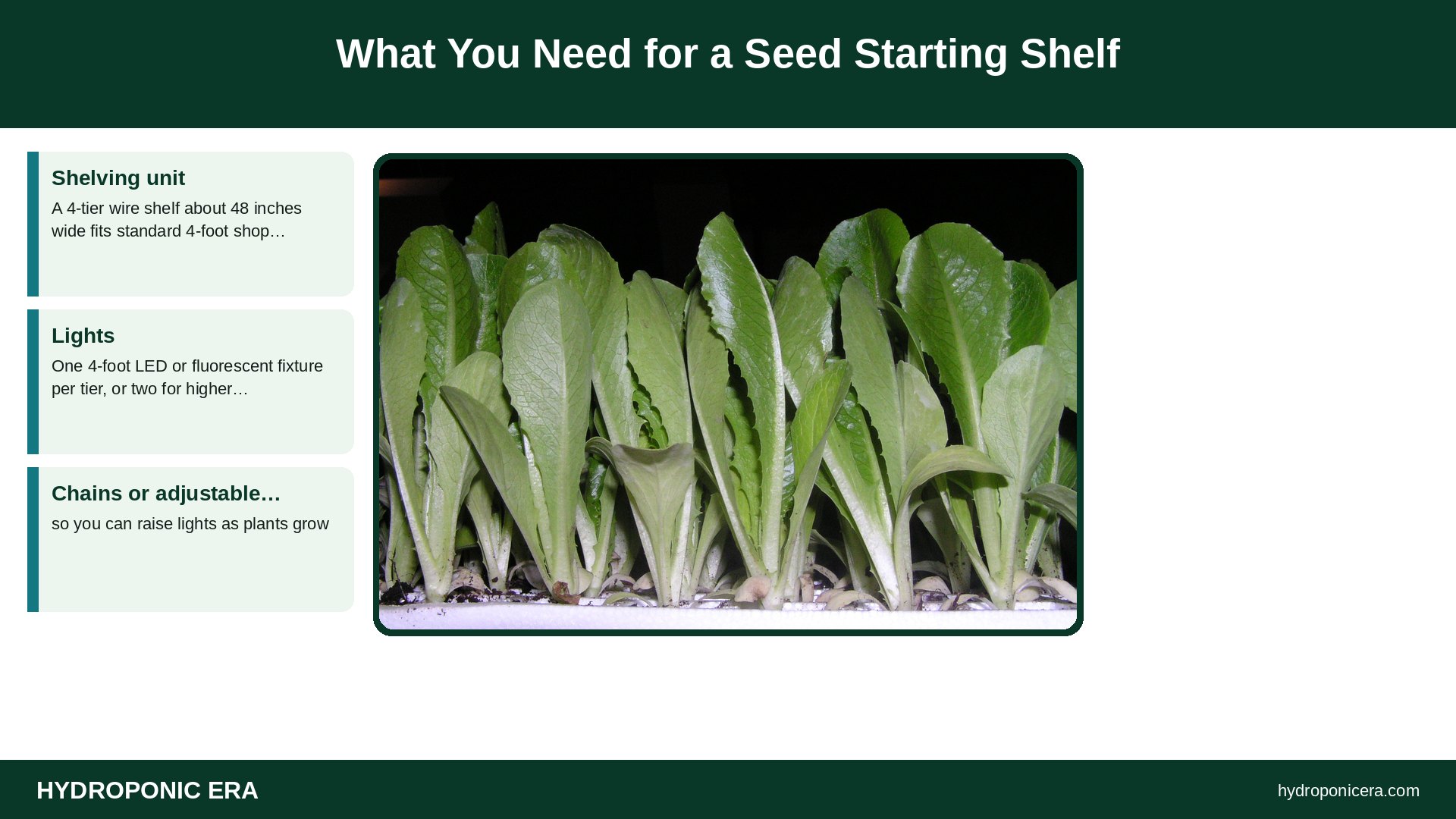
- Shelving unit. A 4-tier wire shelf about 48 inches wide fits standard 4-foot shop lights and two 10×20-inch trays per shelf.
- Lights. One 4-foot LED or fluorescent fixture per tier, or two for higher light. UMN notes standard “cool white” tubes give adequate light and are inexpensive.
- Chains or adjustable hangers so you can raise lights as plants grow.
- Timer. A plug-in or smart timer for the lights.
- Trays, cells and seed-starting mix or hydroponic plugs.
- Small fan for air movement.
- Heat mats (optional) on a separate circuit from the light timer.
- Power strip with surge protection mounted above water level.
How to Build a Seed Starting Shelf: 8 Steps
- Pick the spot. UMN advises a location where spills won’t matter, with air above 60°F and access to outlets. Avoid cold exterior walls.
- Assemble and level the shelf. Water and wet trays are heavy; tighten all connections.
- Hang lights under each tier. Use chains, S-hooks or adjustable rope hangers so each fixture can move up and down.
- Route cords high. Run cords along the back posts with drip loops so water can’t follow a cord into a plug.
- Mount the power strip above trays, plugged into a GFCI-protected outlet.
- Add the timer. Put lights on the timer; plug heat mats in separately. UMN specifically says not to plug heat mats into the light timer.
- Add a fan. Clemson notes moving air makes plants sway and starts the hardening-off process.
- Test overnight with empty trays to check light timing, heat and noise.
Seed Starting Shelf Lighting: Distance and Hours
Lack of light is the main cause of tall, skinny seedlings. UMN says to keep lights no more than 4 inches above seedlings, with 2 inches ideal, and to run them 12 to 16 hours a day with a dark period. Clemson describes 48-inch, 40-watt fluorescent tubes placed 2 to 4 inches above seedlings on a timer as an adequate setup and suggests 16 to 18 hours of bright light.
LEDs change the math. University of New Hampshire Extension explains that what matters is the total daily light, or DLI. In one LED light bar it tested, reaching the target DLI took about 8 hours at 8 inches above the crop but 16 hours at 20 inches. Stronger LEDs can hang higher than fluorescents; watch plants rather than a fixed number. Pale, stretched seedlings need more light; bleached or crispy leaves mean too much. Our light distance guide and leggy seedlings guide go deeper.
Fluorescent vs LED on a Seed Starting Shelf
| Factor | Fluorescent tubes | LED fixtures |
|---|---|---|
| Distance | Very close: 2–4 inches | Varies with output; often higher |
| Hours needed | Long; UNH says T8 shop lights may need about 22 hours to hit an ideal seedling DLI for sun-loving crops | Shorter for strong fixtures |
| Heat | UNH notes ballasts run hot; plants under them may dry out faster | Less heat at the plant |
| Cost to run | Higher per unit of light | Lower per unit of light |
UNH’s point is that “grow light” labels matter less than how much usable light reaches the tray each day. A cheap fixture far from seedlings can fail even with long hours, while a good fixture hung close can do the job in fewer hours.
Electrical Safety on a Seed Starting Shelf

Water, wet trays and multiple fixtures on one shelf call for care:
- Use GFCI protection for any outlet near water.
- Don’t daisy-chain power strips or extension cords.
- Add up the watts. Know the total load on the circuit, including heat mats and fans.
- Keep connections dry. Bottom-water trays away from plugs and wipe up spills right away.
- Use fixtures with a safety listing such as UL or ETL.
Read our full electrical safety guide for indoor hydroponics before your first run.
Heat, Humidity and Watering
UMN notes potting mix in indoor containers can be up to 5°F cooler than the air, and bottom heat helps most seeds germinate faster and grow healthier roots. Remove humidity domes once seedlings emerge to prevent damping-off. Clemson suggests bottom-watering by setting trays in 1 to 2 inches of water for 3 to 10 minutes. See our heat mats and domes guide and damping-off guide.
Using a Seed Starting Shelf for Hydroponics
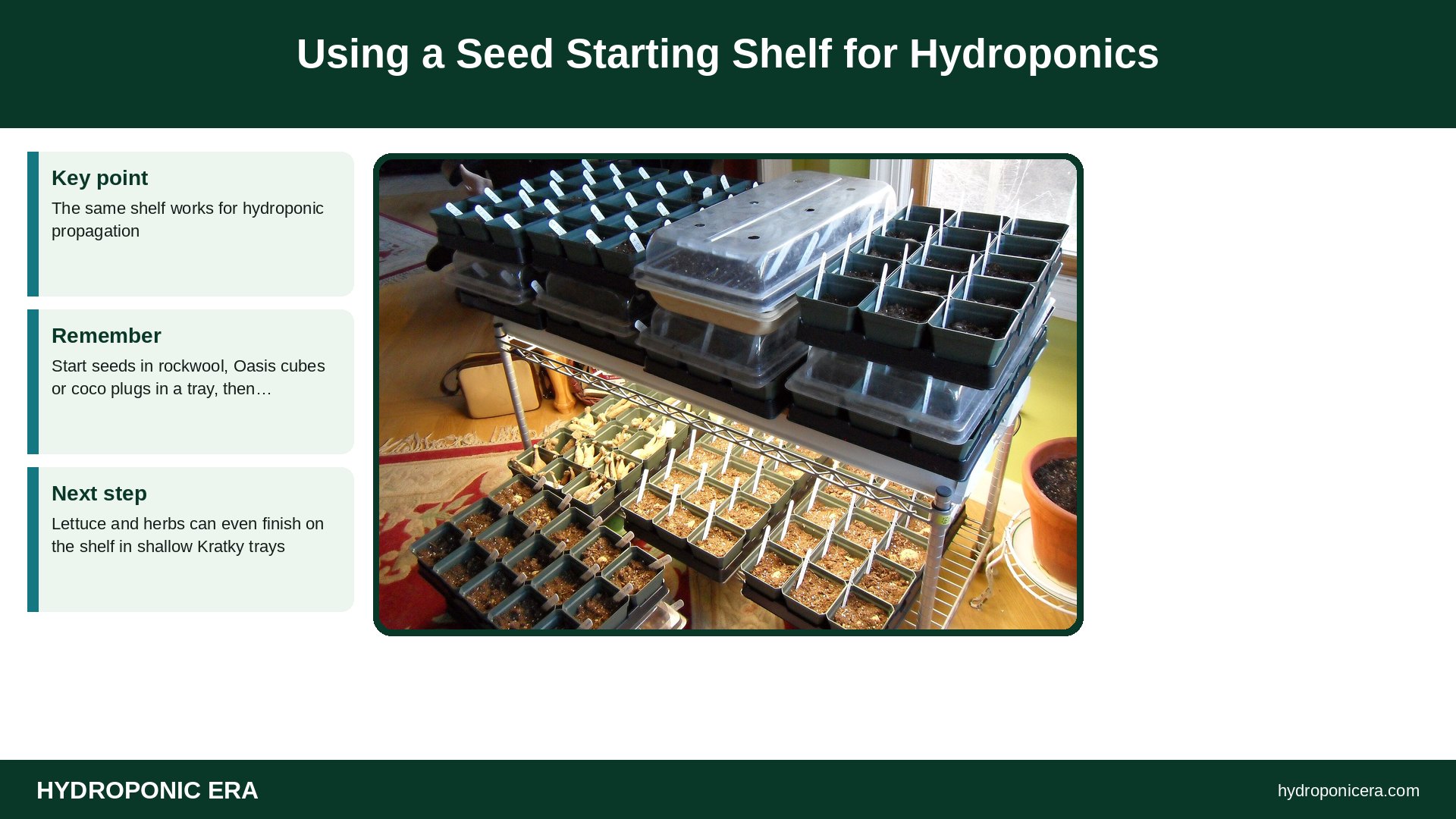
The same shelf works for hydroponic propagation. Start seeds in rockwool, Oasis cubes or coco plugs in a tray, then transplant into net pots once roots show. Lettuce and herbs can even finish on the shelf in shallow Kratky trays. See our germination methods guide and transplanting guide.
Seed Starting Shelf Timeline for US Gardeners
Most US gardeners fill a seed starting shelf in late winter. Seed packets list how many weeks before your last frost to sow. Slow crops go first and fast growers last, so stagger sowing dates rather than filling every tier at once. Two weeks before transplanting, UMN recommends hardening off: move seedlings outside to shade for a few hours, then gradually increase sun and time.
FAQs: Seed Starting Shelf
How far should lights be from seedlings?
For fluorescent lights, 2 to 4 inches. LEDs vary; start higher and adjust based on how the seedlings look.
Should grow lights run 24 hours on a seed starting shelf?
No. UMN says many plants need a dark period each night. Use a timer.
Can I use regular shop lights on a seed starting shelf?
Yes. UMN and Clemson both say standard fluorescent shop lights work when kept close. Many LED shop lights work too.
How many seedlings fit on a seed starting shelf?
A 48-inch shelf holds two 10×20-inch trays per tier, so a 4-tier shelf can hold eight trays.
Related HydroponicEra Guides
- Electrical safety for indoor hydroponics
- Seedling heat mats and humidity domes
- Hydroponic timers and automation
- IKEA hydroponics hacks
Sources
- Clemson Home & Garden Information Center — Starting Seeds Indoors
- University of Minnesota Extension — Starting seeds indoors
- University of New Hampshire Extension — Growing Seedlings Under Lights
- Photo credits (Wikimedia Commons, edited with titles): Dahlias started indoors by F. D. Richards from Clinton, MI (CC BY-SA 2.0); Lettuce Plugs by Apapac at English Wikipedia (Public domain); Led digital visuals-leds in grow box PNr°0082 by D-Kuru (CC BY-SA 3.0 at); -2020-07-10 Purple basil (Ocimum basilicum) seedlings, Trimingham by Kolforn (Kolforn) I’d appreciate if you could mail me (Kolforn@gmail.com) if you (CC BY-SA 4.0)