
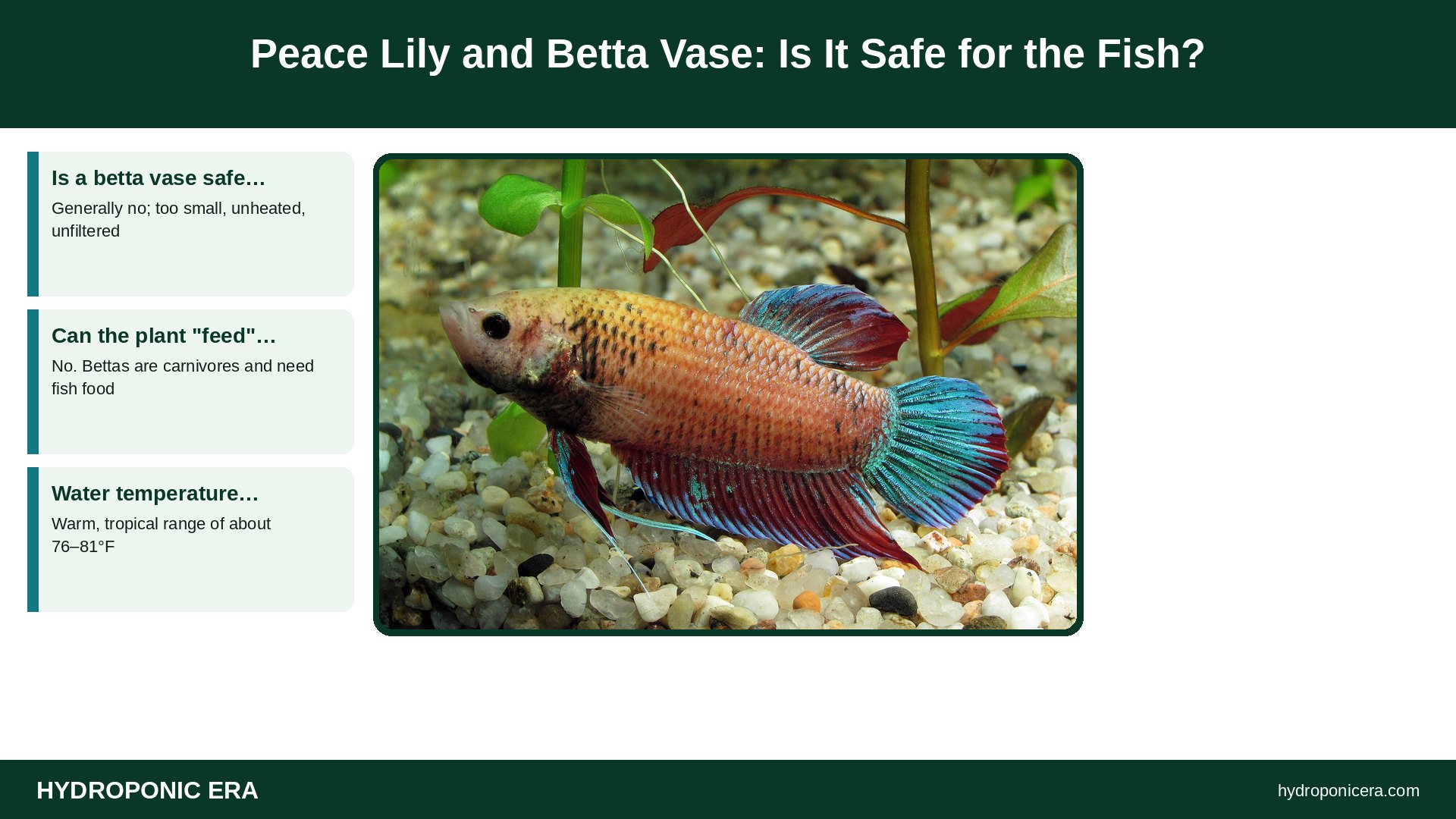
A betta vase, the popular setup where a peace lily sits on top of a vase and a betta fish lives underneath, is not a safe long-term home for the fish. Bettas need several gallons of filtered, heated water around 76–81°F, room to swim, and access to air at the surface. A typical betta vase offers less than a gallon, no heater, no filter, and roots that can block the surface. The peace lily part can work. The fish part usually does not.
Key takeaway: If you love the look, keep the peace lily in water on its own, or build a real heated, filtered tank and grow plants on top of that instead.
| Question | Short answer |
|---|---|
| Is a betta vase safe for the fish? | Generally no; too small, unheated, unfiltered |
| Can the plant “feed” the fish? | No. Bettas are carnivores and need fish food |
| Water temperature bettas prefer | Warm, tropical range of about 76–81°F |
| Minimum tank commonly recommended | Many fish-care groups suggest 5 gallons or more |
| Safer alternative | Heated, filtered tank with plants grown on top (small aquaponics) |
Where the Betta Vase Idea Came From
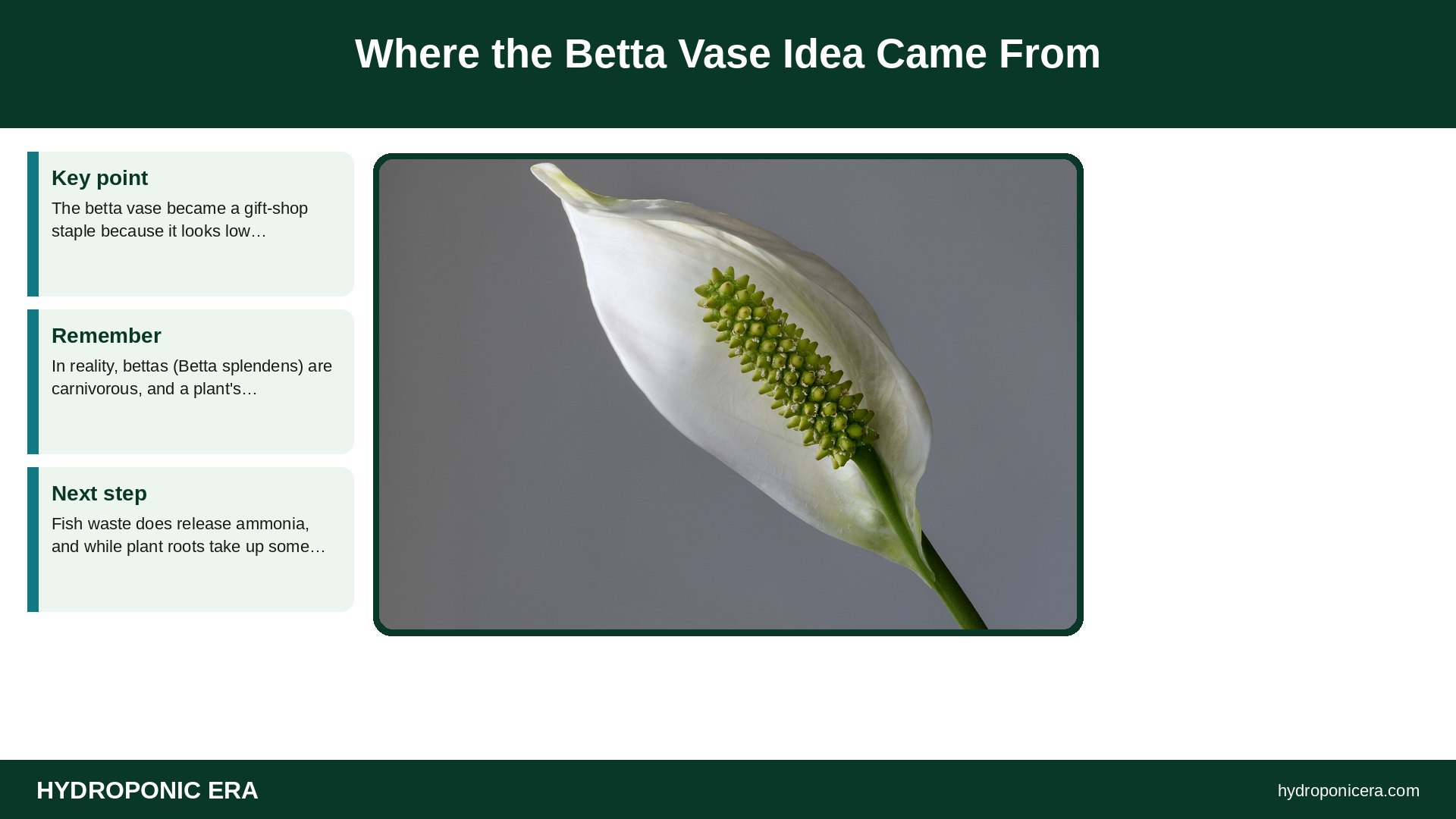
The betta vase became a gift-shop staple because it looks low maintenance: a living plant, a colorful fish, and a myth that the fish eats the roots and the plant cleans the water. In reality, bettas (Betta splendens) are carnivorous, and a plant’s roots do not provide a balanced diet. Fish waste does release ammonia, and while plant roots take up some nitrogen, a peace lily in a vase cannot keep a small, unfiltered volume stable on its own.
Research supports this. A 2024 study in Animal Welfare found male bettas in small bowls could not perform normal swimming behavior, and the authors recommended enriched aquaria of at least 10 liters (about 2.6 gallons). Veterinary care sheets go further and suggest 5 gallons or more.
Wild bettas come from shallow, warm waters in Southeast Asia. “Shallow” is often misread as “tiny.” Rice paddies and marshes are shallow, but they are huge, stable bodies of water compared with a vase.
Why a Betta Vase Fails the Fish
- Volume. Small volumes swing fast in temperature and ammonia. Most fish-welfare and aquarium groups recommend at least about 5 gallons for a single betta.
- Temperature. Bettas are tropical. A room at 68°F in winter is too cold without a heater, and cold fish become lethargic and prone to disease.
- Filtration. Without a filter, beneficial bacteria have little surface to colonize, and waste builds up between water changes.
- Surface access. Bettas are labyrinth fish that gulp air at the surface. A plant base or dense roots can block that access.
- Food. Bettas need a protein-rich fish diet. Starving a betta so it “eats the roots” is cruel and does not work.
Is the Betta Vase Ever Acceptable?

A vase with a plant and no fish is fine. A vase with a fish, no heater, and no filter is not something we recommend. If you have one now, the kindest step is to move the betta to a proper tank, keep the peace lily in water on its own, and enjoy both separately.
This also matters for the plant. Peace lily is listed by the ASPCA as toxic to cats and dogs, and a vase on a low table is easy for pets to reach. Keep it up high.
A Better Way: Plants on a Heated, Filtered Tank
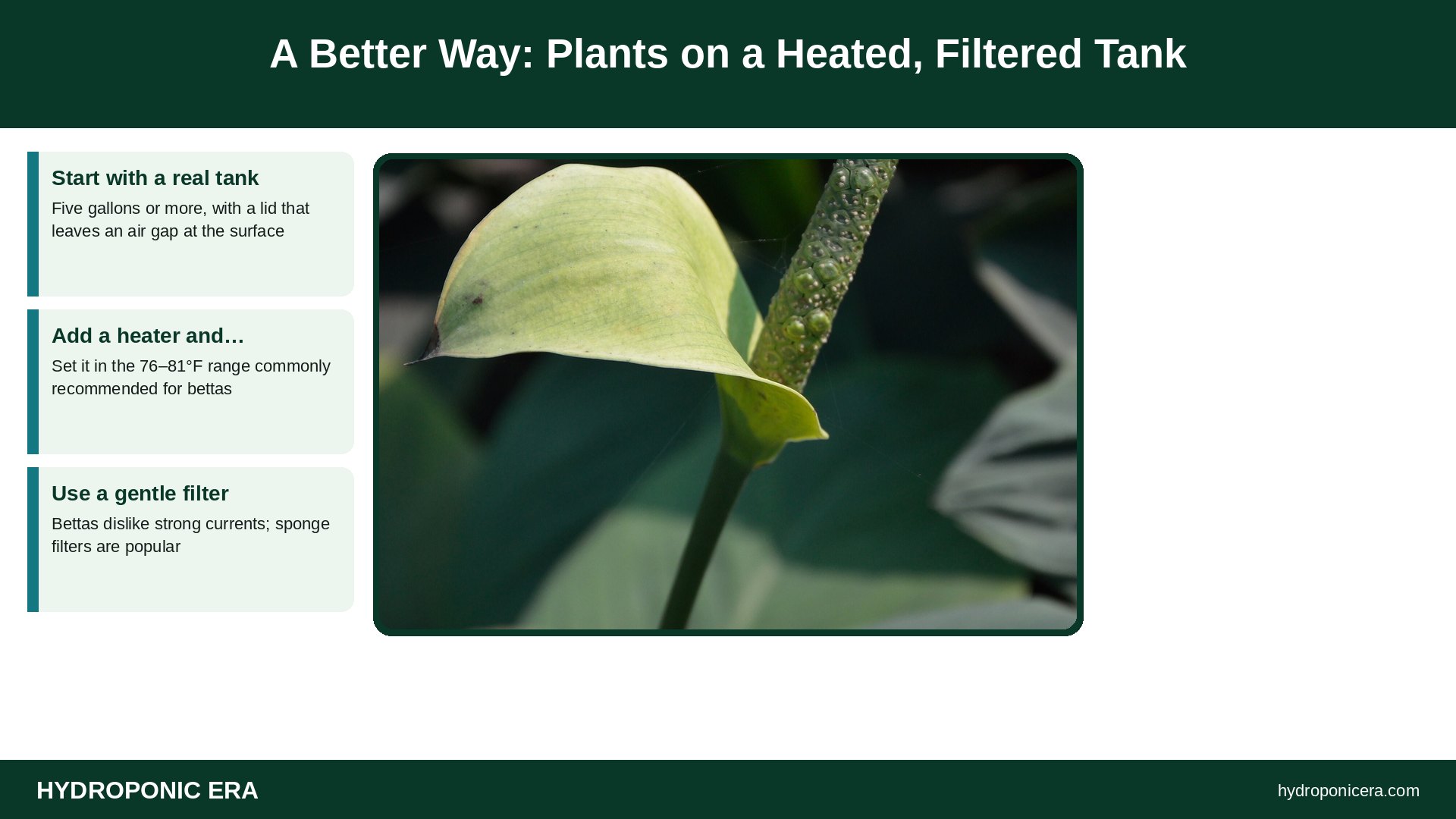
If you want fish and plants together, think small aquaponics rather than betta vase. Our aquaponics for beginners guide explains the nitrogen cycle that makes it work.
- Start with a real tank. Five gallons or more, with a lid that leaves an air gap at the surface.
- Add a heater and thermometer. Set it in the 76–81°F range commonly recommended for bettas.
- Use a gentle filter. Bettas dislike strong currents; sponge filters are popular.
- Cycle the tank first. Let beneficial bacteria establish before adding the fish.
- Grow plants on top. Pothos cuttings, peace lily roots in a basket, or herbs in net pots can dangle into the water. Keep roots from filling the whole tank.
- Keep feeding the fish a betta food and do partial water changes.
Never add hydroponic nutrients to a fish tank. Many fertilizers can harm fish. Plants on a fish tank should live on fish waste only. Our guide on using aquarium water for plants explains the cautions.
Betta Vase vs Proper Setups
| Setup | Fish welfare | Plant growth | Effort |
|---|---|---|---|
| Betta vase (no heater, no filter) | Poor | Fair | Looks easy, fails quietly |
| Peace lily in water alone | N/A | Good with dilute feeding | Low |
| 5+ gallon heated, filtered tank with plants on top | Good | Good for low feeders | Moderate |
Common Mistakes With a Betta Vase
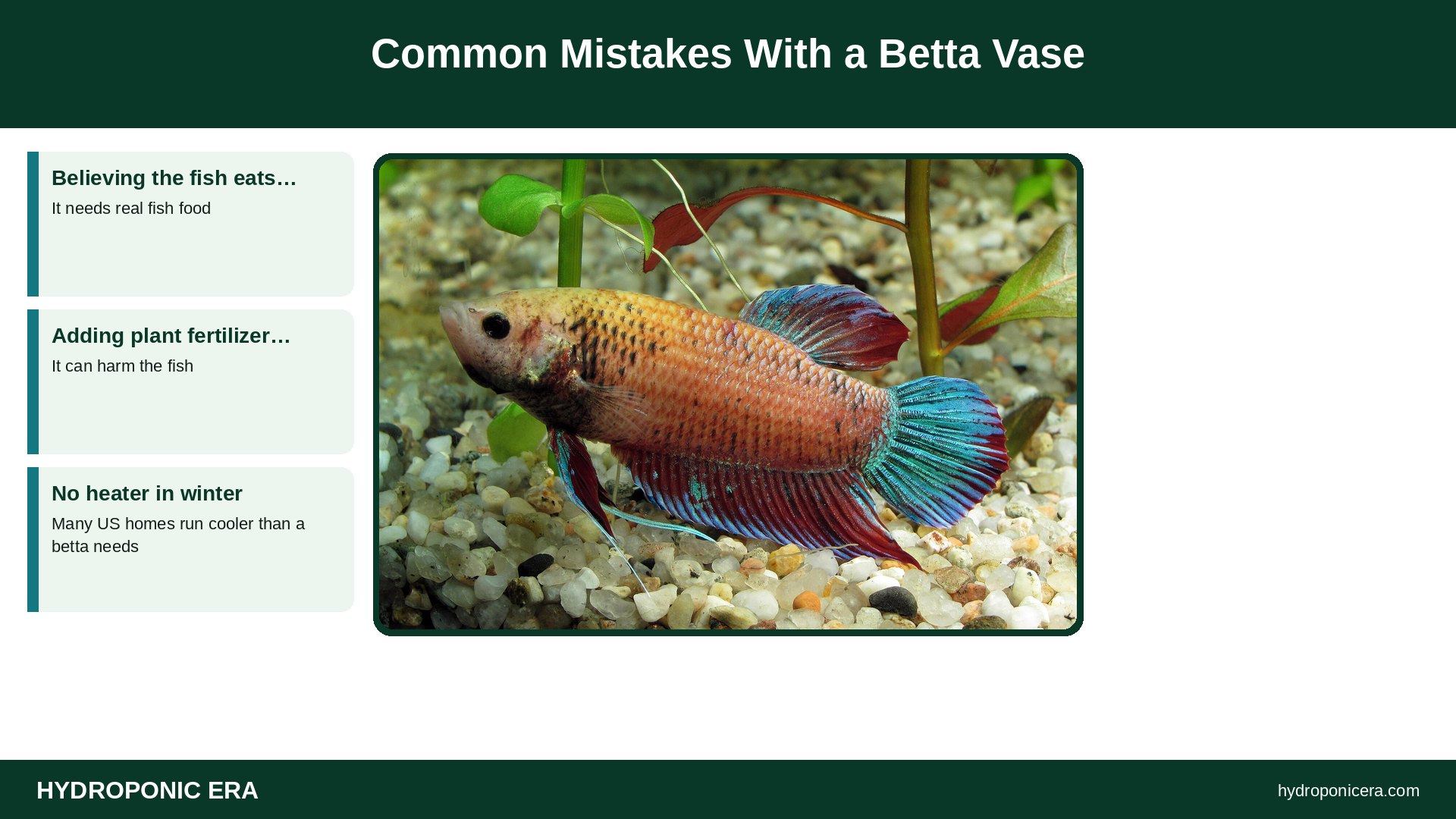
- Believing the fish eats the roots. It needs real fish food.
- Adding plant fertilizer to the vase. It can harm the fish.
- No heater in winter. Many US homes run cooler than a betta needs.
- Roots filling the water. They reduce swim space and surface access.
- Using a vase as a “starter” and never upgrading.
Checklist: Rehoming a Betta From a Vase
- Set up the new tank first with heater, filter, and conditioned water.
- Match temperature before moving the fish to avoid shock.
- Float the fish in a cup of its old water, then slowly add new tank water over 15–30 minutes.
- Net the fish gently into the new tank; don’t pour old vase water in.
- Feed lightly the first few days and watch behavior.
- Keep the peace lily in its vase with fresh water and dilute plant food, now that no fish lives there.
Moving the plant and fish apart lets you care for each one properly: plant fertilizer for the lily, fish food and water changes for the betta.
FAQs: Betta Vase
Can a betta live in a vase with a plant?
It may survive for a while, but a betta vase usually lacks the heat, filtration, and space a betta needs to stay healthy.
Do bettas eat plant roots?
Bettas may nibble, but they are carnivores and need protein-rich food. Roots are not a diet.
What size tank does a betta need?
Many fish-care groups recommend about 5 gallons or more with a heater and gentle filter.
What plants can grow on top of a betta tank?
Pothos, peace lily, and some herbs are commonly used. Keep only the roots in the water and never add plant fertilizer.
Related HydroponicEra Guides
Sources
- ASPCA — Peace Lily toxicity
- PetMD — Betta Fish Care Sheet (76–81°F; 5–10 gallons ideal)
- Oldfield & Murphy (2024), Animal Welfare — Life in a fishbowl: space and enrichment affect Betta behaviour
- MEAMS exotic animal veterinary care sheet (Dr. Lizzy Arnett) — Betta Fish Care Sheet (at least 5 gallons, low-flow filter, heater)
- Photo credits (Wikimedia Commons, edited with titles): Siamese fighting fish (Betta splendens) female orange by Bernard Ladenthin (CC BY 4.0); Peace lily – 2 by W.carter (CC BY-SA 4.0); Spathiphyllum – Alipore – Kolkata 2013-02-10 4662 by Biswarup Ganguly (CC BY 3.0)